

Nobody warns you that moving is an athletic event. You sign a lease or close on a house, and somewhere in the back of your mind you file the whole thing under admin, right next to changing your address and cancelling the broadband. Then moving day arrives and you spend nine hours doing squats with a wardrobe, and by the evening your lower back is filing a formal complaint.
The physical part is only half of it. There is also the low hum of stress that runs underneath everything: the deadlines, the decisions, the strange grief of watching your life reduced to cardboard. You can get through all of it in far better shape, physically and mentally, but not by accident. It takes a bit of planning and a handful of habits that most people skip because they are too busy buying tape.
Preparation Is Not the Same as Buying Boxes
Here is the mistake almost everyone makes. They equate getting ready to move with acquiring supplies, so they order a stack of boxes, feel productive, and call it preparation. Boxes are not preparation. A timeline is.
The single biggest predictor of whether a move wrecks you is how much time you gave yourself. Nearly every injury and every stress spike traces back to the same root cause: rushing. When you compress three weeks of packing into two frantic days, you lift carelessly, you skip meals, you stop drinking water, and you make the kind of tired mistakes that end with a dropped box or a wrenched shoulder. Give yourself genuine breathing room and the whole endeavour changes character. It stops being an emergency and becomes a project.
Build a rough week-by-week plan that works backwards from moving day. Which rooms get packed first, when the utilities switch over, who is helping and when. It does not need to be elaborate. It just needs to exist, because a plan on paper is a plan your exhausted future self does not have to invent at 11 pm.
A Healthy Move Starts the Night Before

Your body needs prepping just as much as your possessions do, and that prep begins before you have lifted a thing.
Get a proper night’s sleep beforehand, seven to eight hours if you can manage it, because fatigue is what turns good lifting technique into bad lifting technique around hour six. Eat a real breakfast with some protein in it rather than running on toast and adrenaline. And in the week leading up to the move, spend ten minutes a day loosening up the muscles you are about to overwork. This is not fussy wellness advice. Movement is genuinely one of the better things you can do for a body that is about to be asked to work hard, and the NHS guidance on staying active is a sensible place to see why a little regular movement beats a sudden heroic effort.
None of this feels urgent when you are staring down a flat full of boxes. All of it pays off when the day actually arrives.
Packing Habits That Protect You, Not Just Your Plates
Good packing does two jobs at once. It keeps your belongings intact, and it quietly protects your body from injury, which is the part people never connect.
Right-sized boxes are the unsung hero here. An oversized box is an invitation to overload, and an overloaded box is how you end up hauling forty kilos across a landing with your spine doing all the work. Keep heavy things in small boxes and light, bulky things in big ones. Pad fragile items properly so you are not contorting yourself to keep a wobbly stack of glasses upright. Getting the right essential packing supplies genuinely lowers your injury risk rather than just tidying the job up.
Pack room by room instead of drifting from cupboard to cupboard, grabbing whatever catches your eye. Room-by-room keeps you organised, makes unpacking sane, and spares you the last-minute scramble where everything left in the flat gets stuffed into a bin bag at speed. That scramble is where pulled muscles and smashed valuables live.
One Thing That Causes Most Injuries
Exertion on moving day is unavoidable. Exhaustion is not, and there is a difference. You can spread the load across the day by alternating the punishing tasks with the gentle ones. Carry a few small boxes, then spend a stretch labelling, directing traffic, or building flat-pack and rotating like this stops any single muscle group from taking a relentless beating and keeps your energy from cratering all at once.
But if there is one thing that separates a sore evening from a genuine injury, it is how you lift.
Lift With Your Legs, Every Single Time
The overwhelming majority of back injuries during a move come from the same error: bending at the waist and hoisting with the back. Your lower back is not built to be the primary engine for lifting, and it lets you know.
The fix is boring, and it works. Get close to the load. Bend at the knees and hips, not the waist. Keep your back straight, grip firmly, and drive up through your legs, which are full of the large muscles designed for exactly this. Keep whatever you are carrying close to your body, and never, ever twist while holding a load. If you need to turn, move your feet and pivot. Twisting mid-carry is one of the fastest routes to a back injury there is. This sound lifting technique is worth reading properly once, because it is remarkable how quickly people abandon it the moment they are tired and behind schedule.
Two bits of kit help more than you would expect. Supportive shoes with real grip give you a stable base, and a pair of moving gloves improves both your control and your comfort, which matters more the longer the day drags on.
Set Up Your Space So It Cannot Hurt You.
Safe moving is not only about your body. It is also about the environment you are moving through, and a hazardous space will injure a person with perfect lifting form just as readily as a careless one.
Clear every walkway before anyone picks up a box. The route from the bedroom to the front door should be an obstacle-free runway, not a slalom around loose shoes and trailing cables. Use hand trucks and dollies for heavy furniture instead of dragging it across the floor on willpower and hope. And do not overlook moving straps, which are one of the most underrated tools going. They spread a heavy load across your shoulders and legs rather than dumping the whole thing on your lumbar spine. Overexertion and awkward manual handling are among the leading causes of everyday musculoskeletal injury, a pattern the CDC’s workplace injury data sees play out across physically demanding work of every kind, and a house move is exactly that kind of work.
Look After Your Head, Not Just Your Back
You have protected your body and cleared your hazards. Now protect your mind, because moving day is at least as much a mental test as a physical one, and a beautifully organised move can still unravel the moment anxiety takes the wheel.
The technique that helps most is almost embarrassingly simple: brief pauses. Thirty seconds of slow, deliberate breathing between loads does more to keep you level than you would ever guess. It interrupts the spiral, drops your shoulders, and hands you back a bit of focus. If the day is tipping towards genuine overwhelm rather than ordinary stress, the mental wellbeing resources from Mind are a good reminder that stress management is a skill, not a personality trait, and one worth leaning on when the pressure climbs.
Fuel and Water Are Not Optional Extras
Dehydration creeps up fast during heavy physical work, and it takes your energy and your concentration with it. Set up a water station somewhere central so drinking is the easy default rather than an afterthought. For steady physical work, public-health guidance suggests roughly a cup of water every fifteen to twenty minutes rather than waiting until you feel thirsty, since thirst lags behind actual need. The CDC’s hydration recommendations are aimed at people working hard on their feet all day, which is precisely what you will be doing.
Resist the urge to run the whole day on coffee. Caffeine is not a substitute for water, and past a certain point it works against you. Pack real food that releases energy slowly: nuts, bananas, a few oatcakes or granola bars, cheese. The goal is sustained fuel, not the quick sugar high that dumps you into a slump an hour later.
Build Rest In Before You Need It

Even good food will not save you from fatigue if you never stop, so schedule proper breaks rather than waiting for your body to force one on you. Every forty-five to sixty minutes, step away for a few minutes. Use those windows to stretch the parts taking the most punishment, your hip flexors, hamstrings and shoulders, and to walk about a little. Two minutes strolling to the end of the road and back resets your focus and gives overworked muscles a moment to recover. Breaks are not time lost. They are what keep the back half of the day from falling apart.
Move Is Not Over When the Van Leaves
Wellness does not clock off when the last box lands in the hallway. The days after a move matter just as much, and this is exactly when post-move adrenaline tempts people to unpack the entire house in one manic evening. Do not. Rest, keep drinking water, eat properly, and unpack in stages. Gradual beats heroic every time.
A First-Night Box Makes the New Place Feel Human
Before anything else gets loaded onto the van, pack a first-night essentials box and keep it with you rather than in the removal lorry. Bedding, toiletries, phone charger, a kettle and a couple of mugs, and one or two things that make an unfamiliar place feel a little like yours. Fumbling through twenty identical boxes at midnight looking for your toothbrush is a small misery that is entirely avoidable.
If you can face it, introduce yourself to one neighbour early on. It feels awkward, and it is worth doing anyway, because that one tiny thread of connection creates a surprising sense of belonging when everything else in the new place still feels strange and echoey.
Listen to Your Body Afterwards
In the days that follow, pay attention to what your body is telling you. Ordinary next-day soreness is expected. But persistent pain, swelling, sharp or shooting sensations, or unusual fatigue that does not settle are not always things to push through, and post-move momentum should not talk you out of noticing them. Ice, real rest and gentle movement are your first-line recovery tools. If something is not easing after a few days, or if the pain is sharp rather than achy, the NHS advice on back pain is a sensible next stop, and worth acting on rather than ignoring.
Two Ways to Move, Side by Side
| Area | The rushed way | The health-first way |
| Lifting | Back bent, done in a hurry | Knees bent, slow and controlled |
| Hydration | Coffee and not much else | Water station, a cup every 15 to 20 minutes |
| Packing | Random, last-minute grabbing | Room by room, correctly sized boxes |
| Rest | Push through the exhaustion | Scheduled breaks every 45 minutes |
| Mental load | Ignore the stress and hope | Short breathing pauses, first-night box |
Final Thoughts
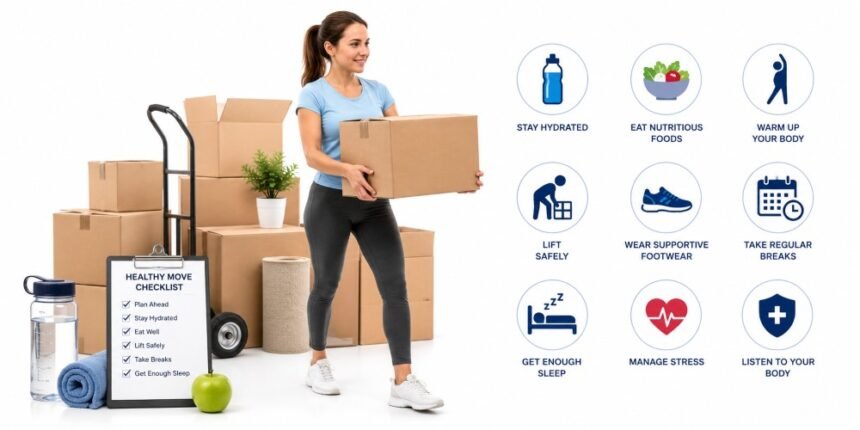
A healthier move does not happen on its own. It comes from a realistic timeline, the right tools, sound technique, and self-care that extends past moving day into the days on either side of it. None of it is complicated. Most of it is the sort of thing you already half-know and skip anyway because there is a van booked and a clock running.
So do not skip it this time. Build the checklist, set up the water station, bend your knees, take the breaks, and pack that first-night box before everything else. Your body and your frayed nerves will both quietly thank you. And if you have hard-won tricks of your own that got you through a brutal move, the comments are open.
Frequently Asked Questions
What should you eat on moving day to keep your energy up?
- Lean towards protein and slow-release carbohydrates: eggs, nuts, wholegrains. Skip heavy, greasy meals that leave you sluggish. Bananas and granola bars are ideal for quick, steady energy between loads.
Which injuries are most common during a move, and how do you avoid them?
- Back strains, wrist sprains and knee injuries top the list. Bend your knees, keep your back straight, never twist mid-lift, and use dollies and moving straps for anything genuinely heavy.
How often should I take breaks while moving?
- Roughly every forty-five to sixty minutes. Use the pause to stretch your hips, hamstrings and shoulders and to walk about for a minute or two. Short, regular breaks prevent the cumulative fatigue that leads to careless, injury-prone lifting later in the day.
A Note On Health: This article offers general guidance for staying safe and comfortable during a move and is not medical advice. If you have an existing back, joint, heart or other health condition, are pregnant, or are unsure whether you should be doing heavy lifting, check with a GP, physiotherapist or pharmacist first. If you injure yourself during a move and the pain is severe, does not ease after a few days, or is accompanied by numbness, tingling or weakness, seek proper medical attention rather than pushing through it.