

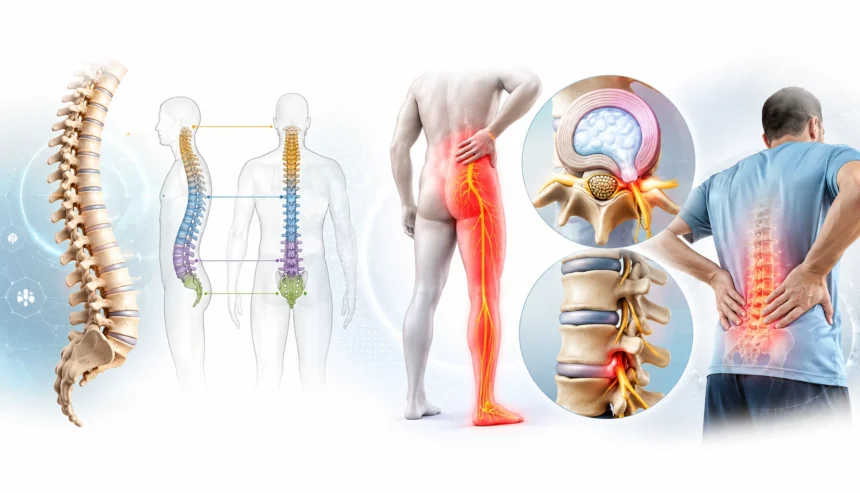
Lower back pain that spreads to the leg may feel different from ordinary back soreness. Some people feel pain moving from the lower spine into the buttock, thigh, calf or foot. Others may notice numbness, tingling, burning sensations or weakness together with the pain.
When pain travels beyond the lower back, nerve irritation may be one possible reason. This can happen when a spinal disc, joint change, narrowing in the spine or inflammation affects the nerves that travel from the lower spine into the leg.
Understanding lower back pain treatment can help patients recognise when symptoms may need more than rest, posture changes or short-term self-care.
Why Lower Back Pain Can Spread to the Leg
The lower spine contains nerves that travel into the buttocks, legs and feet. These nerves help with sensation, movement and reflexes. When a nerve root becomes irritated or compressed, pain may follow the nerve pathway instead of staying only in the back.
This type of pain may be described as:
- Shooting pain
- Burning pain
- Electric-like pain
- Pain that travels below the buttock
- Pain that reaches the calf or foot
- Numbness or tingling
- Leg heaviness
- Weakness in the leg or foot
The exact pattern may depend on which nerve is affected. Some patients may feel symptoms mainly in the thigh, while others may feel pain reaching the toes.
Lower Back Pain vs Nerve-Related Leg Pain
Lower back pain can come from muscles, joints, discs, ligaments or other structures around the spine. It may stay around the lower back, hips or buttocks.
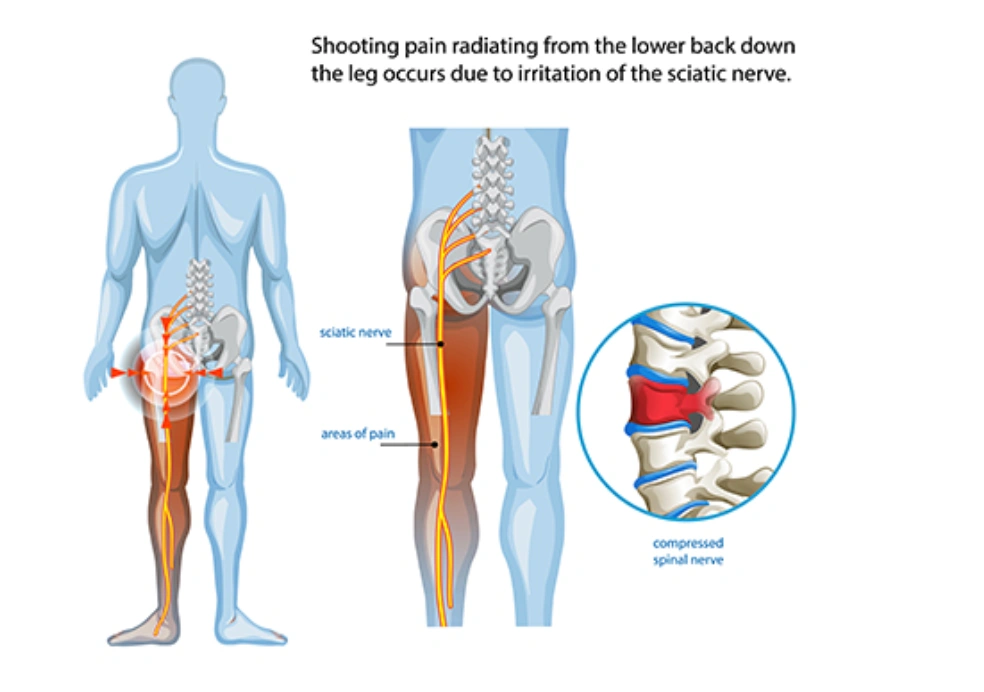
Nerve-related leg pain may feel more radiating. It may travel along a path from the lower back or buttock down one leg. This pattern may suggest that a nerve root in the lower spine is involved.
Nerve symptoms may include:
- Pain spreading below the knee
- Tingling in the leg or foot
- Numbness
- Burning sensations
- Weakness
- Reduced walking tolerance
- Pain that worsens when sitting, bending or coughing
Pain that spreads to the leg does not always mean a serious condition, but it should be assessed if it persists, worsens or affects daily function.
When It May Be Sciatica
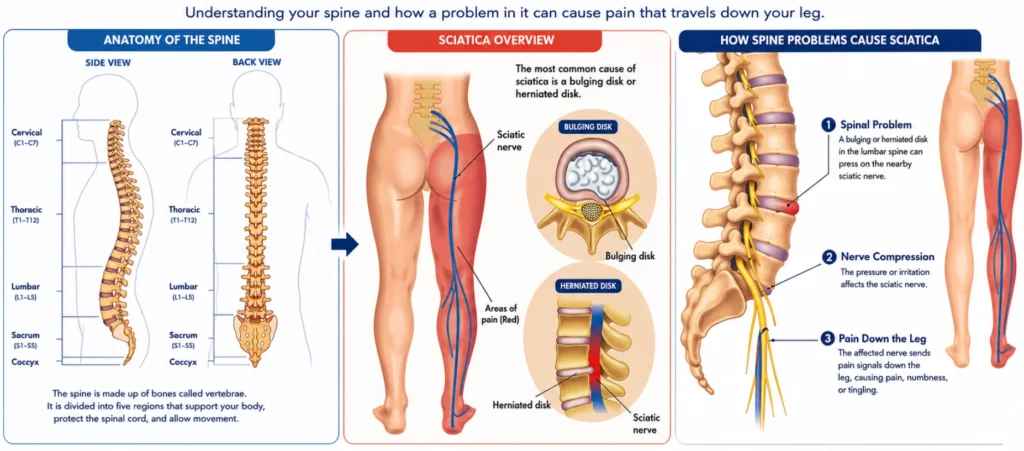
One common reason for lower back pain that spreads to the leg is sciatica. This refers to a pattern of pain linked to irritation or compression of the sciatic nerve or related nerve roots in the lower spine.
Sciatica symptoms may include pain that travels from the lower back or buttock down the back of the leg. Some patients may also feel numbness, tingling or weakness.
Sciatica may be caused by several conditions, including a slipped disc, spinal narrowing, inflammation or irritation around the nerve. The pain may be worse during sitting, bending, lifting, coughing or sneezing.
Common Causes of Pain Spreading From the Back to the Leg
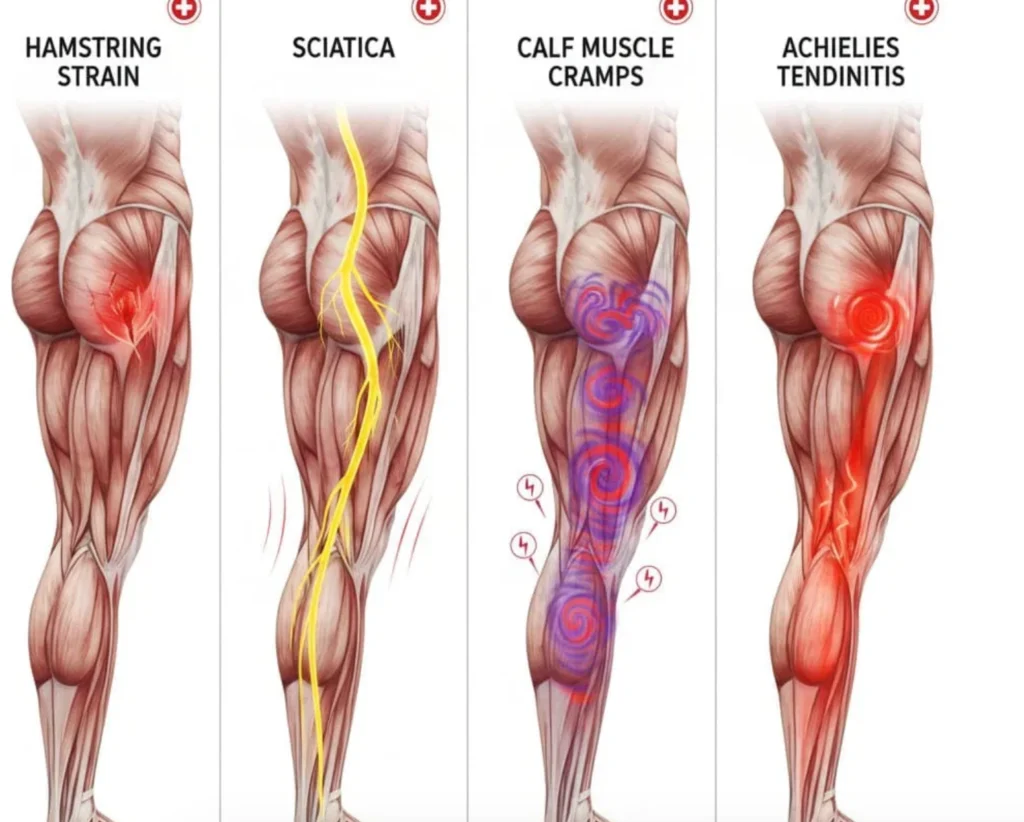
Lower back pain that spreads to the leg can have different causes. A proper assessment helps identify whether the problem is related to a disc, nerve, joint, muscle or another structure.
Possible causes may include:
- Slipped disc or herniated disc
- Degenerative disc changes
- Spinal stenosis
- Nerve root irritation
- Facet joint irritation
- Sacroiliac joint pain
- Piriformis-related irritation
- Muscle strain with referred pain
- Previous injury
- Repeated lifting or bending strain
Some causes may settle with appropriate care, while others may need imaging, specialist assessment or targeted treatment.
When a Slipped Disc May Be Involved
A slipped disc may occur when the inner part of a spinal disc pushes outward and irritates a nearby nerve. When this happens in the lower spine, symptoms may travel into the leg.
Pain from a slipped disc may feel worse when sitting, bending forward, lifting or coughing. Some patients may feel more leg pain than back pain.
Other symptoms may include numbness, tingling or weakness in the leg or foot. If weakness develops or symptoms worsen, medical review should not be delayed.
When Spinal Stenosis May Be Involved
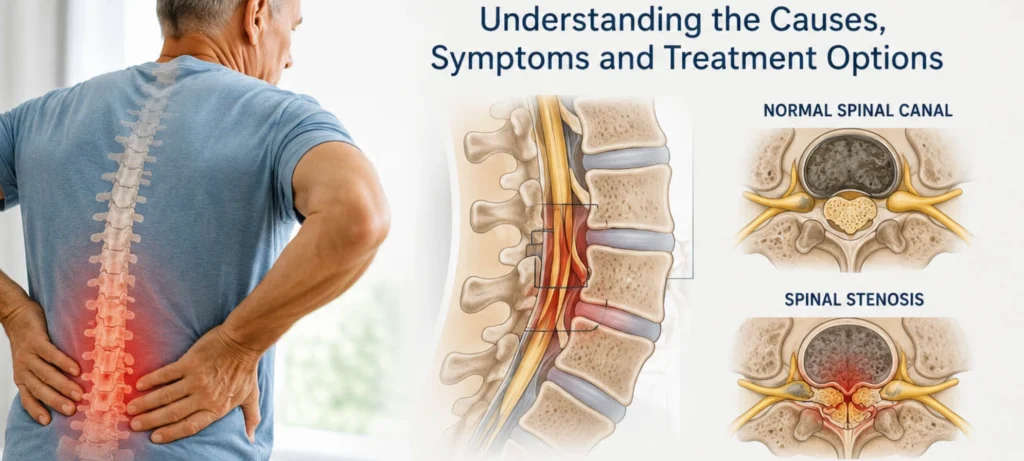
Spinal stenosis refers to narrowing of spaces in the spine. When this affects the lower spine, it may place pressure on nerve roots and cause pain, numbness or weakness in the legs.
This pattern may feel worse with standing or walking for a period of time. Some patients may feel better when sitting, bending forward or leaning on a trolley.
In Singapore, daily routines such as walking between transport stops, standing during commutes, climbing stairs or sitting for long office hours may make symptoms more noticeable.
Symptoms That May Need Specialist Review
Specialist review may be needed when pain does not settle, keeps returning or affects daily activities. Pain spreading to the leg may need closer assessment because it may involve the nerves in the lower spine.
Patients may consider seeing a specialist if they have:
- Pain that spreads from the lower back to the buttock, thigh, calf or foot
- Numbness or tingling in the leg
- Burning or electric-like pain
- Pain that affects walking
- Pain that worsens when sitting or bending
- Weakness in the leg or foot
- Pain that affects sleep
- Symptoms that keep returning
- Pain that does not improve with initial care
- Difficulty working, commuting or exercising because of pain
A specialist assessment can help determine whether symptoms are related to nerve irritation, spinal changes or another cause.
When Symptoms May Be Urgent
Some symptoms need urgent medical attention because they may suggest significant nerve involvement or another serious condition.
Patients should seek prompt review if lower back pain that spreads to the leg occurs with:
- New or worsening leg weakness
- Numbness around the groin or saddle area
- Loss of bladder or bowel control
- Difficulty passing urine
- Severe pain after a fall or injury
- Fever with back pain
- Unexplained weight loss with severe back pain
- Cancer history with new severe back pain
- Symptoms that rapidly worsen
- Difficulty walking due to weakness
These symptoms should not be managed with self-care alone.
How a Pain Specialist May Assess Lower Back and Leg Pain
A pain specialist may review the symptom pattern, medical history, activity level and how the pain affects movement. The aim is to identify whether the pain is likely related to nerve irritation, spinal changes, muscle strain or another cause.
Assessment may include questions about:
- Where the pain starts
- Where the pain travels
- Whether symptoms reach the calf, foot or toes
- Whether numbness or tingling is present
- Whether weakness is present
- What movements worsen the pain
- Whether sitting, standing or walking affects symptoms
- Previous back injuries or spine conditions
- Work, exercise and lifting habits
- Medication use and medical conditions
A physical examination may include checking movement, posture, sensation, reflexes, strength and walking pattern. Imaging such as MRI may be discussed if symptoms are severe, persistent, worsening or suggest nerve involvement.
Treatment Considerations for Lower Back Pain That Spreads to the Leg
Treatment depends on the underlying cause, symptom severity, duration, nerve involvement and how much the pain affects daily function.
Treatment options may include:
- Activity modification
- Medication, where appropriate
- Physiotherapy
- Guided exercise
- Posture and movement advice
- Temporary avoidance of aggravating activities
- Interventional pain procedures in selected cases
- Imaging or further assessment
- Surgery in selected cases
Many cases of lower back and leg pain may be managed without surgery. However, further treatment may be discussed when pain persists, symptoms worsen or nerve compression is significant.
When Interventional Pain Treatment May Be Discussed
Interventional pain treatment may be discussed when symptoms continue despite initial care or when pain affects walking, sitting, sleep, work or daily routines. These procedures may target pain-related structures or inflammation around affected nerves, depending on the diagnosis.
Interventional options are not suitable for everyone. The decision depends on the cause of pain, imaging findings, medical history, symptom severity and response to previous treatment.
Patients should understand the purpose, risks, expected recovery and limitations of any recommended procedure before proceeding.
When Surgery May Be Discussed
Surgery is not needed for many cases of lower back pain that spreads to the leg. It may be discussed when there is significant nerve compression, worsening weakness, persistent pain that does not improve with appropriate treatment or symptoms that affect function.
The decision depends on the diagnosis, imaging findings, severity of symptoms, health status and treatment goals.
Patients should seek prompt medical review if leg weakness, worsening numbness or bladder and bowel symptoms occur.
Early Steps to Consider When Symptoms Begin
For mild symptoms, patients may consider reducing activities that clearly worsen the pain. However, prolonged bed rest may not be helpful for many lower back pain patterns unless specifically advised by a doctor.
Practical steps may include:
- Avoiding heavy lifting temporarily
- Limiting repeated bending or twisting
- Taking short walking breaks if tolerated
- Adjusting sitting posture
- Avoiding long periods in one position
- Using medication only as advised
- Monitoring numbness, tingling or weakness
- Seeking review if symptoms persist or worsen
Patients should avoid forceful stretching, intense exercise or home remedies that make leg pain worse.
How Lower Back and Leg Pain Can Affect Daily Life
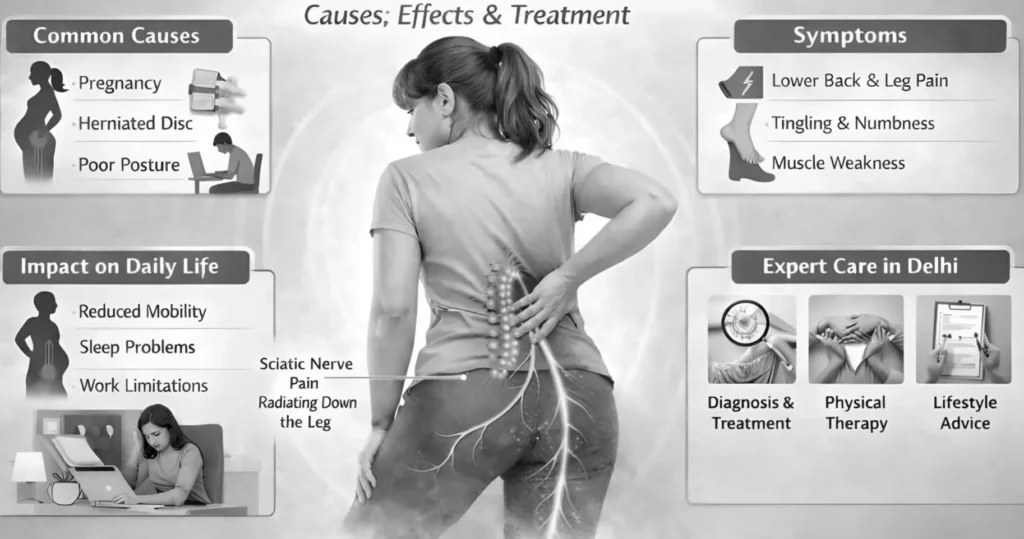
Lower back pain that spreads to the leg can affect more than movement. It may make it harder to sit through meetings, stand during commutes, climb stairs, drive, sleep or exercise.
Some patients may reduce activity because they fear worsening the pain. Others may continue normal routines despite increasing symptoms. Both patterns can affect recovery if the underlying cause is not understood.
A clear assessment can help patients understand what activities may be safe, which movements may need temporary modification and when treatment may be needed.
Disclaimer
The information on Doctiplus is for educational and informational purposes only and should not replace professional medical advice, diagnosis, or treatment. Always consult a qualified healthcare provider before making any health-related decisions or starting new treatments.