


Shoulder pain can make everyday tasks harder. Reaching for a cup, putting on clothes, carrying groceries, exercising or sleeping on one side may become uncomfortable. Some people develop shoulder pain after a fall or sports injury. Others notice pain that builds up slowly from repeated movements, posture, ageing or stiffness.
The shoulder is a flexible joint that moves in many directions. Because of this, it depends on muscles, tendons, ligaments and joint structures to work together. Pain may come from the shoulder itself or, in some cases, from the neck or nearby nerves.
Why Is Shoulder Pain So Common?
The shoulder is one of the most mobile joints in the body. It allows the arm to lift, rotate, reach across the body and move behind the back. This wide range of movement also means the shoulder can be affected by overuse, injury, stiffness and wear-and-tear.
Shoulder pain may happen because of:
- Repeated overhead movement
- Poor posture during desk work
- Sports or gym injuries
- Falls or direct impact
- Lifting heavy objects
- Age-related tendon changes
- Joint inflammation
- Long periods of reduced movement
- Referred pain from the neck
In Singapore, shoulder pain may affect office workers, manual workers, older adults, gym-goers and people who play sports such as badminton, tennis, swimming, basketball or volleyball.
What Are the Common Symptoms of Shoulder Pain?
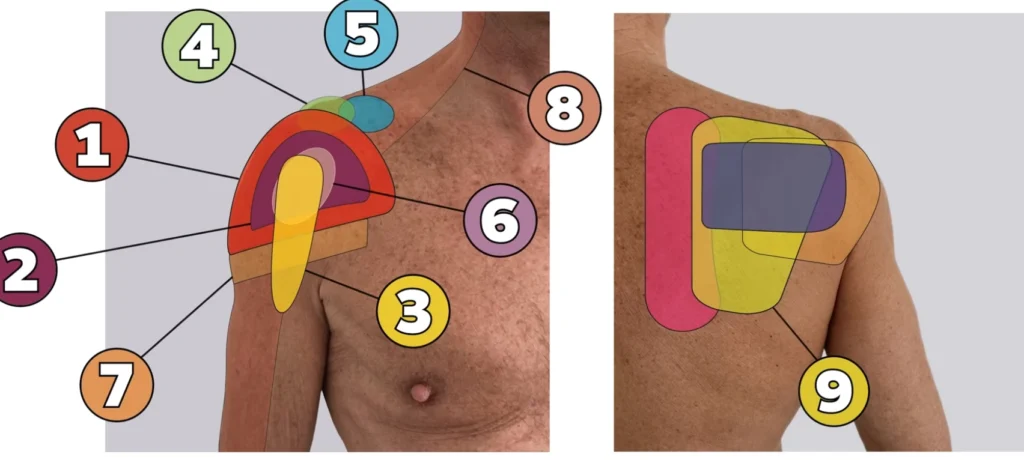
Shoulder pain may feel different depending on the cause. Some people feel a dull ache. Others feel sharp pain when lifting the arm.
Common symptoms include:
- Pain when reaching overhead
- Pain when lifting or carrying
- Pain when reaching behind the back
- Shoulder stiffness
- Weakness in the arm or shoulder
- Pain at night
- Clicking or catching
- Reduced range of motion
- Pain after sport or exercise
- Pain spreading from the neck to the arm
The pattern of symptoms can help guide diagnosis, but a medical assessment may be needed if pain is persistent or worsening.
What Are the Common Causes of Shoulder Pain?
Shoulder pain can come from different conditions. Many causes can improve with non-surgical care, but some injuries need closer assessment.
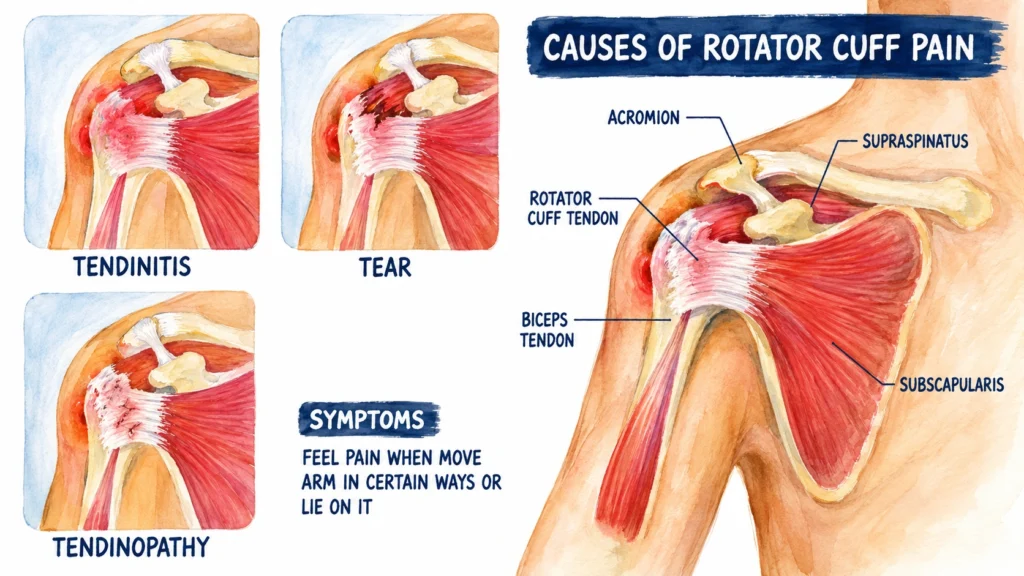
1. Rotator Cuff Problems
The rotator cuff is a group of muscles and tendons that help move and stabilise the shoulder. It is one of the common sources of shoulder pain.
Rotator cuff problems may include:
- Tendon irritation
- Tendon inflammation
- Partial tears
- Full-thickness tears
- Age-related tendon wear
- Injury-related tears
A rotator cuff problem may cause:
- Pain when lifting the arm
- Weakness when carrying objects
- Pain when reaching overhead
- Pain when lying on the affected shoulder
- Difficulty raising the arm
- Pain after a fall or lifting injury
Rotator cuff pain may develop gradually or happen suddenly after trauma. Older adults may be more likely to develop tendon changes over time.
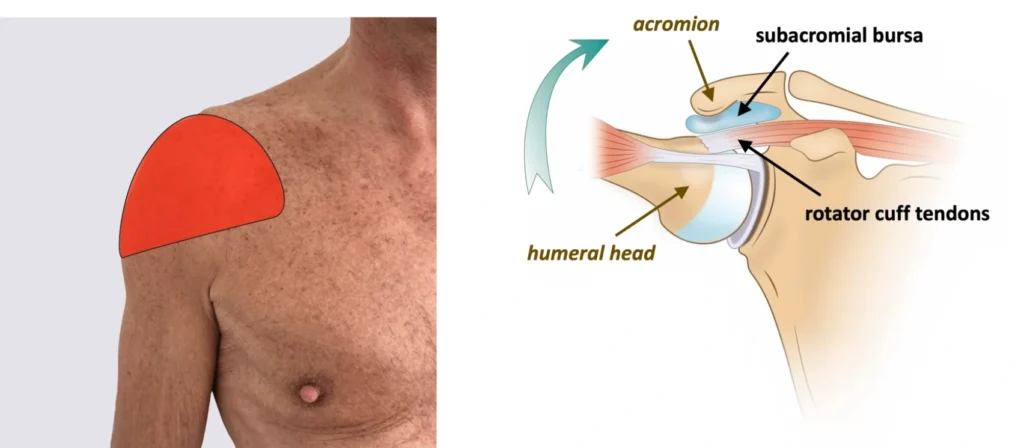
2. Shoulder Impingement
Shoulder impingement happens when soft tissues in the shoulder become pinched during arm movement. This may irritate the rotator cuff tendons or the bursa, which is a small fluid-filled sac that helps reduce friction.
Shoulder impingement may cause:
- Pain when lifting the arm sideways
- Pain during overhead activity
- Pain when reaching behind the back
- Discomfort during swimming, racket sports or gym exercises
- Night pain in some cases
This condition may be linked to repeated overhead movement, muscle imbalance or shoulder blade control problems.
3. Frozen Shoulder
Frozen shoulder, also called adhesive capsulitis, causes pain and stiffness in the shoulder joint. It often develops gradually and may make daily tasks difficult.
People with frozen shoulder may struggle with:
- Reaching behind the back
- Wearing clothes
- Brushing hair
- Reaching overhead
- Sleeping comfortably
- Moving the shoulder in several directions
Frozen shoulder may happen without a clear cause. It may also occur after injury, surgery or a period of keeping the shoulder still. People with diabetes may have a higher risk.
Recovery can take time. Treatment often focuses on pain control, stretching and restoring shoulder movement gradually.
4. Shoulder Bursitis
Bursitis happens when the bursa becomes inflamed. In the shoulder, this may cause pain with movement, especially when lifting the arm.
Symptoms may include:
- Tenderness around the shoulder
- Pain when raising the arm
- Pain that worsens with repeated movement
- Discomfort when lying on the affected side
- Swelling in some cases
Bursitis may occur together with impingement or rotator cuff irritation.
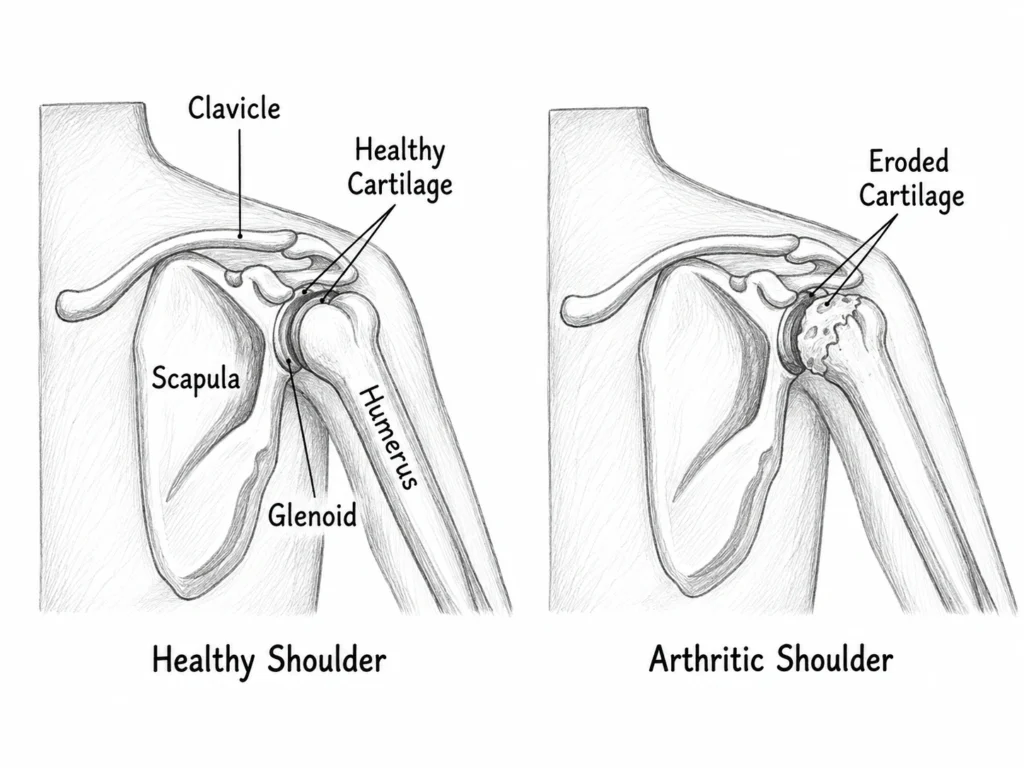
5. Shoulder Arthritis
Arthritis can affect the shoulder joint and cause pain, stiffness and reduced movement. It may happen due to wear-and-tear, previous injury, inflammatory arthritis or long-term joint changes.
Possible symptoms include:
- Deep aching shoulder pain
- Stiffness
- Reduced range of motion
- Pain that worsens with activity
- Grinding or clicking
- Difficulty lifting or reaching
Shoulder arthritis may develop slowly. Treatment depends on severity and may include medication, physiotherapy, injections or surgery in selected cases.
6. Shoulder Dislocation or Instability
A shoulder dislocation happens when the upper arm bone comes out of the shoulder socket. This may happen after a fall, collision or sports injury.
Shoulder instability means the shoulder feels loose or may slip out of place. It can happen after a previous dislocation or ligament injury.
Symptoms may include:
- Sudden severe pain after injury
- Visible change in shoulder shape
- Weakness
- Numbness or tingling
- A feeling that the shoulder may “pop out”
- Repeated slipping episodes
A suspected dislocation needs urgent medical care. Do not try to push the shoulder back into place yourself.
7. Biceps Tendon Irritation
The biceps tendon runs from the upper arm into the shoulder. It can become irritated from lifting, overhead activity, sports or other shoulder problems.
Biceps tendon pain may cause:
- Pain at the front of the shoulder
- Pain when lifting or carrying
- Tenderness near the front of the shoulder
- Clicking or snapping sensations
- Pain with pushing or pulling movements
This condition may occur on its own or together with rotator cuff or labral problems.
8. Labral Tears
The labrum is a ring of cartilage around the shoulder socket. It helps keep the joint stable. A labral tear may happen after a fall, shoulder dislocation, throwing injury or repeated overhead movement.
Symptoms may include:
- Deep shoulder pain
- Clicking or catching
- A feeling of looseness
- Pain with throwing or overhead sport
- Reduced strength
- Shoulder instability
Labral tears may need imaging tests such as an MRI if symptoms suggest deeper joint involvement.
9. Referred Pain from the Neck
Sometimes, the shoulder is not the main source of pain. Nerve irritation in the neck can cause pain that travels to the shoulder, arm or hand.
This may be more likely if symptoms include:
- Neck pain
- Tingling
- Numbness
- Arm weakness
- Burning pain
- Pain travelling below the elbow
A doctor may examine both the neck and shoulder to identify the source of symptoms.
10. Posture and Work-Related Strain
Long hours at a desk, poor monitor height, repeated mouse use or carrying heavy bags can contribute to shoulder and neck discomfort. This type of pain may be related to muscle tension, posture, stiffness or overuse.
Symptoms may include:
- Aching around the shoulder and upper back
- Tight neck and shoulder muscles
- Pain after long work hours
- Discomfort that improves with movement or rest
- Headache in some cases
Workstation changes, stretching, strengthening and posture awareness may help. Persistent pain should still be assessed if it does not improve.
When Should You See a Doctor for Shoulder Pain?
Mild shoulder pain may improve with rest, activity changes and gentle movement. However, medical advice is recommended if pain persists, worsens or affects daily life.
You should consider seeing a doctor if you have:
- Pain that lasts more than a few days to a week
- Pain that affects sleep
- Difficulty lifting the arm
- Shoulder weakness
- Stiffness that limits daily tasks
- Pain after a fall or sports injury
- A shoulder that feels unstable
- Numbness, tingling or pain travelling down the arm
- Repeated clicking, catching or locking
- Symptoms that return when you exercise
Seek urgent care if there is severe pain, visible deformity, suspected dislocation, chest pain, fever with shoulder swelling or sudden loss of arm function.
Where Can Patients Seek Shoulder Assessment in Singapore?
Patients with persistent shoulder pain may seek assessment from a GP, physiotherapist or orthopaedic doctor, depending on the severity and suspected cause. A medical review can help identify whether the pain is due to a rotator cuff problem, frozen shoulder, arthritis, instability, tendon irritation or referred pain from the neck.
In cases where shoulder pain is linked to a tear, instability or arthritis that does not improve with non-surgical care, patients may discuss orthopaedic surgery in Singapore at HC Orthopaedic Surgery as one possible treatment pathway. This should be considered only after proper assessment, diagnosis and discussion of non-surgical options where suitable.
How Is Shoulder Pain Diagnosed?
A doctor will usually ask about the pain pattern, how symptoms started and what activities make the pain worse. They may also ask about sports, work activities, previous injuries and medical conditions such as diabetes or arthritis.
The examination may include checking:
- Shoulder movement
- Strength
- Tenderness
- Joint stability
- Neck movement
- Nerve function
- Pain with specific arm positions
What Tests May Be Needed?
Not every patient needs a scan. Tests may be recommended when the diagnosis is unclear, symptoms are severe or injury is suspected.
Common tests include:
- X-rays: To check bones, arthritis, alignment or fractures
- Ultrasound: To assess selected tendon or soft tissue problems
- MRI scans: To assess rotator cuff tears, labral injuries and deeper soft tissue problems
- CT scans: To assess complex bone injuries in selected cases
The choice of test depends on the symptoms and examination findings.
What Treatment Options May Help?
Treatment depends on the cause of shoulder pain. Many shoulder conditions can start with non-surgical care.
Possible treatment options include:
- Rest from painful activity
- Temporary activity changes
- Pain relief medication, if suitable
- Anti-inflammatory medication, if appropriate
- Physiotherapy
- Stretching and strengthening exercises
- Posture and movement advice
- Injections in selected cases
- Surgery for selected injuries or advanced conditions
Physiotherapy is often used to improve movement, strength and shoulder control. Surgery may be considered only when symptoms are severe, function is limited or non-surgical care has not helped enough.
What Can You Do at Home for Mild Shoulder Pain?
For mild shoulder pain without red-flag symptoms, early self-care may help.
You may consider:
- Resting from painful movements
- Avoiding heavy lifting for a short period
- Using ice for recent injury or swelling
- Using heat for muscle tightness, if suitable
- Keeping the shoulder gently mobile
- Adjusting desk posture
- Avoiding sleeping directly on the painful side
- Doing gentle stretches if they do not worsen pain
Avoid forcing movement, deep massage or returning to heavy exercise if the pain is sharp, worsening or linked to weakness.
This article is for general information only and should not replace medical advice from a qualified healthcare professional.