

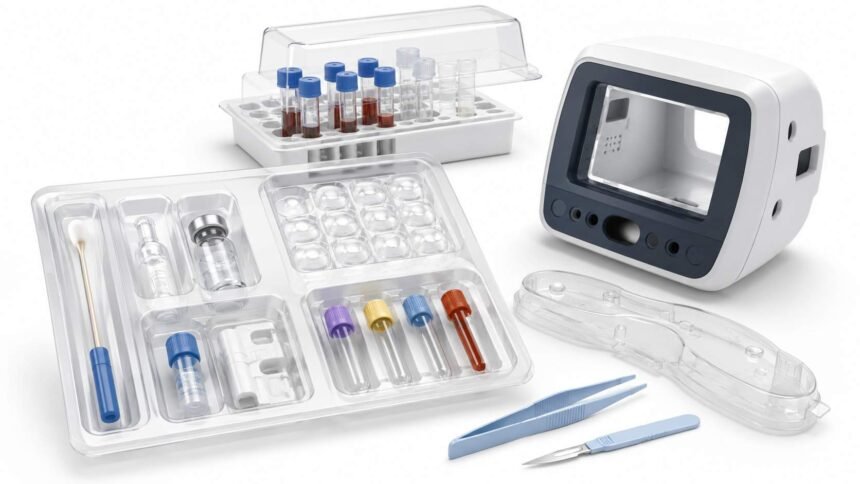
Healthcare does not depend only on doctors, nurses, medicines, and machines. It also depends on the smaller systems that protect medical products before they ever reach a patient. Packaging, trays, covers, inserts, panels, and device housings may look simple, but they play a real role in safety, storage, transport, and daily clinical workflow.
This is where thermoforming becomes important. It is a plastic forming process that turns heated plastic sheets into shaped parts using a mold, vacuum, or pressure. Once the plastic cools, the part is trimmed, finished, checked, and prepared for use. In healthcare, this process can support everything from medical packaging and diagnostic kits to laboratory trays and protective medical device covers.
The value is not just that thermoforming creates plastic parts. The real value is that it helps healthcare products stay organized, protected, lightweight, and easier to handle in environments where mistakes, contamination, delays, or poor storage can create serious problems.
Why Plastic Design Matters In Healthcare
In healthcare, design is not only about how something looks. It is about how safely and reliably it can be used. A medical tray must hold items in place. A diagnostic kit insert must separate components clearly. A device housing must protect sensitive equipment. A laboratory sample tray must reduce confusion during handling.
Poor design can create avoidable friction. A tray that allows parts to move during shipping may lead to damage. Packaging that is hard to open may slow down clinical staff. A device cover that does not fit properly may expose equipment to dust, impact, or handling damage. These small issues can affect workflow, cost, and safety.
Thermoforming helps solve many of these problems because it allows plastic parts to be shaped around the actual product. Instead of using generic boxes or loose inserts, healthcare manufacturers can create fitted trays, protective cavities, clear compartments, and lightweight covers that support safer use.
What Thermoforming Means In Simple Terms
Thermoforming starts with a plastic sheet. The sheet is heated until it becomes flexible. It is then shaped over a mold using vacuum or pressure. After cooling, the plastic keeps the shape of the mold. Extra material is removed, and the finished part is inspected.
This process is commonly used for packaging, trays, covers, panels, and housings. For healthcare products, it is especially useful when the part needs a clean shape, a fitted surface, or an organized layout.
Unlike some plastic manufacturing methods, thermoforming can be suitable for larger parts and practical production runs without extreme tooling costs. That makes it useful for healthcare suppliers that need custom packaging or functional plastic parts without turning every project into a long and expensive manufacturing program.
How Thermoforming Supports Medical Packaging
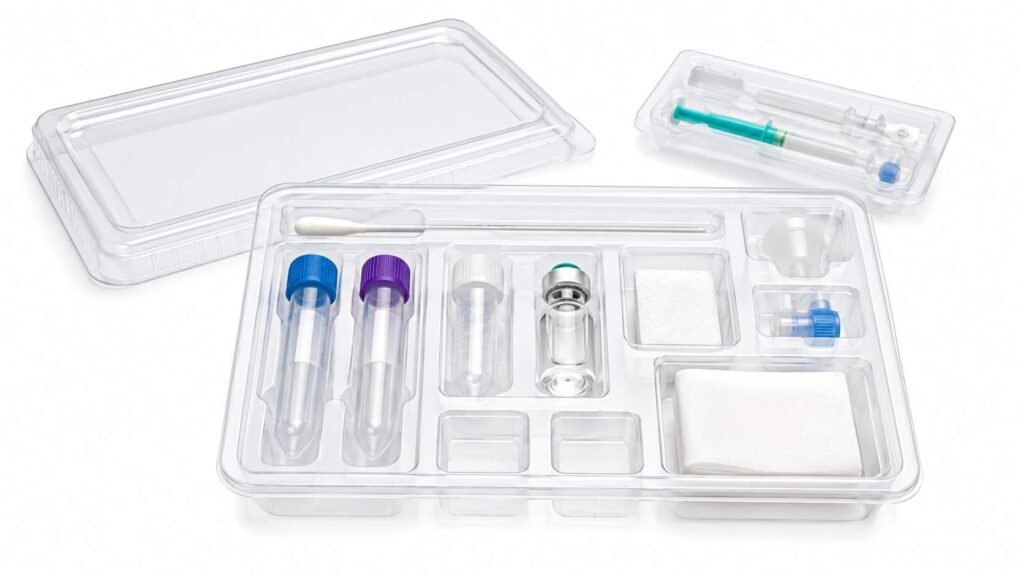
Medical packaging has a difficult job. It must protect the product, support handling, and help users understand what is inside. In some cases, it also needs to support clean presentation or sterile barrier systems, depending on the product type and regulatory requirements.
Thermoformed packaging can help by creating shaped compartments that keep items separated. This is useful for diagnostic kits, test components, single-use medical tools, sample collection sets, and healthcare accessories.
For example, a diagnostic kit may contain swabs, tubes, caps, labels, instructions, and collection tools. If everything is loose inside a box, the user may waste time sorting items or may handle the wrong component first. A thermoformed insert can place each item in a clear position, making the kit easier to understand and use.
This is especially helpful in busy clinics, mobile testing settings, and laboratories where staff need speed without confusion.
Why Medical Devices Need Better Plastic Parts
Medical devices often need housings, covers, panels, guards, or protective shells. These parts may not perform the medical function directly, but they protect the device and support the user experience.
A lightweight device housing can make equipment easier to move between rooms. A protective cover can reduce damage during storage or transport. A shaped panel can make a device easier to clean or handle. For portable medical devices, weight and comfort matter because the product may be used in homes, ambulances, clinics, or community care settings.
This wider shift toward lightweight components is not limited to healthcare. One market report notes that 64% of automotive production now depends on lightweight materials to improve performance and efficiency. Healthcare has different goals, but the same basic idea applies: reducing unnecessary weight can improve usability, transport, and long-term product handling.
For healthcare brands, lighter does not mean weaker. It means the design must use the right material, thickness, structure, and finishing quality for the intended use.
Supporting Clinics With Practical Product Design
Clinics need products that are simple to store, quick to access, and easy to handle. A busy clinical setting is not the place for confusing packaging or poorly organized supplies.
Thermoformed trays and inserts can help clinics by keeping products arranged logically. This can reduce handling time and make supplies easier to identify. For example, wound care kits, sample collection kits, dental tools, small device accessories, or procedure-related items may all benefit from fitted packaging.
Good packaging also helps with inventory control. When each item has a clear space, staff can quickly see whether something is missing. This matters in healthcare settings where missing parts can delay care or create extra stress for staff.
A clinic may never think about the manufacturing process behind a tray or cover, but it will notice when the product is easier to store, open, use, and dispose of correctly.
Supporting Labs With Organization And Protection
Laboratories depend heavily on organization. Samples, tubes, small containers, testing parts, and accessories must be handled carefully. Confusion can cause delays, retesting, wasted materials, or documentation problems.
Thermoformed trays can help labs by holding components in fixed positions. They can also protect delicate items during shipment between suppliers, clinics, and testing facilities.
For lab teams, the benefit is not only protection. It is also consistency. When packaging looks and functions the same every time, staff can build a reliable workflow around it. That consistency can support training, reduce handling mistakes, and make repetitive tasks easier to manage.
A well-designed tray is not just a container. It is part of the workflow.
Patient Safety Starts Before The Product Is Used
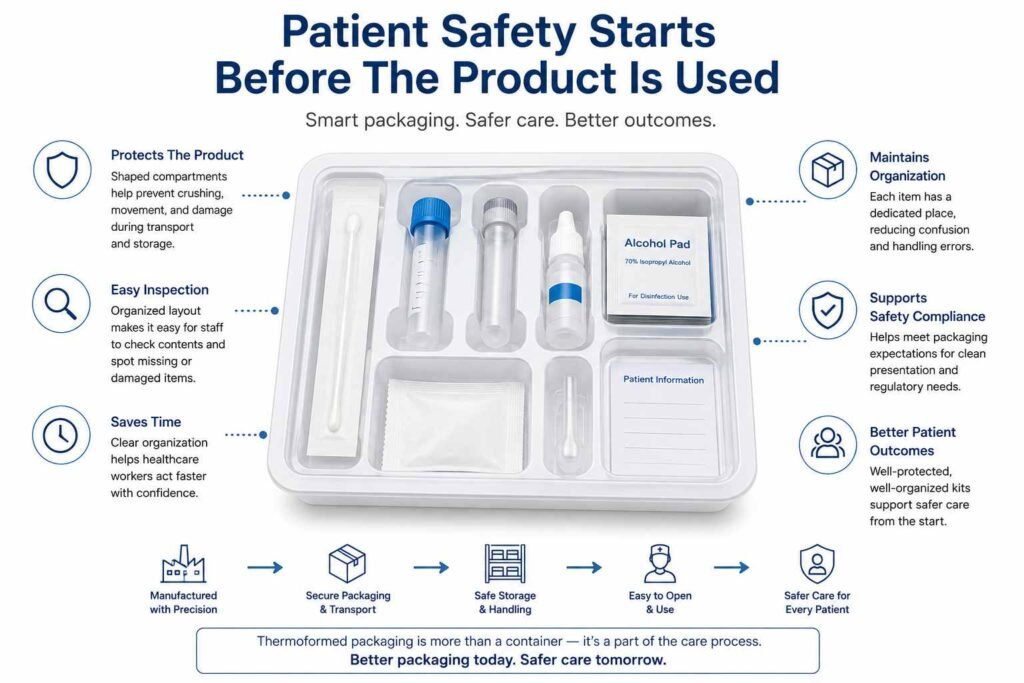
Patient safety is often discussed at the point of care, but many safety decisions happen earlier. The way a medical product is packaged, shipped, stored, opened, and handled can influence whether it reaches the patient in good condition.
Thermoformed packaging can support patient safety by helping protect products from crushing, movement, and poor organization. It can also make the product easier for staff to inspect before use. If a kit is arranged clearly, missing or damaged items may be noticed sooner.
This matters because healthcare workers often operate under time pressure. Good packaging should not require them to guess, sort, or struggle. It should make the correct action easier.
That is one reason plastic thermoforming can be valuable for healthcare product development. It allows packaging and components to be shaped around the actual use case instead of forcing clinical users to work around generic packaging.
Material Choice Matters
Not every plastic is suitable for every healthcare product. Material selection depends on the product’s use, storage conditions, cleaning requirements, strength needs, visibility needs, and regulatory expectations.
Some parts may need clear plastic so users can see the contents. Others may need impact resistance. Some may need chemical resistance. Some may need to be lightweight but rigid enough to protect the item inside.
The design team must also think about edges, surface finish, thickness, and how the product will be opened or handled. A poorly finished part can create frustration or even safety concerns. A well-designed part feels simple because the difficult design decisions have already been solved before it reaches the clinic or lab.
Thermoforming And Sustainability In Healthcare
Healthcare creates a difficult sustainability challenge. Products must be safe, clean, reliable, and practical, but waste also matters. Thermoforming can help reduce unnecessary material use when parts are designed carefully.
A fitted tray may use less material than bulky protective packaging. A lightweight cover may reduce shipping weight. Better product protection may reduce damage and replacement waste. These benefits depend on the design, material, and production process.
Other industries are also trying to reduce weight and material waste. The same conversation is happening in sectors such as transport, packaging, construction, and Renewable energy, where lighter components can improve logistics and reduce operating burdens.
Healthcare cannot copy every manufacturing trend directly, because safety and regulation come first. Still, smarter material use can support both practical healthcare needs and wider sustainability goals.
Where Thermoforming Has Limits
Thermoforming is useful, but it is not the answer for every healthcare product. It works best for parts with a formed surface, such as trays, covers, packaging inserts, panels, and certain housings.
It may not be the best option for very complex internal structures, heavy load-bearing parts, or products that need detailed features on multiple sides. In those cases, another process may be more suitable.
This is why early planning is important. Before choosing thermoforming, manufacturers should consider the product’s use, expected volume, cleaning needs, regulatory category, packaging requirements, and material performance.
The best results come when healthcare teams, designers, engineers, and manufacturers work together early instead of treating packaging as an afterthought.
Final Thoughts
Thermoforming may sound like a manufacturing topic, but it has a clear place in healthcare. It supports safer packaging, better product organization, lighter medical device parts, cleaner workflows, and more practical handling in clinics and labs.
For patients, the benefits are mostly invisible. They may never notice the tray that protected a diagnostic kit, the housing that made a device easier to move, or the packaging that helped staff find the right component quickly. But those design choices still matter.
In healthcare, small details can support better systems. Thermoformed medical packaging and plastic parts are one example of how thoughtful manufacturing can help protect products, support clinical teams, and contribute to safer patient care.