

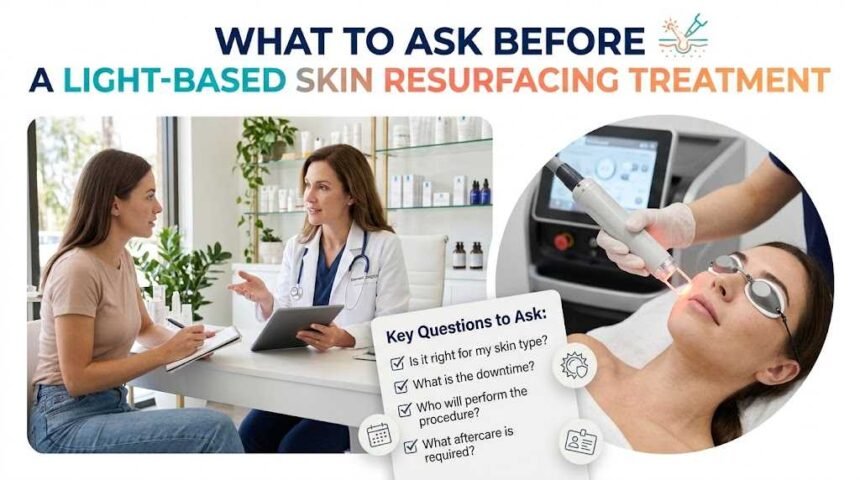
Light-based skin resurfacing can address concerns such as uneven tone, rough texture, mild acne marks, fine lines, and sun-related discoloration. It is still a medical procedure, so the best starting point is a consultation that considers your skin, health history, schedule, and recovery tolerance. Comparing recovery expectations across aesthetic services, including advanced body-contouring techniques, can also reinforce an important principle: treatments should be selected for the individual, not because they are described as quick or easy. Lighter treatment may involve less healing than a deeper resurfacing procedure, but it can still cause redness, dryness, swelling, sensitivity, or temporary changes in texture. Clear answers before treatment can help you decide whether the likely benefits, recovery needs, and possible risks fit your goals. It is also helpful to remember that the word “laser” does not describe one single experience. Different devices, wavelengths, settings, and treatment plans can produce widely varying levels of visible recovery and timelines for results.
Why Treatment Planning Matters
A consultation should review the main concern you want to improve, current skincare products, medication use, recent procedures, past reactions, and realistic expectations. Laser and light treatments are used for a range of concerns, but ablative and non-ablative approaches differ in intensity and recovery time. A provider should explain which approach is being considered and why it is appropriate for your skin. Good planning also means discussing the practical side of treatment. For example, a person with an outdoor job, an upcoming vacation, a wedding, or frequent exercise commitments may need to plan differently from someone who can stay indoors and limit activity for several days. If treatment involves the face, even mild redness or flaking may matter more to someone whose work requires frequent in-person meetings or video calls.
Start With the Main Skin Concern
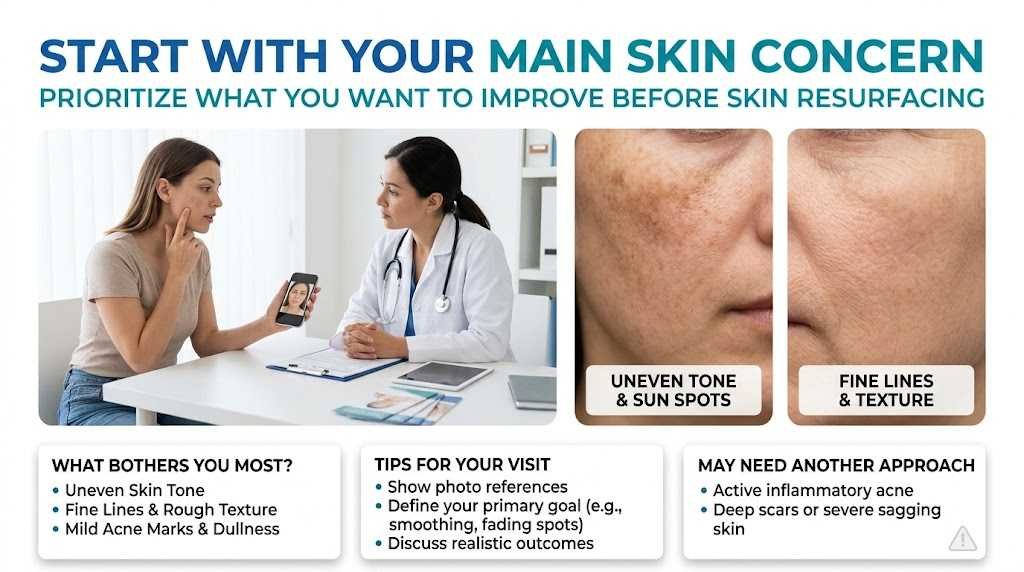
Be specific about what bothers you most. Common reasons people consider resurfacing include uneven skin tone, sun-related discoloration, dullness, rough texture, fine lines, and mild acne marks. Deeper scars, significant skin laxity, active inflammatory acne, or an untreated skin condition may call for another approach. Light-based treatments can improve the appearance of some concerns, but they do not correct every type of scar or sagging skin.
Photos can be useful during a consultation, especially if the concern changes over time or is more noticeable in certain lighting. Explain whether your priority is softening a scar, reducing the look of spots, improving makeup application, or achieving a generally smoother appearance. A clear goal makes it easier to discuss what degree of improvement is realistic, whether a series of sessions may be considered, and whether combination care may be more appropriate than resurfacing alone.
Questions to Ask During a Consultation
- What concern is this treatment designed to address?
- What type of device or light-based treatment is planned?
- How much visible redness, swelling, dryness, or peeling is typical?
- Which skincare products and medications should be paused?
- When can I return to makeup, exercise, work, and normal sun exposure?
- Which symptoms should lead me to call the office?
- Are there alternatives that may better suit my skin, budget, or recovery schedule?
- How many treatments, if any, are commonly considered for my specific concern?
- Who will perform the procedure, and what experience do they have with my skin type and concern?
Factors That May Affect Candidacy
Share a complete and current health history. Active acne, eczema flares, open wounds, a history of cold sores, recent tanning, pregnancy or breastfeeding, immune conditions, unusual scarring, and certain medications may change the plan or require delaying treatment. This is also the time to disclose prescription creams, acne treatments, exfoliating products, and supplements. Do not assume that an over-the-counter product is unimportant. Retinol, acids, exfoliating scrubs, benzoyl peroxide, and products that sting or dry the skin may affect preparation or recovery instructions. Similarly, tell the provider about a recent chemical peel, waxing, facial treatment, or another energy-based procedure. Giving the skin adequate time to settle may reduce avoidable irritation and make it easier for the provider to assess your baseline skin condition.
Skin Tone and Pigment Risk
Any procedure that irritates the skin can lead to pigment changes in some people. This deserves particular attention for people who have experienced post-inflammatory darkening, melasma, or prior discoloration after irritation. A careful provider may adjust settings, recommend preparation, postpone treatment after sun exposure, or suggest an alternative. The possible risks of skin rejuvenation and resurfacing include pigment irregularities, infection, burns, scarring, and delayed healing. Skin tone alone should not be treated as a simple yes-or-no measure of candidacy. Instead, treatment selection should account for an individual history of dark marks, sensitivity, tanning, and previous responses to procedures. Sun protection is especially important before and after resurfacing because ultraviolet exposure can worsen discoloration and make it harder to evaluate the true result of treatment.
What Recovery May Look Like
- Right after treatment: Warmth, redness, tightness, or mild swelling may occur.
- Early healing: Skin can feel dry, rough, or more sensitive than usual.
- Surface shedding: Flaking or small areas of peeling may develop as the skin recovers.
- Later recovery: Tone and texture may continue settling over days or weeks, depending on the treatment.
Do not rely on phrases such as “no downtime” without asking what that means in practice. Ask whether redness may still be visible, whether makeup is permitted, and what happens if your recovery takes longer than expected.
Recovery is not always linear. A treated area may look calmer one day and feel drier or more textured the next as surface cells shed. That does not automatically mean something is wrong. Still, it is one reason to follow the instructions given for your particular procedure rather than comparing your skin to someone else’s online. Deeper procedures can involve more extensive visible healing, while gentler treatments may have shorter downtime but require patience as changes emerge.
Build a Simple Aftercare Plan
Your treating provider’s instructions should come first. In general, a recovery plan may include gentle cleansing with lukewarm water, a bland moisturizer that does not sting, and avoiding picking, scrubbing, or peeling skin. Strong exfoliants, retinoids, acne medications, fragranced products, and potent vitamin formulas may need to be paused until the skin has recovered. Limiting heat exposure, strenuous exercise, and direct sun exposure during early healing may also be advisable. Prepare these basics before the appointment so you are not shopping while your skin is sensitive. Use only products approved by the treating office, particularly if a procedure leaves the skin raw or significantly compromised. Avoid introducing a new serum, mask, essential oil, or home remedy during recovery, since a reaction can make it difficult to determine whether the issue is normal healing, irritation, or an allergy.
Normal Healing Versus Warning Signs
Changes That May Be Expected
- Mild redness, warmth, dryness, tightness, or temporary sensitivity.
- Light swelling or a rough, flaky surface during healing.
- Gradual fading of redness or pinkness rather than an immediate return to your usual skin color.
Changes That Need Prompt Medical Advice
- Worsening pain, severe burning, blistering, or open sores.
- Rapidly increasing swelling, pus, spreading redness, or fever.
- Skin changes that are not improving as your provider said to expect.
When in doubt, contact the treating office and describe the timing, location, and progression of the symptom. If the office asks for photographs, take them in clear, consistent lighting without applying makeup or filters. Early communication can help the provider determine whether reassurance, a change in skincare, or an in-person evaluation is appropriate.
How to Prepare for a Smoother Recovery
- Book treatment when you can allow for quiet recovery days.
- Avoid intentional tanning and disclose recent sun exposure.
- Bring a list of medications and all regular skincare products.
- Ask whether a history of cold sores requires preventive treatment.
- Have gentle cleanser, moisturizer, and recommended sun protection ready beforehand.
- Arrange your calendar so you do not feel pressured to wear makeup, exercise intensely, or spend extended time outdoors too soon.
When Another Option May Make More Sense
Resurfacing is not automatically the best answer. Depending on the concern, a clinician may recommend topical treatment, chemical exfoliation, microneedling, injectables, another energy-based option, or no procedure at that time. For a broader overview, laser skin resurfacing options include both ablative and nonablative treatments with different recovery profiles. For example, active acne may need to be controlled before focusing on leftover marks. In contrast, a person primarily concerned about volume loss or pronounced laxity may need a different discussion altogether. Choosing a less intensive option can sometimes be the better fit when pigment risk, recent sun exposure, a busy schedule, or a compromised skin barrier makes aggressive resurfacing less suitable.
Frequently Asked Questions
Can Someone Work the Next Day?
Some people can return quickly, while others prefer more time because redness, dryness, or swelling is noticeable. The answer depends on treatment intensity, your response, and your work environment. Ask about visible recovery and physical comfort, as both can affect whether next-day work feels practical.
Does More Peeling Mean Better Results?
No. Visible peeling is not a measure of success. More irritation can also mean greater discomfort and a higher risk of adverse effects. The goal is an appropriate treatment response, not the most dramatic possible reaction.
What if Recovery Seems Unusual?
Contact the treating provider instead of relying on online photos or home remedies. Prompt guidance is especially important for persistent pain, drainage, spreading redness, or sudden changes in the treated area.
Conclusion
A well-planned resurfacing treatment begins with honest questions, realistic expectations, and a clear understanding of your skin’s needs. Before moving forward, consider your primary goal, current skin concerns, medical and skincare history, and any sensitivities that could affect the treatment process. It is also important to discuss the expected results, possible side effects, recovery period, and recommended aftercare with a qualified skincare professional. Different resurfacing methods vary in intensity, so the right option depends on factors such as your skin type, tolerance, and the amount of downtime you can manage. Proper aftercare, including gentle cleansing, moisturizing, and sun protection, can help support the healing process and reduce the risk of irritation. Avoid rushing into a procedure simply because it is popular or promises quick results. In some cases, a less intensive treatment may be more appropriate, while in other situations, the procedure may need to be postponed until the skin is ready. Taking time to assess your options and follow professional guidance can help you make a safer, more informed decision that aligns with your skincare goals.
Disclaimer: This article is for general information only and is not medical advice. Speak with a qualified dermatologist or licensed provider about your own skin before starting any treatment.