

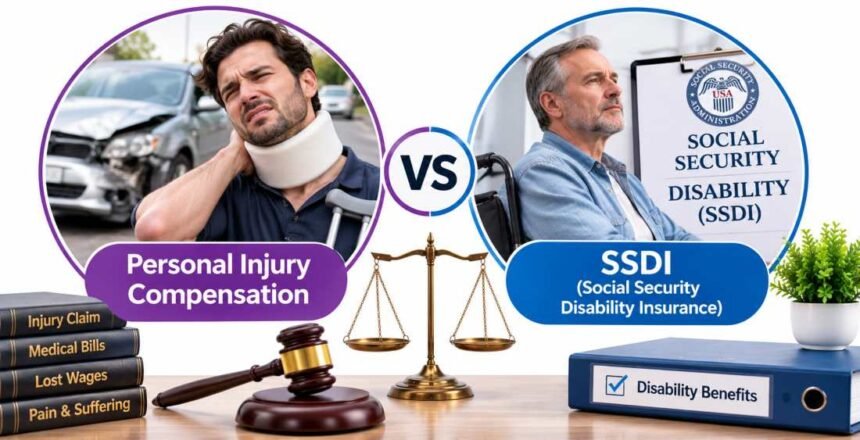
A serious accident can affect almost every part of your life. You may face hospital bills, lose income while recovering, and find that returning to work is harder than expected. If someone else caused the accident, you may have the right to seek personal injury compensation. If your injuries leave you unable to work for a long time, Social Security Disability Insurance (SSDI) may also be an option.
Although both can provide financial support to victims in Nevada, they work in different ways. One is based on an injury and who caused it, while the other depends on your work history and medical condition. Understanding the difference can help you know which benefits to seek and whether you may qualify for both.
1. Personal Injury Compensation Depends on Who Caused the Accident

Personal injury compensation is money you may receive after being harmed because of another person’s careless or wrongful actions. For example, a driver who causes a crash, a property owner who fails to fix a dangerous hazard, or a company that sells a faulty product may be held responsible for the harm they cause.
The purpose of compensation is to help cover the losses linked to the injury. The amount depends on the facts of the case, the evidence, and the laws that apply. You generally need to show that another party was legally responsible for your injury. The American Bar Association’s guide to personal injury claims explains the types of damages that may be available when someone wins a case.
2. SSDI Is Based on Your Work History and Disability
SSDI works differently from personal injury compensation because it is a federal benefit linked to Social Security taxes you paid while working. You do not have to prove that another person caused your medical condition. Instead, you must meet the Social Security Administration’s rules for work credits and disability.
In general, your medical condition must prevent you from doing substantial work and must have lasted, or be expected to last, at least 12 months or result in death. The SSA also considers whether you can return to your past work or adjust to another type of work.
This means a person may qualify for SSDI after a car accident, workplace injury, or serious illness, even if no one else is legally responsible. However, an injury alone does not guarantee approval. The medical evidence must show how the condition limits the person’s ability to work.
The Social Security Administration’s eligibility guide explains the work and medical rules. Its 2024 annual report also shows that more than 8.6 million people received Social Security disability benefits in December of that year.
3. You May Be Able to Receive Both
A common question is whether receiving personal injury compensation prevents someone from getting SSDI. In many cases, a person can receive both because the programs serve different purposes.
For example, imagine that another driver causes a serious accident. You file a personal injury claim to recover medical costs, lost wages, and other damages. At the same time, your injuries prevent you from working for more than a year. If you meet Social Security’s work and medical rules, you may also qualify for SSDI.
However, there is an important difference between a personal injury settlement and workers’ compensation. Workers’ compensation and certain other public disability payments can reduce SSDI benefits when the combined payments go above a set limit. The SSA generally does not apply that same reduction to ordinary personal injury compensation from a third-party claim.
This is why it helps to identify exactly what type of payment you are receiving before making financial plans.
4. A Settlement May Affect SSI Differently
Although SSDI and Supplemental Security Income (SSI) are both Social Security programs, their financial rules are not the same. SSDI is based mainly on work history and disability, while SSI is designed for people with disabilities who have limited income and resources.
A personal injury settlement may affect SSI because the money can count as income or become a resource, depending on when it is received and how it is handled. This could reduce or stop SSI payments if the person’s countable resources go above the program limit.
The rules can be complicated, especially when a settlement includes money for medical costs, legal fees, or future needs. Before accepting or spending a settlement, speak with a lawyer or qualified benefits adviser who understands how it may affect your SSI eligibility.
5. Evidence Needed for Each Claim Is Different
Both types of claims depend on good records, but the evidence serves different purposes. For a personal injury case, you may need accident reports, witness statements, photographs, medical bills, and proof of lost income. These records help show how the accident happened, who was responsible, and what losses followed.
For SSDI, the main focus is your medical condition and how it affects your ability to work. Useful records may include:
- Doctor and specialist reports
- Test results and treatment history
- Medication records and side effects
- Notes about physical or mental limits
- Information about your past jobs and daily activities
People who need help understanding which medical records support an SSDI application may consult an experienced SSD law firm in Nevada. The right guidance can help applicants identify gaps in their records and explain how their condition affects their ability to maintain employment.
Some documents may support both claims, but a successful personal injury case does not automatically prove that you meet Social Security’s disability rules. Each claim needs to be prepared for its own legal standard.
6. Get Guidance Before Making Important Decisions
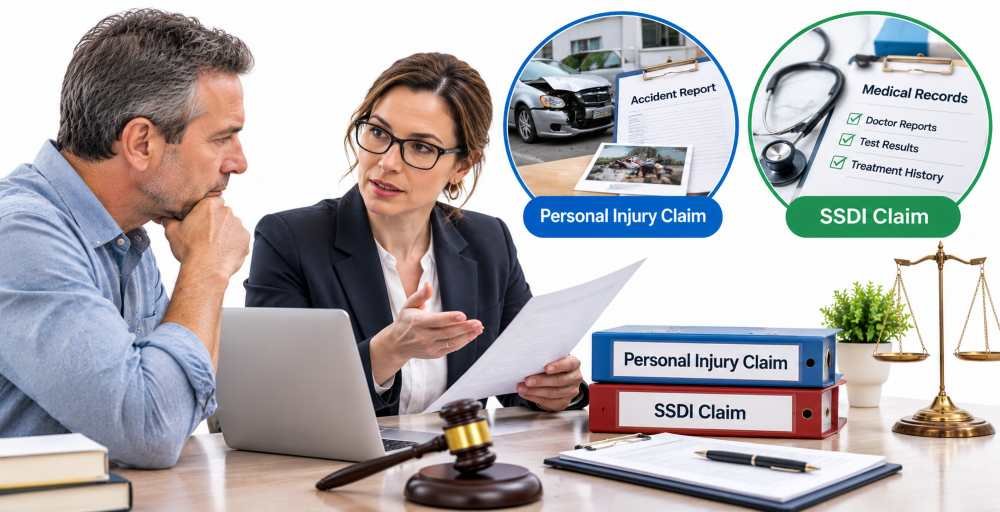
Managing an injury claim and an SSDI application at the same time can be stressful. You may have to deal with insurance companies, medical appointments, benefit forms, and strict deadlines while trying to recover.
If you are handling an SSDI application or appeal in Nevada, it can help to understand the process before responding to requests from the SSA. Practices like Cannon Disability Law assist applicants with understanding SSDI and SSI rules, gathering medical records, filing applications, and preparing for hearings when a claim is denied.
It is also wise to tell your personal injury lawyer if you are applying for disability benefits. The timing and terms of a settlement may affect your finances or other benefits, so both sides should understand your situation before important decisions are made.
Bottom Line
Personal injury compensation and SSDI can both help after a serious injury, but they are not the same type of support. One seeks payment for harm caused by another party, while the other provides benefits to eligible workers who can no longer maintain substantial employment.
You may qualify for both, but the rules for each must be considered separately. Understanding them early can help you protect your rights and plan for your financial needs.