

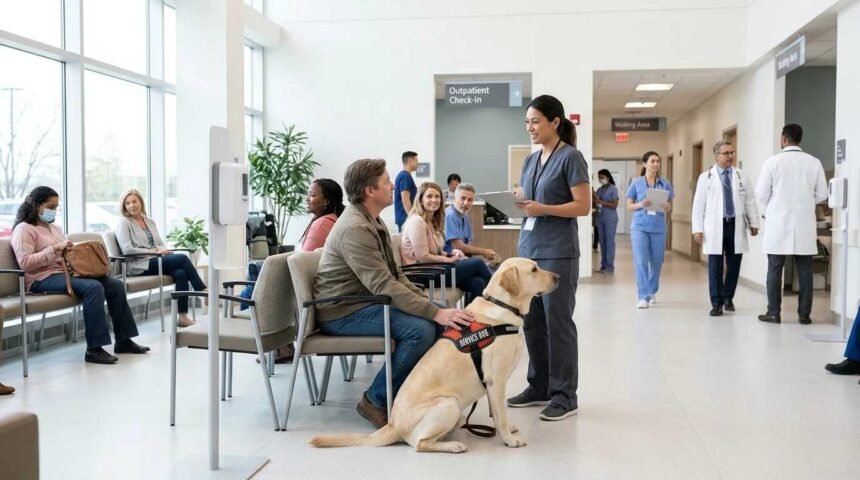
Hospitals can feel extra stressful and overwhelming when you already struggle with anxiety, panic attacks, or other mental health challenges. Having a trusted dog nearby may help you feel calmer while you wait for treatment or to visit a loved one.
However, hospital rules for animals are stricter than the rules in many other public places. This is mainly because patients may have allergies, weakened immune systems, open wounds, or other health concerns.
So, are emotional support dogs allowed in hospitals? Let’s look at the rules, possible exceptions, and what you should know before bringing your dog with you.
Are Emotional Support Dogs Allowed In Hospitals? It Really Comes Down To The Hospital
Emotional support dogs are not considered service animals under the Americans with Disabilities Act (ADA). They provide comfort through their presence, but they’re not necessarily trained to perform a specific task related to a disability, like guiding a blind person or alerting someone before a seizure.
Because of this difference, hospitals are generally not required to let emotional support dogs enter. A letter from a healthcare professional may explain why a person needs the animal, but it doesn’t give the dog the same public-access rights as a trained service dog. The Department of Justice’s frequently asked questions about service animals explain this distinction in more detail.
Since the law doesn’t force the issue, each hospital sets its own rules. Some places are pretty strict and stick to a standard no-pets policy. Others are more flexible and will look at requests case by case, especially in situations like long-term care, hospice, or pediatric units where the patient’s comfort matters a lot.
If you’re hoping to bring your emotional support dog, call the hospital ahead of time and ask directly. Every facility handles this differently, so what worked for a friend at one hospital might not fly somewhere else.
If you’re new to learning about emotional support animals, we recommend taking a look at the emotional support animal guide on emotionalsupportanimal.com. We’ve found them to be an incredibly reliable source for learning the key information about emotional support animals.
Why Hospitals May Restrict Emotional Support Dogs
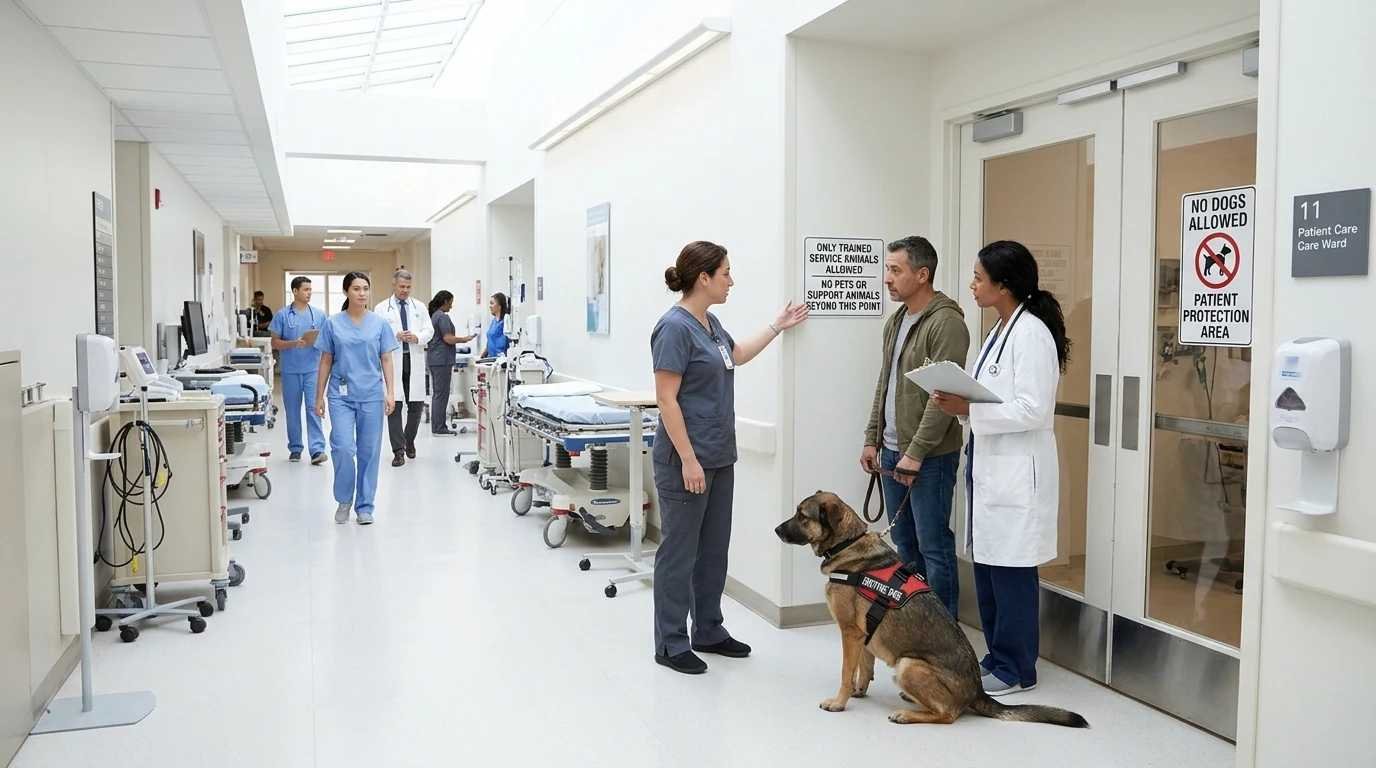
Hospitals have to protect patients who are especially vulnerable to infection. An animal may carry dirt, germs, fleas, or other contaminants into a healthcare setting. Even a clean, healthy dog may raise concerns for patients with weak immune systems. Allergies and fear of dogs can also affect other patients, visitors, and staff.
Space is another issue. Hospital rooms and treatment areas may already contain medical equipment, cords, carts, and several healthcare workers. A dog could accidentally block a walkway or make it harder for staff to respond quickly.
For these reasons, many facilities limit animals to approved service dogs and animals participating in organized therapy programs.
Are Therapy Dogs Treated Differently?
Yes, therapy dogs are not the same as emotional support dogs. A therapy dog usually visits hospitals as part of an approved program, such as those run by organizations like Pet Partners. The dog and handler may need to complete health screenings, behavior assessments, vaccinations, and infection-control training before visits begin.
Hospital staff plan these visits. Therapy dogs may only enter certain rooms or meet patients who have agreed to the visit. A personal emotional support dog doesn’t automatically receive access simply because therapy dogs are sometimes present in the building.
Can A Hospital Make An Exception For Your Emotional Support Dog?
Some hospitals may consider an emotional support dog on a case-by-case basis. Staff may consider the reason for the request, the dog’s health and behavior, and the condition of nearby patients.
The hospital might also set some limits before allowing your emotional support dog. For example, the dog may only be allowed in a lobby, private room, outdoor courtyard, or another approved space. The facility may ask for vaccination records or require another adult to supervise the dog.
What Should You Do Before Arriving At The Hospital?
Call the hospital before bringing your dog. Ask to speak with patient services, guest services, or the department managing your visit. Explain that the dog is an emotional support animal and not a trained service dog.
If the hospital agrees, ask where the dog may go and what documents are needed. Bring a leash, waste bags, vaccination records, and basic cleaning supplies. The dog should be calm, housebroken, clean, and comfortable around unfamiliar people and equipment.
If the hospital says no, don’t arrive with the dog and expect staff to make an immediate exception.
What If The Dog Is Not Allowed?
You can ask whether a trusted person can care for your emotional support dog nearby. Video calls, familiar blankets, calming music, breathing exercises, or support from a friend may also make your hospital visit easier.
So, Are Emotional Support Dogs Allowed In Hospitals?
They can be, but you’ll need the hospital’s permission first. Emotional support dogs don’t have the same public-access rights as trained service dogs, so a hospital can refuse entry or limit where the dog is allowed.
The best thing to do is call ahead, explain your situation, and ask about the facility’s policy. If the hospital can’t allow your dog inside, ask what other forms of emotional or mental health support are available during your visit. If you are ever in crisis, you can call or text the 988 Suicide & Crisis Lifeline in the US at any time.
Disclaimer: This article is for general information only and is not legal or medical advice. Hospital policies and laws vary, so always check with the facility before your visit.