

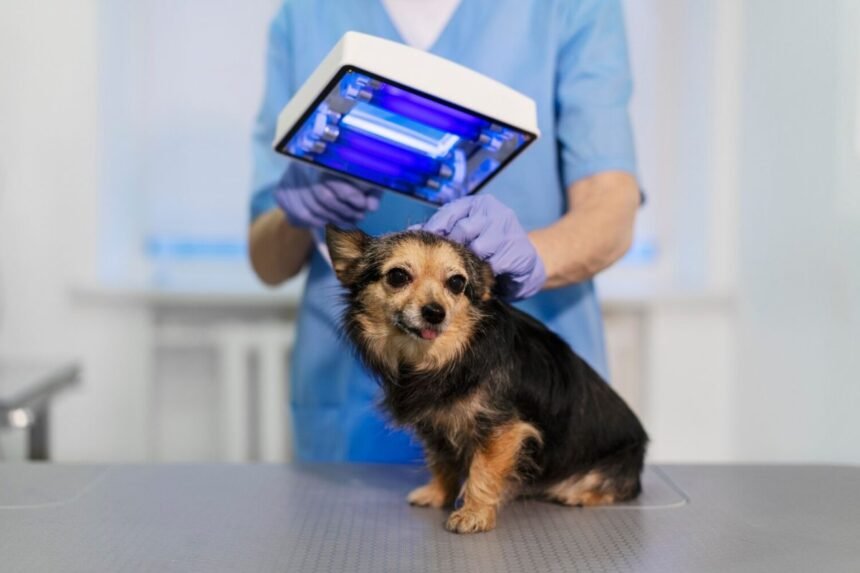
A few years ago, red light therapy was something you’d mostly find in a vet rehab clinic. Now you can scroll past ads for glowing pet wraps and handheld wands almost every day, and a lot of them carry two comforting words: “FDA approved.” For pet parents across the United States trying to help a stiff senior dog or a cat healing after surgery, that label feels like a green light. Here’s the catch. It usually doesn’t mean what you think it means.
So let’s sort it out. Is red light therapy actually safe for dogs and cats? How are veterinary devices regulated? And how do you read those FDA claims without getting played?
Why Red Light Therapy Has Caught On With Pet Owners
Red light therapy, also called photobiomodulation, uses specific wavelengths of red and near-infrared light to reach tissue under the skin. Vets and rehab therapists use it for arthritis, post-surgery recovery, wound care and sore muscles. It’s drug-free, it doesn’t hurt, and most pets happily lie there soaking up the gentle warmth.
Demand isn’t slowing down, either. The American Veterinary Medical Association’s pet ownership survey found that 45.5% of U.S. households owned dogs in 2024, and 32.1% owned cats. That’s a lot of aging hips and creaky knees, and a lot of owners looking for something gentle they can use at home.
So, Is Red Light Therapy Safe for Dogs and Cats?
Short answer: yes, for most pets, as long as the device is well made and you use it sensibly. Home LED devices give off gentle, low-level light, a far cry from the powerful lasers used in surgery. It’s painless and non-invasive, which is why vets often turn to it for senior or sensitive animals. When problems show up, the cause is usually a poorly built device or careless use, not the light itself.
A few things still deserve your attention:
• Eyes. Near-infrared light is invisible, so pets won’t blink or look away. Keep it off their face.
• Heat. Thick or dark fur traps warmth. Stick to the timer and check the skin afterward.
• Strength. Class 3B and Class 4 lasers belong in a clinic with a trained operator.
• Health conditions. Pets with cancer, pregnant animals and very young pets need a vet’s okay first.
How the FDA Actually Regulates Veterinary Devices
This is where most people get tripped up. Here in the U.S., the FDA doesn’t approve devices made for animals. There’s no 510(k), no premarket approval and no review before the product hits the shelf. Companies that only make animal devices don’t even have to register with the agency. The FDA can step in if a product is mislabeled or unsafe, but the job of proving safety and labeling it honestly falls on the manufacturer.
Light-emitting products, especially lasers, still have to meet federal radiation safety rules. That’s about safe output, though, not proof that the therapy works.
So when a pet product says it’s “FDA approved,” that claim simply can’t be true. At best it’s a mix-up. At worst, it’s misleading on purpose. If you’d like a deeper breakdown, There’s No Such Thing as “FDA-Approved” Red Light Therapy for Pets by MedcoVet walks through how these labels get twisted and what to ask before you buy. Since the team builds clinical-grade light therapy designed specifically for dogs and cats, they focus on honest labeling over borrowed badges.
“FDA-Cleared,” “Registered,” and Other Labels That Confuse People
Some “pet” devices are really human devices with a cute dog photo on the box. They might hold a genuine FDA clearance, but it covers a specific human use, not your Labrador’s hips. Here’s a quick decoder:
• FDA approved: a strict review for high-risk human devices. It doesn’t exist for pet devices.
• FDA cleared: the device was shown to be similar to an existing human device. It says nothing about animals.
• FDA registered: the company filed paperwork about where it operates. Nothing about the product was reviewed.
Human settings don’t translate neatly to a 4 kg cat or a 40 kg shepherd, either. Fur blocks light, and doses designed for bare human skin may be way off for your pet.
A Simple Safety Checklist Before You Buy
Since there’s no FDA stamp to lean on, judge the device itself. Look for:
• A design made for animals, with a way to get light through the coat
• Clear instructions on protecting your pet’s eyes
• A session timer, automatic shut-off and a stated maximum surface temperature
• Electrical safety marks from an independent lab, like UL, ETL or CSA
• Guidance based on species, size and coat type
• A written list of when not to use it
• A company that gives straight answers about what, if anything, the FDA reviewed
If a seller dodges that last question, that tells you plenty.
Bring Your Vet Into the Conversation
Even a well-made device isn’t a substitute for a proper diagnosis. Limping, licking at a joint or hiding more than usual can point to several different problems. Your vet can tell you whether red light therapy suits your pet’s condition and help you get the session length and settings right.
Conclusion
Red light therapy can be a safe, gentle option for dogs and cats when the device is built for animals and used with a little common sense. The part worth staying skeptical about is the marketing.
No pet device is FDA approved, so treat that phrase as a red flag rather than a selling point. Ask what was actually reviewed, check the safety details, and loop in your vet. Your pet can’t read the label, but you can.