

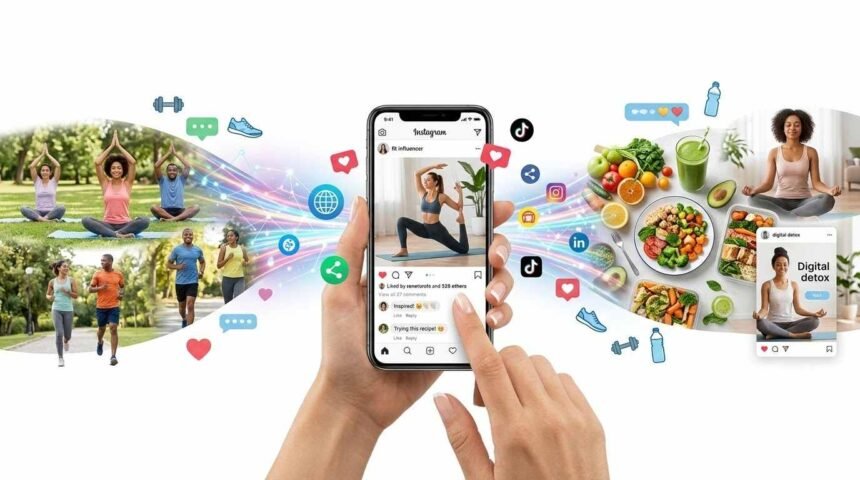
Social media has become a powerful force shaping how people think about and manage their health. Platforms like YouTube Shorts, Instagram Reels, and TikTok are no longer just entertainment hubs—they are widely used sources of information on fitness, nutrition, mental well-being, and everyday healthy habits. With just a smartphone, individuals can access expert advice, practical tips, and motivational content anytime, anywhere.
This shift has made health knowledge more accessible than ever before, allowing people to learn, engage, and take action in ways that were not possible with traditional methods like books or clinic visits. At the same time, the rapid spread of content means users must be mindful about the accuracy of what they consume. As social media continues to influence daily routines and lifestyle choices, understanding its role in promoting healthy habits is more important than ever.
How Social Media Has Reshaped the Way We Approach Health
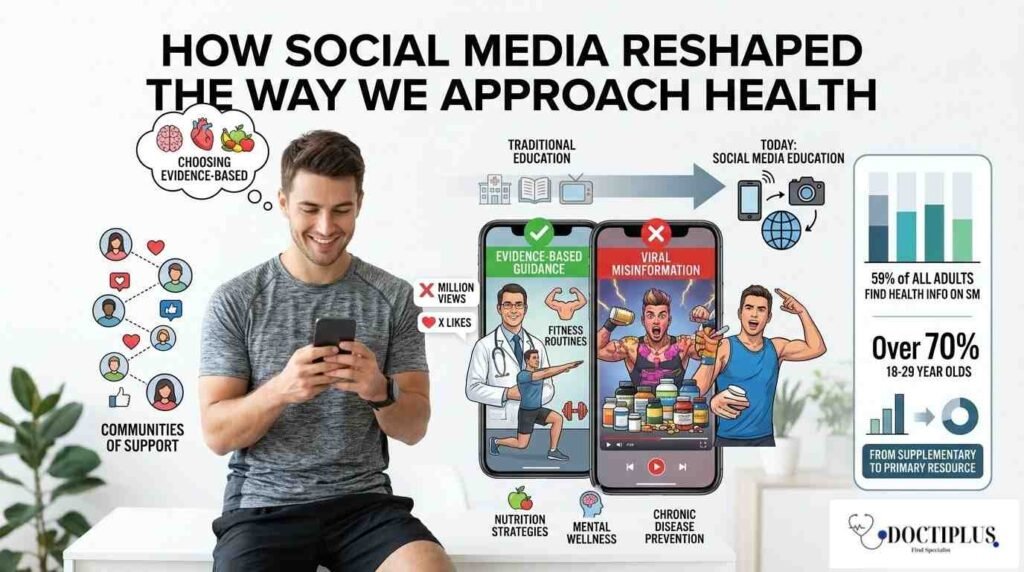
Social media has evolved from a communication tool into one of the most influential health education platforms in the world. Millions of people now turn to YouTube Shorts, Instagram Reels, and TikTok as their first source of information on fitness routines, nutrition strategies, mental wellness, and chronic disease prevention. This shift has democratised access to health knowledge, placing expert guidance within reach of anyone with a smartphone.
The change is significant. Traditional health education relied on clinics, printed materials, and television. Today, a single well-crafted video can reach tens of millions of people within days, inspire meaningful behaviour change, and build communities of support around shared wellness goals. At the same time, the volume and variability of health content online mean that users need to develop the skills to distinguish evidence-based guidance from viral misinformation.
Key statistic: A 2022 survey by the American Psychological Association found that 59 percent of adults reported using social media to find health information. Among adults aged 18 to 29, that figure exceeded 70 percent. Social media is no longer a supplementary health resource; for many, it is the primary one.
Why Health and Wellness Content Flourishes on Social Media
Rising health awareness and chronic disease concern
People today are more health-conscious than at any previous point in recorded consumer behaviour research. Rising rates of type 2 diabetes, cardiovascular disease, obesity, anxiety, and depression have prompted millions of individuals to seek information about prevention and lifestyle modification actively. Social media meets that demand in real time, offering accessible content that does not require a clinic visit, a prescription, or a specialist referral.
Short-form content matches modern attention patterns.
Platforms like TikTok, Instagram Reels, and YouTube Shorts have built their entire architectures around short, digestible video content. A 60-second workout demonstration, a two-minute healthy meal walkthrough, or a 45-second breathing exercise for stress relief fits naturally into how people consume content on mobile devices. This format removes the barrier of time, making health education accessible even for people with demanding schedules.
Two-way engagement creates genuine community.
Unlike television, books, or static websites, social media platforms enable direct interaction between creators and audiences. A fitness professional can post a workout video and receive immediate questions, share modifications, acknowledge progress, and build a genuine supportive relationship with followers. This two-way dynamic transforms passive consumption into active participation, which research consistently links to better health behaviour outcomes.
Algorithm-driven discovery expands reach.
Social media algorithms are designed to surface relevant content to users who have not yet discovered a creator. A person who recently searched for low-carb meal ideas on Instagram may be shown related Reels from registered dietitians they do not yet follow. This organic discovery mechanism means that high-quality, relevant health content can reach people who are actively seeking it without requiring a paid advertising budget.
Important consideration: The same algorithm that surfaces helpful health content also amplifies content that generates engagement through controversy, fear, or extreme claims. Viral health content is not necessarily accurate health content. The sections below include practical guidance on evaluating what you see.
How Each Platform Is Used for Health Promotion
YouTube Shorts: Quick, Credible, and Searchable
YouTube Shorts combines the discoverability of YouTube’s powerful search engine with the short-form video format that mobile users prefer. Health creators use Shorts to deliver focused, actionable content in under 60 seconds, covering topics from quick home workouts and meal prep strategies to sleep hygiene tips and stress reduction techniques.
Because YouTube Shorts live within the broader YouTube ecosystem, they benefit from the platform’s search and recommendation infrastructure. A viewer who finds a helpful Short is one click away from exploring a creator’s full library of longer, more detailed videos. This makes Shorts an effective entry point for building a loyal health-focused audience.
- Best content types for YouTube Shorts: Home workouts without equipment, 60-second meal prep hacks, sleep tips, breathing exercises, posture corrections, daily habit challenges
- Tips for creators: Lead with the most actionable tip in the first three seconds. Include a clear verbal summary at the end. Use captions for accessibility and engagement in silent viewing.
- Tips for viewers: Check the creator’s credentials in their bio or channel description. Look for Shorts that link to more detailed content for context. Search by specific health topics rather than browsing passively.
Instagram Reels: Visual Storytelling for Wellness
Instagram has always been a visually driven platform, and Reels have extended that visual strength into the short-form video space. Health and wellness creators use Reels to demonstrate exercise form, show before-and-after meal transformations, walk through skincare routines, and share personal wellness journeys in a format that is both aspirational and accessible.
For creators who want to produce consistent Reels without needing to appear on camera themselves, AI-powered tools such as invideo Instagram reel maker and other video editor tools allow health educators, fitness coaches, and nutritionists to generate professional-quality videos using AI avatars, voiceovers, and pre-built templates.
Instagram’s interactive features, including polls, question stickers, and story mentions, give creators powerful tools for building dialogue with their audience. A registered dietitian might use a poll to ask followers whether they struggle more with meal planning or portion control, then create a Reel directly addressing the most common response.
- Best content types for Instagram Reels: Exercise demonstrations, healthy recipe tutorials, morning and evening routine walkthroughs, mental health affirmations, supplement myth-busting
- Tips for creators: Use consistent visual branding so followers recognise your content instantly. Add text overlays for key points. Respond to comments within the first hour to boost algorithmic reach.
- Tips for viewers: Save Reels with practical routines to a dedicated health collection. Use the poll and question features to ask creators for clarification. Look for creators who acknowledge limitations and recommend professional consultation.
TikTok: Making Health Accessible to Younger Audiences
TikTok’s algorithm is uniquely effective at surfacing health content to users based on demonstrated interest, even when those users do not follow the creator. This has made TikTok a major discovery platform for health information among adults under 35. Health challenges, transformation stories, nutritional myth-busting, and wellness humour all perform well on TikTok, creating a culture where health engagement feels participatory rather than prescriptive.
TikTok’s duet and stitch features allow users to respond directly to health creators, adding their own experiences, questions, or corrections to existing content. This dynamic has produced valuable peer-driven health conversations, though it also means that misinformation can circulate alongside credible content within the same interaction chain.
- Best content types for TikTok: 7-day wellness challenges, recipe demos with five ingredients or fewer, mental health check-ins, fitness transformation stories, debunking common health myths
- Tips for creators: Participate in trending health challenges to boost discoverability. Use duets to respond to follower questions. Always cite sources for specific health claims, even briefly.
- Tips for viewers: Be cautious of extreme claims, particularly around rapid weight loss, detox protocols, or supplement cures. Use TikTok as a starting point for exploration, not a final authority. Verify any specific health advice with a credible source.
Proven Benefits of Social Media for Health Promotion
1. Increased Access to Health Information
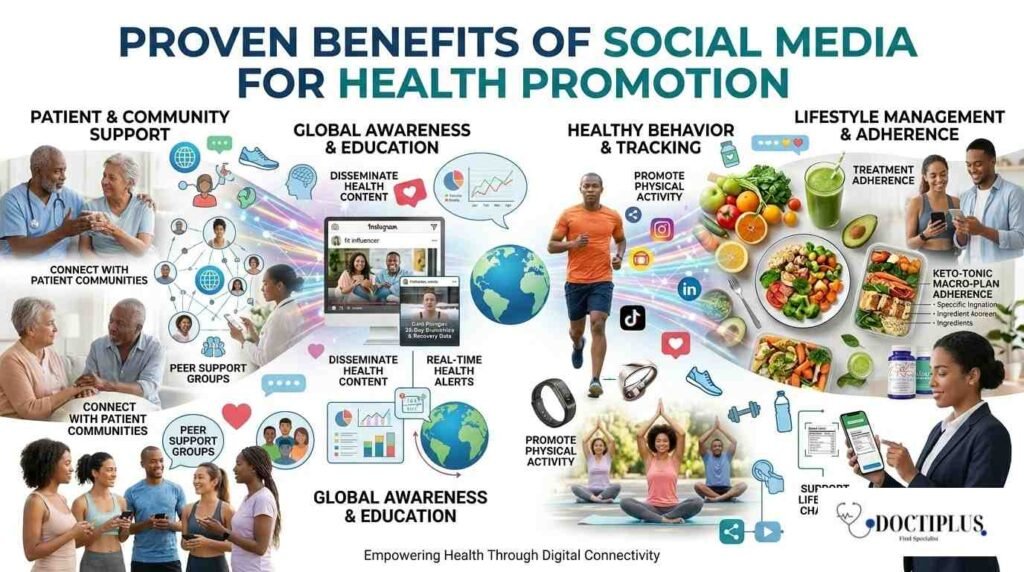
Social media has dramatically reduced barriers to health knowledge. Individuals in areas with limited access to dietitians, personal trainers, or mental health professionals can access expert guidance through social platforms. This is particularly significant for communities where cost, language, or geography have historically limited health education access.
The sheer breadth of available content is also valuable. A person managing type 2 diabetes can find content from endocrinologists, registered dietitians, certified diabetes educators, and others who have lived with the condition, all in the same feed. This multi-perspective approach to health information supports more informed personal decision-making.
2. Accountability and Motivation Through Community
Research published in the Journal of Medical Internet Research has found that individuals who share health goals on social media are significantly more likely to follow through on them than those who keep goals private. The visibility of a public commitment, combined with social encouragement from followers and peers, activates motivational mechanisms that support behaviour change.
Wellness challenges are a particularly effective application of this principle. A 30-day hydration challenge, a step-count competition, or a weekly meal prep accountability group harnesses both social commitment and community support, two of the strongest predictors of sustained lifestyle change.
3. Building Supportive Wellness Communities
Online communities organised around specific health goals, whether managing a chronic condition, losing weight, building strength, or improving mental health, provide a form of peer support that can meaningfully complement clinical care. These communities offer a space where members can share practical strategies, celebrate progress, and offer encouragement during setbacks without the stigma that sometimes accompanies health discussions in offline settings.
Facebook groups, Instagram communities, and TikTok comment sections focused on mental health have been credited by many users with reducing feelings of isolation and providing practical coping strategies between therapy appointments. These communities do not replace professional care, but they can make the space between clinical contacts more manageable.
4. Making Healthy Habits Approachable and Enjoyable
Traditional health messaging has often been clinical, prescriptive, and focused on what people should not do. Social media health content, at its best, reframes healthy living as enjoyable, achievable, and community-supported. A TikTok dance workout, an Instagram recipe Reel, or a YouTube Short demonstrating a five-minute desk stretch makes the entry point to healthier habits feel low-stakes and fun.
This framing matters. Health behaviour change research consistently finds that enjoyment and social connection are among the most powerful predictors of sustained habit formation. Content that makes health feel accessible, rather than demanding, lowers the activation threshold for behaviour change in meaningful ways.
How to Evaluate Health Content on Social Media
Not all health content on social media is created equal. The same platforms that host evidence-based guidance from registered healthcare professionals also host unqualified opinions, product promotion disguised as advice, and genuinely harmful misinformation. Developing basic health content literacy is an essential skill for anyone using social media as a health resource.
Questions to ask when evaluating health content
- Does the creator share their credentials? Look for qualifications such as registered dietitian (RD), certified personal trainer (CPT), licensed therapist (LCSW, LPC), physician (MD, DO), or registered nurse (RN). These titles indicate regulated professional training.
- Does the content cite sources? Credible health creators reference published research, clinical guidelines, or established health organisations such as the WHO, CDC, or NHS rather than relying solely on personal experience.
- Is the claim proportionate? Be sceptical of extreme promises, particularly rapid weight loss, permanent cures, or results achievable without medical supervision. Evidence-based health guidance is generally measured in realistic, sustainable increments.
- Is there a product being sold? Disclosure of sponsored content is legally required in most jurisdictions. When a creator is financially incentivised to recommend a supplement, diet plan, or programme, their recommendation should be evaluated with appropriate caution.
- Does the creator acknowledge limitations and recommend professional consultation? Responsible health creators regularly remind their audience that content is for general education and that individual health decisions should involve a qualified professional.
Warning signs in health content: Claims of rapid, dramatic results with no caveats. Instructions to stop prescribed medications or treatments. Selling proprietary supplements as the core of the health advice. No credentials disclosed. Dismissal of mainstream medical consensus without peer-reviewed evidence.
Practical Guide for Creating Effective Health Content
If you are a health professional, fitness coach, nutritionist, or wellness advocate looking to use social media to share your expertise, the following principles will help you create content that is both effective and responsible.
Content creation principles for health creators
- Lead with value, not virality: Design content around what your audience genuinely needs to know, not what you think will go viral. Practical, actionable content builds loyal audiences more reliably than sensational content.
- Be specific and accurate: Vague health claims are not just unhelpful; they can be harmful. Provide specific guidance backed by evidence and clarify the context in which recommendations apply.
- Acknowledge individual variation: A nutrition recommendation that benefits most people may be inappropriate for someone with a specific medical condition. Regularly remind your audience that your content is general guidance, not personalised advice.
- Disclose partnerships and sponsorships: Transparency about commercial relationships is both a legal requirement and an ethical responsibility. Your audience’s trust is more valuable than any sponsorship fee.
- Engage with comments constructively: When followers share personal health situations in comments, respond with general support and a recommendation to consult a healthcare professional rather than providing individual clinical advice.
- Maintain consistency: Consistent posting builds audience trust and platform reach. Tools like invideo allow health creators to produce professional-quality short-form videos efficiently, making it practical to maintain a regular publishing schedule without a dedicated production team.
Content ideas for health and wellness creators by platform
- YouTube Shorts: Five-minute morning routines, correct vs. incorrect exercise form comparisons, one-ingredient substitution swaps for healthier meals, daily hydration reminders with practical tips
- Instagram Reels: Weekly meal prep walkthroughs, 15-minute full-body home workouts, debunking common nutrition myths, mindfulness practices for beginners, stress management techniques
- TikTok: 30-day wellness challenges with daily check-in format, before-and-after habit formation stories, Q and A response videos addressing follower health questions, recipe transformations making comfort foods healthier
Future of Health Promotion on Social Media
The trajectory of social media health content points toward greater personalisation, more sophisticated AI tools for content creation, and deeper integration between social platforms and digital health technologies. Wearable devices that track sleep, heart rate, and activity are already beginning to integrate with social sharing features, enabling more data-driven personal health storytelling.
Artificial intelligence is also changing the landscape for creators. AI-powered video generation tools now allow health professionals to create consistent, high-quality content across multiple platforms without investing in professional production equipment or technical editing skills. This levels the playing field between individual practitioners and large media organisations, enabling more voices with genuine expertise to participate in the health content ecosystem.
At the same time, growing awareness of health misinformation is driving platform-level responses. YouTube, TikTok, and Instagram have all introduced labelling policies for certain categories of health content, partnerships with health organisations to surface authoritative information, and, in some cases, restrictions on content making unverified medical claims. These measures are imperfect but reflect the direction in which platform governance is moving.
Conclusion
Social media has become one of the most powerful forces shaping how people understand, talk about, and act on health information. For creators with genuine expertise, it offers an unprecedented opportunity to reach people who need accurate, accessible, and motivating health guidance. For individuals seeking to improve their well-being, it offers community, accountability, and practical daily inspiration.
The key to benefiting from social media’s health promotion potential lies in approaching it with critical awareness. Use these platforms as starting points for exploration and motivation, verify important health information with credentialed professionals, and engage with communities that offer genuine support rather than pressure or misinformation.
Whether you are a creator building a health-focused audience or an individual looking for inspiration to make healthier choices, the tools, communities, and content available on today’s social platforms offer real and meaningful support for that journey.
Disclaimer
This article is provided for general informational and educational purposes only. It does not constitute medical, nutritional, psychological, or fitness advice and should not be used as a substitute for consultation with a licensed healthcare provider. Health recommendations vary significantly based on individual circumstances, including age, medical history, fitness level, and existing conditions. Content found on social media platforms, regardless of the credentials of the creator, does not replace personalised professional advice. The mention of specific platforms, tools, or features is for illustrative purposes only and does not constitute an endorsement. Always consult a qualified healthcare professional before making significant changes to your diet, exercise routine, or mental health practices.
References and Resources
- American Psychological Association. (2022). Social Media and Health Information Seeking. APA Public Affairs Research. https://www.apa.org
- Chou W-YS, et al. (2013). Social Media Use in the United States: Implications for Health Communication. Journal of Medical Internet Research, 15(1). https://doi.org/10.2196/jmir.1249
- Moorhead SA, et al. (2013). A New Dimension of Health Care: Systematic Review of the Uses, Benefits, and Limitations of Social Media for Health Communication. Journal of Medical Internet Research, 15(4). https://doi.org/10.2196/jmir.1933
- Maher CA, et al. (2014). Are Health Behaviour Change Interventions That Use Online Social Networks Effective? A Systematic Review. Journal of Medical Internet Research, 16(2). https://doi.org/10.2196/jmir.2952
- YouTube Health. Health Information Policies and Partnership with Health Organisations. https://health.google/intl/en_us/health-research/youtube-health
- TikTok Newsroom. Health and Safety on TikTok: Content Guidelines. https://newsroom.tiktok.com/en-us/health-wellness
- Instagram Help Centre. Health-Related Content Policies. https://help.instagram.com
- Academy of Nutrition and Dietetics. Find a Registered Dietitian. https://www.eatright.org/find-a-nutrition-expert
- American College of Sports Medicine. Certified Personal Trainer and Exercise Professional Lookup. https://www.acsm.org
- World Health Organization. Health Promotion and Disease Prevention Resources. https://www.who.int/news-room/fact-sheets
- Centers for Disease Control and Prevention (CDC). Health Communication and Social Media. https://www.cdc.gov/healthcommunication/socialmedia
- invideo. AI-Powered Video Creation for Health and Wellness Creators.
- Pew Research Center. Social Media Use in 2023: Platforms, Demographics, and Health Content. https://www.pewresearch.org/internet/topic/social-media
- Reuters Institute for the Study of Journalism. Digital News Report: Health Misinformation and Social Media. https://reutersinstitute.politics.ox.ac.uk