


Did you know that 92% of people in many developed countries do not meet the daily recommended intake for at least one essential vitamin or mineral? Despite having access to more food than any generation in history, modern lifestyles are quietly leaving our bodies depleted of the nutrients they need to function well.
This is not simply a matter of eating less healthily than we should. It is a combination of how food is produced, how stress affects the body, how sleep and digestion interact, and how far modern diets have shifted from what human physiology actually requires. The result is a widespread, largely invisible epidemic of nutritional inadequacy that contributes to fatigue, poor immunity, mood disorders, and long-term disease risk.
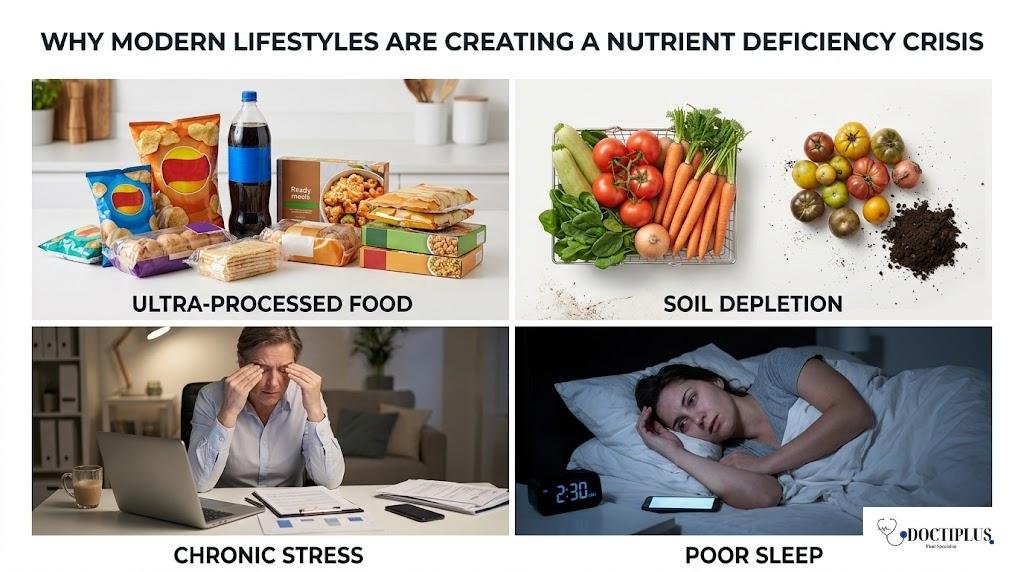
Why Modern Lifestyles Are Creating a Nutrient Deficiency Crisis
Problem With Ultra-Processed Food
The most direct driver of widespread nutrient deficiency is the dominance of ultra-processed food in modern diets. Foods such as packaged snacks, soft drinks, ready meals, and baked goods are formulated to be calorie-dense and highly palatable. Still, they contain very little in the way of vitamins, minerals, fibre, or phytonutrients.
Research indicates that ultra-processed foods account for approximately 57% of daily caloric intakeamong typical adults in many high-income countries. These calories fill the stomach without delivering the micronutrients the body depends on to run its most basic functions, from energy production and immune response to hormone regulation and cognitive performance.
What Are Ultra-Processed Foods?
Ultra-processed foods are industrially manufactured products containing ingredients rarely used in home cooking, including emulsifiers, artificial flavourings, hydrogenated oils, and added sugars. Examples include fizzy drinks, most breakfast cereals, packaged bread, crisps, instant noodles, flavoured yoghurts, and fast food. The more of these foods you eat, the harder it is to meet your nutritional requirements.
How Soil Depletion Reduces Nutrient Content in Whole Foods
Even people who eat what appears to be a healthy diet face a challenge that has been building for decades: the nutrient content of fresh produce has declined significantly compared to previous generations. Intensive farming practices, monoculture cropping, and overuse of synthetic fertilisers have progressively depleted the mineral content of agricultural soil.
Studies comparing the nutritional composition of vegetables and fruits in the 1950s to equivalent produce today have found measurable reductions in calcium, iron, magnesium, phosphorus, potassium, and vitamins B2 and C. One widely cited analysis found that to obtain the same amount of vitamin C from a tomato that was available in 1950, a person would need to consume approximately eleven tomatoes today.
This means that even a genuinely wholefood-based diet may not deliver the same nutritional return it once did, making food quality and variety more important than ever.
How Chronic Stress Depletes Nutrients
Psychological and physical stress place the body in a state of heightened metabolic demand. The stress response consumes nutrients at an accelerated rate, particularly B vitamins, magnesium, and vitamin C, which are required to produce stress hormones, maintain nervous system function, and regulate the inflammatory response.
In a state of chronic stress, which is the normal baseline for many working adults, the body continuously draws on its nutritional reserves faster than they are replenished through diet. Over time, this creates a progressive deficit that manifests as fatigue, poor concentration, low mood, sleep disruption, and reduced immune competence.
Relationship Between Sleep and Nutritional Status
Poor sleep and nutrient deficiency create a self-reinforcing cycle that is easy to enter and difficult to break without deliberate intervention. Insufficient or disrupted sleep impairs the body’s ability to absorb and utilise key nutrients. At the same time, deficiencies in magnesium, zinc, and B vitamins impair the quality of sleep itself.
Both poor sleep and nutritional depletion independently increase the production of pro-inflammatory chemicals in the body. This inflammation further disrupts sleep, raises stress hormone levels, and accelerates nutrient losses, perpetuating the cycle. Addressing nutritional deficiencies is therefore often a necessary step in improving sleep quality, and vice versa.
Most Common Nutrient Deficiencies and What They Do to Your Body
While any essential nutrient can become depleted under the right circumstances, four deficiencies appear consistently across population studies in the UK and wider developed world. Understanding these gives you a clear starting point for assessing and improving your own nutritional status.
| Deficiency | Key Facts | Symptoms |
|---|---|---|
| Iron Deficiency | Affects over 10 million people in the US; most common nutritional deficiency worldwide; especially common in women with heavy menstrual periods | Persistent fatigue and low energy; difficulty concentrating and brain fog; weakened immune function; pale skin, brittle nails, hair loss; shortness of breath on exertion |
| Vitamin D Deficiency | Over 40% of UK adults have insufficient levels; increasing due to indoor lifestyles | Weakened bone density and fracture risk; increased susceptibility to infections; low mood and seasonal depression; muscle weakness and pain; fatigue unresponsive to rest |
| Magnesium Deficiency | Required for 300+ biochemical reactions; commonly low due to poor diet and stress | Muscle cramps and spasms; irregular heartbeat and palpitations; insomnia and restless sleep; anxiety and heightened stress response; constipation and digestive discomfort |
| Vitamin B12 Deficiency | Found mainly in animal products; vegans, vegetarians, and older adults at higher risk | Persistent tiredness and weakness; memory difficulties and confusion; tingling or numbness in hands and feet; mood changes and depression; irreversible nerve damage if untreated long-term |
Important Note on Symptoms:
Many of the symptoms listed above, including fatigue, brain fog, and low mood, are non-specific and can have multiple causes. A blood test is the only reliable way to confirm a nutrient deficiency. Do not self-diagnose or begin supplementation without first consulting your GP or a registered dietitian.
Dietary Interventions That Actually Work
Prioritise Whole Foods Over Supplements
The most effective and sustainable approach to correcting nutrient deficiencies is through diet rather than supplementation, wherever possible. Whole foods provide nutrients in their most bioavailable forms, alongside the co-factors and fibre that support their absorption and metabolism. No supplement fully replicates this nutritional matrix.
A diet built around a wide variety of whole foods will address the majority of common deficiencies without the need for individual supplements. The following food groups are particularly nutrient-dense and deserve regular inclusion:
Dark Leafy Greens
Spinach, kale, Swiss chard, watercress, and rocket are among the most nutrient-dense foods available. They provide iron, magnesium, folate, vitamin K, vitamin C, and a range of antioxidants. Consuming a portion of dark leafy greens daily is one of the single most impactful dietary changes a person can make for their micronutrient status.
Nuts, Seeds, and Their Oils
Pumpkin seeds, sunflower seeds, almonds, Brazil nuts, and walnuts provide magnesium, zinc, vitamin E, selenium, and essential fatty acids. A small daily handful provides a meaningful nutritional contribution with minimal caloric cost relative to the nutrients delivered. Brazil nuts in particular are one of the richest dietary sources of selenium, a mineral closely associated with thyroid function and immune health.
Fermented Foods
Fermentation increases the bioavailability of vitamins and minerals by breaking down anti-nutrients such as phytic acid that otherwise inhibit absorption. Live yoghurt, kefir, sauerkraut, kimchi, and miso are all valuable additions to a nutrient-focused diet. They also support gut microbiome diversity, which is increasingly linked to overall nutritional absorption and immune function.
Organ Meats
For those who include animal products in their diet, organ meats such as liver are among the most concentrated sources of B12, iron, folate, zinc, and vitamins A and D available in any food. A small serving of liver once or twice a week can address multiple deficiencies simultaneously. Quality sourcing is important; opt for pasture-raised or organic where possible.
Algae and Marine-Based Foods
Nutrient-rich algae like spirulina provide complete protein alongside iron, B vitamins, essential fatty acids, including omega-3, and a concentrated array of minerals that are often difficult to obtain sufficiently from plant-based diets alone. Spirulina is one of the few plant-based sources that contains a meaningful quantity of complete protein per gram, making it particularly valuable in vegan and vegetarian nutritional planning. For those reducing or eliminating animal products, algae-derived foods offer an important nutritional bridge that addresses several common deficiencies simultaneously.
Optimise When and How You Eat
Include Protein at Breakfast
Starting the day with a protein-containing meal stabilises blood glucose levels from early morning, which has a cascading effect on energy regulation, mood, and nutrient utilisation throughout the day. Eggs, Greek yoghurt, smoked fish, nut butters, or a protein-rich smoothie are all practical options. Avoiding a carbohydrate-only breakfast reduces the blood sugar spike-and-crash pattern that drives mid-morning energy dips and cravings for processed food.
Eat on a Consistent Schedule
The digestive system functions on a circadian rhythm, with enzyme production and nutrient absorption both peaking at predictable times when meals are eaten regularly. Irregular meal timing, skipping meals, or eating very late at night disrupts this rhythm and reduces the efficiency with which nutrients are extracted from food. Consistent mealtimes are a low-cost, high-impact habit for improving nutritional status.
Pair Iron-Rich Foods With Vitamin C
Non-haem iron, the form found in plant sources such as spinach, lentils, and fortified foods, is less readily absorbed than haem iron from animal sources. Consuming a source of vitamin C alongside iron-rich plant foods, for example, adding lemon juice to a spinach salad or eating citrus fruit after a lentil dish, significantly increases iron absorption. Conversely, avoid consuming iron-rich foods with tea or coffee, as tannins in these beverages inhibit iron absorption.
Practical Meal Planning Tip:
Batch cooking one or two nutrient-dense meals per week reduces reliance on convenience food without requiring daily cooking effort. Preparing a large batch of lentil soup, a tray of roasted vegetables with seeds, or overnight oats with nuts ensures that a nutritious option is always available, even on busy days when processed food would otherwise be the default.
When Nutritional Supplements Become Necessary
Supplements Are Not a Substitute for Diet
The supplement industry is vast and frequently oversells its products. Most people taking a daily multivitamin as an insurance policy against a poor diet are not meaningfully improving their nutritional status. The bioavailability of nutrients in cheap multivitamins is often low, the doses are frequently mismatched to individual needs, and the product provides no benefit for the lifestyle factors that created the deficiency in the first place.
That said, there are specific circumstances in which targeted supplementation is clinically appropriate and genuinely beneficial.
Vitamin D: A Near-Universal Recommendation for Northern Latitudes
Vitamin D is synthesised in the skin through direct exposure to ultraviolet-B radiation from the sun. In the United Kingdom and any location north of approximately 35 degrees latitude, the sun is at too low an angle to trigger meaningful vitamin D synthesis for approximately five to six months of the year, typically from October to March.
For this reason, the NHS recommends that all adults in the UK consider taking a 10 microgram (400 IU) vitamin D3 supplement throughout the autumn and winter months. For individuals with darker skin tones, older adults, and people who cover most of their skin outdoors, year-round supplementation may be more appropriate. A blood test can confirm whether your current levels are adequate.
Magnesium: Choosing the Right Form
Not all magnesium supplements are equivalent. Magnesium oxide, the cheapest and most commonly available form, is poorly absorbed by the gut and delivers little systemic benefit for most people. Chelated forms of magnesium, such as magnesium glycinate, magnesium malate, or magnesium citrate, are significantly more bioavailable and better tolerated, particularly for individuals with digestive sensitivity.
Magnesium glycinate is generally considered the best-tolerated form for regular use and is particularly useful for sleep support and stress management. High-quality brand like Naturecan magnesium glycinate offer superior absorption and purity, providing a reliable way to restore essential levels without causing the digestive distress often associated with lower-grade alternatives. Start with a lower dose and increase gradually to avoid loose stools, which are a common side effect of higher magnesium doses in some individuals.
Vitamin B12: Essential for Vegans and Older Adults
B12 supplementation is strongly recommended for anyone following a vegan or predominantly plant-based diet, as the vitamin is found almost exclusively in animal-derived foods. Adults over 50 are also advised to consider supplementation or fortified foods, as the ability to absorb B12 from food declines with age due to reduced production of intrinsic factor in the stomach.
Methylcobalamin is the most readily utilised form of B12 and is preferable to cyanocobalamin, particularly for individuals with methylation difficulties. Sublingual B12 supplements bypass the need for intrinsic factor and can be beneficial for those with absorption issues.
Iron: Only Supplement Under Medical Supervision
Iron supplementation should only be undertaken following confirmation of deficiency via blood test and under the guidance of a healthcare provider. Unlike most other nutrients, excess iron is not easily excreted by the body and can accumulate to harmful levels. Self-prescribing iron supplements without a confirmed deficiency carries real risk and is not recommended.
Supplement Quality Matters:
The supplement market is largely unregulated in terms of product quality. Look for supplements that carry third-party testing certification such as NSF International, USP Verified, or Informed Sport. These certifications confirm that the product contains what the label states and is free from harmful contaminants.
How to Build Sustainable Nutritional Habits for Long-Term Health

Why Fad Diets and Quick Fixes Do Not Work
Dramatic dietary overhauls, elimination diets, and short-term supplement regimens frequently produce short-term results followed by a return to previous habits. The reason is straightforward: large changes are cognitively and socially demanding, and the effort required to sustain them declines rapidly once the initial motivation fades.
Lasting nutritional improvement comes from small, consistent changes that can be maintained without significant willpower expenditure. Habit formation research consistently shows that building one new food habit at a time, attaching it to an existing routine, and keeping the initial change small produces more durable outcomes than comprehensive dietary transformations.
Role of Annual Blood Testing
A blood test provides the only objective measure of your current nutritional status. Symptoms are unreliable guides because most nutrient deficiencies are clinically silent until they have reached moderate or severe levels. By the time fatigue, brain fog, or mood changes are clearly attributable to a deficiency, the depletion is typically well established.
Annual blood testing that includes a full blood count, ferritin (stored iron), vitamin D (25-OH), B12, folate, and magnesium allows you to identify deficiencies before symptoms appear and to track whether your dietary and lifestyle changes are producing measurable improvements. Many GP surgeries offer this as part of routine health monitoring, and private blood test services are also widely available.
A Practical 6-Step Starting Framework
Rather than attempting to change everything at once, the following sequence gives a practical, evidence-grounded starting point:
| Step | Action | Expected Benefit |
|---|---|---|
| 1 | Get a baseline blood test (iron, vitamin D, B12, magnesium) | Identifies confirmed deficiencies to address first |
| 2 | Add one serving of dark leafy greens daily | Broad micronutrient improvement across multiple nutrients |
| 3 | Replace one processed snack with nuts, seeds, or fruit | Reduces empty calorie load; adds zinc, magnesium, and vitamin E |
| 4 | Take a vitamin D3 supplement from October through March | Addresses the most common seasonal deficiency |
| 5 | Establish consistent meal times with protein at breakfast | Improves nutrient absorption and blood sugar regulation |
| 6 | Retest blood levels after 3 to 4 months | Confirms whether dietary changes have been sufficient |
Frequently Asked Questions
How do I know if I am nutrient-deficient without doing a blood test?
- You cannot know with certainty without a blood test. Many deficiencies produce no clear symptoms until they are moderate or severe. Symptoms such as fatigue, brain fog, hair loss, and low mood are associated with multiple nutrient deficiencies but are also caused by many other conditions. A blood test is the only reliable way to confirm a deficiency.
Is it possible to get all the necessary nutrients from a vegan diet?
- A well-planned vegan diet can meet most nutritional needs, but B12 supplementation is non-negotiable as this vitamin is not reliably available from plant sources. Vitamin D, iodine, zinc, long-chain omega-3 fatty acids, and calcium also require careful dietary planning or supplementation. Consulting a registered dietitian can help ensure a vegan diet is nutritionally complete.
Can stress alone cause nutrient deficiency even with a good diet?
- Yes. Chronic stress accelerates the depletion of B vitamins, magnesium, vitamin C, and zinc, even in individuals eating a nutritious diet. Sustained stress can create a genuine physiological deficit that requires both dietary attention and stress management strategies to address effectively.
Are expensive supplements better than cheaper ones?
- Price does not automatically indicate quality, but the form of the nutrient matters significantly. Magnesium glycinate is more bioavailable than magnesium oxide. Methylcobalamin is more readily used than cyanocobalamin. Look for third-party tested products from reputable manufacturers rather than simply choosing the most expensive option.
How long does it take to correct a nutrient deficiency through diet?
- This depends on the severity of the deficiency and the nutrient in question. Mild iron deficiency may improve meaningfully within six to eight weeks of consistent dietary intervention. Vitamin D levels typically require three to four months of supplementation to reach the optimal range. Severe deficiencies, particularly B12 deficiency with neurological symptoms, require medical supervision and may need injectable treatment.
Medical Disclaimer
This article has been prepared for general informational and educational purposes only. Doctiplus and its contributors do not provide medical advice, diagnosis, or treatment recommendations. The content on this page is not a substitute for professional consultation with a qualified GP, dietitian, or specialist. Never delay or disregard professional medical advice because of something you have read on this site. If you are concerned about a possible nutrient deficiency, please speak to your doctor and request appropriate blood testing.