


New Mexico residents living with serious mental health conditions have more options than many people realize. Inpatient mental health treatment, sometimes called psychiatric hospitalization or residential psychiatric care, provides around-the-clock clinical support in a structured setting. For individuals in crisis or those whose symptoms have not responded to outpatient care alone, this level of care can be genuinely life-changing.
In this guide, Doctiplus walks you through what inpatient mental health treatment looks like in New Mexico, who it is designed for, what to expect during a stay, and how to access services regardless of your insurance situation.
What Is Inpatient Mental Health Treatment?
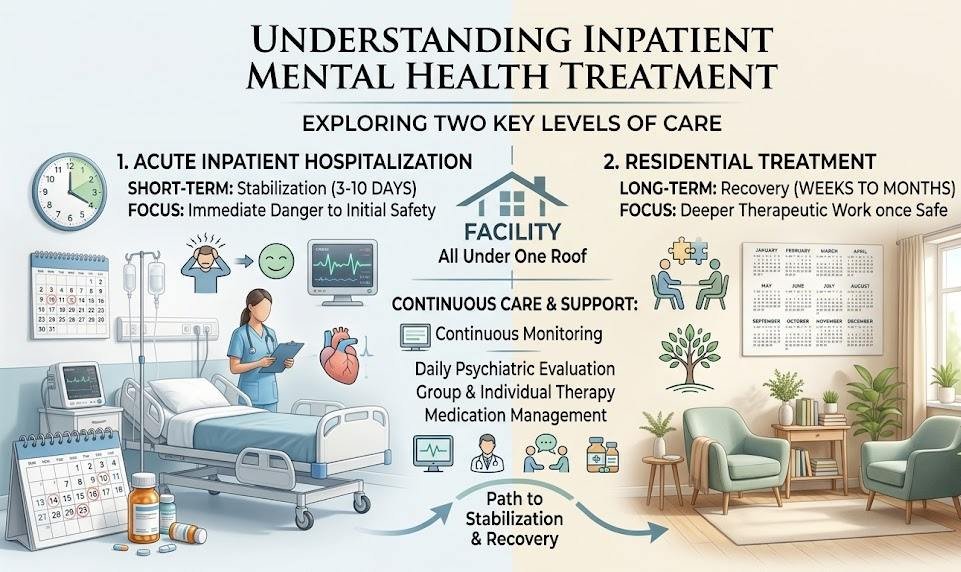
Inpatient mental health treatment refers to care delivered inside a licensed facility where a person stays overnight for an extended period. Unlike a brief emergency room visit or a weekly therapy appointment, inpatient care provides continuous monitoring, daily psychiatric evaluation, group and individual therapy, and medication management all under one roof.
There are two primary types of inpatient psychiatric care:
Acute inpatient hospitalization is short-term, typically ranging from three to ten days, and focuses on stabilization during a mental health crisis. Residential treatment, on the other hand, lasts weeks to months and centers on deeper therapeutic work once a person is no longer in immediate danger.
Both levels of care serve important but distinct roles depending on where someone is in their recovery.
Who Needs Inpatient Mental Health Care?
Inpatient care is appropriate when outpatient support is no longer sufficient to keep someone safe or functioning. Common reasons someone might be admitted for inpatient mental health treatment include active suicidal or self-harm ideation, a first episode of psychosis, a severe depressive episode that has not responded to medication, or a manic episode that poses a risk to the person or others.
It is also appropriate for individuals managing conditions like bipolar disorder, schizophrenia, or major depressive disorder who need a reset in a controlled environment before returning to daily life.
If you or someone you care about is asking whether inpatient care is necessary, that question alone often signals that a higher level of support is worth exploring.
Mental Health Landscape in New Mexico
New Mexico faces a complex set of mental health challenges. The state has one of the highest rates of suicide in the country and a significant unmet need for behavioral health services, particularly in rural and frontier communities. At the same time, the state has made meaningful investments in expanding access to psychiatric care over the past decade.
Albuquerque serves as the primary hub for inpatient psychiatric services, with facilities ranging from hospital-based psychiatric units to freestanding residential programs. Smaller cities like Santa Fe, Las Cruces, and Roswell also have access points, though availability varies considerably by region.
For many New Mexicans, cost and insurance coverage are the biggest barriers to accessing care. It is worth knowing that evidence-based residential treatment is available through providers across the state who accept a range of insurance types, including Medicaid, Medicare, and private plans.
What Happens During an Inpatient Stay?
People often feel anxious about what to expect when entering an inpatient facility. Understanding the basic structure can ease that uncertainty.
Upon admission, a clinical team conducts a comprehensive psychiatric evaluation to assess diagnosis, safety level, and treatment goals. From there, a personalized treatment plan is developed that typically includes individual therapy, group therapy sessions, psychiatric medication review, and case management.
Daily schedules in inpatient settings are intentionally structured. Consistent routine itself is considered therapeutic, particularly for individuals experiencing severe mood episodes or psychotic symptoms. Visits from family members may be permitted depending on the facility’s policies and the clinical team’s guidance.
Discharge planning begins early in the stay. A good inpatient program does not simply stabilize someone and send them home. It coordinates next steps, which include partial hospitalization, intensive outpatient programming, or community mental health services.
Paying for Inpatient Care: Insurance, Medicaid, and Sliding Scales
One of the most common questions people ask is whether they can afford inpatient mental health treatment. The honest answer is that many people qualify for financial support they do not know about.
New Mexico has one of the broadest Medicaid programs in the country through Centennial Care, which covers inpatient psychiatric services for eligible adults and children. If you are looking for an Albuquerque facility that accepts Medicaid, several hospitals and residential providers participate in Centennial Care and can guide you through the enrollment process if you are not already covered.
For those with private insurance, the federal Mental Health Parity and Addiction Equity Act requires that mental health benefits be comparable to medical and surgical benefits, which means inpatient psychiatric care must be covered at similar levels as inpatient medical procedures.
Uninsured individuals should ask providers directly about sliding-scale fees and charity care programs. Many facilities are legally or ethically obligated to treat individuals in crisis regardless of their ability to pay.
How to Find the Right Inpatient Facility in New Mexico
Not all inpatient programs are the same, and finding the right fit matters. A few questions worth asking when evaluating a facility:
Does the program treat your specific diagnosis or population, such as adolescents, older adults, or individuals with co-occurring substance use disorders? What therapeutic approaches are used, and does clinical research back them? What does the discharge planning process look like? Are family members involved in care when appropriate?
The New Mexico Behavioral Health Services Division maintains a directory of licensed behavioral health providers across the state. The Substance Abuse and Mental Health Services Administration (SAMHSA) also offers a free national treatment locator at findtreatment.gov that filters by location, insurance type, and level of care.
Supporting Someone Through Inpatient Treatment
If a family member or close friend is entering inpatient psychiatric care, the experience can feel disorienting for everyone involved. Loved ones sometimes feel helpless, guilty, or confused about what their role should be.
The most important thing you can do is stay connected without placing pressure on the person to recover quickly. Recovery from serious mental illness is rarely linear. Inpatient treatment is often the beginning of a longer process, not a single solution.
Ask the clinical team how you can support their work. Many programs offer family education sessions or allow family members to participate in aspects of treatment planning. Your involvement, when done thoughtfully, can meaningfully improve outcomes.
Taking the First Step Towards Mental Well-Being in New Mexico
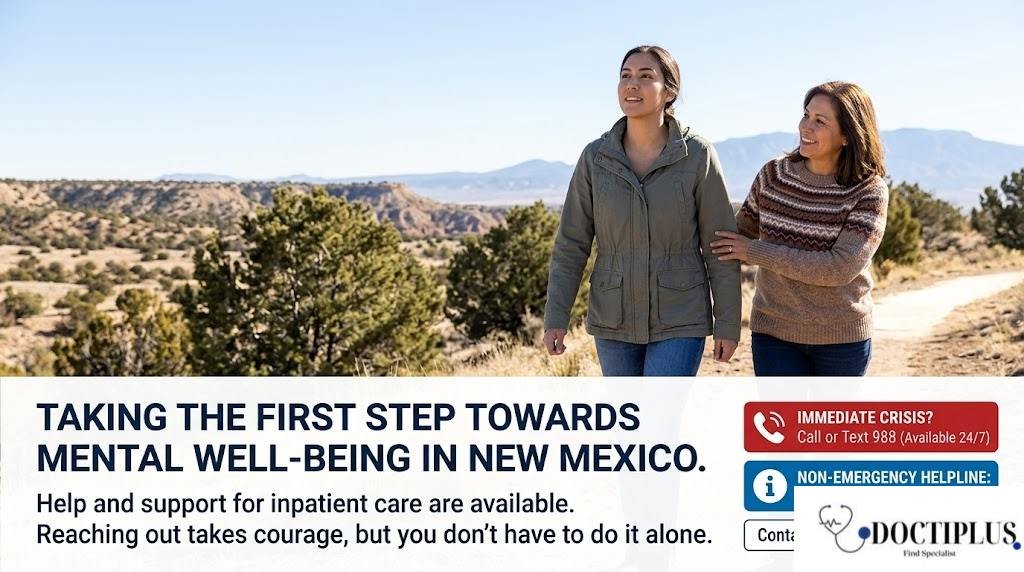
Reaching out for inpatient mental health care takes real courage, both for the person seeking help and for those supporting them. The barriers, whether financial, logistical, or emotional, can feel enormous. But the infrastructure exists in New Mexico to help people access this care, and navigating it becomes easier with the right information.
If you are in immediate crisis, call or text 988 to reach the Suicide and Crisis Lifeline, available 24 hours a day. For non-emergency inquiries about inpatient mental health programs, contacting a provider directly or calling SAMHSA’s National Helpline at 1-800-662-4357 are good starting points.
Final Conclusion
Inpatient mental health treatment in New Mexico offers a critical safety net for individuals facing severe or persistent psychiatric challenges. Whether for short-term stabilization or longer-term residential care, these programs provide structured, evidence-based support that can significantly improve outcomes when outpatient care alone is not enough. While barriers such as cost, availability, and uncertainty about the process can feel overwhelming, resources do exist, from Medicaid coverage and insurance protections to state directories and national helplines.
Understanding what inpatient care involves, who it is for, and how to access it empowers individuals and families to make informed decisions during some of the most difficult moments in life. Recovery is rarely immediate or linear, but with the right level of care and ongoing support, meaningful progress is absolutely possible. Taking that first step, whether it’s gathering information or reaching out for help, can be the turning point toward stability and improved mental well-being.
Disclaimer
This content is intended for informational and educational purposes only and does not constitute medical, psychological, or legal advice. It should not be used as a substitute for professional diagnosis, treatment, or guidance from a qualified healthcare provider. If you or someone you know is experiencing a mental health crisis or worsening symptoms, seek immediate help from a licensed professional or contact emergency services. Individual needs and treatment options vary, and only a qualified clinician can provide personalized recommendations.
References
- Substance Abuse and Mental Health Services Administration (SAMHSA). National Guidelines for Behavioral Health Crisis Care. DOI: 10.1037/e531012013-001
- Walker, E. R., McGee, R. E., & Druss, B. G. (2015). Mortality in Mental Disorders and Global Disease Burden Implications. DOI: 10.1001/jamapsychiatry. 2014.2502
- Vigo, D., Thornicroft, G., & Atun, R. (2016). Estimating the true global burden of mental illness. DOI: 10.1016/S2215-0366(15)00505-2
- Insel, T. R. (2008). Assessing the economic costs of serious mental illness. DOI: 10.1176/appi.ajp.2007.07071032
- Thornicroft, G., et al. (2016). Evidence for effective interventions to reduce mental-health-related stigma and discrimination. DOI: 10.1016/S0140-6736(15)00298-6
- National Institute of Mental Health (NIMH). Mental Health Information, Statistics and Treatment Overview. DOI: 10.1037/e570092012-001