

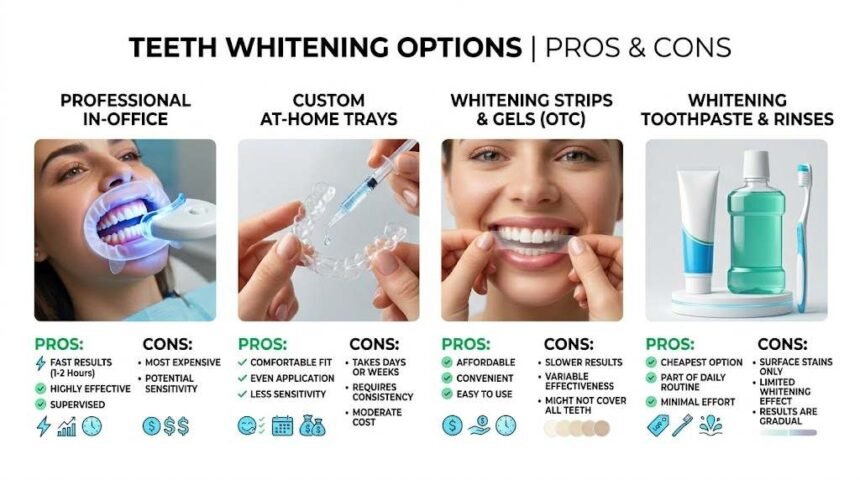
The American Dental Association reports that over 90% of adults have some degree of tooth discoloration, yet only about 37% pursue professional treatment. For Live Oak residents weighing their options in 2024, the challenge is not finding whitening products. It is knowing which ones genuinely work, which are safe for long-term use, and how to match the right solution to your specific type of discoloration. This guide gives you the science, the comparisons, and the practical framework to make that decision with confidence, covering all effective teeth whitening approaches from over-the-counter basics to professional in-office procedures.
Understanding the Causes of Tooth Discoloration Before You Whiten
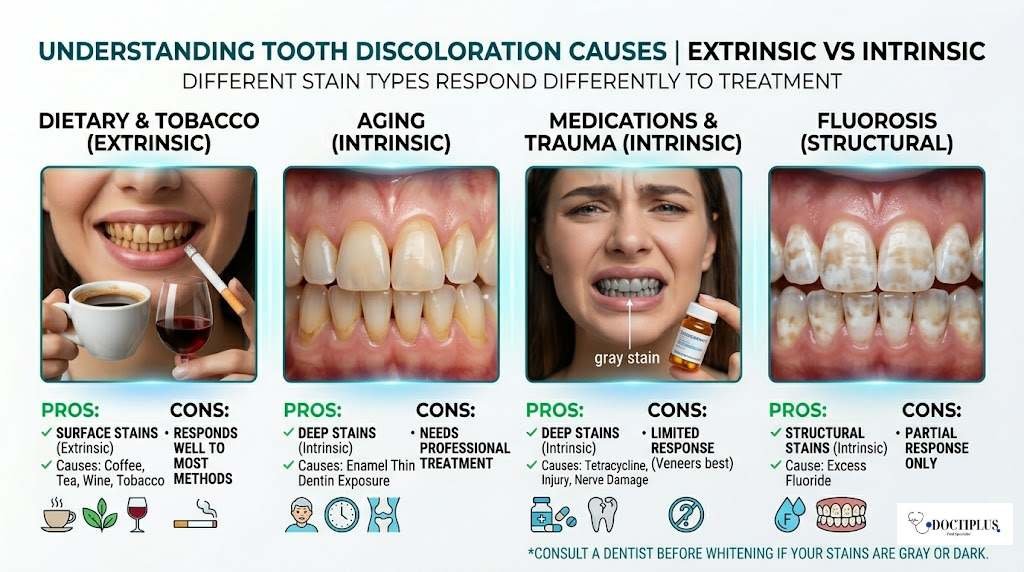
Before choosing any whitening method, understanding what is actually causing your discoloration is critical. Many people invest in products that have no effect because they are targeting the wrong type of staining. The causes of tooth discoloration fall into two distinct categories, and they respond very differently to treatment.
- Extrinsic stains sit on the enamel surface and are caused by food, beverages, and tobacco. These respond well to most whitening methods, including over-the-counter strips and professional treatments.
- Intrinsic stains develop inside the tooth structure from aging, medications, trauma, or developmental conditions. These require higher-concentration treatments or, in some cases, cosmetic solutions like veneers.
The table below maps the most common discoloration causes to stain depth and expected whitening response, which will help you set realistic expectations before spending money on treatment:
| Category | Common Causes | Stain Depth | Whitening Response |
| Dietary | Coffee, tea, red wine, berries | Surface (Extrinsic) | Responds well to most methods |
| Tobacco | Cigarettes, chewing tobacco | Surface to moderate | Responds, but reoccurs quickly |
| Aging | Enamel thinning, dentin exposure | Deep (Intrinsic) | Needs professional treatment |
| Medications | Tetracycline, antihistamines | Deep (Intrinsic) | Limited; veneers often better |
| Trauma | Injury to tooth, nerve damage | Deep (Intrinsic) | Minimal; cosmetic alternatives preferred |
| Fluorosis | Excess fluoride during development | Structural | Partial response only |
Gray staining from tetracycline antibiotics or tooth trauma is the most resistant to bleaching. If your discoloration is gray or severely dark, a consultation with a dentist is worthwhile before committing to whitening. The National Institute of Dental and Craniofacial Research recommends professional evaluation for intrinsic staining before beginning any whitening protocol.
Comparing Every Whitening Method Available to Live Oak Residents
The whitening market in Live Oak ranges from drugstore products under $20 to professional in-office treatments approaching $800. The table below gives you an honest side-by-side comparison of every major option on the five factors that matter most to patients:
| Method | Cost Range | Effectiveness | Sensitivity Risk | Results Duration |
| Whitening Toothpaste | $5 – $20 | Low (surface only) | Minimal | 1 – 2 months |
| OTC Whitening Strips | $20 – $60 | Moderate | Moderate | 3 – 6 months |
| Custom Dentist Trays | $200 – $500 | High | Moderate | 1 – 2 years |
| In-Office Laser/Light | $400 – $800 | Very High | Higher risk | 1 – 3 years |
| Home Remedies | $0 – $5 | Very Low | Varies | Weeks only |
Whitening Toothpaste: Best for Maintenance, Not Transformation
Whitening toothpastes use mild abrasives and trace peroxide to polish surface stains during brushing. They are safe for daily use and effective for maintaining results after professional treatment. They cannot change the underlying tooth color and are not suitable as a standalone whitening solution for noticeable change.
Over-the-Counter Whitening Strips: Good Value for Mild Staining
Strips deliver hydrogen peroxide directly to the tooth surface for 30 minutes daily over 1 to 2 weeks. They work well for mild to moderate extrinsic staining and represent strong value for the cost. The main limitation is fit. Strips are not customized, which can cause uneven coverage, especially on back teeth. According to research published in the Journal of the American Dental Association, OTC strips with 6 to 10% hydrogen peroxide can achieve meaningful whitening over two weeks for surface staining.
Dentist-Prescribed Custom Trays: The Best Balance of Value and Results
Custom trays use professional-strength carbamide peroxide gel (typically 10 to 22%) worn for 1 to 4 hours daily over 1 to 2 weeks. The precise fit prevents gel from contacting gum tissue and ensures even coverage across all tooth surfaces. For Live Oak patients with moderate to significant staining, custom trays typically offer the best combination of effectiveness, safety, and cost over time.
In-Office Laser or Light-Activated Whitening: Maximum Results in One Visit
In-office treatments use 15 to 35% hydrogen peroxide activated by a curing light or laser to accelerate oxidation. A single session of 60 to 90 minutes can achieve the equivalent of weeks of at-home whitening. This is the best choice for patients with significant discoloration or those who need fast results. It carries the highest risk of temporary post-treatment sensitivity but is performed under professional supervision.
Home Remedies: What the Evidence Actually Says
Baking soda has modest evidence for removing surface stains as a mild abrasive, but frequent use can wear enamel over time. Oil pulling may reduce oral bacteria, but does not change tooth color. Activated charcoal has no credible clinical evidence for whitening effectiveness, and the American Dental Association has flagged its highly abrasive nature as a potential cause of permanent enamel damage. Home remedies are not recommended as primary whitening methods.
Safety Considerations and Who Should Avoid Whitening
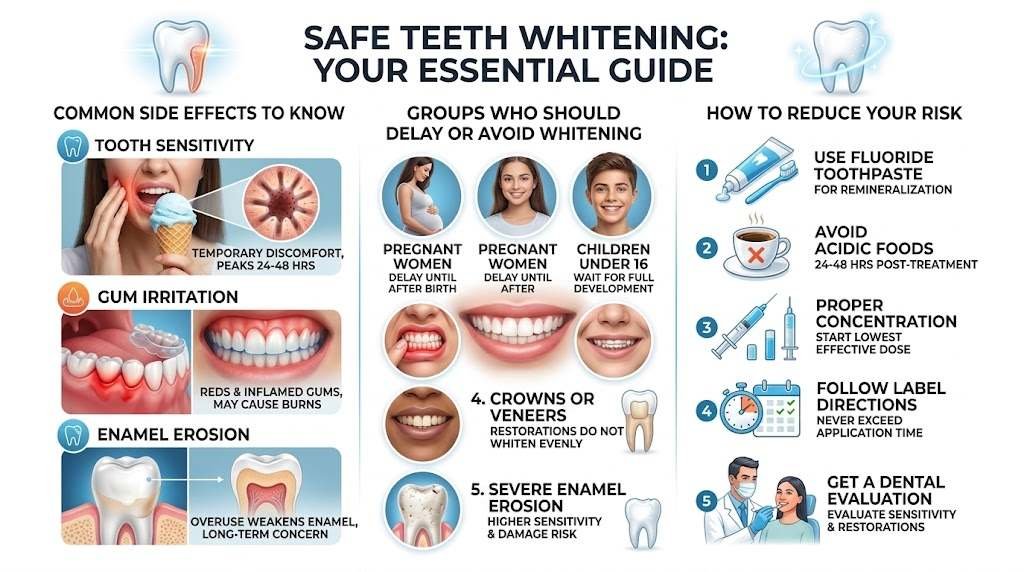
Common Side Effects to Know Before You Start
Tooth sensitivity is the most common side effect of whitening, affecting up to 78% of patients in clinical studies, according to a systematic review in the Journal of Evidence-Based Dental Practice. It occurs because peroxide temporarily opens microscopic tubules in enamel, allowing external stimuli to reach the nerve. Sensitivity typically peaks 24 to 48 hours after treatment and resolves within a few days.
Gum irritation results from gel contact with soft tissue, most commonly from ill-fitting OTC trays. In severe cases, it can cause temporary chemical burns or gum recession. Enamel erosion from overuse is the most serious long-term concern, particularly with products used beyond recommended frequencies.
Groups Who Should Delay or Avoid Whitening
| Group | Risk | Recommended Alternative |
| Pregnant women | Peroxide may cross placental barrier | Postpone until after birth |
| Children under 16 | Large pulp chambers increase sensitivity | Wait until adult teeth are fully developed |
| Active gum disease | Peroxide worsens inflamed tissue | Treat gum disease first |
| Crowns or veneers | Restorations do not whiten evenly | Consult dentist about color matching |
| Severe enamel erosion | Higher damage and sensitivity risk | Remineralization treatment first |
How to Reduce the Risk of Side Effects
- Use fluoride toothpaste before and after whitening to support enamel remineralization.
- Avoid acidic foods and beverages for 24 to 48 hours after treatment to prevent additional enamel softening.
- Start with the lowest effective concentration and increase only if results are insufficient.
- Never exceed the application time or frequency recommended on product labeling.
- Get a dental evaluation before beginning whitening if you have existing sensitivity or restorations.
How to Choose the Right Whitening Option for Your Situation
Choosing Based on Your Budget
- Under $30: OTC whitening strips are the most accessible entry point for mild surface staining. Consistent two-week use produces visible results for most people.
- $30 to $100: Combining whitening strips with a whitening toothpaste for maintenance gives better results than either product alone.
- $200 to $500: Dentist-prescribed custom trays deliver professional-strength results at home and offer the best long-term value for moderate to significant staining.
- $400 to $800: In-office laser whitening delivers the fastest and most dramatic results and is best suited for patients with deeper staining or time constraints.
Choosing Based on Your Lifestyle
- Heavy coffee or tea drinkers: Professional whitening followed by regular touch-ups with custom trays is the most sustainable strategy. Stains will return without reducing intake or improving maintenance habits.
- Smokers: Whitening works temporarily, but tobacco staining returns quickly. Addressing the behavior provides more lasting improvement than repeated whitening cycles.
- People with braces: Delay whitening until orthodontic treatment is complete. Brackets prevent even coverage and leave unwhitened patches when removed.
- Sensitive teeth: Begin with low-concentration carbamide peroxide trays worn for shorter daily periods. Sensitive-formula OTC strips are also available and are gentler than standard options.
How Often Should You Whiten? A Safe Frequency Guide
Overuse is the primary cause of whitening-related enamel damage. Dental professionals generally recommend no more than one to two professional whitening cycles per year. The table below outlines safe frequency guidelines for each method:
| Method | Recommended Frequency | Rest Period |
| Whitening Toothpaste | Daily use safe | No rest period needed |
| OTC Strips | 1 to 2 cycles per year | At least 3 months between cycles |
| Custom Tray (Dentist) | 1 to 2 times per year | 6 months minimum between treatments |
| In-Office Laser | Once per year maximum | 12 months between sessions |
Long-term research shows that professionally performed whitening within recommended frequencies does not cause permanent enamel loss or increased decay rates when used correctly. A review published in Dental Research Journal confirmed that supervised whitening protocols are safe for enamel when used as directed, with temporary sensitivity being the primary documented adverse effect.
For Live Oak residents looking to maintain results long-term, the most effective strategy combines professional treatment with daily whitening toothpaste and lifestyle adjustments that limit staining. People who manage dietary habits and maintain good oral hygiene routinely extend professional results by one to two years between treatments.
Practical Tips to Maintain Your Whitening Results Longer
- Rinse with water immediately after consuming coffee, tea, red wine, or other staining beverages to minimize contact time with enamel.
- Use a straw when drinking dark beverages to reduce tooth surface exposure.
- Brush twice daily with a fluoride whitening toothpaste to manage minor surface buildup between treatment cycles.
- Schedule dental cleanings every six months. Professional cleanings remove tartar and surface staining that toothpaste cannot reach.
- Avoid eating or drinking anything except water for at least 30 minutes after whitening treatment, when enamel pores are temporarily more open to staining.
- Store custom whitening trays and gel in a cool, dry place and replace gel syringes as instructed by your dentist to ensure consistent potency.
Final Conclusion
The most effective teeth whitening approach for any Live Oak resident is not the most expensive or the most aggressively marketed option. It is the one that matches your specific stain type, sensitivity level, budget, and daily habits. Surface staining from coffee and lifestyle factors responds well to a range of methods. Deeper intrinsic discoloration requires professional assessment and often more targeted intervention.
Before spending money on any product, take two steps: identify what is causing your discoloration, and set realistic expectations based on the method you are considering. OTC strips are a solid starting point for mild staining and modest budgets. Custom trays offer the best value for sustained results. In-office treatment is the right choice when you need significant improvement quickly and want professional oversight throughout the process.
Whichever method you choose, consistency in maintenance matters more than the intensity of the initial treatment. Protecting your enamel, limiting staining behaviors, and keeping up with regular dental care are what turn a single whitening treatment into lasting confidence.
Disclaimer
This article is intended for general informational and educational purposes only and does not constitute professional dental or medical advice. Whitening results vary significantly based on individual stain type, enamel condition, age, and treatment compliance. Cost figures are approximate estimates and may differ by provider and region. Individuals with dental sensitivity, existing restorations, or specific health conditions should consult a licensed dentist before beginning any whitening treatment. The publisher is not liable for outcomes resulting from information in this article.
References
- American Dental Association. (2024). Whitening: Oral Health Topics. ADA.org.
- National Institute of Dental and Craniofacial Research. (2024). Oral Health Information. NIDCR.gov.
- Carey, C.M. (2014). Tooth Whitening: What We Now Know. Journal of Evidence-Based Dental Practice. Vol. 14, Supplement.
- Hasson, H. et al. (2006). Home-Based Chemically-Induced Whitening of Teeth in Adults: A Systematic Review. Journal of the American Dental Association. Vol. 137, Issue 12.
- Bersezio, C. et al. (2018). Effectiveness and Adverse Effects of Dental Bleaching Techniques on Enamel. Dental Research Journal.
- Harvard T.H. Chan School of Public Health. (2024). Oral Health and Overall Well-being. Harvard Health Publishing.