

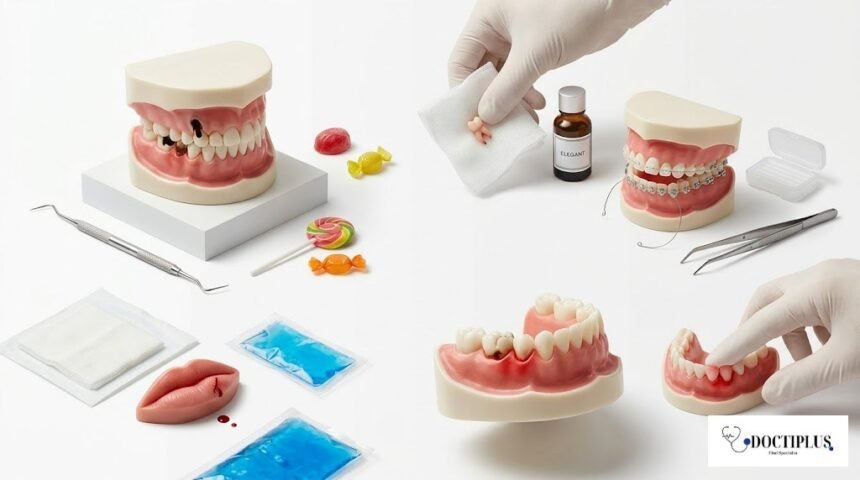
When a child’s tooth gets knocked out on the playground, parents have roughly 30 to 60 minutes to maximize the chances of successful reimplantation. Yet according to recent pediatric dental trauma research, fewer than one in five families know the correct steps to take during those critical first moments. The field of pediatric emergency dentistry has advanced significantly as new studies reveal how differently a child’s developing teeth respond to trauma compared to fully formed adult teeth.
What makes pediatric dental emergencies especially stressful is their timing. They often strike outside regular office hours, during sports, on weekends, or in unfamiliar places where professional care is not immediately available. Understanding why these emergencies happen so often in children, and what sets them apart from adult dental crises, can help you respond confidently when every minute matters.
Why Children Are More Prone to Dental Emergencies Than Adults
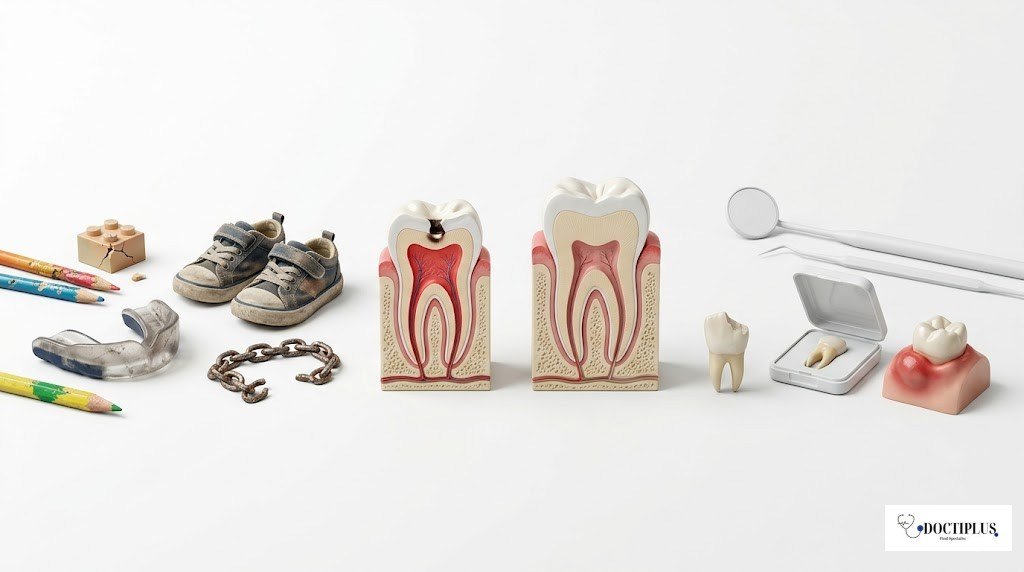
Children face a combination of developmental, behavioral, and situational factors that make dental emergencies far more common than in adults. Developing coordination makes them more likely to fall, while natural curiosity leads them to put objects in their mouths or use their teeth as tools. Unlike adult teeth, children’s primary teeth have thinner enamel and larger pulp chambers, which makes them more vulnerable to decay that can rapidly progress into painful infections. Having access to a reliable emergency dentist Gold Coast families trust ensures that when these unexpected mishaps happen, you can secure prompt, gentle treatment to relieve your child’s discomfort and protect their growing smile.
The timeline for dental emergencies also moves faster in children. A small cavity in an adult tooth might take many months to become symptomatic. In a child, bacteria can reach the nerve tissue within weeks because the pulp chamber sits much closer to the tooth’s surface. What begins as mild discomfort on a Tuesday can escalate into severe pain by the weekend.
Key Differences Between Children’s and Adults’ Teeth
| Feature | Children’s Teeth | Adult Teeth |
| Enamel thickness | Thinner, less mineralized | Fully developed, more resistant |
| Pulp chamber size | Proportionally larger | Smaller relative to tooth size |
| Root development | Often immature in young permanent teeth | Fully formed |
| Decay progression | Rapid, often within weeks | Slower, typically months |
| Healing capacity | High, supports ongoing development | Lower regenerative potential |
Common Causes of Pediatric Dental Emergencies
Sports-related injuries are one of the largest categories of pediatric dental trauma. According to the American Dental Association, athletic activities account for a significant share of dental injuries in young patients. The upper front teeth are especially vulnerable in contact sports like basketball, soccer, hockey, and even casual playground games.
Behavioral factors add another layer of risk. Children often delay reporting dental pain until it becomes unbearable, either because they fear treatment or do not understand what their symptoms mean. A child may mention a “hurt tooth” for several days without parents realizing the early signs of an abscess are developing.
- Falls and playground accidents leading to chipped, cracked, or knocked-out teeth
- Contact sports injuries affecting the front teeth and soft tissues
- Biting hard objects like pencils, toys, or ice
- Rapidly progressing cavities reaching the nerve within weeks
- Dental abscesses from untreated decay or small fractures
- Soft tissue injuries to the lips, gums, cheeks, and tongue
How Pediatric Emergency Dentists Manage Dental Injuries
Pediatric emergency care requires a fundamentally different approach than adult dentistry. Specialists trained in child-focused techniques balance immediate pain relief with preserving ongoing dental development, often making decisions that account for years of future growth. Their goal extends beyond solving the emergency to ensuring minimal disruption to the child’s overall oral development.
Preserving natural tooth structure is central to the treatment philosophy. Primary teeth are not just for chewing. They maintain space for the permanent teeth that will replace them and support healthy speech development. Losing a baby tooth too early can lead to crowding and alignment issues later.
Treating Dental Trauma in Children
Treatment varies significantly based on whether primary or permanent teeth are affected. For knocked-out primary teeth, reimplantation is generally not recommended because it can damage the developing permanent tooth underneath. For permanent teeth, time becomes critical. Successful reimplantation rates drop sharply after the first hour, which is why the American Academy of Pediatric Dentistry stresses rapid response during dental trauma.
Flexible splinting is often preferred in children because it allows slight natural movement during healing. Immature permanent teeth have an impressive capacity for continued root growth even after trauma, as long as emergency care preserves the vital pulp tissue.
Managing Dental Abscesses and Infections in Kids
Dental infections escalate quickly in children due to developing immune systems and tooth anatomy. Emergency care focuses on pain relief, infection control, and preserving the tooth whenever possible. Antibiotic dosing is carefully calculated by weight and age, but antibiotics alone cannot resolve an abscess. The source of infection must be addressed through procedures such as pulpotomies, root canal therapy, or extractions.
For permanent teeth with incomplete root formation, specialists often aim to promote continued root development rather than simply removing infected tissue. This technique, called apexogenesis, uses specific materials and methods that encourage the root to form naturally, creating a stronger long-term tooth structure. The National Institute of Dental and Craniofacial Research notes that preserving pulp vitality in young teeth leads to significantly better long-term outcomes.
Recognizing Signs Your Child Needs Urgent Dental Attention
Parents often struggle to tell the difference between normal childhood complaints and genuine dental emergencies. Children may not describe their symptoms clearly, saying only that their mouth “feels funny” or refusing to eat without explaining why. Learning to spot the warning signs early can prevent a minor issue from turning into a serious infection.
Warning Signs Checklist
| Symptom | What It May Indicate | Urgency Level |
| Severe pain that wakes the child from sleep | Advanced infection or nerve involvement | Immediate |
| Facial swelling near the jaw or under the eye | Spreading abscess | Immediate |
| Fever with dental pain | Active infection | Immediate |
| Knocked-out permanent tooth | Trauma requiring reimplantation | Immediate (within 30 to 60 minutes) |
| Tooth darker than surrounding teeth | Possible nerve damage | Within 24 to 48 hours |
| Persistent gum bleeding | Injury or infection | Within 24 hours |
| Avoiding certain foods or chewing on one side | Hidden pain or sensitivity | Schedule soon |
Behavioral changes often signal dental problems before children verbalize discomfort. Increased irritability, difficulty sleeping, or sudden changes in eating habits can all point to developing dental issues. When a child begins avoiding previously enjoyed activities, like drinking cold beverages or brushing their teeth, investigate potential dental causes.
First Aid and Immediate Actions for Pediatric Dental Emergencies
The moments right after a dental emergency can significantly shape the outcome. Quick, correct first aid can mean the difference between saving a tooth and needing extensive restorative treatment later. Keeping a small dental first-aid kit at home and in your car can make a meaningful difference.
What to Do for a Knocked-Out Permanent Tooth
- Find the tooth and handle it only by the crown, never the root.
- Gently rinse with milk or clean water if dirty. Do not scrub or remove any attached tissue.
- If possible, place the tooth back in its socket and have the child bite down gently on a clean cloth.
- If reimplantation is not possible, store the tooth in cold milk. Saline or the child’s saliva is an acceptable backup.
- Contact pediatric emergency dental services right away and travel to the clinic immediately.
What to Do for Broken or Chipped Teeth
- Save all tooth fragments in milk or water
- Rinse the child’s mouth gently with warm water
- Apply clean gauze with gentle pressure if bleeding
- Use a cold compress on the outside of the cheek to reduce swelling
- Avoid very hot or very cold foods until a dentist can evaluate the tooth
Safe Pain Management at Home
Pain management should provide relief without masking important symptoms. Age-appropriate doses of children’s ibuprofen can help reduce pain and inflammation. Avoid aspirin in children due to the risk of Reye’s syndrome, a rare but serious condition flagged by the U.S. National Library of Medicine. Cold compresses applied in 15-minute intervals can provide additional comfort while you arrange care.
For severe bleeding, apply firm but gentle pressure with clean gauze. If bleeding does not slow within 10 to 15 minutes, seek emergency care immediately. Always contact emergency dental services for guidance, even when the situation seems manageable. Professional advice helps you decide whether immediate care is essential or whether home management can safely bridge the gap until morning.
How to Prevent Pediatric Dental Emergencies Through Regular Care
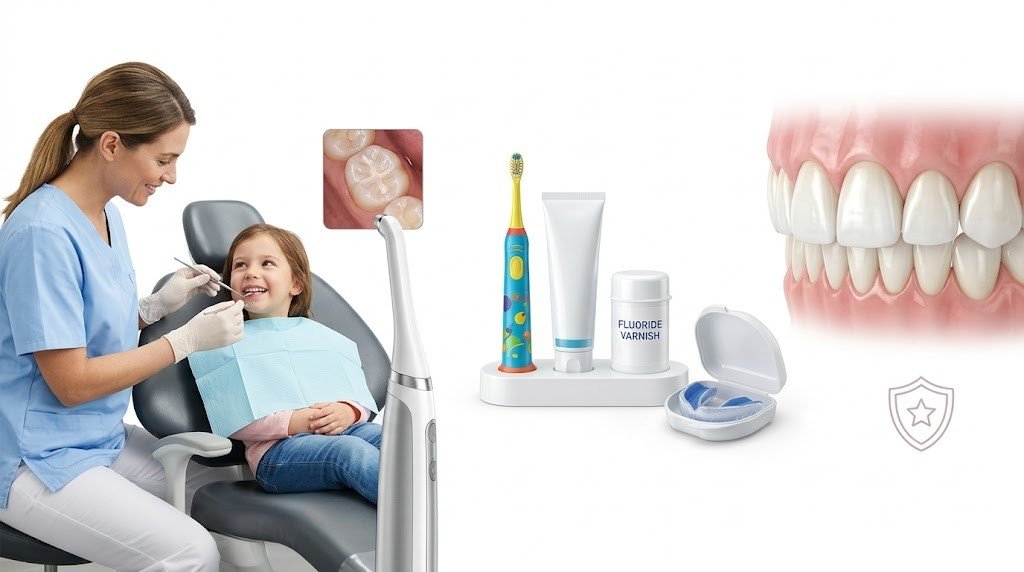
Prevention remains the most effective strategy for reducing pediatric dental emergencies. Research consistently shows that children who receive regular preventive care experience significantly fewer urgent dental situations. Strong habits established early pay dividends for decades.
Preventive Measures That Actually Work
| Preventive Measure | How It Helps | Recommended Age |
| Dental sealants | Seals grooves on molars to block bacteria | 6 to 14 years |
| Fluoride treatments | Strengthens enamel against acid attacks | Every 3 to 6 months for higher-risk children |
| Custom mouthguards | Prevents trauma during sports | Any child in contact or high-risk sports |
| Twice-yearly checkups | Catches problems before they become emergencies | Starting by the first birthday |
| Daily brushing and flossing | Removes bacteria that cause decay | From the first tooth |
Dental sealants are one of the most powerful preventive tools available for school-age children. When applied to the chewing surfaces of permanent molars, they create a protective barrier that prevents bacteria from settling into deep grooves. The Centers for Disease Control and Prevention reports that sealants can prevent roughly 80 percent of cavities in back teeth, effectively eliminating a major source of urgent dental problems.
Custom-fitted mouthguards offer far better protection and comfort than store-bought options, and children are more likely to wear them consistently. Even non-contact sports benefit from protective gear since unexpected collisions can happen in any setting. Regular checkups allow dentists to catch developing cavities while they are still small and painless, preventing the progression to painful infections that demand urgent care.
Building a Family Dental Emergency Plan
Every family should have a clear plan before an emergency happens. Preparation reduces panic and improves outcomes.
- Save your pediatric dentist’s after-hours number in your phone
- Keep a small dental first-aid kit at home and in the car
- Know the location of the nearest emergency dental clinic
- Teach older children what to do if a tooth is knocked out
- Review your dental insurance’s emergency coverage
Final Thoughts for Parents
Pediatric dental emergencies are rarely convenient, but they are almost always manageable when parents know what to expect and how to respond. Understanding why children are more vulnerable, recognizing the early warning signs, and mastering basic first aid gives you the confidence to act quickly during those critical first minutes. Combined with strong preventive habits and a trusted pediatric dental provider, you can dramatically reduce both the frequency and severity of dental emergencies in your child’s life.
The strongest defense is a mix of preparation and prevention. Regular checkups, protective gear during sports, good daily hygiene, and a clear emergency plan work together to protect your child’s smile today and the permanent teeth that will serve them for a lifetime.