

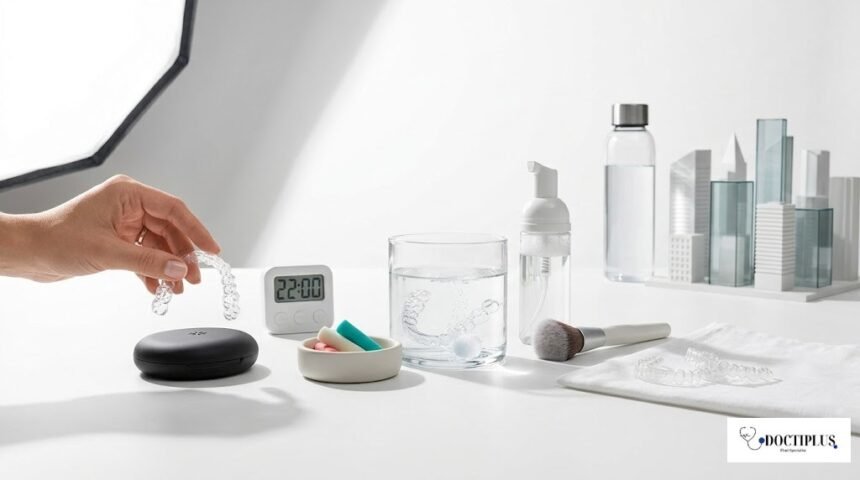
Clear aligner treatment has surged across major metropolitan areas, with New York City leading adoption among working professionals who need an invisible orthodontic solution. But as the American Dental Association notes in its guidance on orthodontic appliances, the success of any aligner treatment depends almost entirely on how well patients care for the trays between appointments. In a city where schedules are packed and coffee runs are sacred, aligner care can slip into sloppy habits that derail months of progress.
This guide breaks down exactly how to maintain your aligners in a busy NYC lifestyle, what to avoid, and which tools actually make a difference.
Why Aligner Care Matters More Than You Think
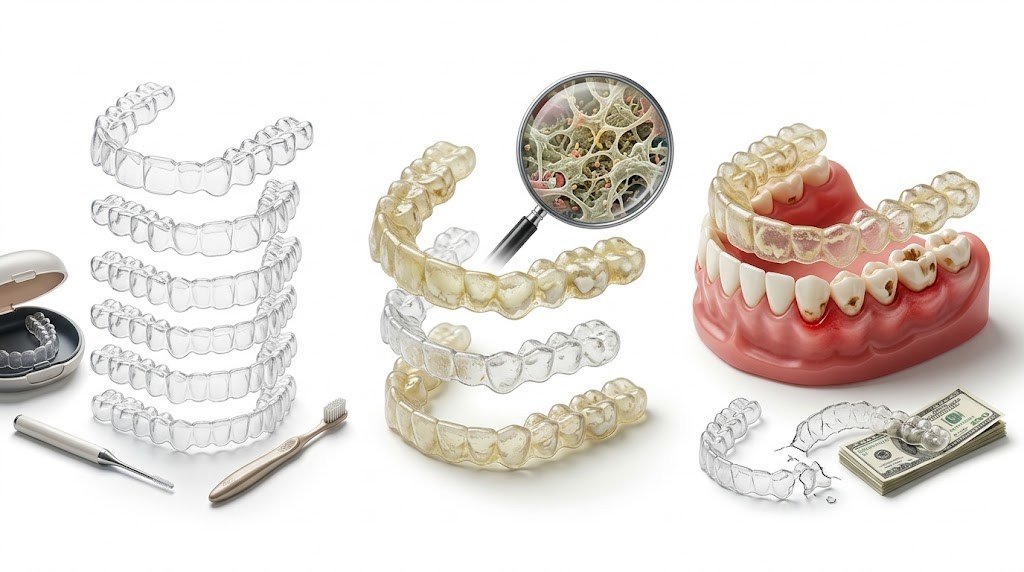
Poor maintenance does more than cloud the appearance of your trays. It can shift your treatment timeline, invite cavities and gum inflammation, and force expensive replacements. According to the American Association of Orthodontists, treatment delays caused by damaged or ill-fitting aligners are one of the most common preventable setbacks in clear aligner therapy.
The biggest enemy is biofilm, a sticky bacterial layer that bonds chemically to aligner surfaces when saliva proteins mix with oral bacteria. Biofilm cannot be rinsed away with water alone, and once it hardens, it mimics tartar, changing how the tray fits against your teeth.
Daily Cleaning Routine That Actually Works
Effective aligner hygiene combines mechanical scrubbing with chemical cleaning. Here is the routine most NYC orthodontists recommend:
| Time of Day | Action | Tools Needed |
|---|---|---|
| Morning (after brushing) | Deep clean with soap and brush | Soft aligner toothbrush, clear antibacterial soap |
| After meals | Rinse with lukewarm water before reinserting | Water, dedicated case |
| Afternoon reset | Quick soap rinse if possible | Portable cleaning kit |
| Evening (before bed) | Full scrub plus soak in cleaning solution | Brush, soap, soaking solution |
| Overnight storage | Store trays in clean water or solution | Ventilated aligner case |
Always use lukewarm water, never hot. Heat warps the thermoplastic material and destroys the custom fit. Cleveland Clinic emphasizes that even water that feels mildly warm to the hand can be too hot for aligner material.
What to Use
- Soft-bristled toothbrush dedicated only to aligners
- Clear, unscented antibacterial soap
- Aligner-specific cleaning crystals or tablets
- Room-temperature water
- A ventilated storage case
What to Avoid
- Toothpaste (abrasives scratch the surface)
- Mouthwash (alcohol and dyes stain and degrade plastic)
- Hot water or boiling water
- Hydrogen peroxide or bleach
- Denture cleaners are not approved for aligners.
- Scented soaps that leave residue
Common Mistakes That Derail Treatment
Many patients unknowingly damage their aligners through habits that feel harmless. The most frequent errors include:
- Drinking anything other than water while wearing aligners. Coffee, tea, wine, and even diet soda create an acidic bath between your teeth and the plastic, accelerating enamel erosion.
- Leaving aligners exposed to the open air. Saliva residue dries into a stubborn film that regular cleaning cannot fully remove.
- Wrapping trays in napkins at restaurants. This is the number one cause of lost aligners in NYC, based on replacement orders reported by local orthodontic practices.
- Skipping cleanings when tired. A single missed cycle rarely matters, but a pattern of skipped cleanings creates biofilm that bonds permanently.
- Chewing gum or eating with aligners in. Even soft foods crack trays and push particles into areas no brush can reach.
The Mayo Clinic recommends treating removable orthodontic appliances with the same hygiene discipline as contact lenses, and the comparison is apt.
Warning Signs You Need a Replacement
Minor surface scratches are normal. What is not normal:
- Visible cracks along the edges or bite surface
- Cloudiness that persists after deep cleaning
- A looser fit than usual, especially in the first few days of a new tray
- Persistent odor that returns within hours of cleaning
- Pieces that have chipped or broken off
- Teeth that no longer contact the tray correctly
If you notice any of these signs, contact your orthodontist right away. For readers who still need to get Invisalign treatment in NYC, most reputable practices keep replacement trays on hand and can fit you in within a day or two. Humid NYC summers and overheated winter apartments both accelerate plastic degradation, so local patients often need slightly faster replacement cycles than the national average.
Technology That Makes Aligner Care Easier
Home cleaning technology has evolved rapidly in the past few years, and some devices are genuinely worth the investment.
Ultrasonic Cleaners
Ultrasonic cleaning devices designed specifically for aligners use high-frequency sound waves to create microscopic bubbles that collapse against the tray surface. This process, called cavitation, dislodges bacteria and debris from the narrow ridges that a toothbrush cannot reach. A typical cycle takes 3 to 5 minutes and removes buildup that manual cleaning misses entirely.
UV Sanitizing Cases
Portable UV cases kill bacteria, viruses, and fungi using ultraviolet light. They are small enough to fit in a work bag and complete a cycle in 10 to 15 minutes, making them ideal for professionals who remove aligners for long meetings or client lunches.
Specialized Cleaning Solutions
New enzyme-based solutions formulated for thermoplastic materials break down protein deposits more effectively than soap alone. Unlike generic denture cleaners, these products maintain the molecular integrity of your aligner material.
| Cleaning Method | Effectiveness | Time Required | Approximate Cost |
|---|---|---|---|
| Brush and soap | Good | 2 to 3 minutes | Under $10 |
| Cleaning crystals | Very good | 15 minutes soak | $20 to $40 per month |
| Ultrasonic cleaner | Excellent | 3 to 5 minutes | $30 to $80 one-time |
| UV sanitizing case | Excellent | 10 to 15 minutes | $40 to $100 one-time |
Dentist-Recommended Habits for Long-Term Success
Research published through the National Institute of Dental and Craniofacial Research shows that oral bacteria populations peak overnight, which makes morning cleaning particularly important. Top NYC orthodontists now recommend:
- A longer, more thorough morning cleaning session
- A shorter evening cleaning paired with bedtime brushing
- Weekly photos of your trays in consistent lighting to track clarity changes
- Professional ultrasonic cleaning once a month during progress checks
- Flossing before reinserting aligners, never after
Integrating aligner care with your existing oral hygiene routine, rather than treating it as a separate chore, is the single biggest predictor of consistent habits, according to the Centers for Disease Control and Prevention’s oral health guidance.
Keeping Aligners Clean on a Busy NYC Schedule
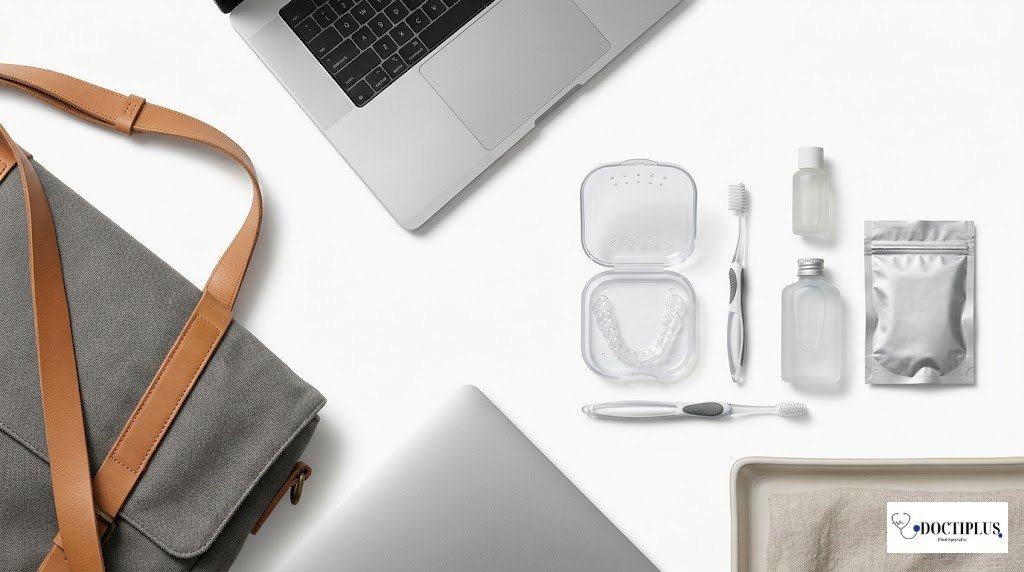
Sustainable aligner care in New York comes down to preparation. Build a portable kit and keep duplicates where you spend the most time.
Essential portable kit contents:
- Compact aligner toothbrush
- Travel-size antibacterial soap
- Ventilated case (never solid plastic without holes)
- Small water bottle dedicated to rinsing
- Backup cleaning tablets in an airtight pouch
Keep identical kits in these locations:
- Home bathroom
- Work desk drawer
- Gym bag
- Weekend or travel bag
Strategic timing helps too. Remove aligners in the bathroom before a meal rather than at the table, clean them on the spot, and store them properly before you sit down to eat. This small shift prevents the single most common cause of lost trays in Manhattan restaurants.
Bottom Line
Proper aligner care takes 10 to 15 minutes a day. Neglecting it can cost you weeks of treatment time, hundreds of dollars in replacements, and lasting damage to your enamel. Treat your aligners like the medical devices they are, build a routine that fits your actual schedule, and lean on modern cleaning technology where it saves you effort. Done consistently, these habits keep your treatment on track and your smile transformation right on schedule.