


Rhinoplasty has held the top spot as the most requested facial surgical procedure for five consecutive years, according to the American Academy of Facial Plastic and Reconstructive Surgery (AAFPRS) 2024 Annual Trends Survey. That’s not a fluke – it reflects something real about why people pursue this procedure.
What surprises most first-time patients is how functional rhinoplasty often is. It’s not purely about aesthetics. A large share of cases now combine cosmetic reshaping with septoplasty or other airway corrections, meaning many patients leave not just looking different but also breathing better. That dual role changes how you should think about candidacy, recovery, and what counts as a good outcome.
Medically reviewed and studied by Jonathan Harounian, Facial Plastic Surgeon. A board-certified specialist with direct clinical experience in rhinoplasty and facial reconstructive procedures.
Why are so many people considering rhinoplasty right now?
Video conferencing has a lot to answer for. Spending hours a day staring at your own face on screen made a lot of people acutely aware of features they’d previously ignored. Surgeons started calling it the “Zoom effect,” and consultation numbers climbed through 2020 and haven’t really come back down.
The demand is global. The rhinoplasty market was valued at $6.46 billion in 2025 and is projected to reach $6.97 billion in 2026, growing at about 8% annually, according to Research and Markets’ 2026 Rhinoplasty Market Report. That’s not a trend driven solely by vanity. About 60% of rhinoplasty cases now combine aesthetic reshaping with septoplasty or other functional airway procedures, indicating that a significant share of patients also have real breathing problems.
The procedure appeals to a wide age range. Younger patients – predominantly in the 18 to 34 bracket – make up roughly 60% of the global patient pool, and male patients now account for around 22% of procedures according to the American Society of Plastic Surgeons.
For people in metro areas, access to experienced surgeons has gotten better. Anyone researching rhinoplasty in Washington, D.C. can find board-certified specialists who can address both cosmetic refinement and functional correction in a single procedure, a practice that wasn’t always the case a decade ago.
What “good results” look like has shifted, too. The current preference, among both patients and surgeons, runs toward preservation rhinoplasty – techniques that maintain the original structure and ligaments of the nose rather than dramatically reshaping it. Subtlety is in. Dramatic transformations are largely out.
Are you actually a good candidate?
The basic physical requirements are straightforward. Facial growth should be complete before surgery – usually around age 16 or 17 for women, 18 or older for men. Surgeons generally won’t proceed until that threshold is met.
Beyond age, the most predictive factor for a good outcome isn’t anatomy. It’s expectations.
A 2024 study published in Plastic and Reconstructive Surgery Global Open followed 234 rhinoplasty patients and found that patients who were psychologically calm reported significantly higher satisfaction than those who were anxious going in. The difference wasn’t in the surgical outcome – it was in how patients interpreted that outcome. Going in with a specific, realistic goal is very different from going in hoping surgery will resolve something you can’t quite articulate.
Functional reasons are completely valid on their own. If you struggle to breathe through one or both nostrils, have a deviated septum, or have had nasal trauma that affected airflow, those are legitimate standalone reasons for surgery, entirely separate from any cosmetic motivation.
A few things that complicate candidacy: active smoking slows wound healing significantly, and most surgeons require cessation well before the procedure. Certain medications – particularly blood thinners and some supplements – need to be stopped beforehand. Body dysmorphic disorder (BDD) is also a real consideration in pre-surgical screening, and good surgeons ask about it.
What does rhinoplasty actually involve?
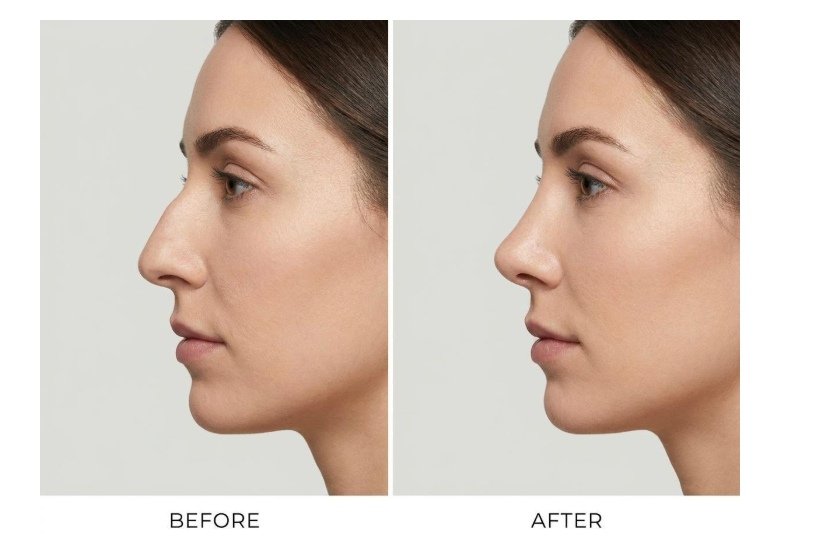
The two standard surgical approaches are open and closed rhinoplasty. Open rhinoplasty uses a small incision at the base of the columella (the narrow strip of tissue between the nostrils), giving the surgeon more direct access to the underlying structures. Closed rhinoplasty keeps all incisions inside the nostrils, leaving no visible external scarring. Which approach is appropriate depends on the complexity of what you’re trying to achieve.
Preservation rhinoplasty is a newer technique that’s gained significant traction. Rather than removing and reshaping cartilage, it preserves the existing ligament and cartilage framework wherever possible. The result tends to be more structurally stable over time and reduces the likelihood of needing revision surgery later.
For bony corrections – adjusting a bump on the bridge, for instance – many surgeons now use ultrasonic piezo osteotomy. This technology works precisely on bone while minimizing trauma to surrounding soft tissue. It’s a real improvement over traditional osteotomy methods.
There’s also non-surgical rhinoplasty, using hyaluronic acid fillers to reshape the nose without any incisions temporarily. It takes under 45 minutes, requires minimal downtime, and lasts roughly 12 to 18 months. It can’t address structural or functional issues, but for patients who want to try a change before committing to surgery, it’s a reasonable option.
Surgical rhinoplasty typically runs 1.5 to 3 hours under general anesthesia. Around 85% of consultations now use 3D imaging or digital simulation, which helps both the surgeon and patient get on the same page about what “subtle” actually looks like before anything happens.
What to expect during recovery
The first week is the roughest. You’ll have a nasal splint in place, you can’t blow your nose, and you need to keep your head elevated – even while sleeping. Anything that raises blood pressure is off the table: strenuous exercise, bending over, and hot showers.
Day seven is usually when the splint comes off, and for most patients, that’s the first real look at the result. There’s still swelling, but the shape is visible.
By week two, most bruising has faded, and many people can return to desk work. Weeks three and four, the swelling concentrates around the nasal tip – the tip is always the last part to settle. At six weeks, roughly 90% of the swelling has resolved. The truly final result isn’t visible until about 12 months post-surgery. If you’re expecting to look completely different at week two, you’ll be disappointed.
Some practical advice: cold compresses help with swelling around the eyes, but don’t apply anything directly to the nose in the early days. Avoid steam, hot showers, and any activity that raises your heart rate for at least 2 weeks. Show up to every follow-up appointment.
What’s happening inside your body during this period matters. how lifestyle affects your body’s ability to heal – sleep quality, stress levels, hormone balance – directly shapes how your tissue recovers after surgery. And maintaining a balanced diet during recovery isn’t optional; protein and micronutrients are what your body uses to rebuild.
Psychological side: what the research shows
People rarely talk openly about this part, but it matters.
A 2024 study in Plastic and Reconstructive Surgery followed 234 patients and found that 59% reported good functional outcomes and 63.2% reported moderate cosmetic satisfaction after rhinoplasty. “Moderate” is the word that trips people up, but the more important pattern is what happens over time: satisfaction tends to climb as swelling resolves and as patients adjust to their new appearance. Measuring outcomes at six weeks doesn’t give you the full picture.
A 2025 study in Aesthetic Plastic Surgery found an average 71% improvement across all measured parameters after surgery, with aesthetic parameters improving by about 90% and functional parameters by around 55%.
Both studies point to the same conclusion: the patient’s mindset before surgery matters as much as the surgery itself. Patients who entered with specific, realistic goals and lower baseline anxiety consistently reported better outcomes – not because their results were objectively better, but because they interpreted them more accurately.
Pre-surgical anxiety is common. If you’re nervous, that’s fine – but don’t let it sit unaddressed. Managing stress in the weeks leading up to surgery may influence how you experience your results afterward.
How to choose the right surgeon

This is where most mistakes happen, and where reversing a bad decision gets expensive.
Board certification is the baseline. Look for surgeons certified by the American Board of Facial Plastic and Reconstructive Surgery (ABFPRS), the American Board of Plastic Surgery, or dual-certified in Otolaryngology/Head and Neck Surgery alongside facial plastics. These aren’t interchangeable credentials – know what you’re looking at.
Here’s a number worth keeping in mind: according to the AAFPRS 2024 Annual Trends Survey, about 80% of AAFPRS members report that more than 10% of their rhinoplasty patients are seeking revision of a previous surgeon’s work. Revision rhinoplasty is harder, more expensive, and riskier than a first procedure. Surgeon selection isn’t a minor decision.
Ask real questions during the consultation: how many rhinoplasties do you perform each year? Can I see before-and-after photos of patients with anatomy similar to mine? What’s your revision rate? A surgeon who gets defensive about any of these is telling you something.
Red flags to watch for: no 3D imaging in the consultation, no discussion of functional concerns alongside cosmetic ones, consultations that feel rushed, or promises of dramatic results without a conversation about your specific anatomy.
A good consultation takes at least an hour. That’s not inefficiency – it’s what you’re paying for.
Conclusion
Rhinoplasty isn’t a small decision. But it’s not something to fear with good information going in.
Patients who enter the process with realistic expectations, take recovery seriously, and select a surgeon with verified credentials and a genuine focus on rhinoplasty consistently report strong outcomes. The procedure has changed over the past decade – preservation techniques, better instrumentation, and 3D planning tools have raised the floor on what patients can expect.
According to the American Society of Plastic Surgeons, rhinoplasty consistently ranks among the top five cosmetic surgical procedures performed each year in the United States. That volume means experienced surgeons are available in most major markets, including DC.
A consultation isn’t a commitment. It’s information gathering. Go in with your questions written down, pay attention to how the surgeon talks about your specific anatomy rather than generic outcomes, and trust your read on whether they’re actually listening. If the first consultation doesn’t feel right, schedule a second one somewhere else. The right surgeon will still be there, and you’ll book with more confidence when you find them.
Start there. Take your time. Ask hard questions, and don’t sign anything until you have a surgeon you genuinely trust.