

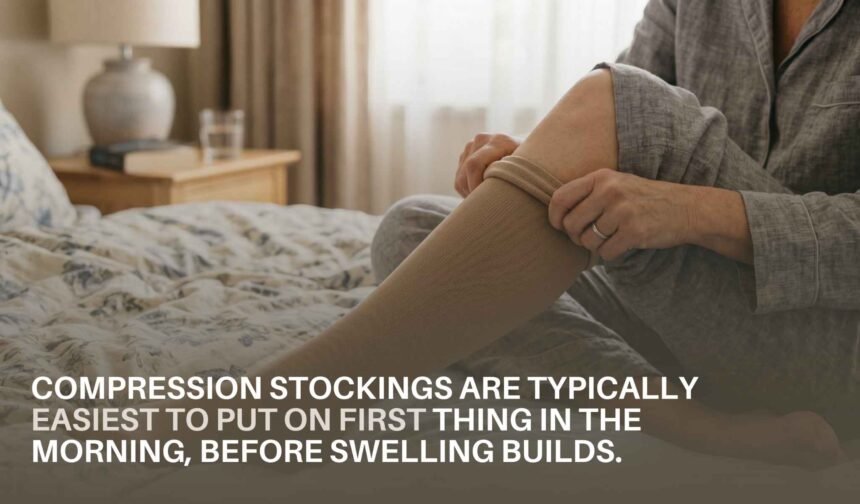
Pregnancy has a way of making small physical changes feel much bigger by the end of the day. Shoes that fit in the morning can feel tight by dinner.
Ankles may look puffier than usual. Legs can feel heavy after errands, commuting, travel, or simply sitting for too long.
Mild swelling in the feet, ankles, and fingers is common in pregnancy, especially later in pregnancy and toward the end of the day. However, a sudden increase in swelling should be checked promptly, as it can signal a more serious problem, such as pre-eclampsia.
For many women, the goal is not to chase a perfect fix.
It is to get through work, appointments, travel days, and daily life with a little more comfort. That is where pregnancy compression stockings often enter the conversation.
Pregnancy compression stockings are also often discussed in the broader context of circulation and vein health, especially since graduated compression is commonly recommended to help support blood flow and reduce swelling in the legs.
They are not a cure-all or a substitute for medical advice, but they may help support circulation and reduce that dragging, swollen feeling in the legs.
Mayo Clinic includes compression stockings among measures that may help ease swelling during pregnancy, and ACOG notes support stockings as one way to help reduce travel-related clot risk during pregnancy.
Why Swelling Happens During Pregnancy
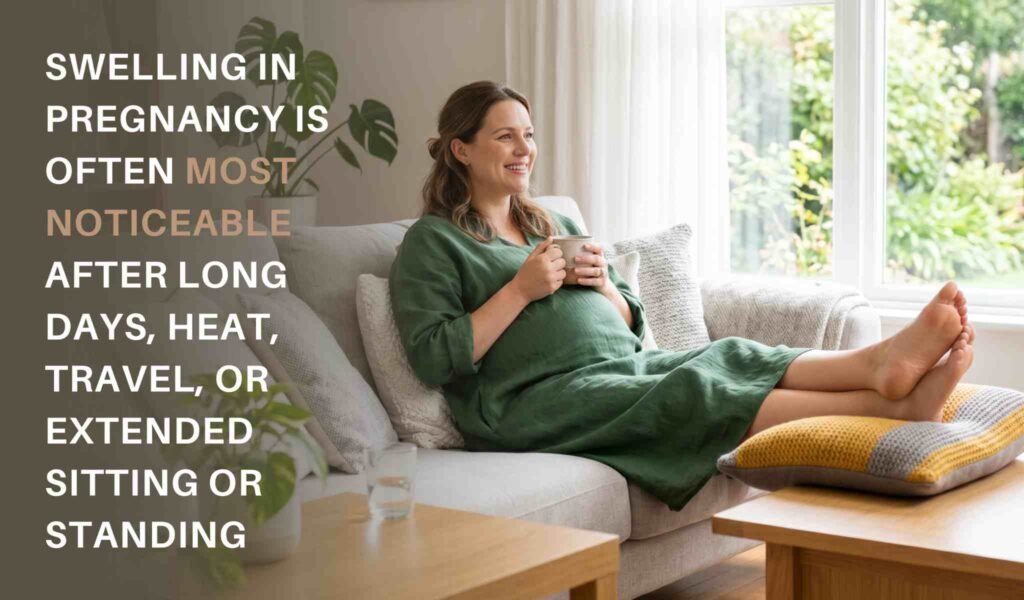
Swelling, often called edema, often occurs because the body holds more fluid during pregnancy. At the same time, the growing uterus can also increase pressure on the veins that return blood from the lower body.
The result is often more noticeable puffiness in the feet, ankles, and lower legs, particularly later in pregnancy or after long stretches on your feet.
That pattern is generally common, but swelling that appears suddenly, becomes severe, or affects one leg more than the other deserves medical attention.
This is one reason pregnancy comfort products have shifted from “pampering” to practical support.
How Compression Stockings May Help
In simple words, compression stockings work by applying pressure to the lower legs to support blood flow and can also help with swelling and pain.
During pregnancy, that gentle graduated pressure may be especially useful for women who spend long hours sitting, standing, or traveling. A 2025 study in pregnant women with leg edema found that wearing elastic compression stockings significantly increased deep venous velocity and flow, supporting the idea that properly fitted compression can assist circulation in late pregnancy.
That does not mean every swollen ankle needs a specialty solution.
One practical way to reducing leg swelling with pregnancy compression stockings is to choose a pair designed for regular wear, not just occasional discomfort. Brands like Vim & Vigr speak directly to that need, offering maternity compression stockings made to support leg health in a way that feels both functional and wearable.
But remember, compression stockings prove to be a reasonable comfort tool within a broader routine that may also include hydration, changing positions often, elevating the feet, and avoiding restrictive clothing.
What Makes Maternity Compression Stockings Different
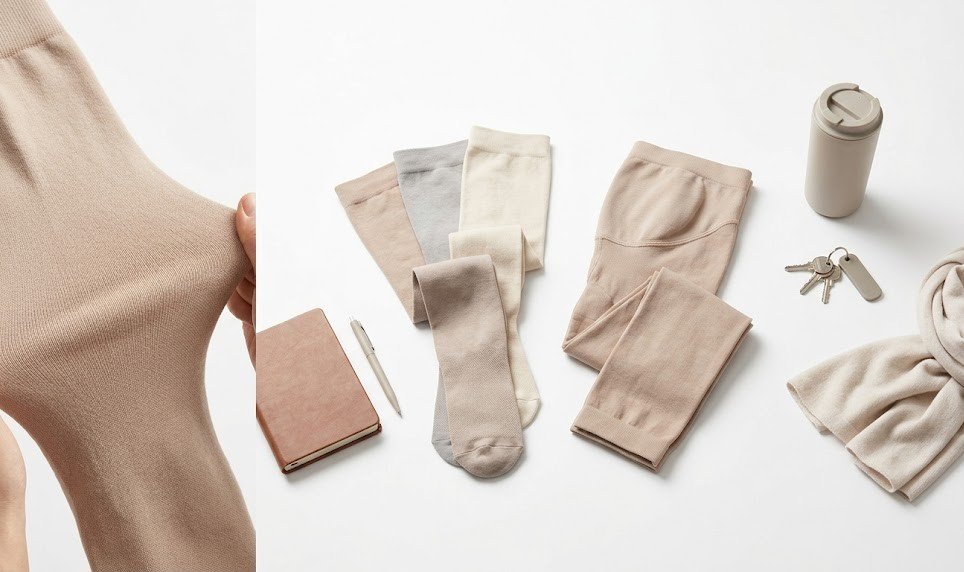
Not all compression hosiery is built with pregnancy in mind.
Maternity styles are usually designed to accommodate body changes, provide comfort at the waistband or upper portion, and reflect the reality that pregnant women often want support without feeling squeezed in the wrong places.
The best pairs tend to balance support with softness, breathability, and enough stretch to make daily wear realistic.
This matters because consistency is part of what makes compression useful. A pair that feels too tight, too hot, or too difficult to pull on is less likely to become part of a routine.
For a women ’s-interest wellness piece, that is the more honest framing: the right stocking isn’t just the one with “support” on the label, but the one a pregnant woman can actually imagine wearing on a commute, a workday, or a flight.
When They May Be Especially Useful
Pregnancy compression stockings may be worth considering when swelling and leg fatigue occur at predictable times. Travel is one of the clearest examples.
ACOG advises pregnant travelers to minimize risk by staying hydrated, moving the lower extremities periodically, avoiding restrictive clothing, and using support stockings.
They may also be helpful during workdays that involve a lot of standing or sitting when compression stockings may be useful, especially alongside comfortable footwear and movement strategies.
Women who notice heaviness, mild aching, or end-of-day puffiness may also find them useful as part of a comfort routine. That is particularly true when the goal is not medical treatment, but simply making daily life feel more manageable.
What To Look For Before Buying
Start with fit
- Compression stockings should feel snug and supportive, but not painfully tight, pinching, or causing numbness. Mayo Clinic notes that proper measuring is important and that legs are usually measured when they are least swollen, often early in the morning.
Think about wearability
- Breathable fabric, a smooth feel under clothes, and a style that works with everyday outfits can matter more than many people expect. This is where wellness-minded brands have changed the category. Compression is no longer only a clinical-looking purchase. It can also be part of a comfort wardrobe that supports movement, travel, and confidence.
Do not self-prescribe a higher level of compression just because more sounds better. Compression level can matter, especially during pregnancy, and stronger compression is not automatically the right choice for everyone. If you are unsure what level is appropriate, or if you have circulation issues, significant swelling, varicose veins, or a history of clotting concerns, check with your prenatal care team first.
We advise talking with a health care professional before trying special stockings intended to help prevent deep vein thrombosis.
When Swelling Needs a Medical Check, Not a Product
This is the most important distinction.
Gradual swelling that builds over the course of pregnancy is often normal. Sudden swelling, swelling paired with headache or vision changes, or swelling that is much worse in one leg should not be brushed off as “just pregnancy.”
That is why the smartest approach is a balanced one.
Compression stockings may help with day-to-day discomfort and routine swelling, but they belong in the category of supportive tools, not diagnosis or treatment.
Real Appeal is Practical Relief
Pregnancy can make everyday life feel more physically demanding than expected.
The appeal of compression stockings is not that they promise some dramatic transformation. It is that they may offer a quieter kind of help: less heaviness, less end-of-day puffiness, more comfort on long days, and more confidence that your clothes and routines are working with your body instead of against it.
That kind of support fits naturally into a broader women’s wellness conversation, especially for readers who want practical solutions without turning every symptom into a crisis.
Closing Thoughts
Pregnancy compression stockings are not about fixing everything. They are about making everyday life a little easier. When used correctly, they may help reduce that heavy, tired feeling in the legs and support better circulation during long days, travel, or work routines.
The key is balance. Simple habits like staying hydrated, moving regularly, and resting when needed still play the biggest role in managing swelling. Compression stockings can be a helpful addition, especially when comfort and consistency matter.
Every pregnancy is different, so what works well for one person may not feel the same for another. Paying attention to your body and choosing options that feel practical and comfortable is what truly makes a difference.
Disclaimer
This content is for informational purposes only and is not intended as medical advice, diagnosis, or treatment. Always consult a qualified healthcare professional, such as a doctor or obstetrician, before using compression stockings during pregnancy, especially if you have underlying health conditions, significant swelling, or a history of circulation or clotting disorders.
References
- Ochalek K, Pacyga K, Curyło M, et al. Risk factors related to lower limb edema, compression, and physical activity during pregnancy: A retrospective study. Lymphatic Research and Biology, 2017. DOI: 10.1089/lrb.2016.0038
- Mori K, Koshiyama M, Watanabe Y, et al. The effect of wearing elastic compression stockings on leg edema in pregnant women in late pregnancy. Healthcare, 2025. DOI: 10.3390/healthcare13030214
- Saliba Júnior OA, Rollo HA, Saliba O, Sobreira ML. Graduated compression stockings’ effects on chronic venous disease signs and symptoms during pregnancy. Phlebology, 2019. DOI: 10.1177/0268355519846740
- Kaplan Ö, Başer M, Özgün MT. The effect of compression stockings on well-being and sleep quality in pregnant women with restless legs syndrome. Revista da Associação Médica Brasileira, 2024. DOI: 10.1590/1806-9282.20240145
- Ochalek K. Three-year follow-up of compression use in lower limb edema during pregnancy: A case report. Journal of Vascular Nursing, 2021. DOI: 10.1016/j.jvn.2021.04.002
- Miranda et al. Positive perception and efficacy of compression stockings for the prevention of lower limb edema in pregnant women. Clinical Study, 2022.