

When my doctor first prescribed cephalexin for my daughter’s skin infection, I had the same questions you probably have right now. What exactly is this medication? How should I take it? What should I watch out for?
Let me share everything I’ve learned about cephalexin, both from medical professionals and real experience. This isn’t just another generic drug guide. It’s the information I wish someone had given me from the start.
What Is Cephalexin and When Do Doctors Prescribe It?
Cephalexin is an antibiotic that kills bacteria causing infections in your body. It belongs to a group called cephalosporins, which work similarly to penicillin but can handle different types of bacteria.
Doctors commonly prescribe it for:
- Skin and soft tissue infections like cellulitis, infected cuts, or abscesses. I’ve seen this work remarkably well for minor wounds that got infected despite proper cleaning.
- Urinary tract infections (UTIs) are especially problematic when other antibiotics aren’t suitable. Many women I know have used this successfully for bladder infections.
- Respiratory infections, including strep throat, tonsillitis, and some cases of bronchitis.
- Bone infections like osteomyelitis are usually treated in combination with other treatments.
- Ear infections, particularly middle ear infections in both children and adults.
- Dental infections when you have an abscess or infection after dental procedures.
Here’s what matters: cephalexin only works against bacterial infections. It won’t help with colds, flu, or COVID-19. Taking antibiotics for viral infections increases antibiotic resistance without helping you feel better.
How to Take Cephalexin the Right Way
Getting the dosage right makes a huge difference in how well cephalexin works.
Standard Dosing for Adults
Most adults take 250 mg to 500 mg every 6 hours, or 500 mg to 1000 mg every 12 hours. Your doctor decides based on:
- The type of infection you have
- How severe is it is
- Your kidney function
- Your overall health
For a simple skin infection, you might get 500 mg twice daily. For something more serious, like a bone infection, you could need 1000 mg four times a day.
Dosing for Children
Children’s doses depend on their weight, typically 25 to 50 mg per kilogram of body weight per day, split into multiple doses.
A 20-kilogram child (about 44 pounds) might take 250 mg three to four times daily. The liquid suspension makes this easier for kids who can’t swallow pills.
Practical Tips That Actually Matter
- Take it with food if it bothers your stomach. I learned this the hard way. While cephalexin works fine on an empty stomach, taking it with meals can prevent nausea.
- Set phone alarms for your doses. When you’re taking medicine four times a day, it’s easy to forget. I use recurring alarms labeled “antibiotic time.”
- Finish the entire course. This is critical. Even if you feel better after three days, stopping early lets surviving bacteria multiply and potentially become resistant. Most courses run 7 to 14 days.
- Space is evenly. If you’re taking it twice daily, try every 12 hours. Four times daily means roughly every 6 hours. You don’t need to wake up at night for doses unless specifically told to.
- Store liquid suspension in the refrigerator. It stays good for 14 days when refrigerated. Shake it well before each dose because the medication settles at the bottom.
Side Effects You Should Know About
Every medication has potential side effects. Here’s what you might experience and what actually matters.
Common Side Effects That Usually Aren’t Serious
Diarrhea happens to about 1 in 10 people. It’s usually mild. Eating yogurt with live cultures sometimes helps, though wait a couple of hours after taking the antibiotic.
Nausea and upset stomach affect some people. Taking cephalexin with food almost always fixes this.
Vaginal yeast infections occur in some women because antibiotics kill helpful bacteria along with harmful ones. Probiotics might help prevent this, though talk to your doctor first.
- A mild skin rash can develop, but it doesn’t always mean you’re allergic. A few small red spots might be a minor reaction.
Serious Side Effects That Need Immediate Attention
Severe allergic reactions are rare but dangerous. Stop taking cephalexin and get emergency help if you develop:
- Difficulty breathing or swallowing
- Swelling of your face, lips, tongue, or throat
- Widespread hives or severe rash
- Rapid heartbeat or dizziness
About 10% of people allergic to penicillin also react to cephalexin. Always tell your doctor about penicillin allergies.
Severe diarrhea could signal C. difficile infection, a serious intestinal problem. Warning signs include:
- Watery diarrhea more than three times daily
- Bloody stools
- Severe stomach cramping
- Fever above 101°F
This needs medical attention because C. difficile can be serious if untreated.
Unusual bruising or bleeding might indicate blood cell problems. Contact your doctor if you notice this.
Severe skin reactions like blistering, peeling, or skin that looks burned require immediate medical care.
My Personal Experience
When my daughter took cephalexin for her infected scrape, she developed mild diarrhea on day three. Our pediatrician said this was normal and recommended probiotics taken separately from the antibiotic. The diarrhea resolved within a day of finishing the medication.
Important Safety Information
Drug Interactions
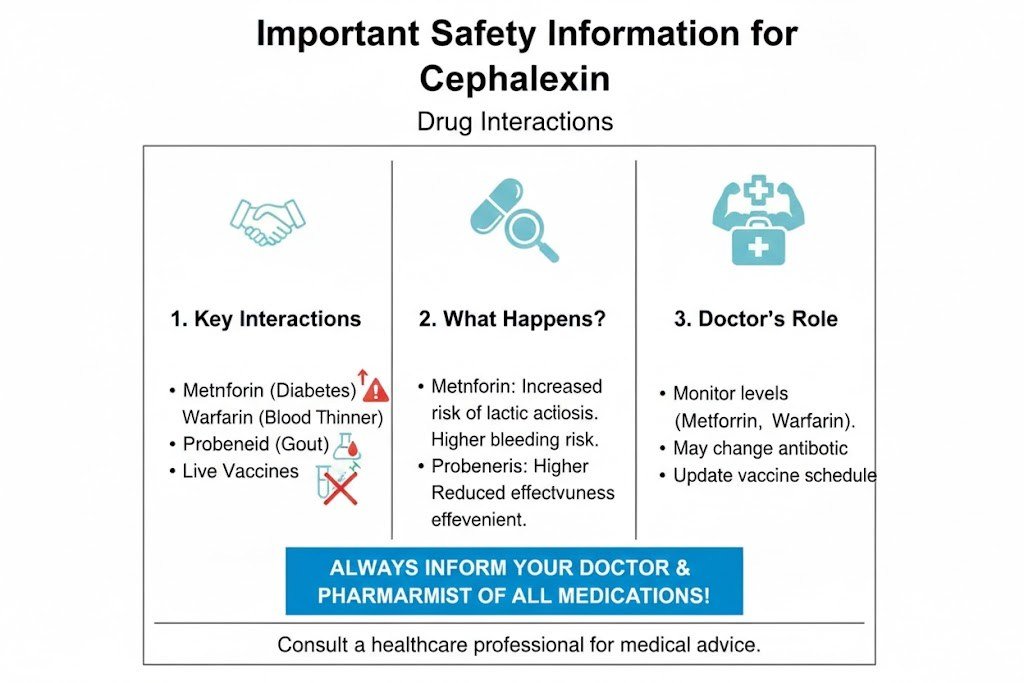
Cephalexin interacts with several medications:
- Metformin (diabetes medication) levels can increase when taken with cephalexin, raising the risk of lactic acidosis. Your doctor might monitor you more closely.
- Blood thinners like warfarin can become more potent, increasing bleeding risk. You might need more frequent blood tests.
- Probenecid (used for gout) increases cephalexin levels in your blood by preventing your kidneys from removing it quickly.
- Live vaccines might not work as well while you’re taking antibiotics.
Always give your doctor and pharmacist a complete list of everything you take, including vitamins, supplements, and over-the-counter medications.
Who Shouldn’t Take Cephalexin
Tell your doctor if you have:
- Kidney disease. Cephalexin leaves your body through the kidneys. Poor kidney function means you need a lower dose to avoid medication building up to dangerous levels.
- A history of intestinal problems like colitis. Antibiotics can worsen these conditions.
- Allergies to cephalosporins or penicillin. Cross-reactions happen.
Pregnancy and Breastfeeding
Cephalexin is generally considered safe during pregnancy (Category B). Doctors prescribe it when the benefits outweigh potential risks. I know several women who took it safely while pregnant for UTIs.
Small amounts pass into breast milk, but it’s usually fine for breastfeeding mothers. Watch your baby for diarrhea, thrush, or diaper rash, which can happen when antibiotics affect their gut bacteria.
Questions I Wish I’d Asked My Doctor
Can I drink alcohol while taking cephalexin?
- Unlike some antibiotics, cephalexin doesn’t interact dangerously with alcohol. However, alcohol can worsen side effects like stomach upset and might slow your recovery by weakening your immune system. Most doctors suggest avoiding alcohol until you’re feeling better.
What if I miss a dose?
- Take it as soon as you remember, unless it’s almost time for the next dose. Then skip the missed dose and continue your regular schedule. Never double up to make up for a missed dose.
Will cephalexin affect my birth control?
- This is a common concern. Cephalexin doesn’t reduce birth control effectiveness like some antibiotics (rifampin) do. However, if you develop vomiting or severe diarrhea, your birth control pills might not absorb properly. Use backup contraception if this happens.
How quickly should I feel better?
- Most people notice improvement within 48 to 72 hours. If you’re not feeling better after three days, call your doctor. You might need a different antibiotic or further evaluation.
Can I stop taking it once I feel better?
- No. This is one of the biggest mistakes people make. Stopping early allows resistant bacteria to survive and multiply. Finish the entire prescription even if you feel completely normal.
Stories from Real People
Jesus’s UTI Experience
- “I’ve had several UTIs, and cephalexin worked faster than other antibiotics I’ve tried. The burning went away by the second day, though I made sure to finish all seven days. The only issue was a mild yeast infection afterward, which my doctor warned me about. Eating yogurt daily helped.”
Tom’s Skin Infection
- “I got a nasty infection from a blister that popped while hiking. The area around it turned red, hot, and swollen. My doctor prescribed cephalexin 500 mg four times daily. Within two days, the redness started shrinking. By day five, it looked almost normal. I had some loose stools, but nothing terrible.”
How to Get the Best Results
Based on conversations with pharmacists and doctors, here’s what makes cephalexin work better:
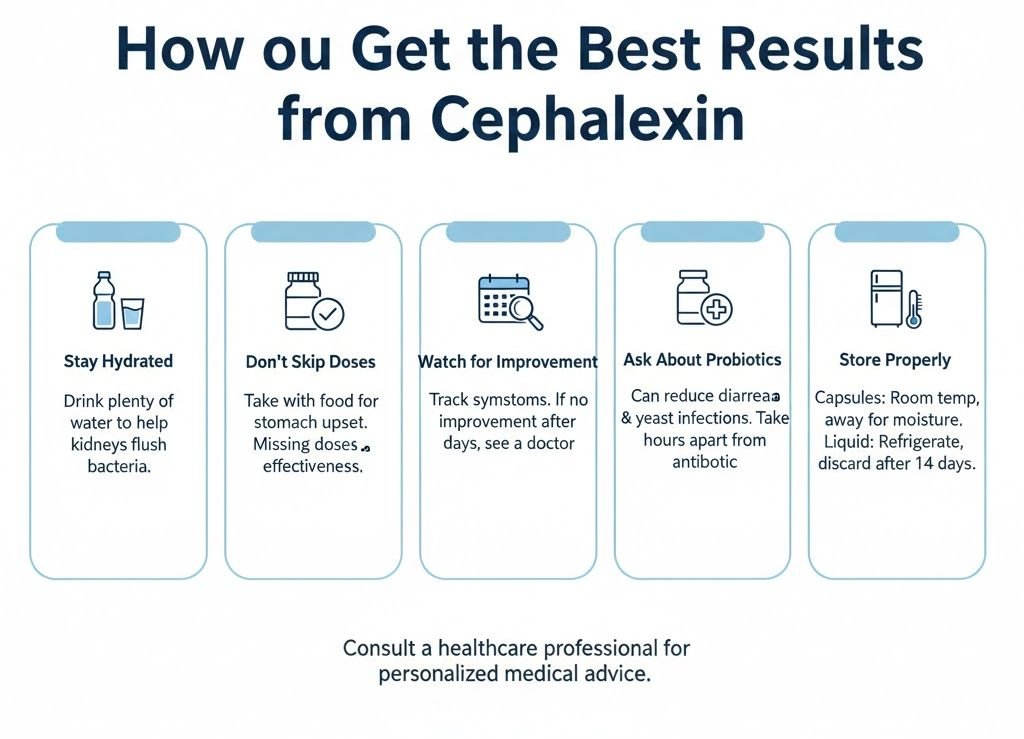
- Stay hydrated. Drinking plenty of water helps your kidneys flush out bacteria and process the medication properly.
- Don’t skip doses to avoid side effects. If you’re having stomach issues, take it with food instead of skipping. Missing doses is worse than mild discomfort.
- Watch for improvement. Keep track of your symptoms. If they’re getting worse or not improving after three days, you need medical attention.
- Ask about probiotics. Some doctors recommend taking probiotics a few hours after your antibiotic dose to maintain healthy gut bacteria. This might reduce diarrhea and yeast infections.
- Store it properly. Keep capsules at room temperature away from moisture and heat. Refrigerate the liquid suspension and throw it out after 14 days.
When to Call Your Doctor
Contact your healthcare provider if:
- Your symptoms don’t improve within 3 days
- New symptoms develop
- You have severe diarrhea (more than 3 watery stools daily)
- You develop signs of an allergic reaction
- You experience unusual bleeding or bruising
- Your urine output decreases significantly
- You develop severe stomach pain
- You see blood in your stool or urine
Bottom Line
Cephalexin is a reliable antibiotic that works well for many common bacterial infections. It’s been around since the 1960s, so doctors understand it thoroughly.
The keys to success are simple: take it exactly as prescribed, finish the entire course, and pay attention to how your body responds. Most people tolerate it well with only minor side effects.
This isn’t medical advice for your specific situation. Your doctor knows your health history and can determine if cephalexin is right for you. Use this guide to ask better questions and understand what to expect.
If you’re currently taking cephalexin, stick with it. If you’re considering whether to fill a prescription, talk with your pharmacist about any concerns. They’re incredibly knowledgeable and usually have more time to answer questions than busy doctors.
Remember, antibiotics only work when we use them correctly. Taking them responsibly helps ensure they’ll still work when we really need them.
References
- U.S. Food and Drug Administration (FDA). (2022). Cephalexin prescribing information.
- Joint Task Force on Practice Parameters. (2010). Drug allergy: an updated practice parameter. Annals of Allergy, Asthma & Immunology.
- Blair, J. M., et al. (2015). Molecular mechanisms of antibiotic resistance. Nature Reviews Microbiology.
- Mandell, G. L., Bennett, J. E., & Dolin, R. (2020). Mandell, Douglas, and Bennett’s Principles and Practice of Infectious Diseases. Elsevier.
- Macy, E., & Poon, K. Y. (2018). Penicillin and cephalosporin allergy: What do we know, what can we do? Allergy, Asthma & Clinical Immunology.
- Spellberg, B., & Shlaes, D. (2011). The end of antibiotics and the need for new development models. Journal of Antimicrobial Chemotherapy.
- Dixson, K., et al. (2019). Cephalosporin usage and the risk of Clostridium difficile infection: a systematic review and meta analysis. The Lancet Infectious Diseases.