

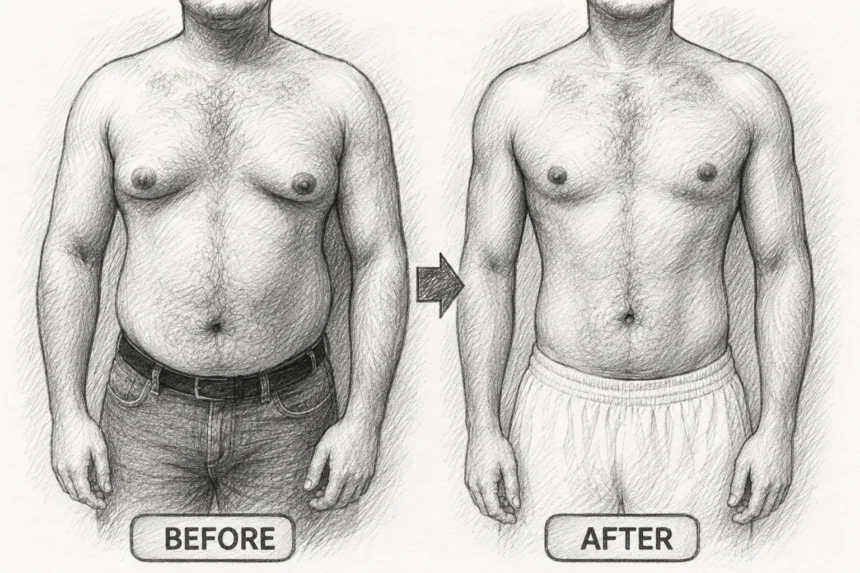
Let’s clear something up right away.
Estrogen is not a “female hormone.” Men produce it too. And you actually need it. just the right amount.
Too little estrogen and your bones get weak, your joints ache, and your mood tanks. Too much estrogen and you might notice puffy nipples, stubborn belly fat, low libido, and feeling unusually emotional.
The problem isn’t estrogen. The problem is estrogen dominance — when levels get too high relative to testosterone.
This is surprisingly common in modern men. And most don’t even know it.
Why Men’s Estrogen Levels Go Up
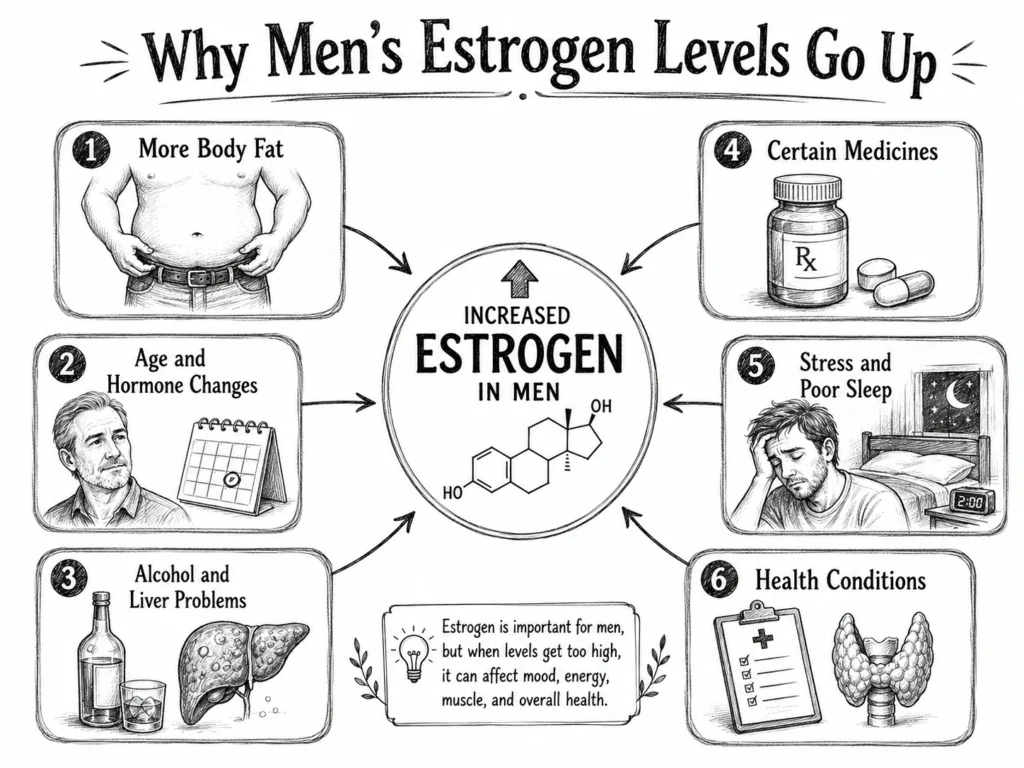
Your body makes estrogen from testosterone using an enzyme called aromatase. Aromatase lives in fat tissue, skin, and certain organs.
When you have more body fat, you have more aromatase activity. More aromatase = more conversion of testosterone into estrogen.
Here’s what drives that process in daily life:
- Excess body fat: The number one cause. Fat isn’t just storage. It’s an active endocrine organ.
- Chronic stress: High cortisol increases aromatase activity.
- Poor sleep: Low testosterone + high cortisol = favorable conditions for estrogen dominance.
- Alcohol: Heavy drinking damages the liver, which normally clears excess estrogen.
- Aging: Testosterone naturally declines after 30. Body fat often increases. The ratio shifts.
- Certain medications: Some antidepressants, opioids, and heartburn drugs affect hormone metabolism.
If you have a few of these factors, your estrogen could be quietly creeping up without any obvious symptoms at first.
Signs Your Estrogen Might Be Too High
Symptoms come on slowly. You might not connect the dots right away.
Look for a cluster of these:
Physical signs:
- Gynecomastia (enlarged or tender breast tissue).
- Stubborn fat around hips and lower belly.
- Water retention (puffy face, bloated feeling).
- Low libido or erectile difficulties.
- Fatigue that doesn’t improve with sleep.
Mood and mental signs:
- Increased anxiety or irritability.
- Brain fog and poor concentration.
- Feeling overly sensitive or tearful (yes, men experience this too).
You don’t need all of them. Even two or three lasting months are worth checking.
How to Naturally Lower Estrogen
Before jumping to medication, try these evidence-based lifestyle adjustments. Give them 8–12 weeks.
- Lose body fat. This is the most powerful natural aromatase inhibitor. Every kilogram of fat lost reduces aromatase activity.
- Prioritize fiber. Fiber binds to excess estrogen in the gut and helps excrete it. Aim for 30–40g daily from vegetables, beans, flaxseeds, and whole grains.
- Eat cruciferous vegetables. Broccoli, cauliflower, kale, and Brussels sprouts contain DIM (diindolylmethane), which supports healthy estrogen metabolism.
- Cut back on alcohol. Even 3–4 drinks per week can raise estrogen in some men. Try a 30-day break and see how you feel.
- Optimize sleep. 7–8 hours of quality sleep lowers cortisol and supports natural testosterone production, which helps balance the ratio.
- Manage stress. Cortisol directly increases aromatase. Daily deep breathing, walking outside, or simply setting better work boundaries helps.
These changes work for many men. But not all.
When Medical Help Makes Sense
Sometimes lifestyle isn’t enough. Genetics, severe obesity, or long-term hormone disruption can keep estrogen high despite your best efforts.
In these cases, doctors may prescribe an aromatase inhibitor – a medication that blocks the aromatase enzyme and stops testosterone from converting into estrogen.
One commonly used option is exemestane. It’s a third‑generation aromatase inhibitor that can lower estrogen production by up to 97%. It’s typically prescribed off-label for men with confirmed estrogen dominance when diet and exercise haven’t worked.
If you’re curious about pharmaceutical options, you can check the price of Exemestane 25 mg at Driada Medical — a verified European supplier that offers lab-tested products for medical use. Always use aromatase inhibitors under a doctor’s supervision, not as a DIY shortcut.
Aromatase inhibitors are powerful tools. They’re not for beginners or for healthy men trying to “optimize” normal levels. They’re for those with a genuine imbalance confirmed by blood work.
Right Way to Monitor Your Hormones

You can’t guess your estrogen levels. You need blood work.
Ask your doctor for these specific tests:
- Estradiol (sensitive assay, not standard – the sensitive one is accurate for men).
- Total testosterone.
- Free testosterone.
- SHBG (sex hormone binding globulin).
- LH and FSH.
Ideally, test first thing in the morning, fasted, after a good night’s sleep. Don’t train heavy the day before.
A healthy estradiol range for most men is between 10–40 pg/mL. But the right level also depends on your testosterone level. The ratio matters more than a single number.
Final Conclusion
Estrogen is not something men should fear. It plays an important role in bone strength, mood, libido, joint comfort, and general hormone balance. The real issue starts when estrogen becomes too high compared with testosterone, or when men try to lower estrogen without proper testing.
For most men, the best first step is not medication. It is improving body composition, sleep, alcohol intake, stress control, diet quality, and regular health checks. These changes support better testosterone and estrogen balance naturally.
If symptoms continue for several months, blood work is the safest next step. Estradiol, total testosterone, free testosterone, SHBG, LH, and FSH can give a clearer picture than symptoms alone. Aromatase inhibitors may help in selected medical cases, but they should only be used when a real imbalance is confirmed and monitored by a qualified doctor.
The goal is not to crush estrogen. The goal is balance.
Medical Disclaimer
This article is for general educational purposes only and should not be used as personal medical advice, diagnosis, or treatment guidance. Hormone symptoms can have many causes, including thyroid disease, liver problems, medication side effects, obesity, sleep disorders, stress, pituitary issues, testicular conditions, or other medical concerns.
Do not start, stop, or change testosterone therapy, aromatase inhibitors, exemestane, supplements, or any prescription medicine without speaking to a licensed healthcare professional. Lowering estrogen too much can cause joint pain, low mood, poor libido, fatigue, bone loss, and other health problems.
Anyone with breast swelling, nipple discharge, testicular pain, a testicular lump, severe erectile dysfunction, sudden hormone changes, or ongoing fatigue should seek medical evaluation. Blood test results should always be interpreted by a qualified clinician using the correct lab method, reference range, age, symptoms, and full medical history.
References
- Ahmed F, Hetty S, Laterveer R, Surucu EB, Mathioudaki A, Hornbrinck E, Patsoukaki V, Olausson J, Sundbom M, Svensson MK, Pereira MJ, Eriksson JW. Altered Expression of Aromatase and Estrogen Receptors in Adipose Tissue From Men With Obesity or Type 2 Diabetes. The Journal of Clinical Endocrinology & Metabolism. 2025;110(10)–e3424. DOI: 10.1210/clinem/dgaf038.
- Zumoff B, Miller LK, Strain GW. Reversal of the Hypogonadotropic Hypogonadism of Obese Men by Administration of the Aromatase Inhibitor Testolactone. Metabolism. 2003;52(9):1126–1128. DOI: 10.1016/S0026-0495(03)00186-0.
- Johnson RE, Murad MH. Gynecomastia: Pathophysiology, Evaluation, and Management. Mayo Clinic Proceedings. 2009;84(11):1010–1015. DOI: 10.1016/S0025-6196(11)60671-X.
- Rosner W, Hankinson SE, Sluss PM, Vesper HW, Wierman ME. Challenges to the Measurement of Estradiol: An Endocrine Society Position Statement. The Journal of Clinical Endocrinology & Metabolism. 2013;98(4):1376–1387. DOI: 10.1210/jc. 2012-3780.
- Araujo AB, Travison TG, Leder BZ, McKinlay JB. Correlations Between Serum Testosterone, Estradiol, and Sex Hormone-Binding Globulin and Bone Mineral Density in a Diverse Sample of Men. The Journal of Clinical Endocrinology & Metabolism. 2008;93(6):2135–2141. DOI: 10.1210/jc. 2007-1469.
- Van Pottelbergh I, Goemaere S, Kaufman JM. Bioavailable Estradiol and an Aromatase Gene Polymorphism Are Determinants of Bone Mineral Density Changes in Men Over 70 Years of Age. The Journal of Clinical Endocrinology & Metabolism. 2003;88(7):3075–3081. DOI: 10.1210/jc. 2002-021691.
- Mauras N, Lima J, Patel D, Rini A, di Salle E, Kwok A, Lippe B. Pharmacokinetics and Dose Finding of a Potent Aromatase Inhibitor, Aromasin, Exemestane, in Young Males. The Journal of Clinical Endocrinology & Metabolism. 2003;88(12):5951–5956. DOI: 10.1210/jc. 2003-031279.
- Lombardi P. Exemestane, a New Steroidal Aromatase Inhibitor of Clinical Relevance. Biochimica et Biophysica Acta. 2002;1587(2–3):326–337. DOI: 10.1016/S0925-4439(02)00096-0.
- Bhasin S, Brito JP, Cunningham GR, Hayes FJ, Hodis HN, Matsumoto AM, Snyder PJ, Swerdloff RS, Wu FCW, Yialamas MA. Testosterone Therapy in Men With Hypogonadism: An Endocrine Society Clinical Practice Guideline. The Journal of Clinical Endocrinology & Metabolism. 2018;103(5):1715–1744. DOI: 10.1210/jc. 2018-00229.