

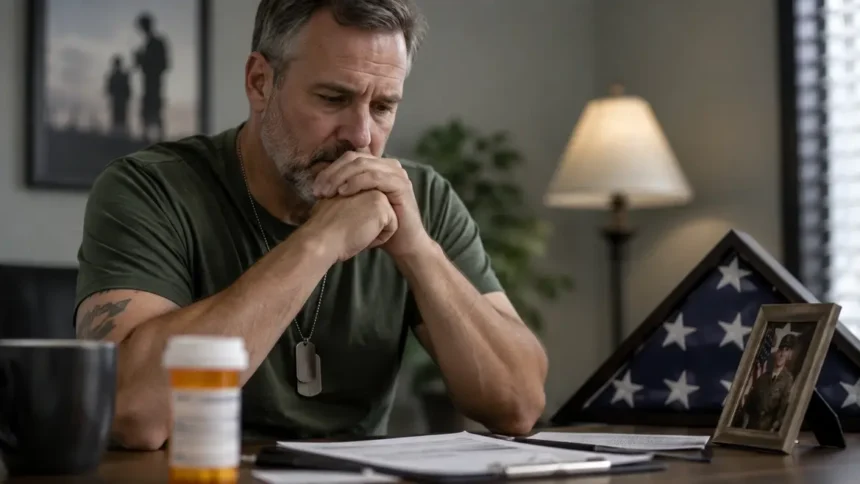
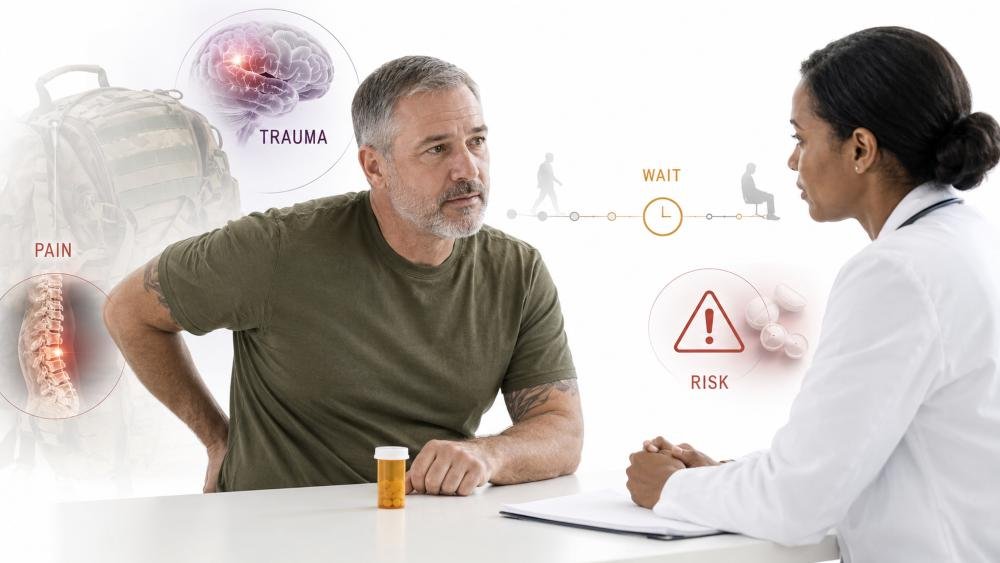
The prescription came from a military physician who saw him for twelve minutes. Three combat deployments, chronic back pain from carrying eighty-pound packs across Afghan mountains, and a bottle of oxycodone that would reshape the next decade. He did everything the military asked of him. The military gave him pills that nearly finished the job the war had started. When he finally went to the VA for help, he joined a waiting list that ran for months while the dependence deepened every day.
If he had died on that waiting list, there is a strong chance the VA would never have recorded it as an overdose.
Deaths The System Cannot Account For
Start with the finding that reframes everything else, and that has received almost no public attention.
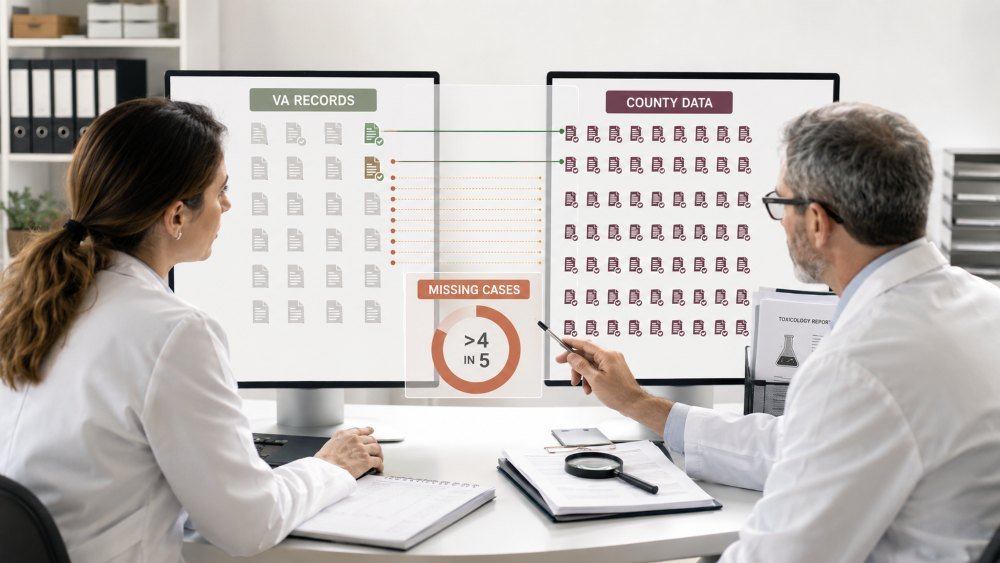
Researchers comparing VA records against county medical examiner data in San Diego found that VA records missed more than 80 percent of drug-related overdose deaths among veterans. Four in every five. When they separated the deaths by manner, the pattern got worse: intentional overdoses were captured accurately, while accidental overdoses, which account for the overwhelming majority of overdose fatalities, were missing more than 90 percent of the time.
Sit with the implication. Every VA program evaluation, every budget justification, every claim of progress on veteran overdose rests on a count that may be wrong by a factor of five. The toxicology findings in that study tracked county-wide trends closely, which suggests the veterans were dying the same way everyone else was dying. The VA was not seeing it.
An institution cannot explain a rate it cannot measure. That is the first and largest sense in which these deaths remain unexplained, and it is not a rhetorical flourish. It is a documented gap between what is happening and what the record shows.
Statistic Everyone Repeats, And Why It Fails
The second problem is that the number in circulation is not the number the evidence supports.
You have probably encountered the claim that veterans die of opioid overdose at roughly twice the civilian rate. It appears in advocacy material, congressional testimony, and most coverage of this subject. It comes from real research: a 2011 study found that in fiscal year 2005, opioid overdose mortality among patients of the Veterans Health Administration ran close to double the general population rate.
That finding was accurate. It is also twenty years old, and it describes a specific group rather than veterans generally. VHA patients carry more chronic pain, more medical comorbidity, and more mental health diagnoses than veterans who do not use VA care, and only about a third of veterans use VHA at all.
The current picture is stranger and harder to talk about. A study of veteran drug overdose mortality from 2010 to 2019, built from VA records, the VA and Defense Department mortality repository, and CDC data, found overdose deaths rising 53 percent among veterans against 79 percent among non-veterans. Veteran rates climbed from 19.8 per 100,000 in 2010 to a peak of 32.6 in 2017, then fell to 30.3 by 2019. From 2015 onward, veteran men showed lower age-adjusted overdose rates than non-veteran men.
So the picture the VA can produce says one thing. The picture the medical examiners produce says the record is missing most of the deaths. Both cannot be right, and the institution responsible for reconciling them has not done so.
There is a third gap, and it sits entirely inside the VA’s own walls. Veterans with recent VHA contact die of overdose at substantially higher rates than veterans without it, with the 2019 rate ratio at 1.69. The obvious reading is that the sickest veterans end up in VA care, which is true and insufficient. It does not tell you how much of the difference is selection and how much is the system, and the VA has not published an answer.
Where Military Medicine Started It
Combat produces injuries that require pain management. That much is not negotiable. What was negotiable was the prescribing culture that took hold during the Iraq and Afghanistan wars, when opioids moved freely to service members whose continued deployment depended on staying functional through pain that would otherwise have sidelined them.
Polypharmacy compounded it. Opioids arrived alongside benzodiazepines for anxiety, sedatives for insomnia, stimulants for alertness. The combinations were pharmacologically hazardous and clinically routine. The prescribing pattern answered to force readiness rather than individual patient welfare, and the two are not the same thing.
Transition to civilian life then broke the supply. Medications that flowed easily in uniform became difficult to obtain out of it. Some veterans found civilian physicians willing to continue writing. Others went to illicit markets. Dependence cultivated in service did not end at discharge, and discharge is precisely where institutional responsibility for it became ambiguous.
“The military created opioid dependence in a generation of service members through prescribing practices that prioritized short-term readiness over long-term health,” explains Rab Nawaz Khan, M.D. “These weren’t people seeking drugs recreationally. They were following medical orders from military physicians. The institution that asked them to sacrifice their bodies then gave them medications that created additional suffering. The debt owed to these veterans includes addressing the dependence military medicine helped create.”
Wounds That Don’t Show On A Scan
Post-traumatic stress and opioid use disorder move together in veteran populations with grim efficiency. The same deployments that produce chronic pain produce psychological injury, and opioids happen to address both at once. They dull the body, and they dull the memory.
The VA’s National Center for PTSD documents the co-occurrence directly, along with evidence that treating both conditions simultaneously works better than treating them in sequence. VA research puts PTSD prevalence among Iraq and Afghanistan veterans at roughly 11 to 20 percent, well above general population estimates.
The mechanics of self-medication are not mysterious. A veteran who cannot sleep without nightmares discovers that opioids deliver dreamless unconsciousness. A veteran who cannot tolerate crowds discovers that opioids put distance between him and the noise. The relief is real, temporary, and ultimately destructive, but it arrives in twenty minutes rather than twenty weeks, which is a decisive advantage in the moment someone is deciding.
Traumatic brain injury complicates both problems. It impairs impulse control and decision-making while generating chronic headaches that create genuine pain requiring genuine management. The injured brain is simultaneously more vulnerable to Addiction and harder to treat for it.
Moral injury, the damage done by participating in or witnessing something that violates a person’s deepest sense of right, gets less attention than PTSD and may drive substance use just as hard. It is not fear. It is the inability to forgive yourself, and it responds poorly to treatments designed for fear.
“Veterans carry combat trauma that directly fuels substance use, and you cannot treat the addiction without addressing the trauma underneath it,” explains Garret Biss, USMC (Ret.), Veteran Wellness and Resilience Expert at Diamond Mind. “The opioids aren’t just treating physical pain. They’re treating psychological pain that conventional psychiatry struggles to reach. Recovery for veterans requires trauma-informed approaches that understand what military service does to the mind, not just generic addiction treatment that ignores the specific wounds these men and women carry.”
Risk Is Not Spread Evenly
Population averages are the third thing obscuring these deaths, because the danger is not distributed across twenty million veterans. It is concentrated savagely in specific groups, and the averaging hides exactly the people most likely to die.
Veterans experiencing homelessness die at rates that make the population comparison look almost irrelevant. Research published in Addiction in 2025 found an overdose mortality rate of 227.3 per 100,000 person-years among homeless veterans against 23.2 among non-homeless veterans, running seven to fourteen times higher depending on the substance involved. Homelessness roughly tripled overdose death risk even after adjustment for other factors.
Rural veterans face compounding disadvantages. Distance from emergency services stretches the window between overdose and naloxone. Geographic isolation limits supply competition in ways that may concentrate potency.
None of these groups appears in the headline number. All of them are where the deaths are. A system reporting national averages while the mortality sits in its homeless and rural caseloads is not measuring the problem it has.
Fentanyl Changed The Arithmetic
Even as overall veteran overdose mortality declined from 2017 to 2019, deaths involving synthetic opioids and psychostimulants kept climbing. The aggregate improvement concealed a deteriorating trend underneath it, which is its own small lesson about trusting summary figures here.
Tolerance built on pharmaceutical opioids or heroin offers no meaningful protection against illicit fentanyl. The dose that worked last month can kill this month, and the person taking it has no way to know which. Counterfeit pills pressed to resemble oxycodone or hydrocodone carry unpredictable fentanyl content, which means a veteran who believes he is taking something familiar may be taking something several orders of magnitude stronger.
For a population already running elevated risk on trauma, pain, and isolation, an unpredictable supply is the variable that converts dependence into mortality.
What Actually Works
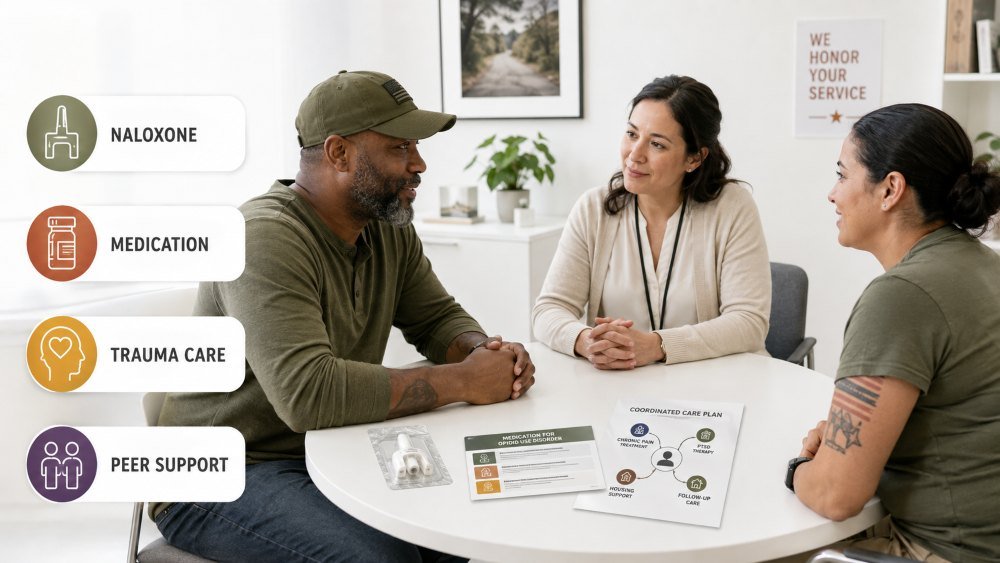
A comprehensive review of veteran overdose risk and prevention argues that effective response requires attention to biological, psychological, and structural factors at once rather than treating the pharmacology in isolation. Its recommendations are unglamorous and well-evidenced: widespread naloxone distribution, low-threshold wraparound services, and broad access to medications for opioid use disorder.
Three things consistently improve engagement with veteran patients. Cultural competence matters, because veterans frequently distrust clinicians who have no frame of reference for military experience and who miss or minimize what they are being told. Peer support from other veterans supplies a shared vocabulary that civilian peer support cannot replicate. And integrated dual-diagnosis care, addressing trauma and Addiction together rather than in sequence, produces better outcomes than treating one and hoping the other resolves.
The review makes a further point worth sitting with: veterans with lived experience of substance use should help design the programs meant to reach them. Interventions built without that input tend to solve the problems their designers imagined rather than the ones veterans actually have.
Accountability Question
The Department of Defense wrote the prescriptions. The VA inherited what followed. Pharmaceutical manufacturers marketed aggressively into military medicine and profited from a prescribing culture they helped shape. Settlement funds from opioid litigation ought to reach veteran-serving programs in proportion to veteran harm.
But the first obligation is simpler than money, and the VA can meet it without an appropriation. Reconcile the records against state and county medical examiner data. Publish the gap. Explain why veterans in VA care die at higher rates than veterans outside it. Report mortality by housing status and geography rather than by national average.
None of that requires new science. It requires an institution to count its dead accurately and say so publicly, and until that happens, every number in this article, including the reassuring ones, should be read as provisional.
He eventually found treatment through a veteran-specific program that understood his combat history was not separate from his Addiction but braided into it. The therapist was a veteran. The peer specialist had deployed to the same province. For the first time, he did not have to explain the parts no civilian seemed to follow. Recovery began when the treatment finally fit the person receiving it.
If You Need Help Now
Veterans and service members can reach the Veterans Crisis Line by dialing 988 and pressing 1, texting 838255, or chatting online. It is free, confidential, available 24 hours a day, and open to you regardless of discharge status or whether you are enrolled in VA care.
For treatment referral and information on substance use disorders, SAMHSA’s National Helpline is available at 1-800-662-HELP (4357), free and confidential, 24 hours a day in English and Spanish.
Disclaimer: This article is general reporting and does not constitute medical advice. Statistics reflect published research as of August 2026 and describe populations rather than individuals. Anyone concerned about their own or another person’s substance use should consult a qualified clinician.
References
- New methodology to improve tracking of Veteran overdose deaths and characterization of a population of Veteran overdose decedents in San Diego County. Available at: https://www.ncbi.nlm.nih.gov/pmc/articles/PMC12664422/
- Veteran drug overdose mortality, 2010-2019. Preventive Medicine. Available at: https://www.sciencedirect.com/science/article/abs/pii/S0376871622000333
- Tsai, J., Szymkowiak, D., Beydoun, H.A. Drug overdose deaths among homeless veterans in the United States Department of Veterans Affairs healthcare system. Addiction. 2025 Feb;120(2):306-315. doi: 10.1111/add.16689. Available at: https://pubmed.ncbi.nlm.nih.gov/39415621/
- Bennett, A.S., Elliott, L. U.S. military veterans and the opioid overdose crisis: a review of risk factors and prevention efforts. Available at: https://www.ncbi.nlm.nih.gov/pmc/articles/PMC9262363/
- U.S. Department of Veterans Affairs, National Center for PTSD. Co-Occurring Conditions. Available at: https://www.ptsd.va.gov/professional/treat/cooccurring/index.asp
- U.S. Department of Veterans Affairs, Office of Research and Development. Posttraumatic Stress Disorder (PTSD). Available at: https://www.research.va.gov/topics/ptsd.cfm
- U.S. Department of Veterans Affairs. Veterans Crisis Line. Available at: https://www.veteranscrisisline.net/
- Substance Abuse and Mental Health Services Administration. Mental Health and Substance Use Helplines. Available at: https://www.samhsa.gov/find-help/helplines