

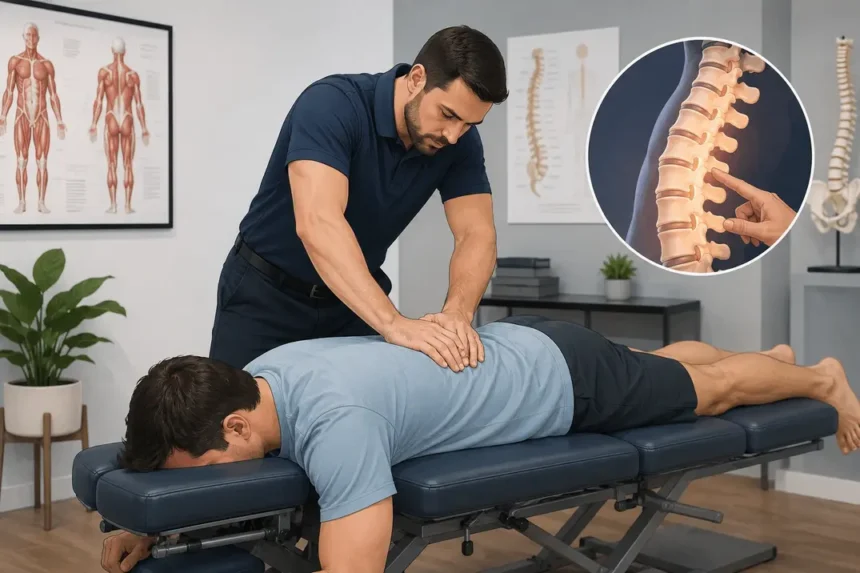
Pain can make ordinary tasks feel disproportionately difficult. Sitting through a workday, turning your head while driving, sleeping comfortably, or taking a walk may all become daily challenges. Concerns such as a persistent head tilt, back stiffness, or neck discomfort can also make people wonder whether hands-on treatment could help.
Spinal adjustments are one possible non-drug option for some types of musculoskeletal pain. They are not a cure-all, and they should not replace a medical evaluation when symptoms are severe, unusual, or worsening. The most useful pain-relief strategy usually takes into account movement, strength, daily routines, stress, sleep, and the underlying cause of the pain.
What Is a Spinal Adjustment?
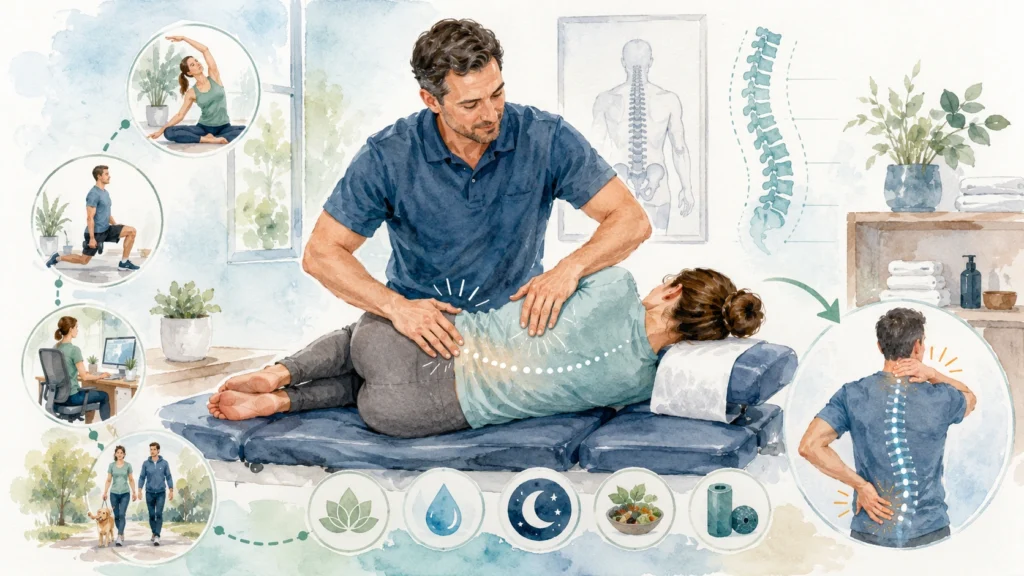
A spinal adjustment, or spinal manipulation, is a manual technique applied to spinal joints, typically involving a quick movement. This approach, distinct from mobilization, which uses slower movements, aims to enhance joint movement, reduce stiffness, and improve comfort. Prior to treatment, a qualified provider assesses the patient’s symptoms and medical history to ensure appropriate care. The popping sound heard during adjustments does not necessarily indicate treatment efficacy.
Potential Benefits for Pain and Movement
Spinal manipulation may offer modest improvements in pain and daily functioning for some with low-back pain. While benefits may appear in both the short term and the long term, results can vary among individuals.
- Less discomfort: A short course of care may reduce pain for some people.
- Easier movement: Standing upright, turning, bending, or walking may feel more manageable when stiffness improves.
- Better function: The meaningful outcome is often returning to household tasks, work duties, exercise, or sleep, not simply lowering a pain score.
- Support for active care: Feeling more comfortable may help a person participate in walking, mobility work, or rehabilitation exercises.
What Current Research Says
Research indicates a balanced perspective. A 2026 Cochrane review suggests that spinal manipulative therapy might slightly decrease pain and significantly improve function in adults with chronic low-back pain compared to sham treatments. The review also highlighted variations in study quality and outcomes, indicating that results may not be consistent across individuals. For many cases of uncomplicated low-back pain, adjustments tend to perform similarly to other conservative treatments, rather than clearly surpassing them. Exercise, physical therapy, education on maintaining activity, and practical self-management strategies remain crucial for long-term improvement. No responsible treatment approach should claim that adjustments can cure all conditions or explain every source of pain.
Which Types of Pain May Respond?
Spinal adjustments are most often studied in musculoskeletal complaints, especially low back pain. They may be considered for mechanical neck pain, limited joint mobility, stiffness from prolonged sitting, and some tension- or neck-related headaches. A person whose symptoms began after repetitive activity or a minor strain may also benefit from a broader conservative plan that includes hands-on care.
However, pain that travels down an arm or leg, new numbness, noticeable weakness, loss of coordination, or persistent symptoms after an injury deserve a more detailed assessment. Those symptoms can indicate irritation or involvement beyond a simple joint or muscle problem.
Why Movement Still Matters After an Adjustment
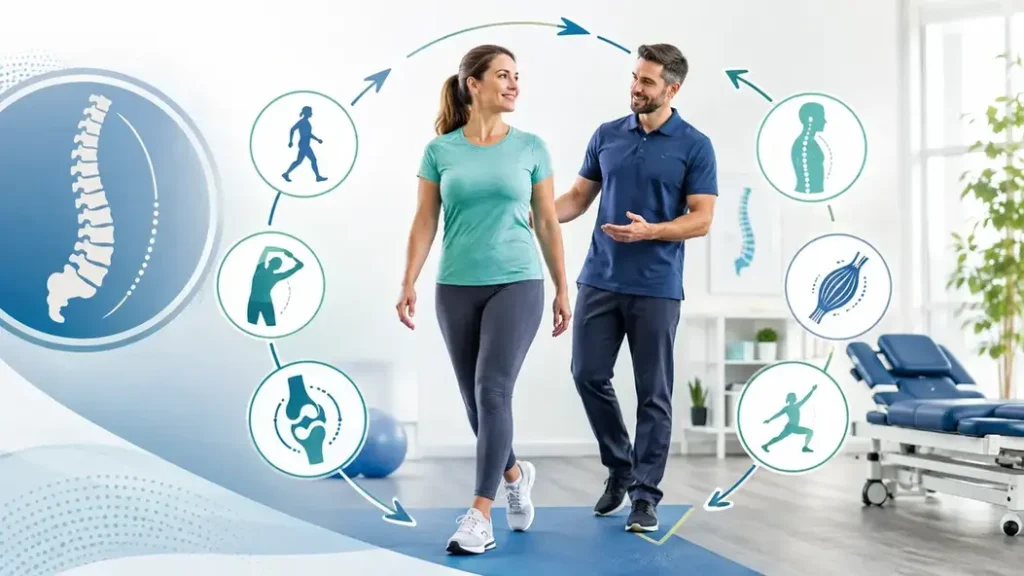
Temporary pain relief does not automatically build strength, restore endurance, or prevent another flare-up. A person with desk-related back stiffness may feel better after hands-on treatment but still benefit most from regular movement breaks, gradual core and hip conditioning, and improved work setup habits.
Useful movement plans often include walking, gentle mobility exercises, progressive strengthening, and pacing activity so that a person does not do too much too soon. Exercises should be individualized when possible. Copying an intense routine from the internet can aggravate symptoms if it does not match a person’s condition, fitness level, or medical history.
A Simple Decision Guide
- Describe the problem: Note where pain begins, how long it has lasted, and what makes it better or worse.
- Check for warning signs: Seek prompt medical care for severe weakness, loss of bladder or bowel control, fever, major trauma, unexplained weight loss, or numbness in the groin area.
- Review your health history: Discuss fractures, osteoporosis, inflammatory disease, cancer, surgery, blood-thinning medications, and neurological symptoms.
- Set a practical goal: Aim for an outcome such as sleeping through the night, walking for 20 minutes, or returning to a normal work task.
- Use a time-limited plan: Track pain, movement, and daily function over several visits rather than continuing care without a clear purpose.
- Reassess when needed: If symptoms worsen or progress stops, seek another opinion or medical evaluation.
Safety, Side Effects, and When to Pause
Short-term soreness, stiffness, mild discomfort, or headache can occur after spinal manipulation and often resolve quickly. Serious complications are uncommon, but no treatment is risk-free. A provider should carefully review risks before treating someone with fragile bones, recent surgery, a suspected fracture, cancer affecting the spine, or concerning neurological symptoms.
Neck manipulation deserves particular care. Anyone with sudden, unusual neck pain, severe headache, dizziness, vision changes, facial symptoms, weakness, or other neurological concerns should seek urgent medical assessment rather than assuming the problem is routine muscle tension.
Questions to Ask Before Starting Care
- What may be contributing to my pain?
- What improvement is realistic, and when should I expect it?
- How will progress be measured beyond pain alone?
- What movement, exercise, or self-care steps should I use at home?
- What side effects should I report right away?
- When should another health professional become involved?
How Adjustments Compare With Other Options
Spinal adjustments are best viewed as one tool among several. Exercise therapy can build strength and confidence with movement. Physical therapy often emphasizes assessment, movement retraining, and progressive rehabilitation. Heat, massage, and relaxation methods may provide short-term comfort. Medication can help manage symptoms for some people, but may involve side effects and does not necessarily address movement limitations. Medical evaluation is essential when pain is severe, persistent, or linked to warning signs.
Medical Disclaimer
This article is provided for general educational and informational purposes only. It is not intended to diagnose, treat, cure, or prevent any medical condition, and it should not be considered a substitute for advice, diagnosis, or treatment from a qualified healthcare professional.
Spinal manipulation or adjustment is not appropriate for everyone, and individual risks and benefits can vary based on symptoms, medical history, medications, bone health, previous injuries, and other health conditions. Anyone considering spinal manipulation should discuss their symptoms and medical history with a qualified, licensed healthcare professional.
Seek prompt medical attention for severe or rapidly worsening pain, significant weakness, new numbness, loss of coordination, loss of bladder or bowel control, numbness around the groin or saddle area, major trauma, fever with back pain, or sudden unusual neck pain or headache accompanied by neurological symptoms. Do not delay emergency or professional medical care based on information in this article.
References
- de Zoete A, Innocenti T, Petrozzi MJ, van Middelkoop M, Assendelft WJJ, de Boer MR, van Tulder MW, Rubinstein SM. Spinal manipulative therapy for adults with chronic low back pain. Cochrane Database of Systematic Reviews. 2026;2026(1):CD008112. Published January 6, 2026. doi:10.1002/14651858.CD008112.pub3. PMID: 41494147.
- Rubinstein SM, de Zoete A, van Middelkoop M, Assendelft WJJ, de Boer MR, van Tulder MW. Benefits and harms of spinal manipulative therapy for the treatment of chronic low back pain: systematic review and meta-analysis of randomised controlled trials. BMJ. 2019;364:l689. Published March 13, 2019. doi:10.1136/bmj.l689. PMID: 30867144.
- Qaseem A, Wilt TJ, McLean RM, Forciea MA; Clinical Guidelines Committee of the American College of Physicians. Noninvasive treatments for acute, subacute, and chronic low back pain: a clinical practice guideline from the American College of Physicians. Annals of Internal Medicine. 2017;166(7):514-530. Published April 4, 2017. doi:10.7326/M16-2367. PMID: 28192789.
- Paige NM, Miake-Lye IM, Booth MS, Beroes JM, Mardian AS, Dougherty P, et al. Association of spinal manipulative therapy with clinical benefit and harm for acute low back pain: systematic review and meta-analysis. JAMA. 2017;317(14):1451-1460. Published April 11, 2017. doi:10.1001/jama.2017.3086. PMID: 28399251.
- Hayden JA, Ellis J, Ogilvie R, Malmivaara A, van Tulder MW. Exercise therapy for chronic low back pain. Cochrane Database of Systematic Reviews. 2021;2021(9):CD009790. Published September 28, 2021. doi:10.1002/14651858.CD009790.pub2. PMID: 34580864.
- Swait G, Finch R. What are the risks of manual treatment of the spine? A scoping review for clinicians. Chiropractic & Manual Therapies. 2017;25:37. Published December 7, 2017. doi:10.1186/s12998-017-0168-5. PMID: 29234493.
- Biller J, Sacco RL, Albuquerque FC, Demaerschalk BM, Fayad P, Long PH, et al. Cervical arterial dissections and association with cervical manipulative therapy: a statement for healthcare professionals from the American Heart Association/American Stroke Association. Stroke. 2014;45(10):3155-3174. doi:10.1161/STR.0000000000000016. PMID: 25104849.
- Coulter ID, Crawford C, Vernon H, Hurwitz EL, Khorsan R, Booth MS, Herman PM. Manipulation and mobilization for treating chronic nonspecific neck pain: a systematic review and meta-analysis for an appropriateness panel. Pain Physician. 2019;22(2):E55-E70. PMID: 30921975.
- Fernandez M, Moore C, Tan J, Lian D, Nguyen J, Bacon A, et al. Spinal manipulation for the management of cervicogenic headache: a systematic review and meta-analysis. European Journal of Pain. 2020;24(9):1687-1702. doi:10.1002/ejp.1632. PMID: 32621321.
- World Health Organization. WHO Guideline for Non-Surgical Management of Chronic Primary Low Back Pain in Adults in Primary and Community Care Settings. Geneva: World Health Organization; 2023. 242 pages. ISBN: 978-92-4-008178-9.