

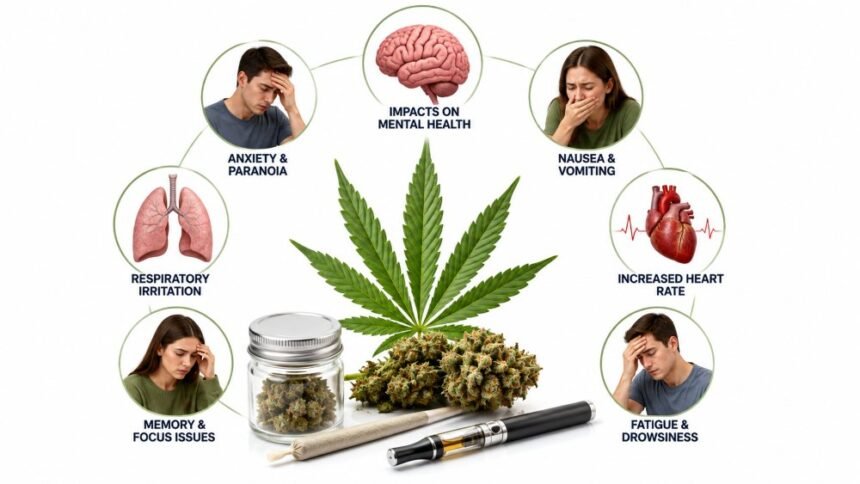
Cannabis has moved a long way in a short time. What was once whispered about is now sold in storefronts, prescribed in clinics, and joked about in prime-time television. That shift in attitude is real, and in many ways it is healthy. What sometimes gets lost along the way is a simple truth that applies to caffeine, alcohol, and prescription medicine just as much as it applies to weed: any substance strong enough to change how you feel is also strong enough to have a downside.
Understanding the side effects of weed is not about scaring anyone or taking sides in a political argument. It is about giving yourself enough information to make a sensible decision, to notice when something is going wrong, and to know what to do if a friend or family member starts to struggle. Whether someone uses cannabis for pain, for sleep, or simply to unwind, the effects are worth knowing in plain language. If you want a broader clinical overview of the side effects of weed, a treatment-focused resource can round out the picture, but the essentials are laid out below.
How THC Actually Works Once It Is in Your System
Most of the interesting and the troublesome effects of cannabis trace back to one molecule: delta-9-tetrahydrocannabinol, better known as THC. It is the compound responsible for the high. Its quieter cousin, cannabidiol or CBD, does not cause intoxication and is being studied for a range of therapeutic uses.
When you smoke, vape, or eat cannabis, THC enters the bloodstream and latches onto receptors that are part of the body’s own endocannabinoid system, an internal signalling network that helps regulate mood, memory, appetite, pain, and immune response. Because THC mimics chemicals the body already makes, it slips into that system and nudges all of those processes at once. That is why the effects are so wide-ranging, and why they vary so much from one person to the next depending on potency, dose, the method of use, and individual biology.
Short-Term Side Effects of Weed
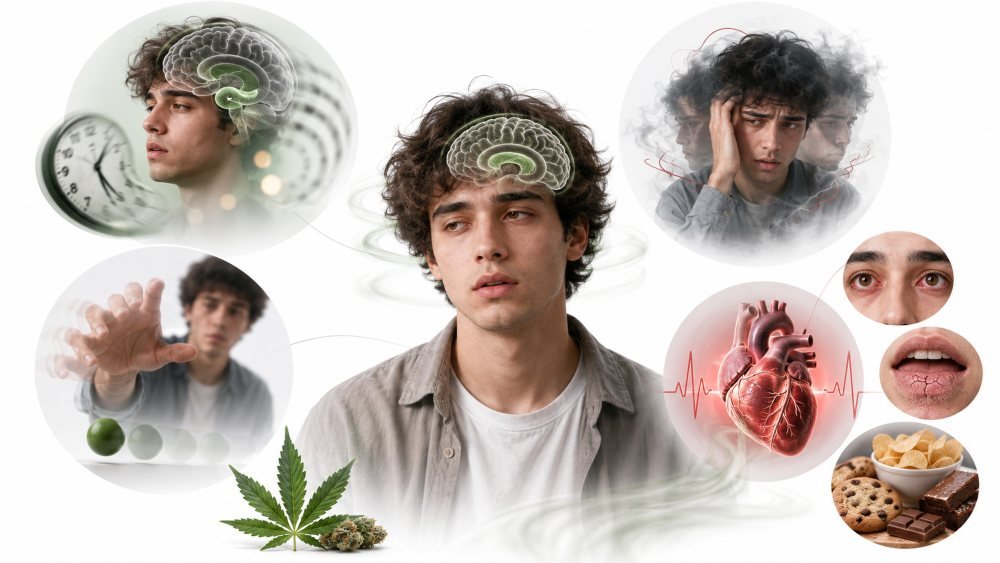
Short-term effects come on within minutes of inhaling, or over one to two hours with edibles, and usually fade as the THC is metabolised. They are not the same for everyone, but a familiar set shows up again and again.
Changes in Thinking and Perception
THC has a direct effect on the hippocampus, the part of the brain that files away new memories. Many people notice they lose their train of thought, struggle to hold onto a fresh piece of information, or find it hard to concentrate. Time can feel stretched, so a few minutes seem to drag on far longer. Coordination and reaction time also slow down, which is exactly why getting behind the wheel or operating machinery while high is genuinely dangerous rather than merely frowned upon.
Mood, Anxiety, and Paranoia
Plenty of people reach for cannabis to relax, and for them it delivers. Others, especially with strong modern products, get the opposite. Anxiety, a creeping sense of paranoia, and in some cases a full panic attack are among the most commonly reported adverse reactions. At high doses THC can occasionally tip someone into a temporary psychotic state marked by hallucinations or a loss of contact with reality. These episodes usually pass, but they can be frightening.
What the Body Does
Cannabis leaves physical fingerprints. Within minutes the heart rate can climb sharply, sometimes by dozens of beats per minute, and that added strain can linger for a couple of hours. For most healthy young people this passes without incident, but it matters a great deal for anyone with a heart condition. Research from the American Heart Association has linked cannabis use with a raised risk of heart attack and stroke. Dry mouth, red eyes, and a sudden surge of appetite, the famous munchies, round out the everyday physical effects.
Long-Term Risks of Regular Use
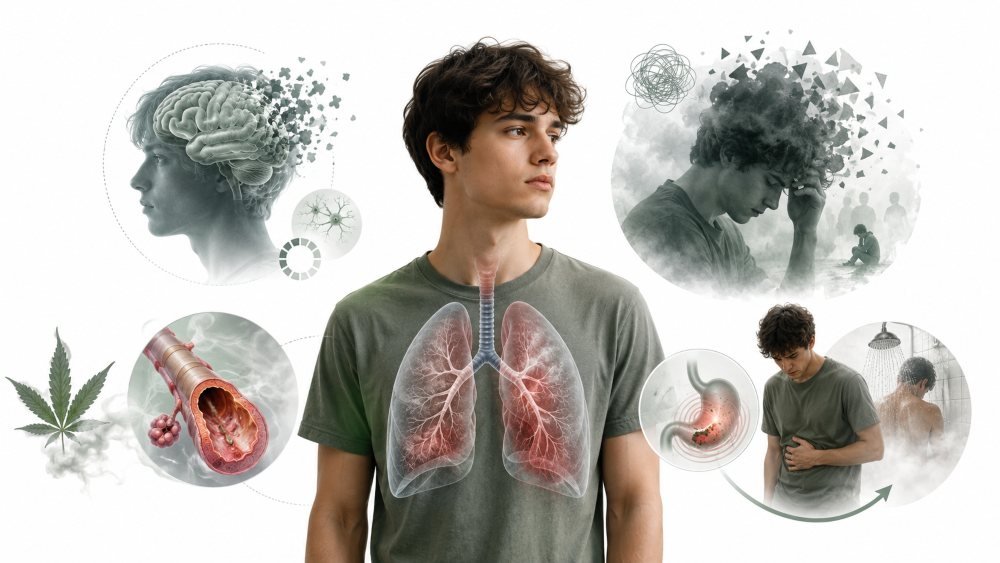
Occasional effects are one thing. What happens when use becomes frequent, heavy, and sustained over years is where the more serious concerns live.
Teenage Brain Is a Special Case
The human brain keeps maturing until roughly the age of twenty-five, and the regions that handle judgement, impulse control, and planning are among the last to finish. Cannabis appears to interfere with that process. Heavy use during the teen years has been linked to lasting changes in brain structure, weaker verbal memory, and reductions in cognitive performance that may not fully bounce back even after someone stops. This is the single strongest reason to keep cannabis away from adolescents.
Lungs and Breathing
Smoking anything sends irritants and combustion by-products into the lungs, and cannabis smoke is no exception. Regular smokers often develop a chronic cough, produce more phlegm, and pick up chest infections more easily. Airway inflammation and bronchitis are common. The direct link to lung cancer is still being studied and is less clear than it is for tobacco, but the everyday respiratory toll is well documented.
Mental Health Over Time
The relationship between cannabis and mental health is one of the most studied and most debated areas in the field. A landmark review by the National Academies of Sciences found that frequent, high-potency use is associated with a higher risk of developing psychosis, particularly in people who already carry a genetic vulnerability to schizophrenia. Heavy users also report higher rates of depression and a flattening of motivation, sometimes described as amotivational syndrome, where drive at work, school, and in relationships quietly erodes.
Cannabinoid Hyperemesis Syndrome
One of the strangest long-term effects is cannabinoid hyperemesis syndrome, or CHS. After years of heavy use, a small number of people begin to suffer cycles of severe nausea, relentless vomiting, and stomach pain. The telltale sign is that sufferers often find the only relief in long, very hot showers or baths. The Cleveland Clinic notes that the one reliable cure is complete and permanent cessation of cannabis, which makes CHS easy to miss and slow to diagnose.
Yes, Cannabis Can Be Addictive
The idea that weed is impossible to get hooked on is one of the most stubborn myths around it. The evidence says otherwise. According to the Centers for Disease Control and Prevention, roughly three in ten people who use cannabis develop some degree of cannabis use disorder, and the risk climbs for anyone who starts before eighteen.
The disorder is defined less by the drug itself than by the pattern around it: continuing to use despite clear damage to health, work, money, or relationships. People who cut down abruptly after heavy use can also face genuine withdrawal, including irritability, restlessness, poor sleep with vivid dreams, low appetite, and strong cravings that tend to peak in the first day or two.
Who Should Be Most Careful
Some people carry a heavier risk than others and have good reason to be cautious. Adolescents and young adults top the list because their brains are still developing. Pregnant and breastfeeding women come next, since THC crosses the placenta and enters breast milk and has been tied to lower birth weight and developmental concerns. Anyone with a personal or family history of psychosis, bipolar disorder, or severe depression can find those conditions worsened, and people living with heart disease, high blood pressure, or an irregular heartbeat face added cardiac strain during intoxication.
Finding Balance and Knowing When to Ask for Help
None of this means cannabis is uniquely dangerous. It means it is a real drug with real effects, and it deserves the same honest attention we would give to alcohol or any prescription. For some people, under medical supervision, it offers meaningful benefit. For others, especially with today’s high-potency products, the costs outweigh the reward.
If cannabis has stopped feeling like a choice, if the side effects are piling up, or if someone you care about cannot stop despite wanting to, that is worth taking seriously rather than shrugging off. Confidential, judgement-free support exists, and the earlier someone reaches out the easier the path tends to be. A round-the-clock resource such as the SAMHSA National Helpline can point people toward local treatment, and structured programmes that combine counselling with practical recovery planning have helped a great many people find their footing again.
Medical Disclaimer
This article is provided for general educational and informational purposes only and is not a substitute for professional medical advice, diagnosis, or treatment. It should not be used to make decisions about your health or the health of anyone else. Always seek the guidance of a qualified physician or another licensed healthcare provider with any questions about a medical condition or cannabis use. Never disregard or delay professional medical advice because of something you have read here. If you believe you are experiencing a medical emergency, contact your local emergency services immediately.