

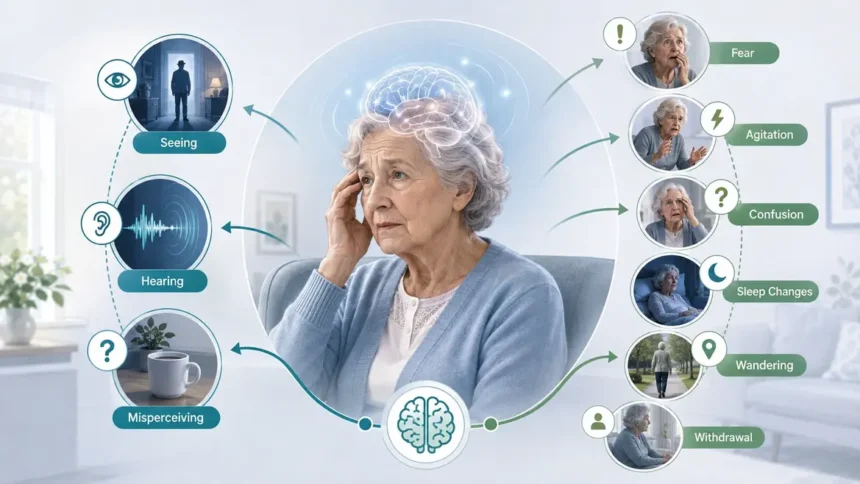
Changes in behavior can be one of the most difficult parts of caring for someone with dementia. A once calm person may suddenly become suspicious, angry, restless, or fearful. These changes can happen because memory loss and cognitive decline affect how the brain understands people, places, and everyday situations.
Hallucinations can make these behaviors even harder to understand. A person may see people, animals, or objects that aren’t actually there. They may also hear sounds or voices that others cannot hear. Understanding dementia and being mean to family can help families respond with patience instead of assuming the person is simply being difficult.
Why Dementia Can Change Behavior
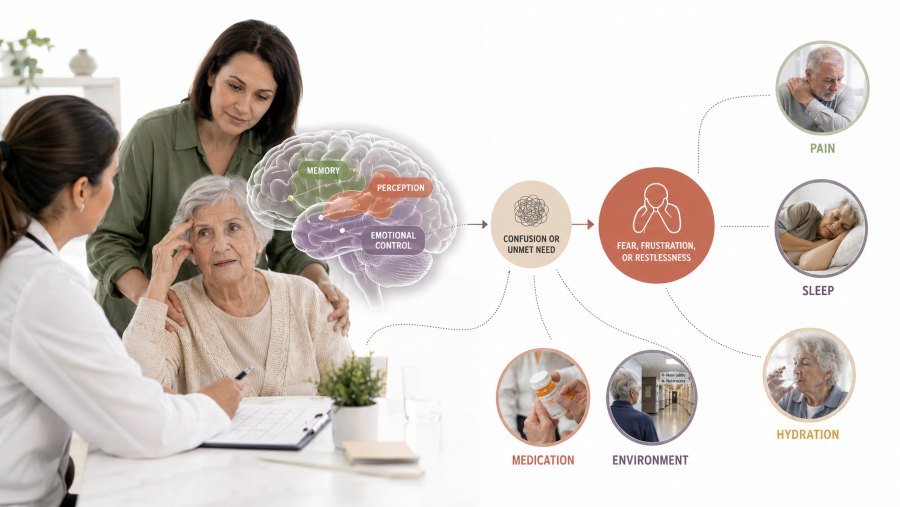
Dementia can affect more than memory. As cognitive function changes, a person may struggle to understand conversations, recognize familiar surroundings, or remember what happened moments earlier. This confusion can lead to frustration, fear, or sudden emotional reactions.
Physical discomfort can also influence behavior. Poor sleep, hunger, pain, medication changes, or an unfamiliar environment may make symptoms worse. NHS guidance on coping with dementia behaviour changes encourages carers to ask a doctor to rule out underlying causes before assuming the behavior is the condition itself. When you understand these possible triggers, it becomes easier to look beyond the behavior and ask what the person may actually need.
Dementia and Being Mean to Family: Why It Happens
It can be painful when a loved one becomes rude, angry, or aggressive toward family members. However, these reactions don’t always reflect how the person truly feels about you. Changes in the brain can affect emotional control and make ordinary situations feel threatening or confusing. The Alzheimer’s Society explains that aggressive behaviour and dementia are often linked to an unmet need rather than to the illness alone.
Memory impairment can also play a role. Someone may forget a familiar relationship or misunderstand a caregiver’s intentions. For example, a person may believe a family member is trying to take something from them when that isn’t happening. Responding calmly can reduce fear and prevent the situation from escalating.
What Hallucinations in Dementia Can Look Like
Hallucinations can take different forms. A person might report seeing a stranger in the room, hearing someone calling their name, or feeling that someone is touching them. According to the Alzheimer’s Association, hallucinations in dementia can involve any of the senses, and some are frightening while others are ordinary or even comforting. These experiences can feel completely real to the person even when others know they aren’t happening.
It’s important not to dismiss the experience harshly. Saying “that’s not real” may increase fear or confusion. Instead, acknowledge the person’s feelings and calmly check the environment for possible causes such as shadows, mirrors, television sounds, or poor lighting.
What Stage of Dementia Is Hallucinations?
Hallucinations can occur at different points, depending on the underlying condition. They’re sometimes associated with later-stage cognitive problems, but they can also appear earlier in certain types of dementia. In Lewy body dementia, for example, Mayo Clinic notes that visual hallucinations may be one of the earliest symptoms. Their presence alone doesn’t tell you exactly what stage a person has reached.
A sudden change deserves particular attention. New hallucinations may sometimes be linked to infection, medication effects, dehydration, sleep problems, or another medical issue. If the change is sudden or severe, contacting a healthcare professional is important.
How Hallucinations Can Trigger Difficult Dementia Behaviors
Imagine waking up and seeing a stranger standing in your bedroom when everyone else says nobody is there. You’d probably feel frightened too. Hallucinations can create that same sense of danger for a person experiencing them.
Fear may lead to shouting, pacing, refusing care, hiding, or becoming defensive. Cleveland Clinic describes how changes in mood and perception can appear together, with suspicion, agitation, and false beliefs surfacing alongside what the person sees or hears. These behaviors aren’t necessarily intentional. They may be the person’s attempt to protect themselves from something their brain perceives as real.
How Families Should Respond in the Moment When Behavior May Signal a Bigger Problem
Your first goal should be safety and reassurance. Keep your voice calm, give the person enough personal space, and avoid arguing about what they see or hear. Simple statements such as “You’re safe. I’m here with you” can sometimes provide comfort. The National Institute on Aging offers similar advice for coping with hallucinations, delusions, and paranoia, including telling the doctor about the episode and reviewing current medicines.
Also look for changes around the person. Ask yourself whether they seem unusually tired, uncomfortable, confused, or physically unwell. If behavior changes suddenly, especially alongside other dementia symptoms, the family should consider seeking medical advice rather than assuming it’s simply part of the condition.
Why Family Caregivers Should Not Handle This Alone
Caring for someone with cognitive decline can become exhausting. Family caregivers may spend hours managing confusion, appointments, medications, changing behaviors, and everyday responsibilities. Trying to handle everything alone can leave caregivers overwhelmed. CDC research on caregiver health and wellbeing shows that people caring for a relative with dementia often neglect their own medical needs and carry higher out-of-pocket costs than other caregivers.
Support can come from doctors, nurses, professional in-home senior care agencies, support groups, and trusted relatives. A strong dementia care plan should consider both the person’s needs and the caregiver’s wellbeing. Asking for help isn’t a failure. It can make care safer and more sustainable.
Practical Home Adjustments That May Reduce Triggers
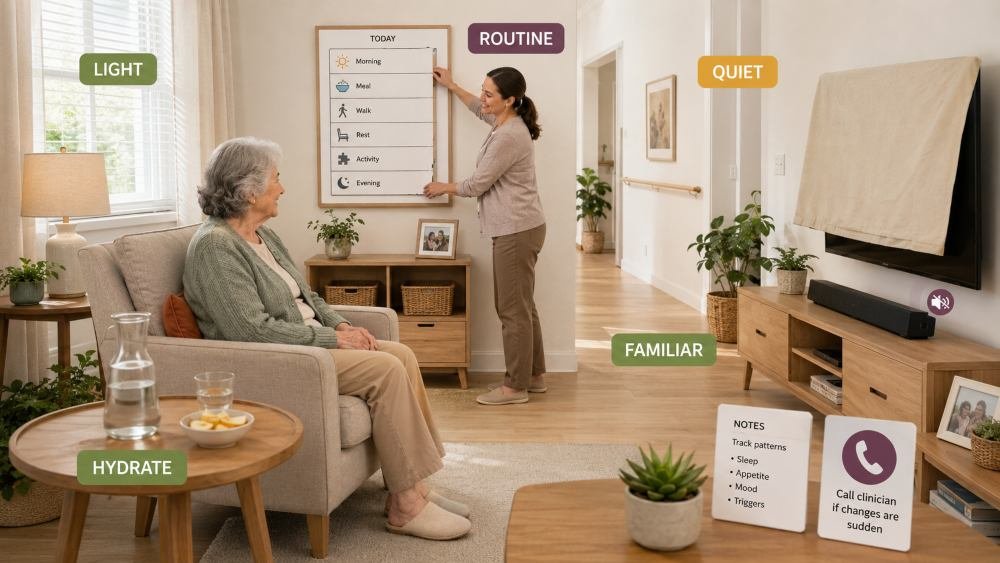
Small changes at home may help reduce confusion and unnecessary stress. Keep rooms well lit and remove clutter that could create confusing shapes or shadows. Familiar furniture, regular routines, and clear pathways can also make the environment easier to understand.
Consider these practical steps:
- Keep lighting consistent, especially in the evening.
- Reduce loud television or background noise.
- Keep important objects in familiar places.
- Maintain a predictable daily routine.
- Watch for patterns that seem to trigger distress.
- Make sure the person gets enough food, fluids, and rest.
- Discuss sudden or worsening changes with a healthcare professional.
FAQs
1. Can dementia cause hallucinations?
- Yes. Some people with dementia may experience visual, auditory, or other types of hallucinations.
2. Why can someone with dementia become angry with family?
- Confusion, fear, memory impairment, and difficulty communicating can contribute to anger or defensive behavior.
3. Should I argue with someone experiencing a hallucination?
- No. Calm reassurance is usually more helpful than arguing about whether the experience is real.
4. Can sudden hallucinations indicate another problem?
- Yes. Sudden changes can sometimes be related to infection, medication effects, dehydration, or other medical problems.
5. How can families support better brain health?
- Regular routines, appropriate physical activity, social engagement, good sleep, and professional guidance can support overall brain health. The World Health Organization’s dementia fact sheet also highlights modifiable risk factors that may lower the risk of cognitive decline.
Conclusion
Understanding behavior changes can make difficult moments easier for families to manage. Hallucinations, confusion and disorientation, and emotional changes may have different causes, so it’s important to look at the whole situation rather than judging the behavior alone.
With patience, a safe environment, appropriate medical guidance, and reliable support, families can provide better care while also protecting their own wellbeing. Recognizing early signs of dementia and reporting significant changes can also help healthcare professionals provide more appropriate support.
Disclaimer
This article is intended for general information and educational purposes only. It is not medical advice, and it is not a substitute for diagnosis, treatment, or guidance from a qualified healthcare professional. Dementia affects every person differently, and behaviors such as aggression or hallucinations can have several possible causes, including treatable medical conditions. Always speak with a doctor, nurse, or other licensed clinician about the specific needs of the person you care for, particularly if symptoms appear suddenly, worsen, or raise concerns about safety. Never delay or disregard professional medical advice because of something you have read here. In an emergency, contact your local emergency services immediately.