

Substance abuse is often talked about in a way that sounds simple from the outside. People say someone should “just stop.” They say a person has to lose everything before help makes sense. They say addiction only happens to people who are careless, irresponsible, or weak.
But real life is not that neat.
Addiction is not a flat story with one kind of person, one kind of cause, and one clear turning point. It can start quietly. It can build through stress, grief, pressure, trauma, loneliness, pain, or repeated exposure to a substance that slowly becomes harder to control. Sometimes it begins with social use. Sometimes it begins with a prescription. Sometimes it begins with a person trying to sleep, calm down, stay awake, feel normal, or get through a season that feels too heavy.
That is why myths about substance abuse are so harmful. They do more than spread wrong ideas. They delay help. They increase shame. They make families misread warning signs. They make people think, “I’m not bad enough yet,” when the truth is that support matters long before a life falls apart.
Compassion does not mean ignoring the damage addiction causes. It means seeing the whole person, not just the behavior. Clarity does not mean being cold or harsh. It means facing the problem honestly, without hiding behind blame or denial.
Addiction Does Not Have One Look
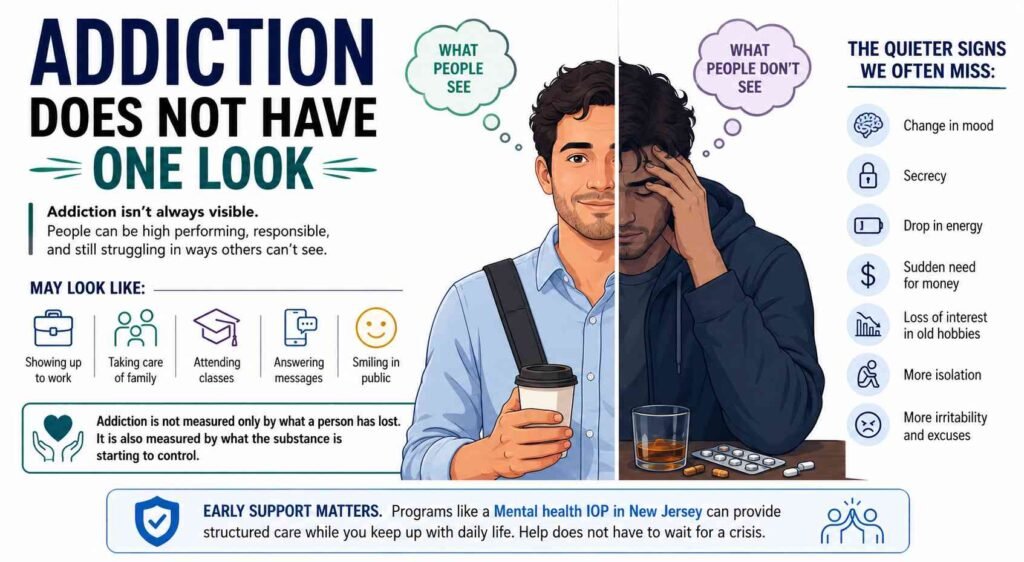
One of the strongest myths about substance abuse is the belief that addiction has a certain face. Many people imagine someone who has lost a job, lost housing, lost family support, or lost control in a very visible way. Because of that, they often miss the person who is still showing up to work, still parenting, still attending class, still answering messages, and still smiling in public.
Addiction can live behind a clean shirt and a busy schedule.
A person can look organized and still be struggling. They can meet deadlines while secretly relying on alcohol to sleep. They can keep a family routine while misusing pills. They can appear social and confident while using substances to manage anxiety. That is part of what makes addiction so hard to see from the outside.
The stereotype becomes a screen. People look for the dramatic signs and miss the quieter ones. A change in mood. A pattern of secrecy. A drop in energy. A sudden need for money. A loss of interest in old hobbies. More isolation. More irritability. More excuses.
And then there is the shame. When someone does not match the common image of addiction, they often tell themselves they do not really have a problem. They say they are just stressed. They say they can stop later. They say it is not serious because they still have a job, a home, or a family.
But addiction is not measured only by what a person has lost. It is also measured by what the substance is starting to control.
This is why early support matters. For someone who needs structured mental health care while still staying connected to daily responsibilities, a program such as a Mental health IOP in New Jersey can offer support before everything reaches a crisis point. Help does not have to wait until the damage becomes extreme.
Rock Bottom Is Not a Requirement for Help
The idea of “rock bottom” sounds dramatic, and many people repeat it like a rule. They believe a person has to lose everything before they will take recovery seriously. But waiting for rock bottom can be dangerous. It turns pain into proof. It tells families to stand by while things get worse. It tells the person struggling that they are not allowed to ask for help yet.
No one should have to earn care by suffering more.
Think about how strange this idea would sound in any other health situation. You would not tell someone with chest pain to wait for a heart attack before seeing a doctor. You would not tell someone with depression to wait until they cannot get out of bed before speaking to a therapist. Yet with substance abuse, people are often told to wait until the situation becomes unbearable.
That mindset hurts everyone involved.
Addiction often becomes harder to treat the longer it continues. Relationships become more strained. Physical health can decline. Trust can break. Work, school, and family life can become unstable. The person may feel more trapped with each passing month.
The better message is simple: if substance use is starting to affect health, mood, choices, safety, money, work, sleep, or relationships, it is already worth taking seriously.
A person does not need to be in an emergency to need support. They do not need to look broken. They do not need to fit someone else’s idea of “bad enough.” Wanting help early is not overreacting. It is wise.
Willpower Is Not the Whole Story
Another common myth says addiction is only about willpower. If someone really wanted to stop, people say, they would stop. That sounds clean and direct, but it misses how addiction works.
Substance abuse affects the brain’s reward system, stress response, and decision-making patterns. Over time, the brain starts to connect the substance with relief, comfort, confidence, sleep, energy, or escape. So when the person tries to stop, they are not only fighting a habit. They are fighting cravings, withdrawal, emotional triggers, and old patterns that have become deeply tied to daily life.
That does not remove responsibility. It adds context.
People with addiction still need accountability. They need to be honest. They need to take steps toward recovery. They need to repair harm when they can. But shame alone does not create lasting change. Neither does a lecture about self-control.
Honestly, many people with substance use problems already feel ashamed. They know they are hurting themselves. They often know they are hurting people they love. They may promise to stop and fully mean it in that moment. Then stress hits, cravings rise, or withdrawal begins, and the promise becomes hard to keep.
That is not because they do not care.
It is because addiction is stronger than a simple decision when no support system is in place. Recovery needs more than desire. It needs structure, treatment, therapy, safer coping skills, and people who understand what the person is up against.
This is also where families can shift their approach. Instead of asking, “Why won’t you just stop?” a better question is, “What support will help you stay stopped?” That small change in wording opens a different kind of conversation. It moves the focus from blame to action.
Detox Is Important, But It Is Not the Whole Recovery
Detox is often misunderstood. Some people think once the substance leaves the body, the addiction is fixed. That sounds logical at first. If the drug or alcohol is gone, the problem should be gone too, right?
Not quite.
Detox helps the body clear the substance. It can also help people manage withdrawal more safely, especially when withdrawal symptoms become intense or risky. For many people, detox is the first doorway into recovery. But it is not the entire house.
Addiction also lives in routines, emotions, memories, relationships, and coping patterns. If a person finishes detox and returns to the same stress, same triggers, same social circle, and same untreated pain, the risk of relapse stays high.
That does not mean detox failed. It means detox was only the beginning.
For people who need medical support during withdrawal, a Medical detox center in Washington can provide care during that first stage. This setting matters because stopping some substances suddenly can affect the body in serious ways, and professional support can help protect safety during a vulnerable time.
But after detox, the deeper work continues.
A person needs to learn what led them to depend on the substance. Was it anxiety? Trauma? Depression? Chronic pain? Social pressure? Grief? A lack of healthy coping tools? A home life that never felt calm? These questions matter because recovery has to address the reason the substance became so important in the first place.
Detox clears the body. Recovery rebuilds life.
People Are More Than Their Worst Choices

Substance abuse can cause real harm. It can lead to lies, missed responsibilities, emotional distance, unsafe choices, money problems, and broken trust. Families often carry fear and anger for good reason. Friends get tired. Partners feel betrayed. Children can feel confused or unsafe.
Compassion does not mean pretending none of that happened.
This is where people sometimes get stuck. They think compassion means excusing everything. But compassion and boundaries can exist together. A family member can say, “I love you, and I will not cover for you anymore.” A partner can say, “I care about your recovery, and I also need safety and honesty.” A friend can say, “I want to support you, but I cannot keep pretending this is fine.”
That is not cruelty. That is clarity.
The harmful myth here is that people with addiction are simply bad, selfish, or hopeless. Addiction can push people into behavior that does not reflect who they want to be. It can shrink their world until the substance becomes the center of their choices. That does not erase the damage. It does remind us that healing is still possible.
People recover when they receive support that is honest, steady, and practical. They need help understanding their triggers. They need to learn how to sit with discomfort without reaching for a substance. They need to rebuild trust through repeated action, not just promises.
Therapy plays a major role in that process. Support such as Therapy For Addiction Recovery can help people work through emotional pain, relapse patterns, shame, trauma, and the daily choices that shape long-term recovery.
Recovery is not only about stopping the substance. It is about becoming someone who can live without needing that substance to survive the day.
Silence Keeps the Myths Alive
Many families avoid talking about substance abuse because they do not want conflict. Parents worry they will say the wrong thing. Partners fear the conversation will turn into a fight. Friends notice changes but stay quiet because it feels awkward.
But silence does not protect anyone. It often protects the addiction.
A caring conversation does not need to sound perfect. It just needs to be honest. “I’ve noticed you seem different lately, and I’m worried.” That sentence can open a door. So can, “I care about you, and I think this is becoming serious.”
The goal is not to shame the person into change. Shame usually makes people hide. The goal is to create a moment where truth can enter the room.
It also helps to talk about addiction the same way we talk about other health concerns, with seriousness and respect. Nobody benefits when substance abuse becomes gossip, a punchline, or a moral label. People need facts. They need care. They need options. They need to know that asking for help does not make them weak.
And families need support too. Loving someone with addiction can be exhausting. It can make a person anxious, suspicious, angry, and sad all at once. Family members often need their own space to process what has happened and learn how to support recovery without losing themselves.
Seeing Addiction With Both Compassion and Clarity
The myths around substance abuse survive because they offer easy answers. But easy answers do not always help real people.
Addiction is not limited to one type of person. Rock bottom is not a treatment plan. Willpower is not enough by itself. Detox is not the whole recovery. Relapse does not erase progress. And compassion does not mean ignoring harm.
A clearer view makes room for both truth and hope.
When we understand addiction with compassion, we stop reducing people to their worst moments. When we understand it with clarity, we stop pretending the problem will fix itself, and both matter. One without the other is incomplete.
People need support before a crisis. Families need language that helps instead of hurts. Communities need to let go of old stereotypes that keep people silent.
The more we challenge these myths, the easier it becomes for someone to say, “I need help,” before everything falls apart. And sometimes, that one honest sentence is where recovery begins.
Final Thoughts
Substance abuse is easier to judge from a distance than it is to understand up close. That is why myths can be so damaging. They make people hide their pain, delay treatment, or believe they are not “bad enough” to deserve help.
A better response begins with honesty. Addiction can harm health, trust, family life, work, and safety. At the same time, people who struggle with addiction are not beyond help. Recovery becomes more possible when shame is replaced with support, facts, boundaries, and practical care.
The most important message is simple: help does not need to wait for a crisis. If substance use is beginning to affect daily life, relationships, mood, sleep, money, safety, or decision-making, it is already worth taking seriously. Early support can protect people from deeper harm and give families a clearer path forward.
Understanding addiction with compassion does not mean ignoring responsibility. It means seeing the full person, asking better questions, and supporting recovery with realistic tools. That balance of care and clarity is what helps people move from silence toward change.
Disclaimer
This article is for general informational and educational purposes only. It should not be used as a substitute for professional medical advice, diagnosis, therapy, detox care, or addiction treatment.
Substance use disorders can involve physical, emotional, and mental health risks. Some forms of withdrawal can be medically serious, so anyone considering stopping alcohol, prescription medication misuse, or other substance use should speak with a qualified healthcare professional first. In an emergency or immediate safety concern, contact local emergency services or go to the nearest emergency department.
Treatment needs vary from person to person. A licensed doctor, therapist, addiction specialist, or treatment provider can help decide what level of care is appropriate.
References
- Center for Substance Abuse Treatment. Detoxification and Substance Abuse Treatment. Treatment Improvement Protocol Series, No. 45. HHS Publication No. SMA 15-4131. Rockville, MD: Substance Abuse and Mental Health Services Administration; 2006. PMID: 22514851.
- American Society of Addiction Medicine. ASAM Releases New Definition of Addiction to Advance Greater Understanding of the Complex, Chronic Disease. Rockville, MD: American Society of Addiction Medicine; 2019.
- Volkow ND, Koob GF, McLellan AT. Neurobiologic Advances from the Brain Disease Model of Addiction. New England Journal of Medicine. 2016;374(4):363-371. DOI: 10.1056/NEJMra1511480. PMID: 26816013.