

Tendon pain that lasts for months can interfere with activities that once felt effortless. Walking upstairs, lifting groceries, exercising, or reaching overhead can become uncomfortable when a tendon remains irritated. For some people, rest and changes in activity provide relief. Others continue experiencing symptoms despite trying conservative treatments. Shockwave therapy is a noninvasive treatment option being used for certain persistent tendon conditions. However, it is not appropriate for every type of tendon injury, and its effectiveness depends on the diagnosis, treatment method, and individual circumstances. Understanding when shockwave therapy for chronic tendon pain is worth considering starts with identifying what is causing the discomfort and how the tendon has responded to previous treatment.
Why Does Tendon Pain Become Chronic?
Tendons connect muscles to bones and help transfer force during movement. They experience repeated stress through exercise, physical labor, and everyday activities. When the demands placed on a tendon exceed its ability to adapt, pain and reduced function can develop. Tendinopathy is a term used to describe tendon problems involving pain and impaired function, commonly associated with repetitive loading. Chronic tendon pain can develop gradually rather than following one identifiable injury. Someone might initially notice discomfort after running or lifting weights, only to experience symptoms during less demanding activities several months later. Common signs of persistent tendon problems include:
- Pain that increases during or after physical activity
- Stiffness after periods of rest
- Tenderness around a specific tendon
- Reduced strength or difficulty performing familiar movements
- Symptoms that return when activity levels increase Persistent symptoms do not necessarily mean a tendon is permanently damaged. However, pain lasting several months warrants an evaluation to identify contributing factors and rule out other conditions.
How Does Shockwave Therapy Work?
Shockwave therapy uses acoustic energy delivered through the skin to target specific tissues. The mechanical stimulation is intended to influence pain signaling and biological processes associated with tissue recovery. Different technologies deliver acoustic energy in different ways. Focused shockwave therapy concentrates energy within a targeted area, while radial pressure wave therapy distributes mechanical energy differently. These approaches are not interchangeable, and research findings for one device cannot automatically be applied to another. Some healthcare providers offer StemWave therapy , a noninvasive acoustic wave treatment used for musculoskeletal complaints, including persistent soft tissue discomfort. Researchers have investigated whether acoustic wave treatments can influence local blood vessel activity, cellular signaling, and tissue remodeling. These proposed mechanisms help explain the clinical interest in shockwave treatment, although they do not establish that every tendon condition will respond. Unlike surgery, shockwave therapy does not require incisions. It is also different from corticosteroid injections, which involve delivering medication directly into or around affected tissues. The goal is to provide a treatment option that can support symptom management alongside rehabilitation, rather than replace the physical demands needed to restore tendon function.
Which Chronic Tendon Conditions May Respond To Shockwave Therapy?
Research into shockwave therapy has examined several tendon-related conditions. However, the evidence is stronger for some diagnoses than others.
Calcific Rotator Cuff Tendinopathy
Calcific tendinopathy occurs when calcium deposits develop within a tendon, most commonly involving the rotator cuff in the shoulder. Symptoms can include shoulder pain, discomfort when lifting the arm, and difficulty sleeping on the affected side. Clinical guidelines support considering extracorporeal shockwave therapy for selected patients with calcific rotator cuff tendinopathy. Research suggests it can reduce pain and improve function in some patients, although results vary depending on treatment intensity and individual circumstances. A systematic review of non-surgical treatments for this condition found moderate evidence favouring high-energy over low-energy shockwave therapy for pain and function at three to six months, while cautioning that every trial it included carried a high risk of bias. The distinction between calcific and noncalcific shoulder conditions matters. Current guidance does not recommend shockwave therapy for routine rotator cuff tendinopathy without calcification because evidence of benefit is insufficient. A 2024 meta-analysis reflects the same split, noting trials in which shockwave therapy did not improve outcomes in non-calcified cuff tendonitis and in which low-dose treatment proved ineffective.
Achilles Tendinopathy
The Achilles tendon connects the calf muscles to the heel. Persistent pain can develop from repetitive running, jumping, or changes in training demands. Shockwave therapy has been studied for chronic Achilles tendinopathy, particularly when symptoms persist despite an appropriate exercise program. Results remain mixed. Some studies suggest improvements in selected patients, while others have found no meaningful overall advantage over placebo treatment. A 2023 systematic review and meta-analysis found only a negligible short-term effect on pain and function for both Achilles and patellar tendinopathy, and concluded that shockwave therapy belongs alongside rehabilitation as an adjunct rather than as a primary treatment for either. A clinician should determine whether treatment is appropriate based on the location of the symptoms, tendon condition, and response to rehabilitation.
Patellar Tendinopathy
Patellar tendinopathy affects the tendon connecting the kneecap to the shinbone. It is associated with activities involving repeated jumping, landing, and rapid changes in direction. Individuals with this condition can experience pain below the kneecap during sports, squatting, or climbing stairs. Shockwave therapy has been investigated as an additional treatment, but findings are inconsistent. Progressive exercise rehabilitation remains central to managing the condition.
Elbow Tendinopathy
Lateral elbow tendinopathy, commonly called tennis elbow, involves pain around the outside of the elbow. Despite its name, the condition is not limited to athletes. Repetitive gripping, lifting, and occupational tasks can contribute to symptoms. Shockwave therapy has been studied for persistent elbow pain, although results vary. It should not be presented as a guaranteed solution when exercise-based rehabilitation and other established treatments remain available. The American Academy of Orthopaedic Surgeons notes in its patient material on tennis elbow that shock wave therapy is still considered experimental by many clinicians, and that roughly 80 to 95 percent of patients improve without surgery.
When Is Shockwave Therapy Worth Considering?
The decision to pursue shockwave therapy should depend on more than how long a person has experienced pain. Several factors can help determine whether it deserves consideration.
- A confirmed diagnosis: Tendon pain can resemble joint disease, nerve irritation, bursitis, or other musculoskeletal problems. A clinical examination helps identify the source of symptoms. Imaging can be useful when the diagnosis is uncertain or structural damage is suspected.
- Limited improvement with conservative treatment: A person who continues experiencing significant symptoms despite an appropriate rehabilitation program might benefit from discussing additional options.
- A condition supported by clinical evidence: The strongest justification exists when research supports the specific tendon condition and treatment technology being considered.
- Realistic treatment goals: The purpose should be to improve pain and function, not promise complete tendon regeneration or immediate recovery. For patients whose daily activities remain restricted, these considerations provide a more useful starting point than choosing treatment based solely on advertisements or testimonials.
When Might Shockwave Therapy Be Inappropriate?
Shockwave therapy is not suitable for everyone. A healthcare professional should review medical history, medications, the affected area, and the nature of the injury before recommending treatment. Additional precautions or reasons to avoid treatment can include:
- Active infection involving the treatment area
- Cancer in or near the intended treatment area
- Certain bleeding or clotting disorders
- Pregnancy, depending on the treatment location
- Suspected significant tendon rupture
- Certain implanted medical devices or vulnerable structures near the treatment area Some of these concerns depend on the type of shockwave technology used and where treatment is applied. A sudden popping sensation, substantial bruising, pronounced weakness, or an inability to use the affected limb after an injury requires prompt medical assessment. These findings can indicate a tendon tear or another injury requiring different management. NHS guidance on tendon pain similarly flags sudden severe pain, sometimes with a popping or snapping sound, as a sign a tendon may have ruptured and a reason to seek help rather than wait. Shockwave therapy should not delay an appropriate diagnosis or necessary medical treatment.
What Happens During A Shockwave Therapy Session?
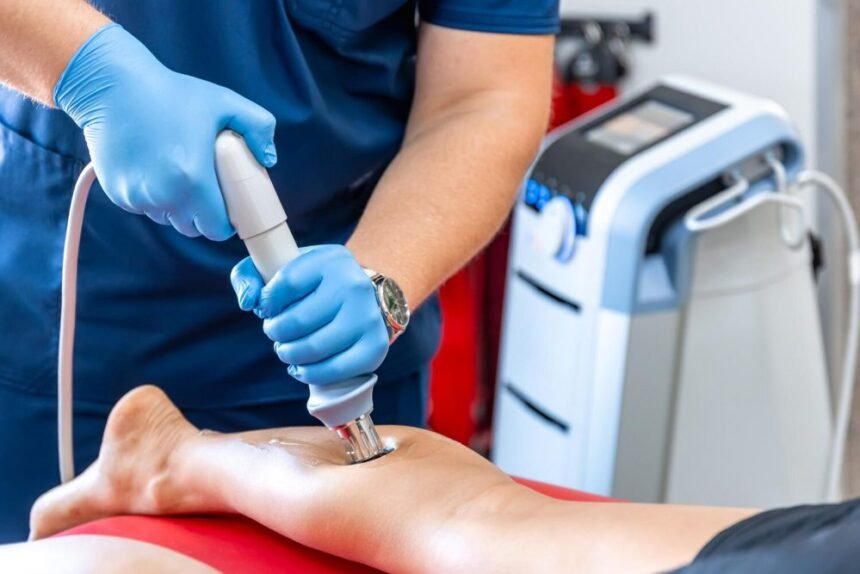
Treatment typically begins with a review of symptoms and an examination of the affected area. Once the clinician identifies an appropriate treatment location, a coupling gel is applied to the skin. A handheld applicator then delivers acoustic pulses to the targeted tissue. Patients can feel tapping, pressure, or discomfort during the procedure. Treatment intensity can be adjusted according to the condition, equipment, and individual tolerance. The length and number of sessions depend on the treatment protocol. Some commonly studied shockwave protocols involve several sessions spaced approximately one to two weeks apart, although other acoustic wave systems use different schedules. Temporary soreness, redness, or mild swelling can occur afterward. More serious complications are uncommon but possible. Because treatment responses vary, improvement should be assessed over time rather than judged solely by how the tendon feels immediately after a session.
Why Rehabilitation Still Matters
Even when shockwave therapy is appropriate, it does not eliminate the need to address the physical demands contributing to tendon pain. Tendons respond to progressive loading. Carefully structured strengthening exercises can help improve their ability to tolerate movement and force. A rehabilitation plan can include:
- Gradually increasing resistance exercises
- Adjusting training frequency or workload
- Improving movement patterns when relevant
- Reintroducing painful activities at manageable levels
- Monitoring symptoms and functional progress Complete rest is not always the best long-term solution. Avoiding movement indefinitely can reduce strength and make returning to activity more difficult. Likewise, repeatedly pushing through substantial pain without adjusting activity can interfere with progress. Combining appropriate rehabilitation with carefully selected additional treatments provides a more complete approach than relying on one procedure alone.
Making An Informed Treatment Decision
Chronic tendon pain does not have one universal treatment. Two people with similar symptoms can require different approaches because their diagnoses, activity demands, and medical histories differ. Shockwave therapy may be worth discussing when a confirmed tendon condition continues limiting function despite suitable conservative care. Evidence is more encouraging for certain conditions, including calcific shoulder tendinopathy, while benefits remain uncertain for several other tendon problems. Before starting treatment, patients should understand which technology is being used, the evidence supporting it for their diagnosis, potential risks, expected costs, and how progress will be evaluated. The most useful treatment plan focuses on measurable improvements in movement, strength, and daily function. For persistent tendon pain, an accurate diagnosis and individualized rehabilitation remain the foundation of responsible care.
Disclaimer
General information, not medical advice, and not a substitute for assessment by a qualified clinician. Shockwave therapy is not suitable for everyone, evidence differs by diagnosis and by device, and no outcome described here is guaranteed. Discuss your own diagnosis, medical history, medications and treatment options with a doctor or physiotherapist before starting. Seek prompt medical attention for sudden severe pain, a popping sensation, or inability to use a limb.