

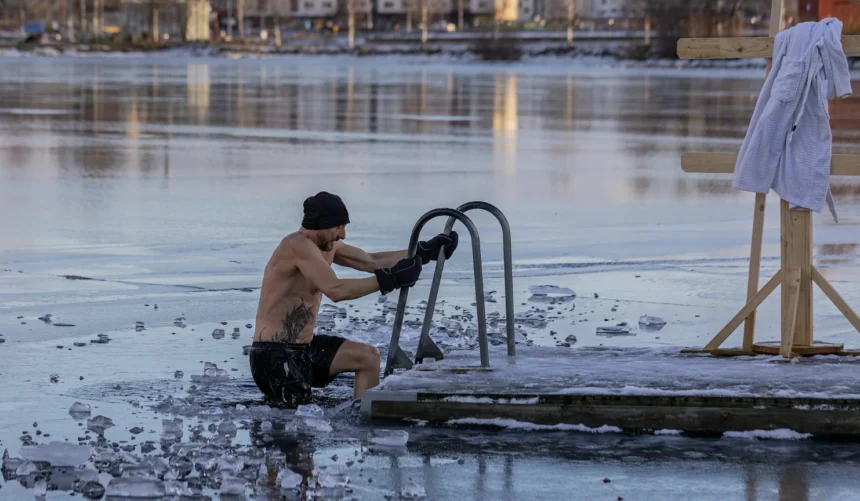
You’ve finished a brutal session at the gym. Your legs feel like concrete, your shoulders are stiff, your hips are tight, and tomorrow’s DOMS is already knocking on the door. So you’ve decided to try cold water. The question is: how long do you sit there before you climb out?
It’s a fair question, and one most people get wrong on their first attempt. Some jump in for thirty seconds and call it done. Others grit their teeth for fifteen minutes thinking longer is better. Neither extreme tends to deliver what you’re hoping for.
Here’s what the research and experience of athletes suggest about getting the dose right.
What is the sweet spot for cold immersion?
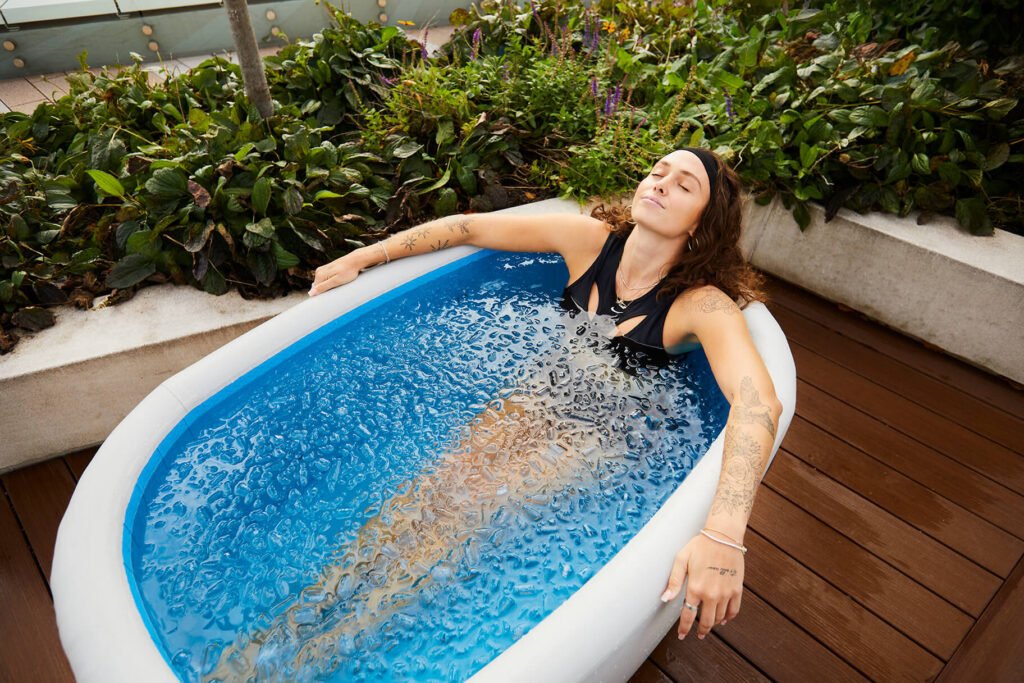
Most studies looking at cold water immersion for muscle recovery land on a similar window: somewhere between 10 and 15 minutes at temperatures around 10 to 15°C. If the water is colder, say 3 to 5°C, you can shorten the session to 5 to 8 minutes and still get the physiological response you’re after.
The goal isn’t to suffer. The goal is to drop your skin and superficial muscle temperature enough to trigger vasoconstriction and dampen the inflammatory response after exercise, which also slows the nerve conduction that contributes to muscle soreness. Once you’ve hit that threshold, staying in longer doesn’t multiply the benefits. You’re just cold for the sake of being cold.
If you’re new to all this and considering using an ice bath for muscle recovery, start at the conservative end. A first-timer in 5°C water shouldn’t aim for 10 minutes. Three to four minutes is plenty while your body adapts to the shock.
Does the timing depend on what you trained?
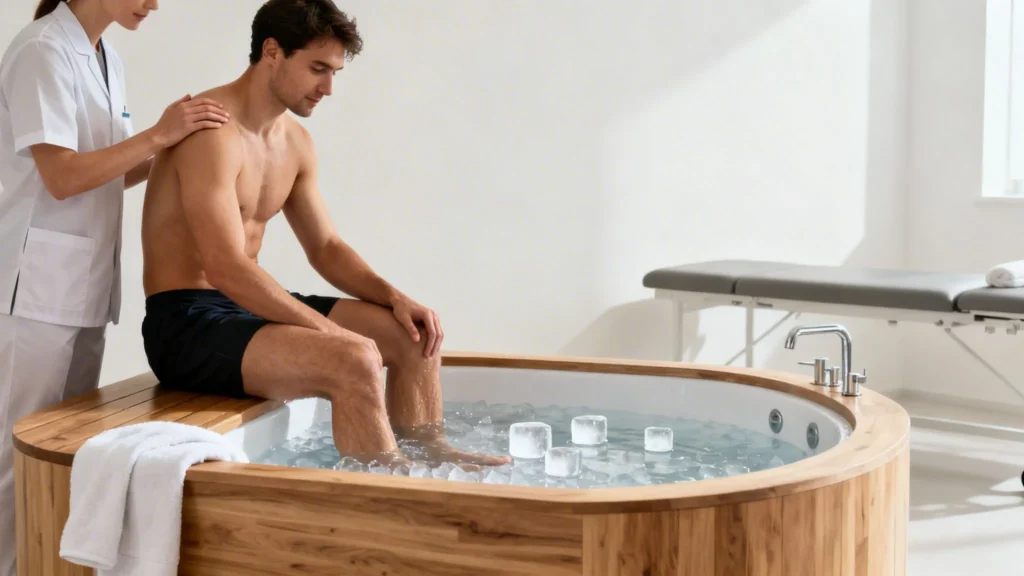
Yes, and this is where a lot of generic advice falls short. A heavy leg day with squats and deadlifts produces a different kind of muscle damage compared to a 10km run or a hit of plyometrics. Endurance work tends to leave you with widespread inflammation and fatigue, while heavy lifting causes more localised micro-tears.
For endurance sessions, longer immersion at warmer temperatures (around 12 to 14°C for 12 to 15 minutes) tends to work well. The slightly warmer water lets you stay in longer without the body screaming at you to get out, and the extended time gives the cold a chance to penetrate deeper into the larger muscle groups.
For heavy resistance training, shorter and colder works better. Around 6 to 10°C for 6 to 10 minutes hits the spot for most lifters. The faster temperature drop helps with the more concentrated inflammation around the worked muscle groups.
There’s also a wrinkle worth knowing about. If you’re chasing muscle growth, the timing of when you take an ice bath matters. Cold immersion immediately after a hypertrophy session may blunt some of the muscle-building signals your body sends out. Athletes focused on strength gains often save their cold sessions for non-training days, or for days when performance recovery matters more than adaptation.
How cold should the water be?
The colder the water, the shorter the session. That’s the general rule. A bath at 15°C feels uncomfortable but manageable; you can sit in it for 15 minutes without much trouble. A bath at 3°C will have you counting seconds, and 3 to 5 minutes is genuinely enough.
Anywhere between 8 and 15°C is the range most facilities and athletes work within. Below 8°C is where you start trading marginal recovery gains for genuine cold stress on the cardiovascular system, so it’s worth being measured about how often you go that cold and how long you stay.
What about breath and the first 60 seconds?
The first minute is the hardest. Your heart rate spikes and your breath quickens, and every part of you wants to climb out. This is normal and expected. The trick is to slow your breathing down deliberately. Long exhales, longer than your inhales, signal to the nervous system that you’re not in danger.
Once you’re past that first minute, the body adapts. Your breathing settles and the panic fades, leaving you to sit calmly for the rest of the session. Most people who quit too early do so because they didn’t push through the first 60 seconds. After that, it’s mostly mental.
How often should you do it?
Two to four sessions per week is the range most athletes settle into. Daily ice baths can work for some people, but for most, the law of diminishing returns kicks in. Your body needs some inflammation to drive adaptation; chasing every bit of soreness with cold water can quietly slow your progress over months.
If you’re training hard six days a week and want a recovery boost, two to three sessions targeted around your hardest training days will give you most of the benefit without interfering with the gains you’re working for.
A simple starting protocol
If you’ve never sat in cold water before and want a starting point, try this:
- Week one: 3 minutes at around 10°C, twice in the week, after your hardest sessions. Focus on slow breathing and not panicking out early.
- Week two onward: build to 5 minutes at the same temperature, or hold the time and drop the temperature by a couple of degrees. Adjust based on how you feel the next day. If your soreness is meaningfully reduced and you’re sleeping well, you’ve found a working dose. If you feel flat or sluggish the day after, ease off the duration or frequency.
The short answer
For most people training regularly, 5 to 10 minutes in water between 8 and 12°C, done two to four times a week, will give you measurable recovery benefits without pushing into the territory where cold becomes counterproductive. Beginners should start shorter and warmer, then build tolerance gradually while paying attention to how their training responds over a few weeks rather than a few sessions.
The cold itself is a tool, not a magic trick. Use it with some intention and it will pay you back in faster recovery, fewer stiff mornings, better sleep, and a sharper feeling between sessions.
muscle recovery and exercise — only the URLs (no titles):
- https://www.verywellfit.com/after-exercise-does-an-ice-water-bath-speed-recovery-3120571
- https://health.osu.edu/wellness/exercise-and-nutrition/do-ice-baths-help-workout-recovery
- https://pmc.ncbi.nlm.nih.gov/articles/PMC2938508/
- https://www.aafp.org/pubs/afp/issues/2025/0400/fpin-hda-cold-water-immersion-muscle-soreness.html
- https://www.cochrane.org/evidence/CD008262_ghwthwry-dr-ab-srd-bray-pyshgyry-w-drman-drd-dlany-ps-az-wrzsh
- https://mcpress.mayoclinic.org/health-letter/i-get-sore-after-exercise-could-cold-plunges-and-ice-baths-help/
- https://mcpress.mayoclinic.org/healthy-aging/the-science-behind-ice-baths-for-recovery/
- https://bjsm.bmj.com/content/41/6/392
- https://www.cdc.gov/healthyschools/physicalactivity/pdf/ice_baths_guidance.pdf (may include official guidance on cold therapy — check)
- https://pmc.ncbi.nlm.nih.gov/articles/PMC9896520/