

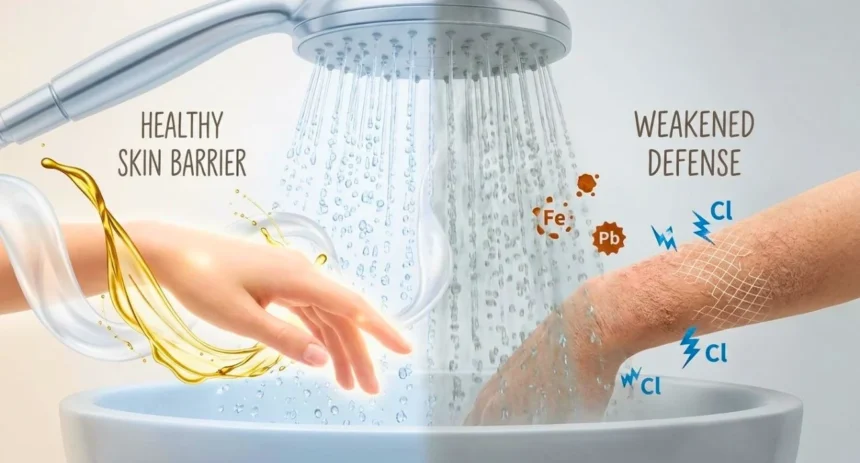
Do you often feel tight, dry, or itchy right after showering, even with good skincare products? The problem might not be your soap or moisturizer. It could be the water itself.
Most tap water contains chlorine and heavy metals. These silently damage your skin barrier every single day. This hidden daily exposure leads to dryness, irritation, and faster skin aging. Understanding these effects is the first step to achieving healthier, more hydrated skin.
How the Skin Barrier Works and Why It Matters
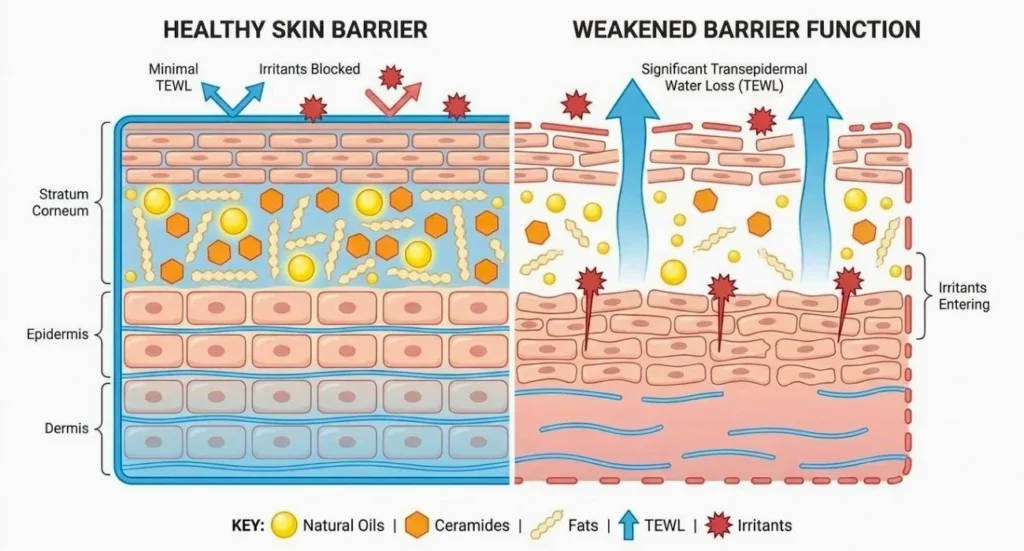
Your skin has a natural protective layer. This layer is called the skin barrier. It sits on the outermost part of your skin. It is made of natural oils, ceramides, and fats.
- This barrier locks in moisture, keeping your skin soft and smooth.
- It keeps out dirt, bacteria, and other irritants.
- When the barrier is strong, your skin looks healthy and feels comfortable.
- When the barrier gets weak, water escapes too easily. Doctors call this transepidermal water loss, or TEWL.
- Higher TEWL indicates drier skin and a greater risk of irritation or redness.
Hot showers make the barrier weaker. The heat opens your pores wider. This lets more water escape and lets more irritants enter. Studies show that long exposure to hot water clearly raises TEWL and skin redness.
A strong skin barrier is important for everyone. It helps prevent flare-ups of common skin problems. When the barrier stays healthy, your daily skincare routine works much better.
Chlorine in Shower Water: The Silent Oil Stripper
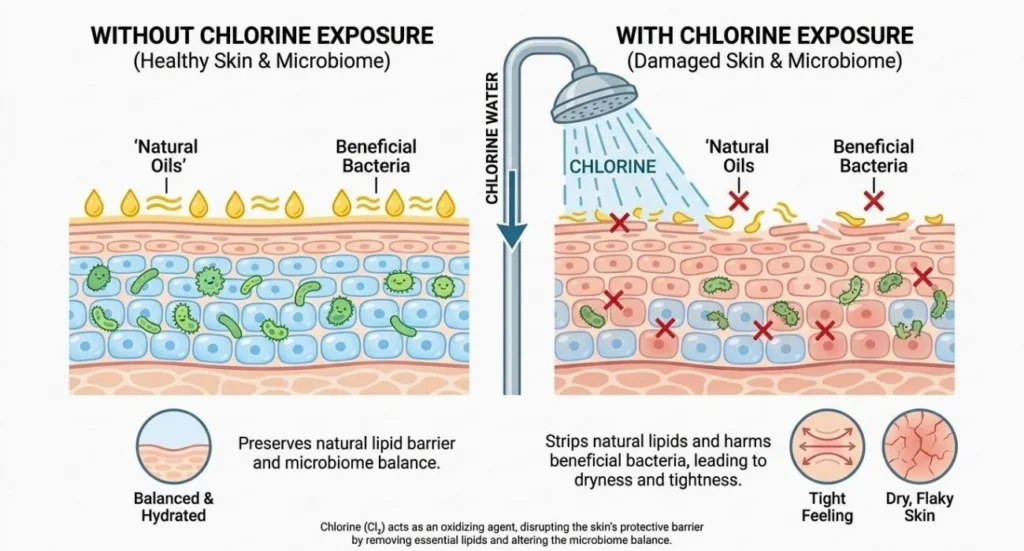
Cities add chlorine to tap water. They do this to kill harmful germs and make the water safe to drink. Chlorine works well for safety. But it stays in the water that comes out of your shower.
Chlorine acts like a strong cleaner. It removes oils from your skin. These natural oils protect your skin and keep it moist. When chlorine strips them away, your skin feels tight and dry.
- Chlorine also harms the beneficial bacteria on your skin. These bacteria help keep your skin balanced.
- This damage increases TEWL. Your skin loses moisture more quickly than usual.
- People with sensitive skin notice the effects quickly. Their skin may feel itchy or red after showering.
- Chlorine can trigger or worsen conditions like eczema and psoriasis.
- Hot water and steam make the problem worse. Heat opens pores, allowing skin to absorb more chlorine.
- Over time, this can break down collagen. Collagen keeps skin firm. Less collagen means faster signs of ageing.
One important study looked at patients with atopic dermatitis (a type of eczema). It found that even small amounts of chlorine in bathing water reduce the skin’s ability to hold water. Patients with eczema were more sensitive than people with normal skin. The water-holding capacity dropped noticeably at chlorine levels as low as 0.5 to 1.0 mg/L.
Another review of research shows that chlorine damages the stratum corneum (the outer skin layer). This leads to increased water loss and a weaker barrier. Swimmers who are exposed to higher levels of chlorine often experience similar problems with dry, irritated skin.
Many people describe a “squeaky clean” tight feeling after showering. Some notice a slight pool-like smell on their skin or hair. These are common signs that chlorine is affecting the skin barrier.
Heavy Metals and Hard Water: The Hidden Cause of Oxidative Stress
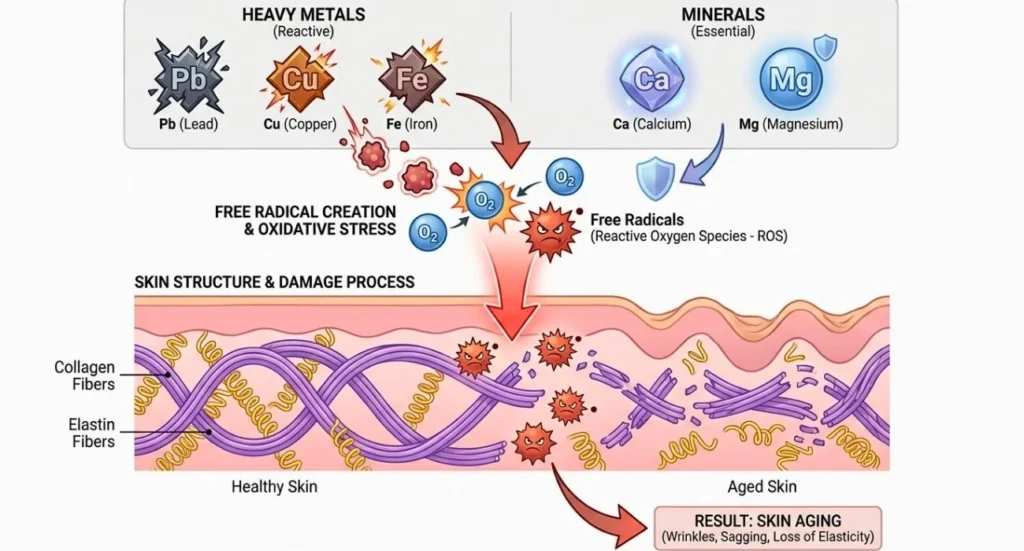
Tap water can pick up heavy metals from old pipes. Common ones include lead, copper, and iron. Hard water also contains extra minerals, such as calcium and magnesium.
These metals create free radicals inside your skin. Free radicals are unstable molecules. They damage healthy cells and break down collagen and elastin. Collagen and elastin keep skin firm and elastic.
- Free radicals cause oxidative stress. This stress leads to inflammation and faster aging.
- Skin may develop fine lines, lose firmness, and appear dull earlier than usual.
- Heavy metals can also upset the skin’s natural pH balance. Normal skin pH is slightly acidic. When it changes, the barrier becomes weaker.
- Hard water minerals leave a thin film on the skin. Soap and cleansers do not rinse off easily.
- This leftover film makes skin feel rough and dry. It can also clog pores, leading to breakouts.
Research shows a clear link between hard water and eczema. One large review found that children living in areas with hard water have a higher risk of developing eczema. The risk increases with higher levels of calcium and magnesium.
Another study from King’s College London found that hard water can damage the skin barrier. It makes the skin more sensitive to irritants in soaps and detergents. Calcium and magnesium ions interact with surfactants in wash products. This interaction raises transepidermal water loss and irritates.
Chlorine and heavy metals often work together. Chlorine strips oils while heavy metals add oxidative damage. The result is a much weaker skin barrier and more daily discomfort.
Who Suffers the Most from Unfiltered Shower Water?
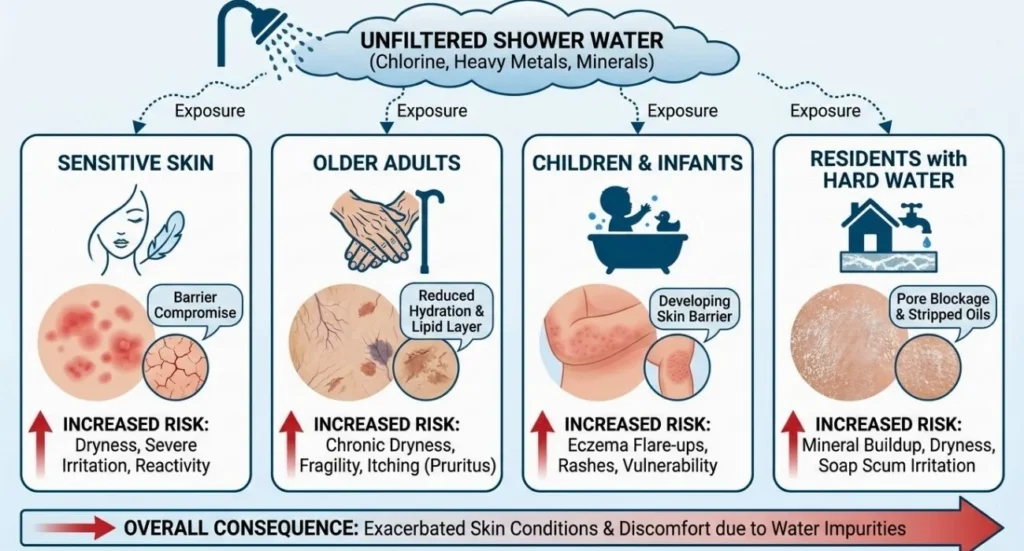
Not everyone feels the effects the same way. Some people notice problems more quickly.
- People with sensitive, dry, or mature skin feel dryness and tightness faster.
- Those who already have eczema, psoriasis, acne, or rosacea often see more flare-ups.
- Residents in areas with hard water or homes with old plumbing are at higher risk.
- Anyone who takes long, hot showers every day has repeated exposure to these irritants.
- Children have thinner skin barriers so that they can be more easily affected.
- Older adults also have naturally thinner, drier skin, which makes protection more difficult.
If you live in a city with heavily treated water, pay extra attention. Check your local water quality report. Many cities publish this information online each year.
Cumulative Effect: Why Daily Showers Cause Long-Term Damage
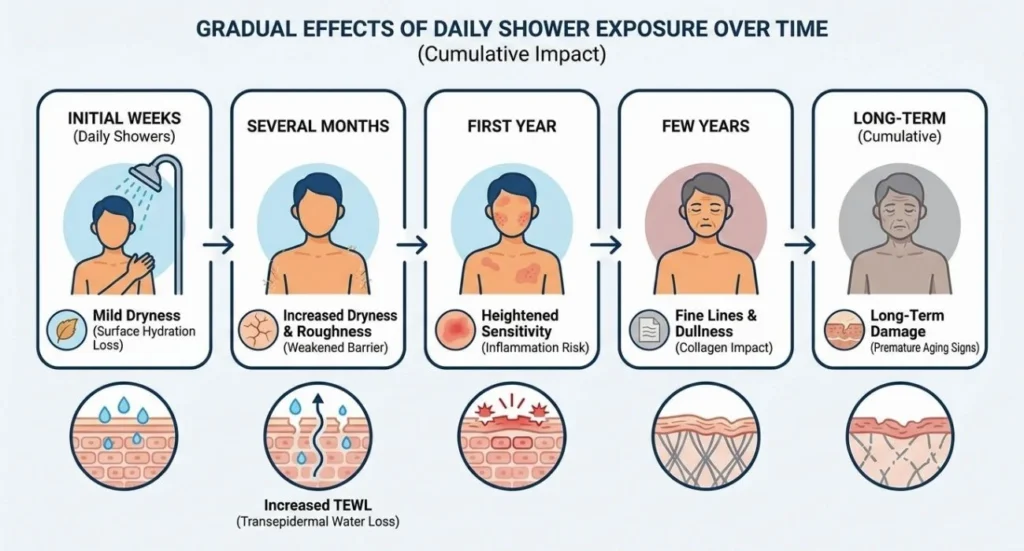
You probably shower once or twice every day. This means your skin is repeatedly exposed to chlorine and heavy metals. The damage does not happen all at once. It builds slowly over months and years.
Compare it to swimming in a pool. A single swim might cause mild dryness. But daily full-body hot showers are different. The warm water keeps pores open for longer. Chlorine and metals have more time to act.
- Over time, the skin barrier stays weak.
- Dryness becomes a constant problem instead of occasional.
- Skin gets more sensitive to other skincare products and environmental factors.
- Fine lines and dullness appear earlier.
- Healing from irritation takes longer.
This daily low-level exposure is sometimes called “cumulative damage.” It is hard to notice at first. Many people blame their moisturizer or diet. But the water they use every day can be a major hidden factor.
Studies on swimmers show that repeated exposure to chlorine clearly increases TEWL and impairs barrier function. Daily showering creates a similar but steadier effect for most people.
Practical Ways to Protect Your Skin from Shower Water Damage
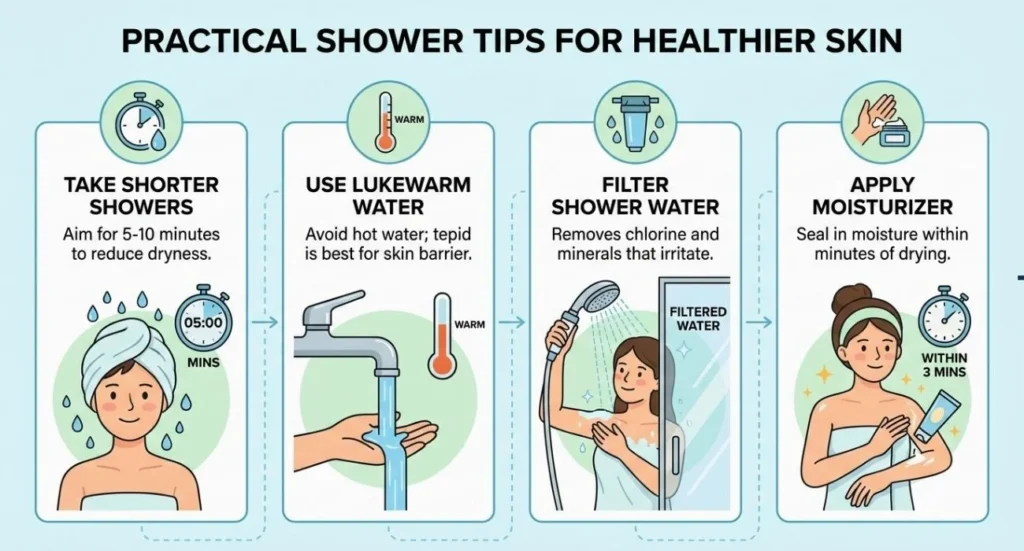
The good news is that you can take simple steps to protect your skin. Small changes bring noticeable improvements.
- Take shorter showers. Five to ten minutes is often enough.
- Use lukewarm water instead of hot water. Hot water opens pores and increases damage.
- Choose gentle, fragrance-free cleansers. Avoid harsh soaps that strip even more oils.
- Pat your skin dry gently with a soft towel. Do not rub hard.
- Apply a good moisturizer while your skin is still damp. This locks in hydration right away.
- Test your water quality. Simple home kits can check hardness and chlorine levels. You can also look up your city’s annual water report.
The most effective long-term solution is to filter your shower water. A high-quality shower filter reduces chlorine, heavy metals, and sediment before the water reaches your skin.
- Filtered water helps restore your skin’s natural balance.
- Many users report calmer skin, less redness, and better hydration within a few weeks.
- It also leaves hair feeling softer and less dry as a nice bonus.
- Look for filters that specifically target chlorine and heavy metal reduction.
One helpful option is a well-designed shower filter made for skin and hair health. You can learn more and explore choices at Clyrskin.
Other helpful habits include drinking plenty of water and eating foods rich in antioxidants. These support your skin from the inside while you hydrate from the outside.
Final Thoughts
Your skincare routine does not start with cleansers or serums. It starts the moment water touches your skin.
What feels like a simple daily habit can quietly shape your skin health over time. Chlorine strips away protective oils, heavy metals trigger oxidative stress, and hard water interferes with proper cleansing. On their own, each factor may seem minor. Together, repeated every day, they can weaken your skin barrier and make dryness, irritation, and early ageing more noticeable.
The important takeaway is not to avoid showering or overcomplicate your routine. It is to become more aware of small, consistent exposures that often go unnoticed. Shorter showers, lower temperatures, gentle products, and proper moisturising already make a meaningful difference. Improving water quality, especially through filtration, adds another strong layer of protection.
Healthy skin is not built overnight. It is the result of daily habits that support your skin barrier instead of slowly breaking it down. When you address both what you apply to your skin and what comes into contact with it, you give your skin a much better chance to stay balanced, calm, and resilient over time.
If your skin continues to feel tight, itchy, or reactive despite a good routine, it is worth looking beyond products and considering your environment. Sometimes, the most overlooked factor is the one you experience every single day.
References
- World Health Organization (WHO). (2017). Guidelines for Drinking-water Quality (4th ed.). Geneva: WHO Press
- U.S. Environmental Protection Agency (EPA). (2023). National Primary Drinking Water Regulations. Washington, DC: EPA
- Proksch, E., Brandner, J.M. and Jensen, J.M. (2008). The skin: an indispensable barrier. Experimental Dermatology, 17(12), pp. 1063–1072. DOI: 10.1111/j.1600-0625.2008.00786.x
- Cork, M.J. et al. (2009). Epidermal barrier dysfunction in atopic dermatitis. Journal of Investigative Dermatology, 129(8), pp. 1892–1908. DOI: 10.1038/jid. 2009.133
- Lodén, M. (2003). Role of topical emollients and moisturizers in the treatment of dry skin barrier disorders. American Journal of Clinical Dermatology, 4(11), pp. 771–788. DOI: 10.2165/00128071-200304110-00005
- Engebretsen, K.A. et al. (2016). The effect of environmental humidity and temperature on skin barrier function and dermatitis. Journal of the European Academy of Dermatology and Venereology, 30(2), pp. 223–249. DOI: 10.1111/jdv. 13301
- McNally, N.J. et al. (1998). Atopic eczema and domestic water hardness. The Lancet, 352(9127), pp. 527–531. DOI: 10.1016/S0140-6736(98)01252-7
- Perkin, M.R. et al. (2016). Association of water hardness with atopic eczema in children. Journal of Allergy and Clinical Immunology, 138(2), pp. 509–516. DOI: 10.1016/j.jaci.2015.12.1317
- Thyssen, J.P. et al. (2017). The association between water hardness and atopic dermatitis: A systematic review. Contact Dermatitis, 77(6), pp. 357–363. DOI: 10.1111/cod. 12863
- Valacchi, G. et al. (2002). Ozone exposure and skin oxidative stress: Protective effect of antioxidant mixtures. Free Radical Biology and Medicine, 33(4), pp. 541–551. DOI: 10.1016/S0891-5849(02)00933-8
- Draelos, Z.D. (2018). The effect of cleansing on the skin barrier and the role of mild cleansing. Dermatologic Therapy, 31(5), e12626. DOI: 10.1111/dth. 12626
- Kelleher, M.M. et al. (2015). Skin barrier dysfunction measured by transepidermal water loss at birth predicts atopic dermatitis at 1 year. Journal of Allergy and Clinical Immunology, 135(4), pp. 930–935. DOI: 10.1016/j.jaci.2014.12.013