

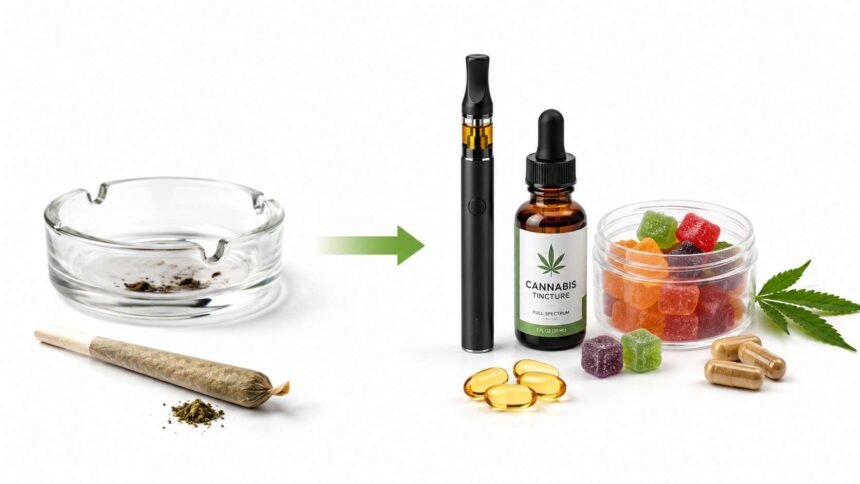
How marijuana is consumed has certainly evolved, interesting not only from a legal and access point of view but from a broader trend of shifting consumer expectations around the experience. An increasing portion of the user base now isn’t satisfied with just wanting to know what they’re smoking, but also where, why, and how it’s a part of their overall wellness.
Combustion is the Problem, Not the Plant
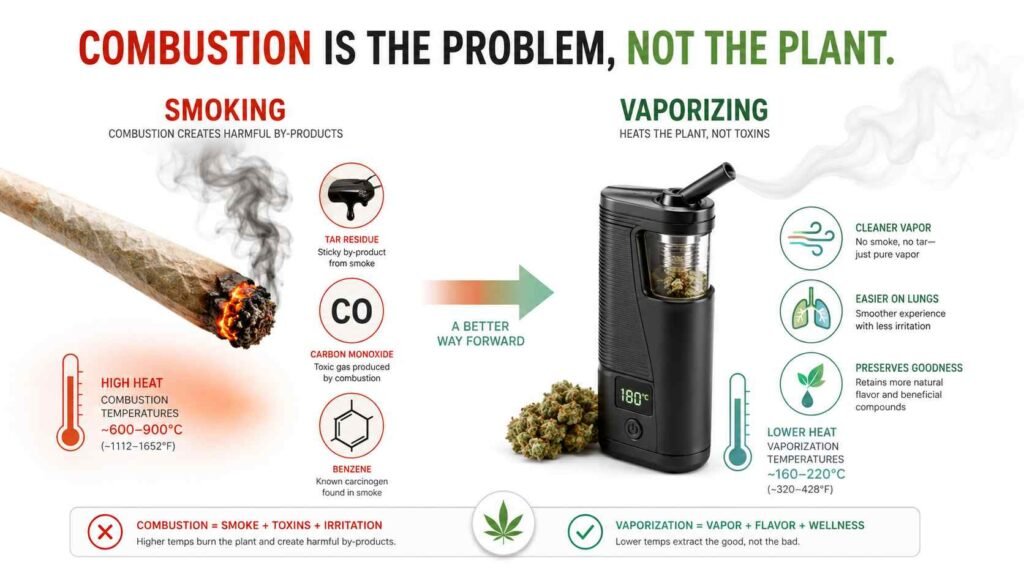
When you burn cannabis flower with a simple flame, the temperature is much higher than when vaporizing, often exceeding 450°F and more than 900°F right at the cherry of the joint. At these temperatures, the plant material doesn’t vaporize; it combusts, which makes benzene, tar, and carbon monoxide in addition to the cannabinoids.
Vapor is much cleaner. One study, published in The Journal of Cannabis Therapeutics, said that vapor is approximately 95% cannabinoids, while smoke contains as little as 12% cannabinoids, with 88% being non-cannabinoid combustion by-products. This isn’t a minor difference: it’s a different experience entirely.
Most people who vaporize instead of smoke report less coughing, less phlegm, and none of the related morning-after respiratory dysfunction issues that they get from smoking. In the end, harm reduction at this level seems a sure thing: if it does not feel like anything is working better, but you notice that it’s causing much less damage to you, you will eventually change.
Why Concentrates Fit This Picture
Concentrates simplify the concept of clean consumption. By removing the plant material, chlorophyll, lipids, and waxes that can lead to a lot of rough combustion, what you’re left with is pretty much pure active compounds. This type of product is much denser in those compounds and thus a bit more efficient when it comes to unit mass. This is why concentrates are ideal for dabbing and vaping compared to flower; without those plant pieces in the mix, delivery will be smoother, and you’ll know better what to expect each time.
The bioavailability of vaporized concentrates compared to smoked flower is another appealing metric. Put simply, more of what you’re consuming will get into your bloodstream when you vape compared to smoking the same material. That’s an important consideration for anyone using cannabis to help with sleep, stress, or pain. You want to have the best possible sense of both the quantity and the effects of what you’re taking. It’s a lot easier to know how many milligrams of THC you’re absorbing from that distillate cartridge or rosin hit than it is for the average street-market joint.
Terpene Argument
Another reason why health-conscious users are gravitating toward vaporization has less to do with what they’re trying to avoid and more to do with what they’re consciously trying to preserve.
Terpenes, the unique aromatic compounds responsible for the myriad of distinctive scents and tastes between cannabis strains, are easily degraded. Many begin to evaporate around 300°F, and most are dead by the time combustion comes into the picture.
So, when you spark up that bowl or joint, you’re essentially torching most of the terpene content eagerly waiting to interact with your endocannabinoid system.
Because vaporization works by heating cannabis to high temperatures without reaching the point of combustion, more of these delicate terpenes are left over for the tasting.
Fans of vaporization are often quoted as saying they never really tasted their cannabis until they enjoyed it through their vaporizer. That’s not hyperbole. The science backs it up.
Low-heat terpene consumption should not be underestimated. The entourage effect (the theory that terpenes and cannabinoids heighten each other’s effects when taken together, rather than in isolation) is dependent on terpenes maintaining their integrity. A better-tasting and more potent cannabis experience isn’t just a possibility; it’s probable if terpenes are on the menu.
Hardware Has Made This Accessible
A couple of years back, dabbing was still considered too complicated and scary. The hot nails, torches, and real room for mistakes intimidated most folks.
But things have changed. Electronic rigs and portable vapes do the temperature work for you. Set a temp, and the device dials itself in, whether you’re after nuanced terpene taste in the 315-450°F range or want a more thorough extraction above that. The learning curve is gone.
Portable vapes especially solve that discretion problem that smoking can never fulfill. Vapor fades quickly, the smell doesn’t linger like smoke, and the whole form factor is discreet enough not to attract onlookers. For patients who use cannabis as medicine, not a social activity, that is crucial.
Where This is Heading
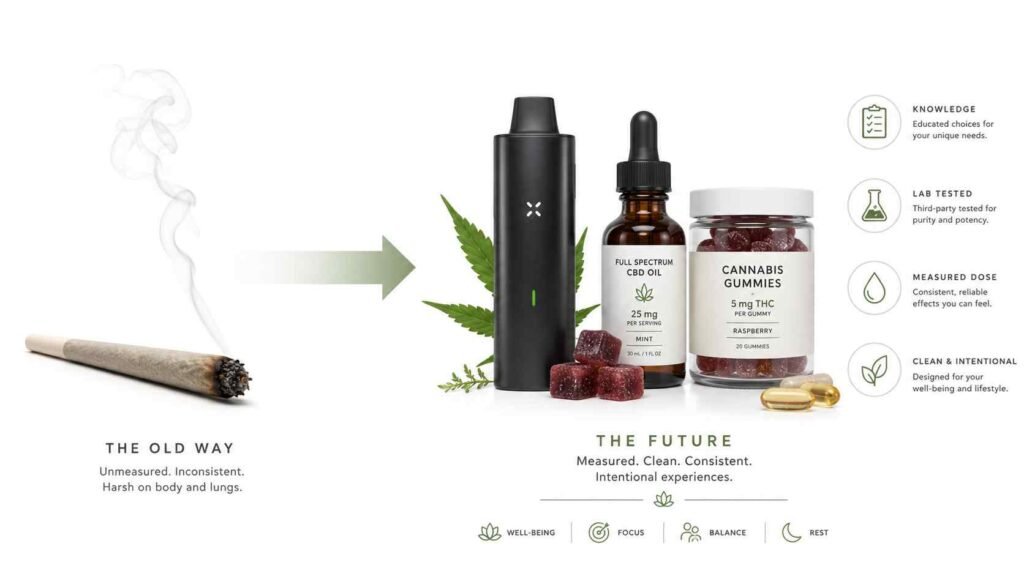
The move from smoking is more than a passing trend swayed by a handful of loud, popular enthusiasts. It’s about a broader sea change in how people regard intentional consumption. Cannabis consumers want to understand what’s in their product, how it’s likely to feel, how it was produced, and, more and more often, what its story is. That kind of consumer doesn’t automatically opt for a joint. They opt for something measured, clean, and designed specifically for the experience they’re pursuing.
Disclaimer
This article is for general educational and informational purposes only. It does not provide medical advice, legal advice, or encouragement to use cannabis or any cannabis-related product. Cannabis laws vary by country, state, and region, so readers should check local regulations before making any decisions. Cannabis may not be suitable for minors, pregnant or breastfeeding individuals, people with respiratory or heart conditions, people with a history of substance misuse, or anyone taking prescription medication. Smoking and vaping can still carry health risks, even when used as harm-reduction alternatives. Anyone considering cannabis for medical reasons should speak with a qualified healthcare professional first.
References
- Gieringer, D., St. Laurent, J., & Goodrich, S. (2004). A cannabis vaporizer combines efficient delivery of THC with effective suppression of pyrolytic compounds. Journal of Cannabis Therapeutics, 4(1), 7–27. DOI: 10.1300/J175v04n01_02.
- Hazekamp, A., Ruhaak, R., Zuurman, L., van Gerven, J., & Verpoorte, R. (2006). Evaluation of a vaporizing device for the pulmonary administration of tetrahydrocannabinol. Journal of Pharmaceutical Sciences, 95(6), 1308–1317. PMID: 16637053. DOI: 10.1002/jps. 20574.
- Abrams, D. I., Vizoso, H. P., Shade, S. B., Jay, C., Kelly, M. E., & Benowitz, N. L. (2007). Vaporization as a smokeless cannabis delivery system: A pilot study. Clinical Pharmacology & Therapeutics, 82(5), 572–578. PMID: 17429350. DOI: 10.1038/sj.clpt.6100200.
- Earleywine, M., & Barnwell, S. S. (2007). Decreased respiratory symptoms in cannabis users who vaporize. Harm Reduction Journal, 4, Article 11. PMID: 17437626. PMCID: PMC1853086. DOI: 10.1186/1477-7517-4-11.
- Tashkin, D. P., Baldwin, G. C., Sarafian, T., Dubinett, S., & Roth, M. D. (2002). Respiratory and immunologic consequences of marijuana smoking. The Journal of Clinical Pharmacology, 42(S1), 71S–81S. DOI: 10.1002/j.1552-4604.2002.tb06006.x.