

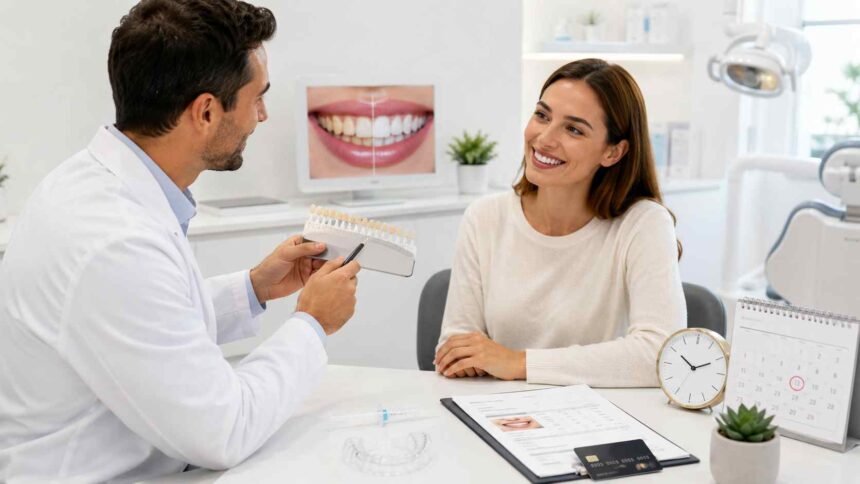
Whiter teeth are one of the most commonly requested cosmetic dental treatments in the world, and it is easy to understand why. A brighter smile affects how confident you feel in a job interview, a first date, or a photograph. But before you book a whitening appointment or reach for a box of strips at the pharmacy, there is one question worth asking first: how long will the results actually last?
The honest answer is that it depends, and the factors involved are more practical and personal than most people expect. This guide breaks down what teeth whitening does to your teeth, why results fade, and what you can do to get more time out of your investment.
What Teeth Whitening Actually Does Inside Your Tooth
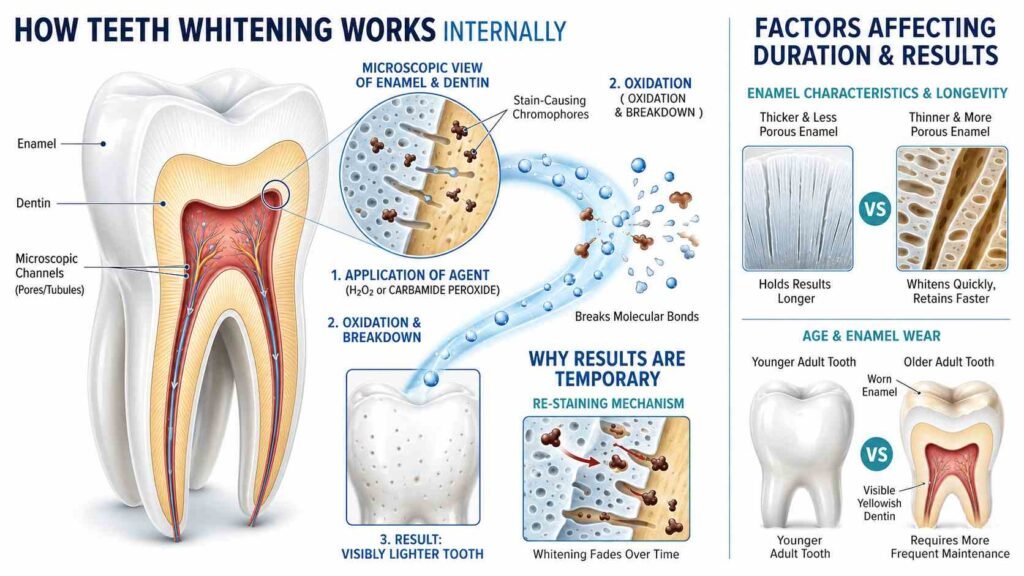
To understand why whitening results are temporary, it helps to understand what is happening at the surface of your tooth during the process.
Tooth enamel, the hard outer layer of your teeth, is not completely solid. It contains microscopic channels running through it, sometimes described as tiny pores or tubules. When a whitening agent is applied, the active ingredient, either hydrogen peroxide or carbamide peroxide, travels through these channels and reaches the dentin layer underneath. Once there, it breaks apart the molecular bonds of the compounds responsible for discolouration, called chromophores.
The result is a visibly lighter tooth. But here is the catch: the whitening agent does not permanently change the structure of your tooth. It simply clears out existing stain molecules. Those same microscopic channels that allowed the whitening agent in will continue allowing new staining compounds to enter over time, which is why whitening inevitably fades.
Why Some People See Results That Last Longer
Enamel thickness and porosity vary between individuals, and this plays a larger role in whitening results than most people realise. People with naturally thicker enamel tend to see more dramatic results initially and hold them longer. Those with thinner or more porous enamel may whiten quickly but also restain faster.
Age is a related factor. As we get older, enamel gradually wears thinner and the yellowish dentin layer beneath becomes more visible. This is why teeth naturally look more yellow with age, despite good brushing habits. Professional whitening can reverse much of this, but older adults may find they need more frequent maintenance to keep results looking consistent.
How Long Do Results Realistically Last?
For most people, professional teeth whitening maintains noticeable results for somewhere between 12 and 24 months. That is a wide range, and where you fall on that spectrum depends largely on your daily habits.
At-home whitening products, including strips, paint-on gels, and generic trays, tend to produce results that last between 3 and 6 months. The lower concentration of active ingredients means the whitening is more superficial, and surface stains return more quickly.
The short version: professional treatment costs more upfront but lasts significantly longer, which often makes it more cost-effective over a two-year period than repeatedly buying over-the-counter products every few months.
Lifestyle Factors That Shorten Your Results the Fastest
Coffee, Tea, and Red Wine
These three beverages are among the biggest contributors to tooth staining, and not just because of their dark colour. They contain compounds called tannins that bind readily to tooth enamel, making them particularly difficult to clear through normal salivation and brushing alone.
Someone who drinks three cups of coffee per day without any precautions may find their results fading within six months. Someone who uses a straw for cold coffee and rinses their mouth with water afterwards might stretch those results to 18 months or more.
Smoking and Tobacco Use
Tobacco causes some of the most stubborn staining because nicotine and tar penetrate deeply into enamel pores. If you smoke regularly and have whitening done, you will likely see noticeable re-staining within a few months. For anyone serious about maintaining whitening results long-term, tobacco is the single biggest obstacle.
Certain Foods
Tomato-based sauces, soy sauce, balsamic vinegar, berries, and curries are all capable of contributing to surface staining over time. This does not mean you have to avoid them entirely, but rinsing your mouth with water soon after eating them makes a meaningful difference.
Professional Whitening vs. At-Home Kits: What Is Actually Different
The most important difference is concentration. Professional treatments administered in a dental clinic use whitening agents at concentrations of 15 to 35 percent hydrogen peroxide, while over-the-counter products are typically restricted to 3 to 10 percent. This is not just a number: a higher concentration reaches deeper into the dentin layer, breaking apart more stain molecules at a structural level and producing results that last considerably longer.
Professional treatment also involves custom-fitted trays made from a mould of your specific teeth. This ensures the whitening gel is distributed evenly across every tooth surface and does not pool at the edges or miss patches in the middle. Uneven application is one of the main reasons at-home treatments can look patchy as they fade.
If you are considering making a proper investment in your smile, it is worth speaking to a dental professional about whitening options for your smile that suit your teeth’s specific condition, sensitivity level, and long-term goals before choosing a product or treatment type.
The Custom Tray Advantage
Even if you are doing at-home maintenance between professional appointments, custom trays provided by your dentist deliver significantly better results than generic strips. They cover every part of the tooth evenly, hold the gel in contact with the surface for longer, and minimise contact with gums, which reduces irritation and wasted product.
Side Effects Worth Knowing About
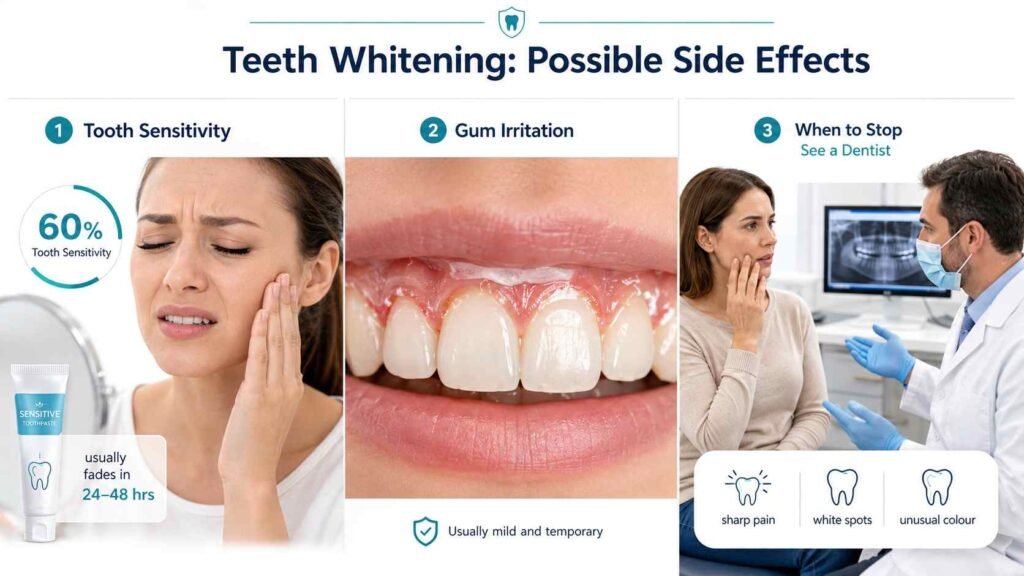
Teeth whitening is considered safe when done correctly, but it is not entirely without effects on your teeth and gums.
Tooth Sensitivity
Roughly 60 percent of people experience some tooth sensitivity during or after whitening. This happens because the enamel’s pores are temporarily widened during treatment, exposing the sensitive dentin layer underneath. For most people, this discomfort is mild and resolves within 24 to 48 hours. Using a toothpaste formulated for sensitive teeth in the days before and after treatment can reduce this significantly.
Gum Irritation
If whitening gel comes into contact with soft gum tissue, it can cause temporary irritation, redness, or a burning sensation. Professional treatment minimises this risk through careful application and protective barriers. With at-home strips or generic trays, the risk is higher simply because the fit is less precise.
When to Stop and See a Dentist
If you experience persistent sensitivity lasting more than a few days, sharp pain, white spots appearing on your gums, or unusual discolouration of your teeth after whitening, stop the treatment and see your dentist. These are not typical responses, and they warrant a proper assessment before you continue.
What to Do Immediately After Whitening to Protect Your Results
The first 48 hours after a whitening treatment are the most important window for protecting your investment. During this time, the enamel pores are still slightly enlarged, which makes teeth significantly more susceptible to re-staining.
During this initial period, avoid coffee, tea, red wine, dark-coloured fruit juices, tomato sauce, chocolate, and tobacco. If you absolutely need caffeine, opt for a white tea or a very milky coffee with a straw, and rinse with water immediately afterwards.
After 48 hours, your enamel will have largely remineralised, and your normal diet can resume, though the habits listed above still influence how quickly staining returns over the following months.
Practical Habits That Keep Results Looking Good for Longer
These small adjustments make a genuine difference and cost nothing to adopt:
Use a straw for coffee, iced tea, and cold drinks with staining potential. It redirects liquid away from the front surfaces of your teeth, where whitening is most visible. Rinse your mouth with plain water immediately after consuming anything with a strong pigment. Do not wait until your next brushing opportunity. Brush twice daily with a soft-bristled toothbrush and use a whitening toothpaste two to three times per week, not every day, as daily use of abrasive whitening formulas can wear enamel over time. Schedule a professional dental clean every four to six months instead of every six months. Regular removal of surface plaque and tartar prevents stain buildup from becoming embedded in enamel. Consider a touch-up treatment at the 12 to 18 month mark rather than waiting until results have fully faded. A single shorter top-up session is far less intensive than retreating fully discoloured teeth.
A Realistic View of Long-Term Whitening
Teeth whitening is not a one-time procedure with permanent results. It is more like a maintenance process, similar to haircuts or skincare. People who get the most out of it are those who go in with clear expectations, make modest adjustments to their daily habits, and stay consistent with maintenance appointments over time.
With professional treatment and reasonable aftercare, most people can maintain a noticeably brighter smile for two to three years before needing a more intensive session. That is a solid return for a single visit and some small lifestyle adjustments.
The goal is not perfection. It is a smile you feel comfortable with, maintained in a way that supports your overall oral health rather than working against it.
Medical Disclaimer: This article is for general informational and educational purposes only. It does not replace advice from a qualified dental professional. Always consult your dentist before beginning any whitening treatment, especially if you have existing dental work, sensitivity issues, or underlying oral health concerns.
References
- Joiner A. The bleaching of teeth: a review of the literature. Journal of Dentistry. 2006;34(7):412–419. doi:10.1016/j.jdent.2006.02.002.
- Li Y, Greenwall L. Safety issues of tooth whitening using peroxide-based materials. British Dental Journal. 2013;215(1):29–34. doi:10.1038/sj.bdj.2013.629.
- Carey CM. Tooth whitening: what we now know. Journal of Evidence-Based Dental Practice. 2014;14(Suppl):70–76. doi:10.1016/j.jebdp.2014.02.006.
- Eachempati P, Kumbargere Nagraj S, Kiran Kumar Krishanappa S, Gupta P, Yaylali IE. Home-based chemically-induced whitening (bleaching) of teeth in adults. Cochrane Database of Systematic Reviews. 2018;12:CD006202. doi:10.1002/14651858.CD006202.pub2.
- Grobler SR, Majeed A, Hayward R, Rossouw RJ, Moola MH, van W Kotze TJ. A clinical study of the effectiveness of two different 10% carbamide peroxide bleaching products: a 6-month follow-up. International Journal of Dentistry. 2011;2011:167525. doi:10.1155/2011/167525.
- Aka B, Celik EU. Evaluation of the efficacy and color stability of two different at-home bleaching systems on teeth of different shades: a randomized controlled clinical trial. Journal of Esthetic and Restorative Dentistry. 2017;29(5):325–338. doi:10.1111/jerd.12296.
- Llena C, Villanueva A, Mejias E, Forner L. Bleaching efficacy of at-home 16% carbamide peroxide: a long-term clinical follow-up study. Journal of Esthetic and Restorative Dentistry. 2020;32(1):12–18. doi:10.1111/jerd.12560.
- American Dental Association. Whitening. ADA Oral Health Topics. Updated online resource. Accessed June 15, 2026.