

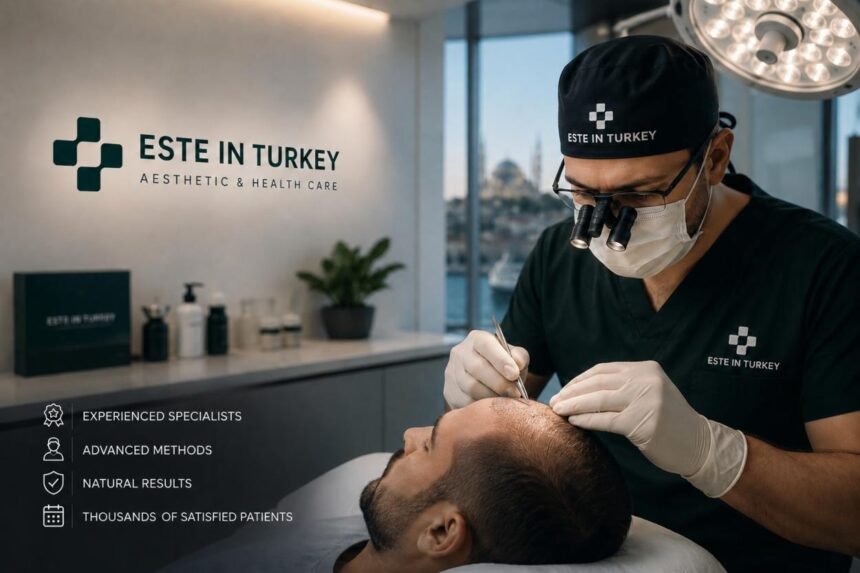
Turkey has become one of the world’s best-known destinations for hair transplantation. Every year, thousands of international patients travel to Istanbul for FUE and DHI procedures, often combining treatment with hotel accommodation, airport transfers and multilingual support.
The wide range of clinics can make the decision difficult. Many providers advertise similar packages, but quality depends more on medical planning, donor protection, hairline design, graft handling and follow-up.
Choosing the best hair transplant clinic in Turkey should therefore involve a careful review of the medical team, the clinic’s working model and the level of personal attention offered to each patient. International patients can also consult the official list of healthcare providers authorised by Turkey’s Ministry of Health before making a booking.
Why a Boutique Clinic Model Can Matter
One of the main differences between hair transplant providers is the number of patients treated each day.
Some high-volume centres perform many procedures at the same time. This may reduce prices, but it can also limit the time available for consultation, planning and follow-up. A boutique clinic usually works with fewer patients and gives each case more focused attention.
A boutique approach can provide:
- More time for donor-area evaluation
- A more personalised hairline design
- Better communication with the medical team
- Closer supervision during the procedure
- More consistent postoperative follow-up
The important point is whether an experienced and medically responsible team supports limited daily procedures.
Este in Turkey follows a boutique treatment model and works with a limited number of patients each day. This allows the team to focus on planning, communication and quality control rather than simply increasing procedure volume.
Patients comparing options can review this guide to the best hair transplant clinic in Turkey for more information about donor management, natural hairline design, FUE, DHI and international-patient support.
Check the Experience and Structure of the Medical Team
A successful hair transplant requires coordination between the doctor, nurses, technicians and patient coordinators.
Before booking, patients should ask who will be responsible for the medical consultation, donor assessment, hairline design, anaesthesia, extraction, channel opening, implantation and postoperative control. The International Society of Hair Restoration Surgery’s patient guidance recommends asking exactly who will evaluate the patient, plan the surgery and perform each surgical stage.
The clinic should explain the qualifications and experience of the team clearly. Patients should also understand which stages are performed by the doctor and which are completed by trained medical staff under supervision. Patients can use the American Board of Hair Restoration Surgery directory to understand specialist certification and check whether a surgeon holds recognised hair-restoration credentials.
Team quality is especially important because grafts are delicate. Extraction, sorting, storage and implantation must be carried out carefully to minimise trauma and support graft survival.
A professional clinic should never avoid questions about who will perform the procedure.
Expect an Individual Treatment Plan
Every patient has a different pattern of hair loss, donor capacity, hair thickness, scalp condition and risk of future thinning. For this reason, a responsible clinic should not recommend the same graft number or technique to everyone.
A preliminary online consultation usually requires photographs of the hairline, temples, top, crown and donor area, together with relevant medical information.
An online assessment can provide an initial estimate, but the final plan should be confirmed after an in-person examination. Photographs cannot always show precise donor density, scalp condition or hair miniaturisation. The British Association of Aesthetic Plastic Surgeons’ hair transplant guidance also explains why the donor area, recipient area and treatment expectations should be assessed during a proper consultation.
A trustworthy clinic should also be willing to explain when surgery is not recommended or when postponing treatment may be the safer option.
Natural Hairline Design Requires Experience
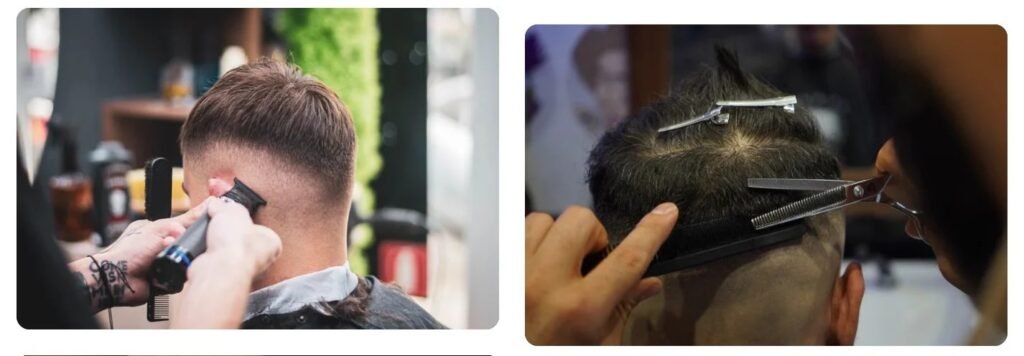
The hairline is usually the most visible part of a hair transplant. Even when graft growth is good, an unnatural design can make the result look artificial.
A natural hairline should reflect the patient’s age, facial proportions, forehead shape, existing hair direction, temple recession, donor capacity and possible future thinning.
It should not normally be perfectly straight or excessively low. Softer single-hair grafts should be used at the front, while small irregularities can help create a more natural appearance.
An experienced team should give the patient enough time to review the planned hairline before the procedure begins. A conservative design is often more suitable for long-term appearance than an aggressively low one.
Donor-Area Protection Is Essential
The donor area is limited. Hair follicles removed through FUE do not grow back in the exact extraction points.
If too many grafts are removed, or extraction is concentrated in a small zone, the donor area may appear thin, patchy or overharvested.
The clinic should evaluate donor density, hair thickness, follicular-unit quality, safe donor-zone boundaries, previous extraction scars and future hair-loss risk before recommending a graft number. The ISHRS provides further information about protecting and managing the donor area during hair transplant planning.
A very high graft count is not always better. In some cases, a more conservative number of carefully placed grafts can produce a stronger visual result while protecting the donor area for the future.
Boutique clinics may have an advantage here because the team can spend more time analysing the donor region and planning for the long term rather than focusing only on the immediate result.
FUE and DHI Should Be Chosen for the Patient
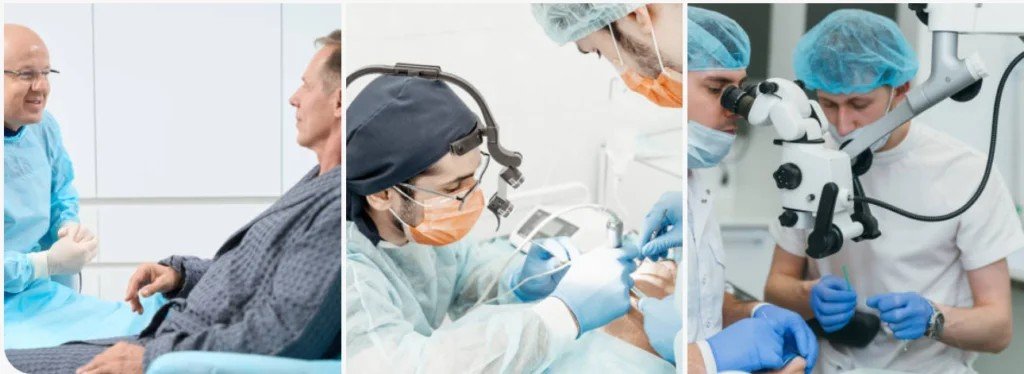
FUE refers to the extraction of individual follicular units from the donor area using small punch instruments. The grafts are then prepared and implanted into the recipient area. The American Society of Plastic Surgeons’ overview of hair transplantation explains how follicular units are taken from a donor region and placed into areas affected by thinning.
Sapphire FUE usually refers to the use of sapphire blades when creating recipient channels. The material itself does not guarantee a better result. Planning, angle, direction and graft distribution remain more important.
DHI generally refers to implantation with Choi-type implanter pens. In most cases, the grafts are still extracted using FUE. DHI may be useful when implanting between existing hairs or when precise control is required, but it is not automatically superior for every patient.
Patients researching a hair transplant in Turkey should ask why a particular method has been recommended for their case. A good clinic should explain the advantages and limitations of each option without exaggerated claims.
Review Real Patient Results Carefully
Before-and-after photographs are useful, but they should be assessed critically.
Look for similar lighting and camera angles, dry and unstyled hair, close views of the hairline, the top and crown, the donor area and results after approximately 9 to 12 months.
Different lighting, wet hair, styling products and scalp concealers can make density appear stronger than it really is.
Patients should also look for cases involving a similar hair-loss pattern and hair type. The donor area is equally important: a good result should improve the recipient zone without creating obvious thinning at the back and sides.
Boutique clinics often build their reputation through a smaller number of carefully documented cases, making consistency easier to assess.
Check Independent Reviews and Communication
A clinic’s own website naturally presents its strongest results. Patients should also review Google, Trustpilot, healthcare platforms, forums and long-term patient diaries.
Do not look only at the average rating. Read comments about communication, medical supervision, hygiene, donor-area healing, organisation and postoperative support.
Communication is especially important for international patients. A professional clinic should answer questions clearly before the trip, confirm the treatment plan in writing and remain available after the patient returns home.
Aftercare Should Continue After the Procedure
Hair transplantation does not end when the operation is finished.
Patients should receive written instructions about sleeping position, first washing, medication, swelling, scab removal, exercise, sun exposure and when to contact the clinic. The American Society of Plastic Surgeons’ hair transplant recovery guidance outlines common postoperative issues and the importance of following the surgeon’s activity and wound-care instructions.
The clinic should also explain the normal growth timeline. Transplanted hairs often shed during the first weeks. New growth usually develops gradually, while the final result may require around 12 months or longer.
A boutique clinic should be able to provide more personal postoperative communication, review recovery photographs and answer questions during healing.
Do Not Choose Based Only on Price
Hair-transplant prices in Turkey vary according to the clinic, method, team, number of grafts and services included.
A low price does not always mean poor quality, and a high price does not guarantee an excellent result. However, unusually cheap offers may involve compromises in supervision, staffing or follow-up.
Patients should ask whether the price includes consultation, blood tests, anaesthesia, hairline design, extraction, implantation, medication, first washing, hotel, transfers, translation and aftercare.
Everything should be confirmed in writing. The clinic should also explain whether the plan may change after the physical examination.
Patients travelling internationally should also review the CDC’s medical tourism safety guidance, which covers infection risks, continuity of care, medical records, travel planning and possible complications after returning home.
Final Thoughts
The best hair transplant clinic in Turkey is not necessarily the one offering the cheapest package, the highest graft number or the most luxurious hotel.
The most important factors are medical transparency, donor protection, natural hairline design, experienced teamwork and reliable aftercare.
A boutique clinic model can be especially valuable when a high-quality medical team and limited daily procedures support it. This structure allows more time for consultation, planning, quality control and patient communication.
Este in Turkey combines a boutique approach with an experienced team and personalised support for international patients. Rather than focusing on high procedure volume, the clinic aims to provide carefully planned FUE and DHI treatments, natural-looking results and close follow-up throughout recovery.
Patients should compare several clinics, ask detailed questions and avoid deciding under pressure. Careful research cannot guarantee a perfect result. Still, it can reduce avoidable risks and help patients choose a clinic that treats hair transplantation as a long-term medical and aesthetic process.
Medical disclaimer: This article is intended for general informational purposes only and does not replace an individual medical examination or treatment recommendation from a qualified healthcare professional. Suitability, graft numbers, techniques, risks and expected results vary between patients.