

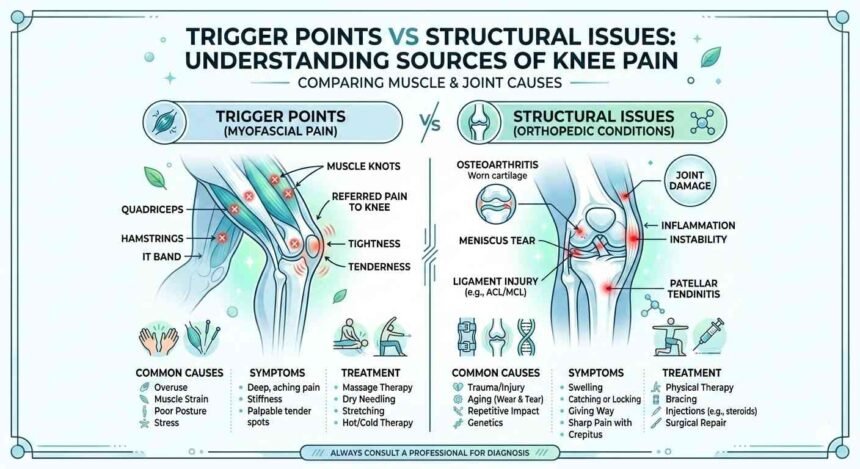
Knee pain is one of the most common musculoskeletal complaints, affecting people of all ages and lifestyles. According to the research, around 25% of adults experience chronic knee pain, with many more suffering from acute pain caused by injury or overuse. The knee, the largest joint in the body, is susceptible to a range of issues, from temporary discomfort to long-term disability.
The sources of knee pain are diverse and can stem from both muscular and structural problems. This article aims to differentiate between these two key contributors to knee pain: trigger points and structural issues. By understanding the underlying causes, individuals can better address their symptoms and seek the most appropriate treatment.
What Are Trigger Points?
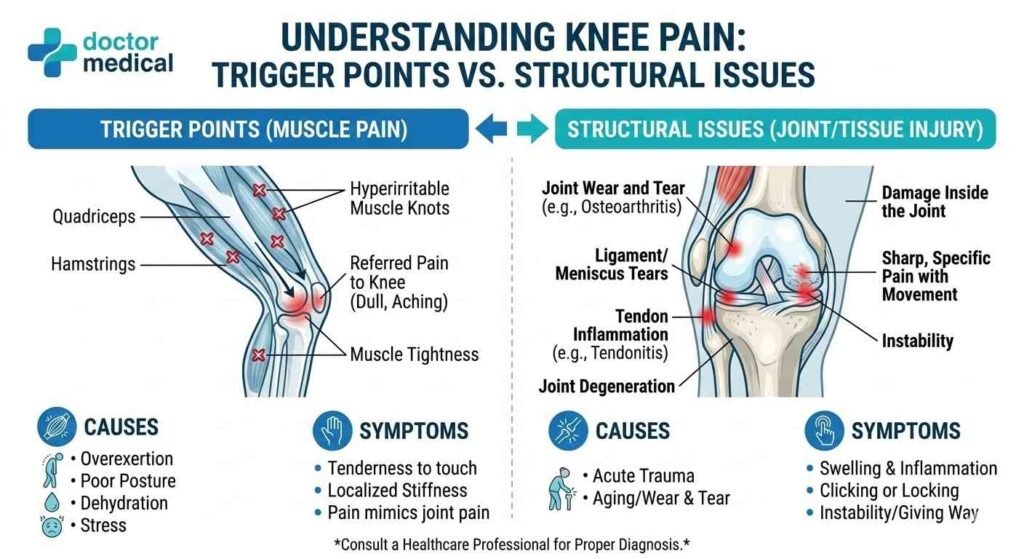
Trigger points are small and tight knots or areas of muscle fibers that become hyperirritable when a muscle is overused or strained. These knots can be painful to the touch and are often described as “muscle spasms” or “muscle cramps”.
Trigger points are typically found in muscles but can also affect connective tissue. When pressure is applied to these areas, they can cause discomfort and, in some cases, pain that radiates to other parts of the body, a phenomenon known as referred pain.
These painful spots are often the result of muscle overuse, poor posture, or muscle imbalances, which cause the muscle fibers to contract abnormally, forming tight knots. Over time, this can lead to restricted movement and persistent discomfort.
Causes of Trigger Points
Several factors contribute to the formation of trigger points:
- Overexertion: Repetitive movements or sudden heavy lifting can cause muscles to work harder than they are conditioned for, leading to tightness.
- Poor body mechanics: Misalignment during movement or physical tasks (such as improper lifting techniques) can put undue strain on specific muscle groups, leading to muscle fatigue and the development of trigger points.
- Dehydration: Insufficient fluid intake can lead to muscle stiffness and cramping, which can contribute to the formation of trigger points.
- Stress: Physical or emotional stress can increase muscle tension and cause unnecessary contractions, promoting the formation of trigger points.
How Trigger Points Affect the Knee
While trigger points develop in the muscles, their effects are not always limited to the site of the knot. Muscle tightness from trigger points can refer to pain in surrounding areas, including the knee joint.
For example, a tight quadriceps or hamstring in the thigh can cause discomfort in the knee. This referred pain is often described as dull and aching and can vary in intensity. The primary symptoms associated with trigger points in the knee area include:
- Tenderness: The muscle knot feels painful to the touch.
- Localized pain: Pain that is focused around the area where the trigger point is located.
- Referred pain: Pain that radiates to the knee from a different part of the leg or thigh. This can sometimes mimic joint pain, making it difficult to distinguish from structural knee issues.
What Are Structural Issues?
Structural issues refer to conditions that affect the physical components of the knee joint, including the bones, cartilage, ligaments, and tendons. Unlike muscular problems, structural issues involve damage or deterioration to the fundamental components that support the knee’s movement and stability. These problems can result from injury, aging, or wear and tear over time and often lead to pain, dysfunction, and reduced freedom of movement of the knee.
Common Structural Problems
Several structural problems can contribute to knee pain, including:
- Osteoarthritis: One of the most common structural conditions affecting the knee. Osteoarthritis occurs when the cartilage that cushions the bones in the knee joint begins to wear down, leading to friction between the bones. This wear and tear can cause pain, stiffness, and swelling, and is often associated with aging or repetitive stress on the knee.
- Ligament injuries: Ligaments are the connective tissues that stabilize the knee. ACL (anterior cruciate ligament) tears and MCL (medial collateral ligament) strains are common knee injuries, often caused by sports-related trauma or sudden twisting motions. Ligament injuries can result in knee instability and difficulty walking.
- Cartilage damage: The meniscus is a C-shaped cartilage that acts as a cushion between the thigh bone (femur) and the shin bone (tibia). Meniscus tears often occur during twisting movements or high-impact activities. Damage to the meniscus can cause knee pain, swelling, and difficulty with knee movement.
Impact of Structural Issues on the Knee
Structural issues can significantly impact the knee’s function. As these conditions progress, they can lead to:
- Pain: Continuous discomfort in the knee joint, often exacerbated by movement or weight-bearing activities.
- Instability: Structural damage, particularly to ligaments, can make the knee feel unstable or give way during walking or other physical activity.
- Reduced range of motion: Joint stiffness and swelling may limit the knee’s ability to extend or bend, making everyday tasks difficult.
Signs and Symptoms
The symptoms of structural issues in the knee can vary depending on the specific problem, but often include:
- Swelling: Accumulation of fluid in the knee joint due to inflammation or injury.
- Clicking or popping: A sensation of the knee making sounds, often due to cartilage damage or meniscal tears.
- Instability: A feeling that the knee might buckle or give way, especially during physical activity.
- Pain during movement: Discomfort or sharp pain when bending, extending, or bearing weight on the affected knee.
Key Differences Between Trigger Points and Structural Issues
Origin of Pain
The origin of pain is one of the key distinctions between trigger points and structural issues.
Trigger points are muscular and myofascial in nature, meaning the pain originates from tight or irritated muscle fibers. These points can refer to pain in other areas of the body, including the knee, even though the actual muscle causing the pain may be located elsewhere. For instance, tight hamstrings or quadriceps can cause knee pain, even though the issue lies in the muscles, not the knee joint itself.
Structural issues are directly related to damage in the bone, cartilage, ligaments, or tendons within the knee joint. Problems like osteoarthritis, ligament tears, or cartilage damage cause pain localized to the knee joint because the structures involved are directly within or around the knee.
Pain Location and Referral
Trigger points often lead to referred pain, which means the pain is felt in a different location than where the trigger point exists. For example, a trigger point in the hip flexor or thigh may cause pain that radiates down to the knee. The pain may not be directly over the muscle knot, making it more difficult to pinpoint the true source of discomfort.
Structural issues tend to cause pain that is localized to the knee joint. When there’s damage to the cartilage, ligaments, or bones, the pain is usually concentrated in the knee area itself, with less of the pain radiating to other parts of the leg.
Impact on Movement
The way pain from trigger points and structural issues affects movement also differs:
Trigger points can limit flexibility and cause discomfort during certain movements. For instance, tight muscles around the knee, such as the quadriceps or hamstrings, may restrict the range of motion and make activities like bending or straightening the leg more difficult, but the joint itself may still be stable.
Structural issues can lead to joint instability, reduced mobility, and functional impairment. For example, a torn ligament, such as the ACL, can cause the knee to feel unstable and give way during physical activity. Cartilage damage may limit the knee’s range of motion, leading to stiffness and pain even with simple tasks like walking or climbing stairs.
Diagnosing Trigger Points vs Structural Issues
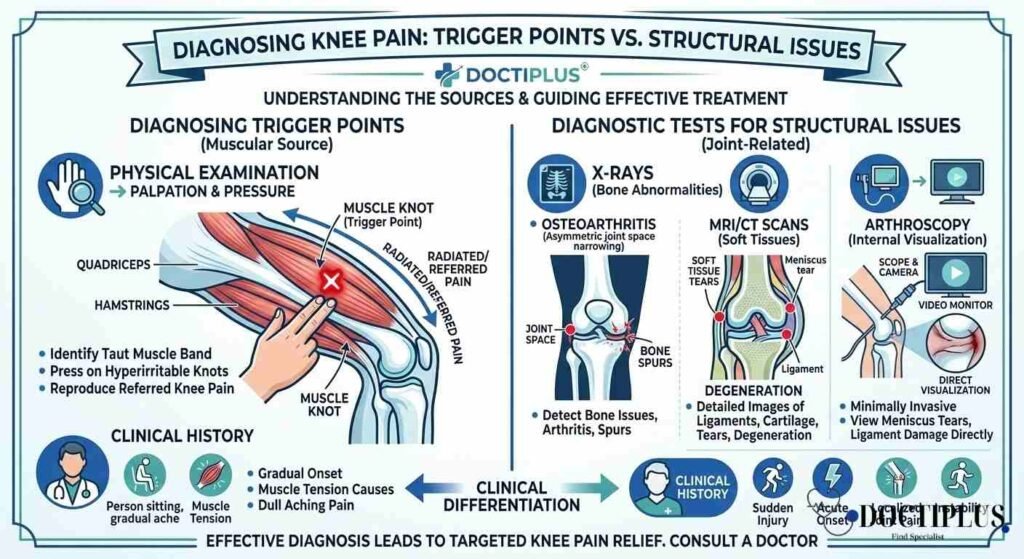
Physical Examination for Trigger Points
To diagnose trigger points, a healthcare provider uses palpation, pressing on muscles to locate tight knots. These knots often cause localized pain, and when pressure is applied, the pain may radiate to other areas, such as the knee. This referred pain helps identify muscle groups involved in knee discomfort.
Diagnostic Tests for Structural Issues
For structural issues, the following tests are commonly used:
- X-rays: Detect bone abnormalities, such as osteoarthritis or bone spurs.
- MRI/CT Scans: Provide detailed images of ligaments, cartilage, and soft tissues, identifying tears or degeneration.
- Arthroscopy: A minimally invasive procedure allowing direct visualization of the knee joint’s internal structures, useful for diagnosing meniscus tears or ligament damage.
Clinical History and Symptoms
Patient history is key to diagnosis. Activity level, pain onset, and pain type (localized vs referred) help distinguish between trigger points (muscular) and structural issues (joint-related). For example, pain following a sudden injury often points to structural issues, whereas muscle tension causing referred pain can be attributed to trigger points.
Understanding these differences is crucial for proper diagnosis and effective treatment. This can guide healthcare providers in determining the most appropriate approach, such as those addressed in treatments for knee pain relief at The Joint.
Endnote
Understanding the difference between trigger points and structural issues is important for effectively managing knee pain. While trigger points are related to muscle tension and can often be treated with conservative methods, structural issues involve the knee joint and may require more specific medical interventions. Accurate diagnosis helps guide the appropriate treatment approach, improving the chances of relieving pain and restoring function.
Disclaimer
This article is for informational and educational purposes only and should not be considered medical advice. Knee pain can have many different causes, and symptoms may vary from person to person. Always consult a qualified healthcare professional for proper diagnosis and treatment if you are experiencing persistent or severe knee pain. Do not ignore medical symptoms or delay seeking professional care based on the information in this article.