

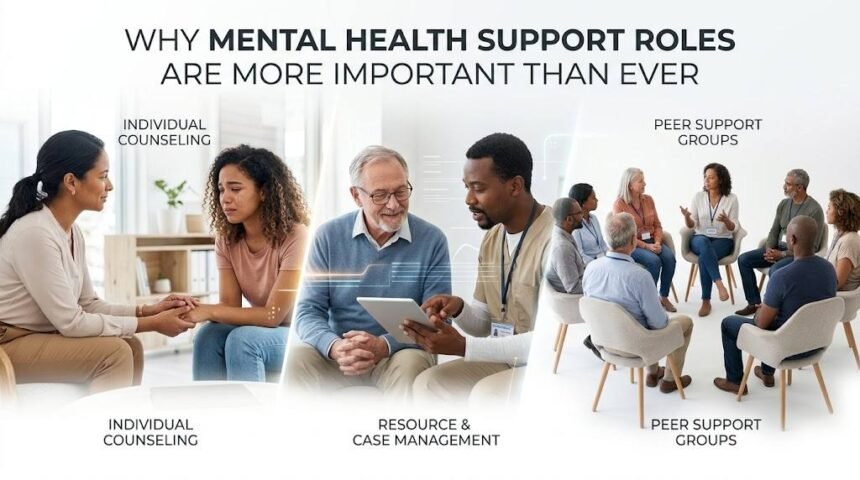
You notice it in small ways at first. A coworker who used to joke around stays quiet in meetings. A friend takes longer to reply, then stops replying at all. Nothing is said directly, but something is clearly off.
This kind of thing shows up more often now. Not always dramatic, not always visible, but present. The issue is not that people are unwilling to talk. There are not enough people trained to listen in a way that actually helps. That gap has been growing for a while.
Quiet Demand That Keeps Growing

Mental health support is no longer limited to clinics or crises. It has moved into everyday life. Workplaces, schools, even casual conversations. People carry more stress than before, and it shows up in ways that are not always easy to define.
Deadlines have tightened. Work does not always stay at work anymore. There is also the constant flow of information, news, opinions, and updates. It builds up. Over time, people start feeling stretched, even if nothing specific has gone wrong. The result is a steady demand for support that is practical and consistent. Not just advice, but structured help. Someone who understands patterns, not just symptoms.
Where Training Starts to Matter More
There is a difference between listening and knowing how to respond. Many people mean well, but without proper training, it is hard to guide someone through deeper issues. That is where formal education begins to play a larger role. Options like the master of mental health counseling online program, which focus on counseling, are not just about theory. They teach how to handle real conversations, how to recognize when something is serious, and how to respond without making things worse.
Why Informal Support Is Not Enough Anymore
People often rely on friends or family for support. That is natural, and it still matters. But there are limits to what informal support can handle. Some issues require more than empathy. They require structure, boundaries, and a clear understanding of mental health conditions. Without that, conversations can circle without progress, or worse, push someone further into confusion.
There is also the emotional load on the person trying to help. Without training, it becomes difficult to carry someone else’s stress without being affected by it. There is also the emotional load on the person trying to help. Without training, it becomes difficult to carry someone else’s stress without being affected by it. This is where professional roles come in. For those seeking counseling in Sugar Land, these professionals create a space where support is consistent and guided, not just reactive.
Workplace Shift No One Talks About Enough
Workplaces have started to notice the impact of mental health, though not always openly. Productivity drops, communication changes, and burnout become harder to ignore. Some companies have added wellness programs or flexible schedules. That helps, but it does not replace trained support. Employees still need access to people who understand how to navigate mental health concerns in a structured way.
There is also a cultural shift happening. Talking about mental health is more accepted now, but acceptance alone does not solve the problem. It only brings it into view. Once it is visible, the need for real support becomes clearer.
Role Is Changing, Not Just Growing
Mental health support roles are not just increasing in number. They are changing in nature. Counselors are now expected to work across different settings. Schools, private practice, community centers, and even digital platforms. The role has become more flexible, but also more complex.
Technology has played a part in this. Online sessions, remote consultations, and digital tools for tracking progress. These have made support more accessible, but they also require professionals to adapt. It is not just about understanding people anymore. It is about understanding how people interact with systems, environments, and technology.
What People Actually Need
When you look past the terminology, the need is fairly simple. People want to feel understood without being judged. They want clarity when things feel confusing. They want a way to move forward that makes sense. But delivering that is not simple. It takes training, patience, and a certain kind of consistency that does not come naturally to everyone.
Mental health support roles provide that structure. They create a space where conversations are not rushed, where patterns are recognized, and where progress is tracked over time. It is not always visible work. Often, it happens quietly, without clear milestones. Still, the impact builds.
Gap That Still Exists
Even with growing awareness, there is still a shortage of trained professionals. In many areas, people wait weeks or months to get proper support. This gap creates pressure on existing systems. It also pushes people to delay seeking help, which often makes issues harder to manage later. Education and training programs are trying to address this, but it takes time. You cannot rush the process of preparing someone for this kind of work. Still, the need continues to grow.
A Shift That Is Not Going Back
It is unlikely that the demand for mental health support will decrease anytime soon. It will become more integrated into daily life. People are more aware of their mental state now. They notice changes faster. They are more willing to seek help, but only if that help feels reliable. This creates a different kind of expectation. Support should not be occasional or reactive. It should be available, structured, and grounded in real understanding. That is where trained professionals come in.
What This Means Moving Forward
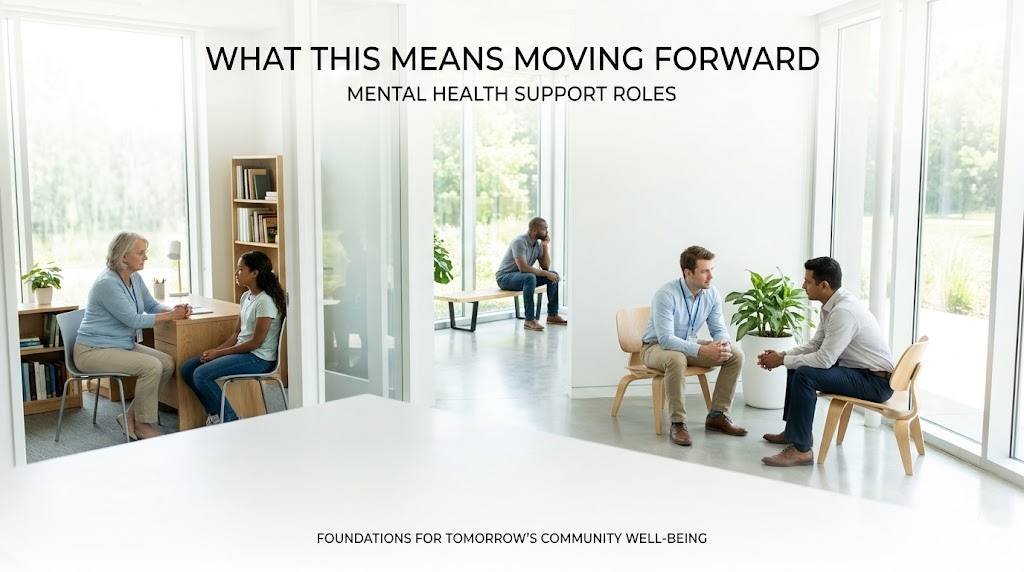
Mental health support roles are becoming part of the foundation of how communities function, not in a dramatic way, but in a steady one. Schools rely on counselors. Workplaces begin to recognize the value of support systems. Individuals look for guidance that goes beyond surface-level advice.
The work itself remains quiet. Conversations behind closed doors, small changes over time, progress that is not always easy to measure. But the presence of that support changes things. It makes it easier for people to manage what they are dealing with, even when those things are not visible to others. And that, more than anything, explains why these roles matter more now than they did before.
Conclusion
Mental health support roles have moved beyond clinical settings into workplaces, schools, and everyday community life. The demand is no longer occasional or crisis-driven. It is steady, structural, and growing faster than the current workforce can meet. Awareness has opened the door, but awareness alone does not provide support. Trained professionals do.
The gap between need and availability remains real. People wait weeks for help that should be accessible within days. Informal support from friends and family, while meaningful, cannot carry the weight of structured mental health care. Professional roles exist precisely because some conversations require more than goodwill. They require training, clinical boundaries, and the ability to recognise patterns that untrained observers miss.
As workplaces evolve, schools expand their counselling capacity, and digital platforms bring remote support to underserved areas, the nature of these roles will continue to shift. Professionals entering this field must be prepared not just for traditional settings but for a world where support is delivered across multiple environments simultaneously. That preparation begins with education. And the work, though often quiet and unmeasured, remains among the most consequential being done today.
References
- Ballout, S. (2025). Trauma, mental health workforce shortages, and health equity: A crisis in public health. International Journal of Environmental Research and Public Health, 22(4), 620. https://doi.org/10.3390/ijerph22040620
- Robiner, W. N. (2006). The mental health professions: Workforce supply and demand, issues, and challenges. Clinical Psychology Review, 26(5), 600–625. https://doi.org/10.1016/j.cpr.2006.05.002
- Walker, E. R., et al. (2015). Psychiatric workforce needs and recommendations for the community mental health system. Psychiatric Services, 66(2), 115–117. https://doi.org/10.1176/appi.ps.201400530
- Costa, C. (2016). Shortage of mental health professionals. Health Affairs, 35(10). https://doi.org/10.1377/hlthaff.2016.0933
- Cicero, D. C., et al. (2025). Psychology workforce national and regional shortfalls. Training and Education in Professional Psychology. https://doi.org/10.1037/tep0000531
- Du Plooy, K., et al. (2025). Health workforce sustainability in mental health services. https://doi.org/10.21203/rs.3.rs-6753953/v1
- Hewage, H. C., & Rostami-Tabar, B. (2024). A hybrid predictive framework for long-term mental healthcare workforce planning. https://doi.org/10.48550/arXiv.2406.17463
- Srivastava, A., et al. (2025). Sentiment-guided response generation for mental health counseling. https://doi.org/10.48550/arXiv.2501.03088