


Access to effective addiction treatment has long been shaped by geography. For individuals living in rural or remote areas, the barriers can be significantly limited treatment centers, long travel distances, and fewer specialized providers. In recent years, however, virtual care models have begun to close this gap. Among the most impactful of these innovations is the rise of virtual intensive outpatient programs (IOPs).
A virtual IOP in California, in particular, has emerged as a leading example of how telehealth can expand access to high-quality addiction care.
In this article, Doctiplus reviews how these programs offer structured, evidence-based treatment through secure online platforms, allowing individuals to receive consistent support without leaving their homes. For residents in remote areas, this model is not just convenient, it can be life-changing.
Understanding Virtual IOPs and Their Role in Addiction Treatment
An intensive outpatient program is designed for individuals who need more support than traditional outpatient care but do not require 24/7 supervision in a residential setting. Virtual IOPs replicate this level of care through digital delivery, typically involving multiple therapy sessions per week, including individual counseling, group therapy, and educational components.

A virtual IOP in California often integrates cognitive behavioral therapy, relapse prevention strategies, and family involvement, all delivered through HIPAA-compliant video platforms. Participants can log in from their homes, maintaining a consistent treatment schedule while continuing with daily responsibilities such as work or caregiving.
This flexibility is especially critical for people in remote areas, where attending an in-person program might involve hours of travel or simply be unavailable.
Why Remote Areas Face Unique Challenges in Addiction Recovery
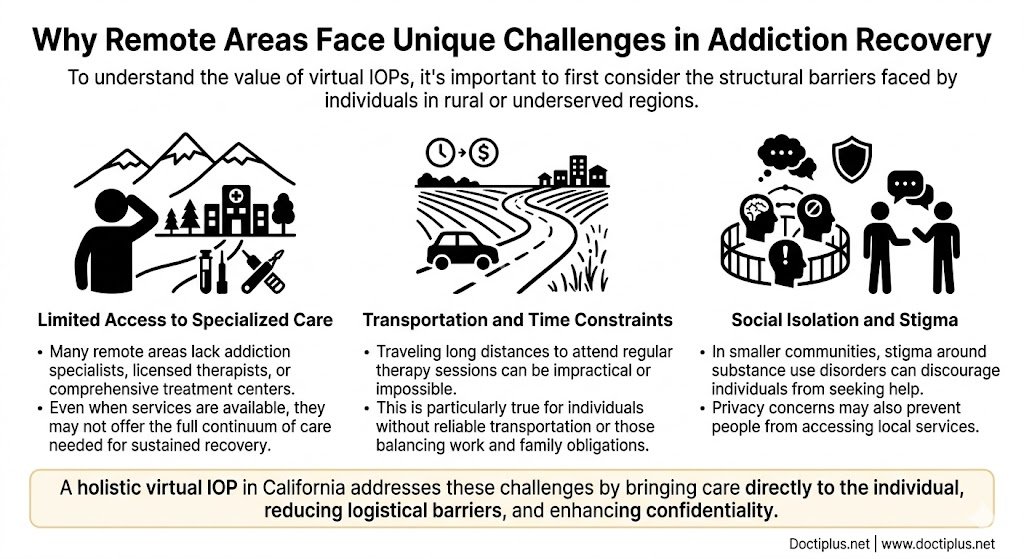
To understand the value of virtual IOPs, it’s important to first consider the structural barriers faced by individuals in rural or underserved regions.
Limited Access to Specialized Care
Many remote areas lack addiction specialists, licensed therapists, or comprehensive treatment centers. Even when services are available, they may not offer the full continuum of care needed for sustained recovery.
Transportation and Time Constraints
Traveling long distances to attend regular therapy sessions can be impractical or impossible. This is particularly true for individuals without reliable transportation or those balancing work and family obligations.
Social Isolation and Stigma
In smaller communities, stigma around substance use disorders can discourage individuals from seeking help. Privacy concerns may also prevent people from accessing local services.
A holistic virtual IOP in California addresses these challenges by bringing care directly to the individual, reducing logistical barriers, and enhancing confidentiality.
How Virtual IOPs Expand Access to Care

Virtual IOPs are uniquely positioned to meet the needs of remote populations by leveraging technology to deliver consistent, high-quality care.
Bridging Geographic Gaps
One of the most immediate benefits is the elimination of distance as a barrier. Individuals can access licensed clinicians and structured programming regardless of their physical location.
This is particularly relevant in a large and diverse state like California, where rural communities may be hundreds of miles from major treatment hubs. A virtual IOP in California ensures that residents in these areas receive the same standard of care as those in urban centers.
Flexible Scheduling That Supports Real Life
Virtual programs often offer multiple session times, including evenings, making it easier for participants to integrate treatment into their daily routines. This flexibility increases engagement and reduces dropout rates.
For someone living in a remote area, the ability to attend therapy without disrupting work or family responsibilities can make the difference between starting treatment and postponing it indefinitely.
Enhancing Continuity of Care
Consistency is a cornerstone of effective addiction treatment. Virtual IOPs allow individuals to maintain regular contact with their care team, even in the face of travel limitations, weather disruptions, or other logistical challenges.
This continuity supports long-term recovery and helps prevent relapse.
The Clinical Effectiveness of Virtual Addiction Treatment
A common question is whether virtual care can match the effectiveness of in-person treatment. Research and clinical experience increasingly suggest that it can.
Comparable Outcomes to In-Person Programs
Studies have shown that telehealth-based addiction treatment can achieve outcomes similar to traditional models, particularly when programs are structured and include evidence-based therapies.
A virtual IOP in California typically includes the same therapeutic modalities as in-person programs, such as cognitive behavioral therapy, motivational interviewing, and group support.
Strong Therapeutic Alliance
Some individuals worry that virtual care may feel impersonal. In practice, many participants report strong connections with their therapists and peers. Video sessions allow for real-time interaction, emotional expression, and meaningful dialogue.
For individuals in remote areas who may otherwise lack access to peer support, virtual group therapy can be especially valuable.
Increased Engagement and Retention
The convenience of virtual care often leads to higher attendance rates. When barriers like travel and scheduling are removed, individuals are more likely to stay engaged in treatment.
This increased retention is a key factor in successful recovery outcomes.
Addressing Common Concerns About Virtual IOPs
While virtual IOPs offer many advantages, prospective participants often have questions about how they work in practice.
Is Privacy Protected?
Confidentiality is a top priority in virtual treatment. Programs use secure, encrypted platforms to ensure that sessions remain private. Participants can attend from a location of their choosing, which may feel safer than visiting a local clinic in a small community.
What About Technology Requirements?
Most virtual IOPs require a stable internet connection and a device with video capabilities. While this may be a limitation for some, many programs offer support to help participants get set up.
In remote areas where broadband access is improving, virtual care is becoming increasingly feasible.
Can Virtual Care Handle Complex Cases?
Virtual IOPs are best suited for individuals who do not require medical detox or 24-hour supervision. However, they can effectively support a wide range of substance use disorders and co-occurring mental health conditions.
For those with more complex needs, virtual programs can also serve as a step-down level of care after residential treatment.
The Importance of Community in Recovery
Recovery is not just about individual change; it’s also about connection. Virtual IOPs create opportunities for meaningful interaction, even across distances.
Building Peer Support Networks
Group therapy sessions allow participants to share experiences, offer encouragement, and build a sense of community. For individuals in remote areas, this connection can reduce feelings of isolation and provide ongoing motivation.
Involving Family and Loved Ones
Many virtual IOPs include family therapy or educational sessions, helping to strengthen support systems at home. This holistic approach enhances the likelihood of sustained recovery.
Why California Is Leading the Way in Virtual IOP Innovation
California has been at the forefront of telehealth adoption, driven by both necessity and innovation. The state’s diverse geography and population have made it an ideal environment for developing scalable virtual care models.
A virtual IOP in California often reflects this leadership, incorporating advanced technology, culturally competent care, and a wide range of therapeutic options. These programs serve as a model for other states looking to expand access to addiction treatment.
The Future of Addiction Treatment in Remote Areas
The growth of virtual IOPs represents a broader shift toward more accessible, patient-centered care. As technology continues to evolve, these programs are likely to become even more sophisticated and widely available.
For residents in remote areas, this means greater access to timely, effective treatment without the burdens that have historically limited care. Virtual IOPs are not a temporary solution; they are a foundational component of the future of behavioral health.
Choosing A Virtual IOP for Addiction
Addiction does not discriminate by geography, but access to treatment often does. Virtual intensive outpatient programs are helping to change that reality.
By removing barriers related to distance, scheduling, and stigma, a virtual IOP in California provides a viable and effective pathway to recovery for individuals in remote areas. These programs combine clinical rigor with practical accessibility, offering a model of care that meets people where they are both physically and emotionally.
For anyone navigating the challenges of addiction in a remote setting, virtual IOPs offer something that was once out of reach: consistent, high-quality support that fits into everyday life.