

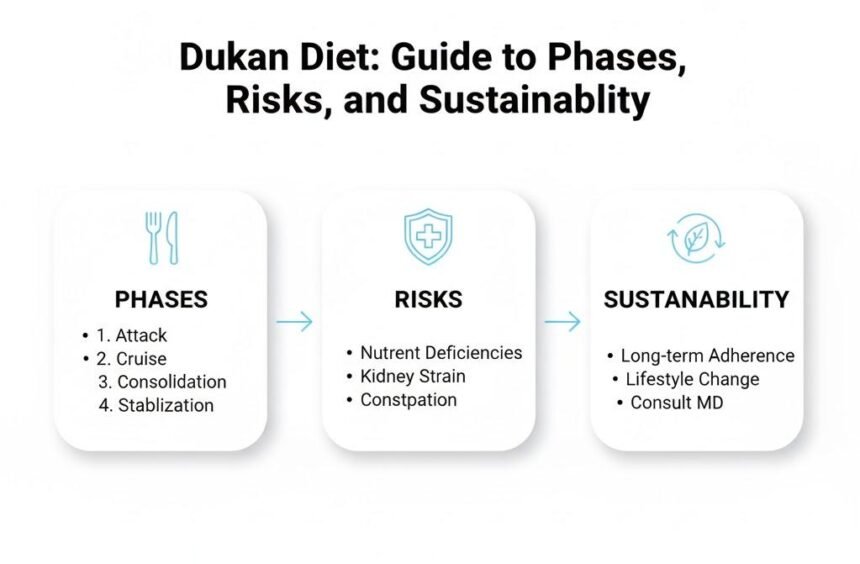
Many of my patients are seeking rapid, effective ways to lose weight, and the Dukan Diet often comes up in conversation. This diet, popularised by French physician Pierre Dukan, is a highly restrictive, very high-protein, low-carbohydrate plan designed in four sequential phases. It promises fast initial weight loss, which can be highly motivating.
While the diet’s emphasis on protein offers early success, its rigid structure and severe carbohydrate restriction carry specific nutritional risks and may make long-term maintenance difficult. We need to examine the stages of this diet, the scientific rationale for it, and the importance of nutritional completeness for overall health.
What is the Dukan Diet and How Does it Affect Metabolism?
The Dukan Diet is a non-calorie-counting, highly prescriptive eating plan based on consuming almost exclusively lean protein during its initial stages.
- Protein Leverage: The immediate weight loss comes from two factors: the high satiety (fullness) protein provides, which naturally reduces overall calorie intake, and the temporary water weight loss associated with cutting carbohydrates.
- Metabolic Effect: Protein has a higher thermic effect of food (TEF) than fat or carbohydrates. This means the body expends more energy (calories) to digest and process protein, which slightly boosts daily calorie burning.
- Key Restriction: The diet severely restricts fats and almost eliminates carbohydrates and fruits during the initial and second phases. This induces a state similar to ketosis for some, reducing appetite.
Four Phases: Attack, Cruise, Consolidation, and Stabilisation
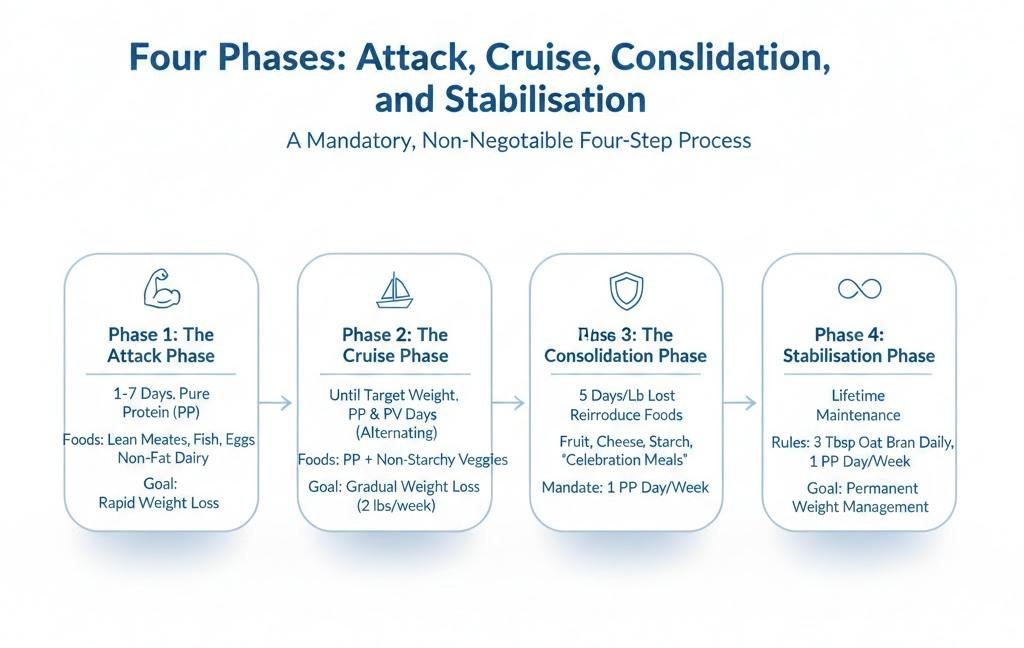
The diet is structured as a mandatory, non-negotiable four-step process, designed to address weight loss and maintenance sequentially.
Phase 1: The Attack Phase
This phase is 1 to 7 days long and involves eating almost pure protein (PP) only.
- Allowed Foods: Very lean meats, fish, poultry, egg whites, and non-fat dairy.
- Goal: Rapid weight loss to kickstart motivation.
Phase 2: The Cruise Phase
This phase continues until the target weight is reached and involves alternating pure protein days with days that include protein plus non-starchy vegetables (PV).
- Allowed Foods: All PP foods plus specific raw or cooked vegetables (e.g., lettuce, zucchini, tomatoes).
- Goal: Gradual, consistent weight loss (average 2 lbs/week).
Phase 3: The Consolidation Phase
This long phase (5 days for every pound lost) is designed to prevent the rebound effect. It slowly reintroduces previously banned foods.
- Reintroduced Foods: Small portions of fruit, cheese, starchy foods (like whole grain bread), and one to two “celebration meals” per week.
- Mandate: One day per week must remain a pure protein (PP) day.
Phase 4: Stabilisation Phase
This is the maintenance phase, intended to last a lifetime.
- Rules: Requires three tablespoons of oat bran daily and one mandatory Pure Protein day per week.
- Goal: Permanent weight management through simple, lifelong rules.
Practical Risks and Nutritional Challenges
The Dukan Diet’s strictness creates serious practical issues that I frequently observe.
- Nutrient Deficiencies: Eliminating most grains, fruits, and starchy vegetables in the early phases can lead to low intake of essential vitamins and minerals, including Vitamin C, potassium, and folate.
- Severe Constipation: This is a significant complaint. The near-total absence of fibre during the Attack Phase causes severe bowel sluggishness. The recommended amount of oat bran often isn’t enough to offset the lack of bulk fibre from vegetables and whole grains.
- “Keto Flu” Symptoms: Cutting carbohydrates so suddenly can lead to symptoms such as headaches, fatigue, bad breath, and nausea, which often cause patients to quit the diet prematurely.
Protein and Oat Bran: Core Components
Two non-negotiable food groups form the backbone of the Dukan approach.
Lean Protein
The focus on lean protein helps preserve muscle mass while losing fat.
| Good Source | Avoid / Limit |
|---|---|
| Lean poultry / fish, fattier cuts of beef, high-fat processed meats | Added oils or butter |
| Egg whites | Added oils or butter |
| Non-fat dairy | Whole milk or cream |
Oat Bran
Oat bran is emphasised for its high soluble fibre content. This is mandatory daily, even in the maintenance phase.
- Dukan Daily Requirement: Starts at 1.5 tablespoons in the Attack Phase and increases to 3 tablespoons in the Stabilisation Phase.
- Benefit: Soluble fibre forms a gel in the digestive tract, aiding satiety and improving cholesterol levels, though it often requires more water than patients realise.
Long-Term Risks and Metabolic Concerns
The stringent nature of the Dukan Diet raises specific health concerns, especially with prolonged adherence.
- Kidney Strain: A chronically very high protein intake puts increased workload and strain on the kidneys to process nitrogenous waste products (urea). While generally safe for people with healthy kidneys, it is highly problematic for individuals with pre-existing renal impairment.
- Boredom and Compliance: Severe food restriction, particularly during the Attack and Cruise phases, often leads to food boredom and social difficulties, resulting in high noncompliance rates and subsequent weight regain.
- Gallstone Risk: Rapid weight loss, regardless of the method, increases the risk of developing gallstones.
When to See a Doctor
The Dukan Diet is a significant metabolic change. Consult your doctor before starting, especially if you have:
- Kidney or Liver Disease: The high protein load is contraindicated.
- Gout: High protein intake can worsen uric acid levels and trigger gout attacks.
- Any Chronic Disease: The restrictive nature requires monitoring of blood pressure, blood lipids, and nutrient status.
Improvement Timeline
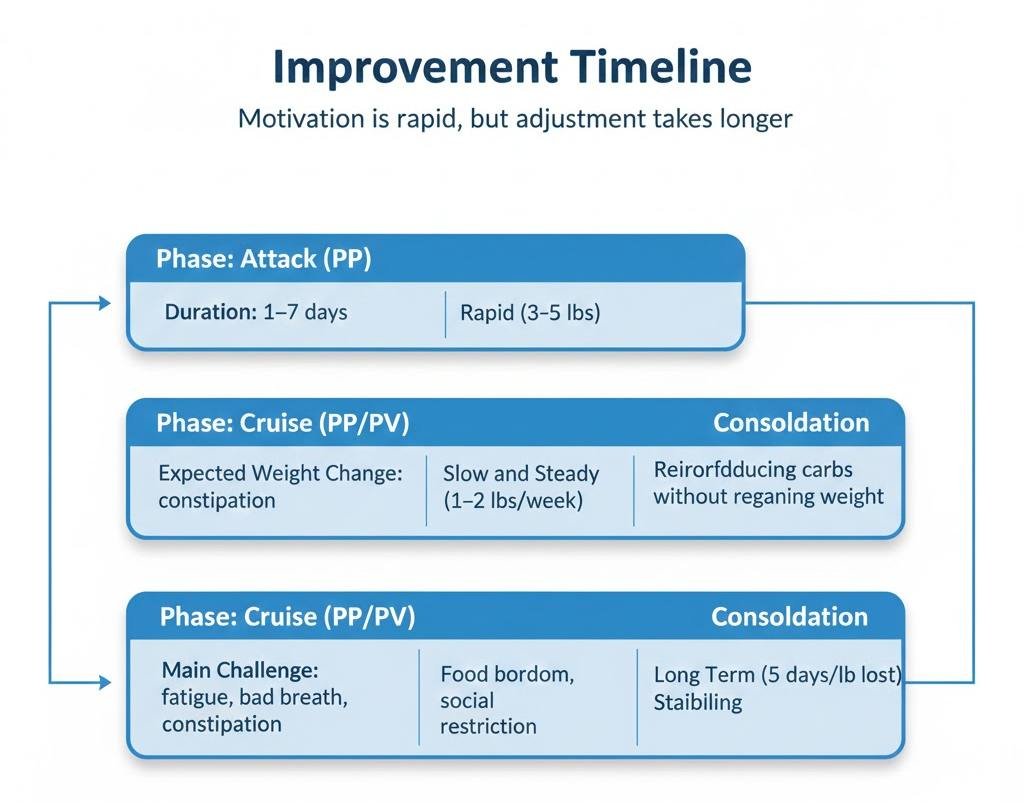
The motivation derived from rapid initial success is a hallmark of this diet, but the physical and psychological adjustment takes much longer.
| Phase | Duration | Expected Weight Change | Main Challenge |
|---|---|---|---|
| Attack (PP) | 1–7 days | Rapid (3–5 lbs) | Severe fatigue, bad breath, constipation |
| Cruise (PP/PV) | Until Goal | Slow and Steady (1–2 lbs/week) | Food boredom, social restriction |
| Consolidation | Long Term (5 days/lb lost) | Stabilizing | Reintroducing carbs without regaining weight |
Final Advice
The Dukan Diet offers a powerful jump-start for weight loss. Still, its success relies entirely on adhering to its strict, often socially challenging rules throughout all four phases, especially the lifelong Stabilisation phase. For a healthier, more sustainable approach, focus on the diet’s core benefits, increasing lean protein and fibre while ensuring a balanced intake of healthy fats, fruits, and whole grains. Any diet that restricts major food groups for an extended period requires medical oversight.
Medical Disclaimer
The information provided in this article is for informational purposes only and is not intended as medical advice, diagnosis, or treatment. It is not a substitute for professional medical care. Always seek the advice of a qualified healthcare provider before starting any highly restrictive diet, such as the Dukan Diet, particularly if you have pre-existing kidney disease, gout, or any chronic health condition.
References
- Dukan, P. (2010). The Dukan Diet. Hodder & Stoughton.
- Astbury, N. M., et al. (2015). A randomised controlled trial of the Dukan, intermittent fasting, and calorie restriction diets. Journal of Functional Foods.
- Westerterp-Plantenga, M. S. (2009). The protein status and requirements in older individuals. Current Opinion in Clinical Nutrition and Metabolic Care.
- Jang, Y., et al. (2019). The effect of a high-protein diet on kidney function in people with and without pre-existing renal disease. Journal of the American Society of Nephrology.
- Fine, E. J., & Feinman, R. D. (2004). Calorie restriction and ketosis in the management of Type 2 diabetes and obesity. Nutrition & Metabolism.
- Popkin, B. M., et al. (2010). Technological change, diet structure and the nutrition transition. Nature Reviews Endocrinology.
- Koliaki, C., et al. (2015). Health implications of a high-protein diet. European Journal of Clinical Nutrition.