

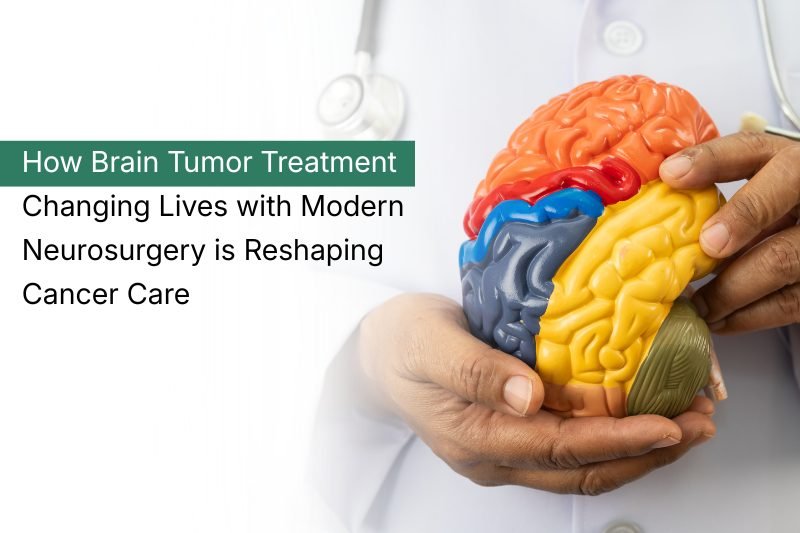
A brain tumor diagnosis can be one of the most challenging moments in a person’s life. The brain controls essential functions such as movement, speech, memory, emotions, and decision-making, making any abnormal growth within it a serious medical concern. For many years, brain tumor treatment was associated with significant risks, lengthy hospital stays, and concerns about permanent neurological damage.
Today, the story is very different. Modern neurosurgery has transformed the treatment landscape, enabling surgeons to remove tumors with greater precision while preserving critical brain functions. Advanced technologies such as intraoperative MRI, neuronavigation systems, fluorescence-guided surgery, awake craniotomy, and minimally invasive surgical approaches are helping patients achieve better outcomes and faster recoveries.
At the same time, breakthroughs in molecular diagnostics, targeted therapies, and multidisciplinary cancer care are allowing treatment plans to be tailored to each patient’s specific condition. These developments are not only improving survival rates but also enhancing the quality of life after treatment.
Whether patients are exploring treatment options close to home or searching for the best hospital for brain tumour treatment internationally, understanding these innovations can help them make informed decisions about their care.
Understanding Brain Tumors
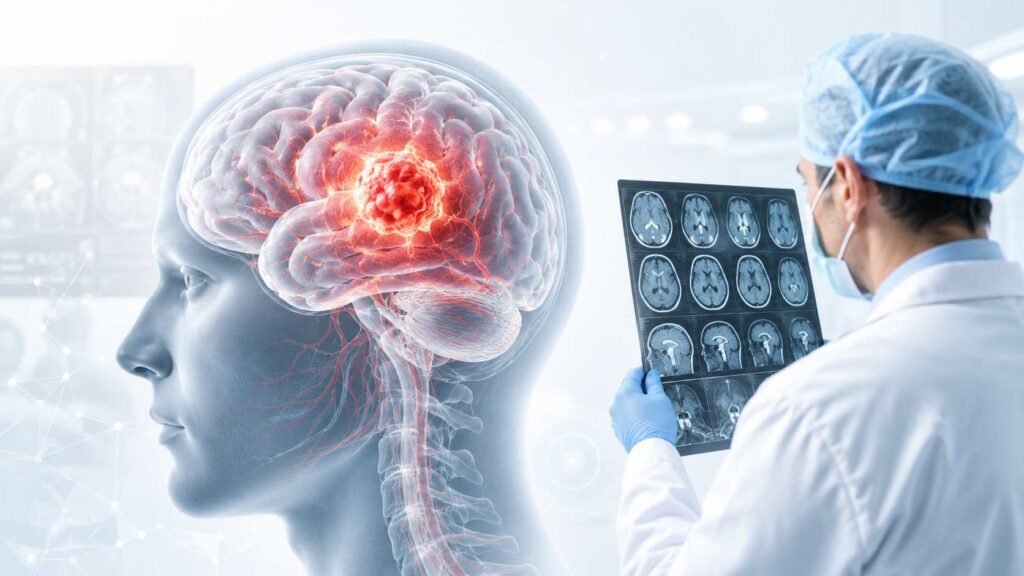
A brain tumor is an abnormal growth of cells within the brain or surrounding structures. Tumors may be benign (non-cancerous) or malignant (cancerous), but both can affect brain function by increasing intracranial pressure or disrupting nearby neural pathways.
Common symptoms include:
- Persistent headaches
- Seizures
- Vision disturbances
- Balance and coordination problems
- Weakness in limbs
- Memory difficulties
- Personality changes
- Speech and language problems
Brain tumors are classified according to the World Health Organisation (WHO) grading system, which helps determine how aggressively a tumor is likely to behave.
WHO Classification of Brain Tumors
| WHO Grade | Characteristics | Typical Treatment |
| Grade I | Slow-growing, often benign | Surgery |
| Grade II | Low-grade with recurrence potential | Surgery ± Radiation |
| Grade III | Malignant and invasive | Surgery + Radiation + Chemotherapy |
| Grade IV | Highly aggressive | Multimodal treatment |
Some of the most common brain tumors include meningiomas, gliomas, astrocytomas, pituitary tumors, acoustic neuromas, and metastatic brain tumors.
Common Types of Brain Tumors
| Tumor Type | Nature | Characteristics |
| Meningioma | Usually benign | Develops from the brain coverings |
| Glioma | Often malignant | Arises from glial cells |
| Astrocytoma | Variable | Can range from low to high grade |
| Glioblastoma | Highly aggressive | Fast-growing and invasive |
| Pituitary Adenoma | Usually benign | May affect hormone production |
| Acoustic Neuroma | Benign | Impacts hearing and balance |
| Metastatic Tumors | Secondary cancer | Spread from another organ |
Evolution of Brain Tumor Surgery
Historically, brain tumor surgery relied heavily on preoperative imaging and the surgeon’s anatomical expertise. While effective in many cases, surgeons often faced challenges in distinguishing tumor tissue from healthy brain tissue during procedures.
The goal of modern neurosurgery is no longer simply removing a tumor. Instead, surgeons aim for what is known as maximum safe resection, removing as much of the tumor as possible while preserving critical neurological functions.
Numerous studies have demonstrated that a greater extent of tumor removal is associated with improved survival in many brain tumor types, particularly gliomas. However, aggressive tumor removal must be carefully balanced against the risk of neurological impairment.
Advances in imaging, navigation, and intraoperative monitoring now allow surgeons to achieve this balance with far greater precision than ever before.
Advanced Imaging: Foundation of Modern Neurosurgery
Successful brain tumor surgery begins with accurate diagnosis and surgical planning.
Modern imaging technologies provide detailed information about tumor size, location, blood supply, and relationship to critical brain structures.
Key imaging tools include:
- Magnetic Resonance Imaging (MRI)
- Functional MRI (fMRI)
- Diffusion Tensor Imaging (DTI)
- Magnetic Resonance Spectroscopy (MRS)
- Positron Emission Tomography (PET)
Functional MRI helps identify regions responsible for speech, language, movement, and sensory processing. DTI maps white matter tracts, allowing surgeons to avoid important neural pathways during surgery.
Role of Modern Imaging in Surgical Planning
| Technology | Purpose | Clinical Benefit |
| MRI | Detailed tumor visualization | Accurate diagnosis |
| fMRI | Functional brain mapping | Preserves speech and motor functions |
| DTI | White matter tract mapping | Reduces nerve injury |
| PET Scan | Tumor metabolic assessment | Better treatment planning |
| MRS | Tumor characterization | Improved diagnostic accuracy |
Increasingly, artificial intelligence (AI) is being integrated into neuroimaging analysis, helping physicians identify tumor boundaries and predict treatment responses more accurately.
Intraoperative MRI: Real-Time Surgical Guidance
One of the most significant innovations in neurosurgery is the use of intraoperative MRI (iMRI).
During surgery, the brain can shift slightly as tumor tissue is removed, making preoperative images less accurate. Intraoperative MRI provides real-time imaging during the operation, allowing surgeons to assess progress and identify any remaining tumor tissue.
Benefits of iMRI include:
- Greater extent of tumor removal
- Enhanced surgical precision
- Reduced the likelihood of repeat surgeries
- Better preservation of healthy brain tissue
Studies suggest that patients undergoing surgery with intraoperative MRI often achieve higher rates of complete tumor resection compared to conventional approaches.
Fluorescence-Guided Surgery: Making Tumors More Visible
One of the challenges in brain tumor surgery is distinguishing tumor tissue from normal brain tissue.
Fluorescence-guided surgery addresses this challenge by using special fluorescent agents such as 5-aminolevulinic acid (5-ALA). After administration, tumor cells absorb the compound and fluoresce at specific wavelengths during surgery.
This allows surgeons to:
- Visualize tumor margins more clearly
- Remove a greater amount of tumor tissue
- Reduce residual disease
- Improve surgical accuracy
Fluorescence-guided surgery has become particularly valuable in the treatment of high-grade gliomas, including glioblastoma.
Technologies Driving Modern Brain Tumor Surgery
| Technology | Function | Patient Benefit |
| Intraoperative MRI | Real-time imaging | Improved tumor removal |
| Fluorescence Guidance | Tumor visualization | Better surgical accuracy |
| Neuronavigation | GPS-like guidance | Safer procedures |
| Functional Mapping | Identifies critical brain areas | Preserves neurological function |
| Robotic Assistance | Enhanced precision | Reduced invasiveness |
Awake Brain Surgery: Protecting Critical Functions
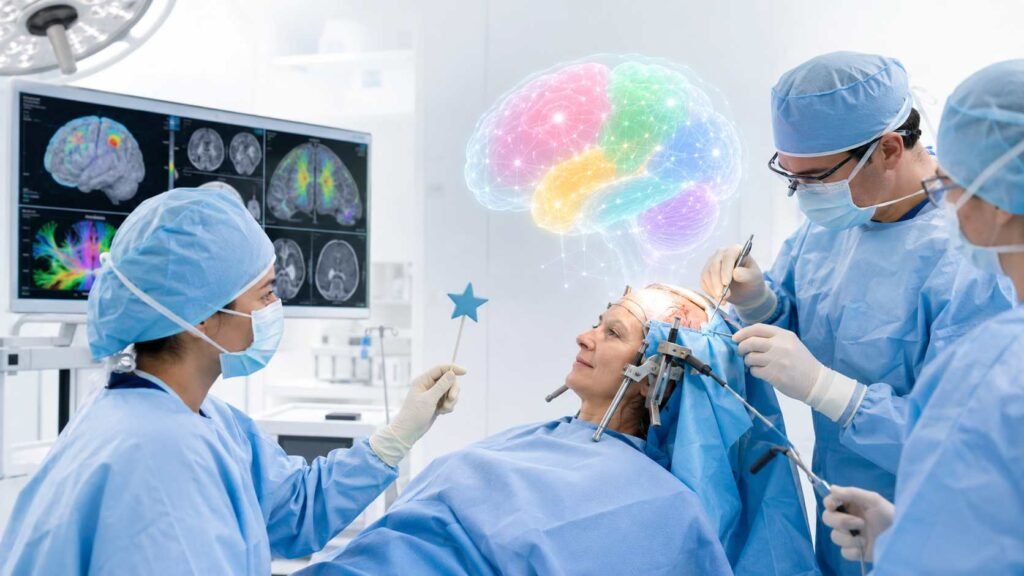
Awake craniotomy is one of the most advanced procedures in contemporary neurosurgery.
Unlike traditional brain surgery performed entirely under general anaesthesia, awake craniotomy allows patients to remain awake during critical stages of the operation.
This technique is particularly useful for tumors located near areas controlling:
- Speech
- Language comprehension
- Motor function
- Memory
- Vision
During surgery, patients may be asked to perform simple tasks such as counting, reading, naming objects, or moving limbs while surgeons stimulate different brain regions.
This process, known as cortical Mapping, helps surgeons identify and preserve vital brain functions while removing the tumor.
Research has shown that awake brain surgery can increase the extent of tumor resection while significantly reducing the risk of permanent neurological deficits.
Traditional Surgery vs Awake Craniotomy
| Feature | Traditional Surgery | Awake Craniotomy |
| Patient Consciousness | Fully asleep | Awake during mapping |
| Functional Monitoring | Limited | Real-time |
| Speech Preservation | Moderate | Excellent |
| Motor Function Protection | Good | Superior |
| Tumor Removal Accuracy | High | Very High |
Neuronavigation: GPS for the Brain
Modern neuronavigation systems function much like GPS technology.
Using preoperative imaging data, these systems create three-dimensional maps of the patient’s brain. Surgeons can track surgical instruments in real time and navigate with millimetre-level accuracy.
Neuronavigation provides several advantages:
- Smaller surgical openings
- Improved precision
- Reduced trauma to healthy tissue
- Greater surgeon confidence
- Shorter operative times
The technology is now considered standard in many advanced neurosurgical centres worldwide.
Minimally Invasive Neurosurgery
Not all brain tumors require traditional open surgery.
Advances in endoscopic and minimally invasive techniques have enabled surgeons to access certain tumors through smaller openings and natural anatomical pathways.
Examples include:
- Endoscopic skull base surgery
- Endoscopic pituitary tumor surgery
- Keyhole craniotomy
- Endoscope-assisted tumor removal
Benefits of minimally invasive brain tumor surgery include:
- Smaller incisions
- Reduced postoperative pain
- Lower infection risk
- Shorter hospital stays
- Faster recovery times
For carefully selected patients, these approaches can yield outcomes comparable to those of conventional surgery with fewer complications.
Precision Medicine Is Changing Brain Tumor Treatment
One of the most exciting developments in neuro-oncology is precision medicine.
Traditionally, treatment decisions were based primarily on what a tumor looked like under a microscope. Today, physicians also analyze the genetic and molecular characteristics of the tumor.
Important biomarkers include:
- IDH1 and IDH2 mutations
- MGMT promoter methylation
- EGFR amplification
- BRAF mutations
- 1p/19q co-deletion
These molecular markers help physicians:
- Predict treatment response
- Estimate prognosis
- Select targeted therapies
- Personalise treatment plans
This individualized approach is helping improve outcomes while reducing unnecessary treatment-related toxicity.
Beyond Surgery: A Multidisciplinary Treatment Approach
Modern brain tumor care involves much more than surgery alone.
Patients often receive care from a multidisciplinary team that includes:
- Neurosurgeons
- Neuro-oncologists
- Radiation oncologists
- Neurologists
- Rehabilitation specialists
- Neuropsychologists
- Specialized nursing teams
Additional treatments may include:
Components of Modern Brain Tumor Care
| Treatment | Purpose |
| Surgery | Tumor removal and diagnosis |
| Radiation Therapy | Destroy residual tumor cells |
| Chemotherapy | Control cancer growth |
| Targeted Therapy | Attack specific molecular pathways |
| Immunotherapy | Enhance immune response |
| Rehabilitation | Restore physical and cognitive function |
This coordinated approach ensures that every aspect of a patient’s care is addressed.
How Modern Neurosurgery Is Improving Quality of Life
While survival remains a key goal, modern treatment increasingly focuses on preserving quality of life.
Advances in surgical techniques and rehabilitation programs are helping patients maintain:
- Speech and language abilities
- Mobility and independence
- Cognitive function
- Emotional well-being
- Professional productivity
- Social engagement
Enhanced Recovery After Surgery (ERAS) protocols, improved anaesthesia methods, and early rehabilitation have further accelerated postoperative recovery.
For many patients, successful treatment now means returning to work, spending time with family, and maintaining a normal lifestyle.
Choosing the Best Hospital for Brain Tumour Treatment
The choice of treatment centre can significantly influence outcomes. Among all the options available, India, in recent years, has proven to have advanced medical facilities. One can choose the hospitals available by evaluating the best hospital for brain tumour treatment in India. Patients should consider:
- Availability of advanced imaging technologies
- Expertise in complex brain tumor surgery
- Access to awake craniotomy programs
- Intraoperative MRI facilities
- Multidisciplinary neuro-oncology teams
- International patient support services
- Rehabilitation and follow-up care
High-volume neuroscience centres often have greater experience managing complex and rare brain tumours.
Finding the Best Doctors for Brain Tumour Treatment
Experience matters greatly in brain tumor surgery.
The best doctors for brain tumour treatment typically possess:
- Fellowship training in neurosurgical oncology
- Expertise in advanced brain mapping techniques
- Experience with awake brain surgery
- Knowledge of molecular neuro-oncology
- Access to multidisciplinary treatment teams
Patients should feel comfortable discussing surgical outcomes, complication rates, and available treatment technologies with their medical team.
Understanding Brain Tumor Treatment Cost
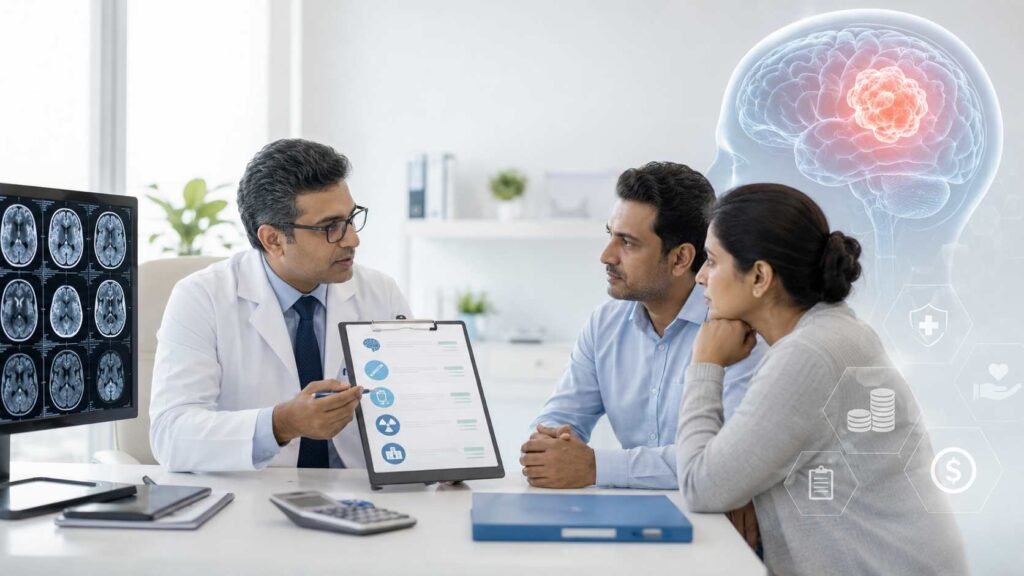
One of the most important considerations for patients and families is the brain tumor treatment cost.
The total cost depends on several factors, including:
- Tumor type and complexity
- Surgical technique used
- Hospital infrastructure
- Length of ICU and hospital stay
- Need for radiation therapy
- Chemotherapy requirements
- Rehabilitation services
Factors Affecting Brain Tumor Treatment Cost
| Factor | Impact on Cost |
| Tumor Complexity | High |
| Surgical Technology | Moderate to High |
| Hospital Stay | Moderate |
| Radiation Therapy | High |
| Chemotherapy | High |
| Rehabilitation | Moderate |
| Geographic Location | Significant |
Patients considering treatment abroad should request comprehensive estimates that include diagnostics, surgery, hospitalization, medications, and follow-up care.
Future of Brain Tumor Treatment
The future of neuro-oncology is being shaped by innovation.
Several emerging technologies are showing tremendous promise:
- Artificial intelligence-assisted surgical planning
- Robotic neurosurgery
- Laser Interstitial Thermal Therapy (LITT)
- Focused ultrasound
- Immunotherapy
- CAR-T cell therapy
- Personalized cancer vaccines
- Advanced drug delivery systems capable of crossing the blood-brain barrier
Researchers are also exploring novel approaches to improve glioblastoma treatment options, one of the most difficult brain cancers to treat.
As these innovations continue to evolve, patients can expect safer procedures, better survival outcomes, and improved quality of life.
Conclusion
Modern neurosurgery has fundamentally transformed the treatment of brain tumors. Innovations such as intraoperative MRI, fluorescence-guided surgery, awake craniotomy, neuronavigation, and minimally invasive approaches have enabled surgeons to treat tumors with greater precision while preserving critical brain functions.
Combined with advances in precision medicine, molecular diagnostics, and multidisciplinary care, these developments are improving both survival and quality of life for patients worldwide.
For individuals facing a brain tumour diagnosis, access to advanced treatment technologies, the best doctors for brain tumour treatment, and the best hospital for brain tumour treatment can make a meaningful difference in outcomes. While brain tumor treatment cost remains an important consideration, the growing availability of sophisticated neurosurgical care is providing new hope to patients and families around the world.
As research continues to advance, modern neurosurgery is not only treating brain tumors, but it is also changing lives.