

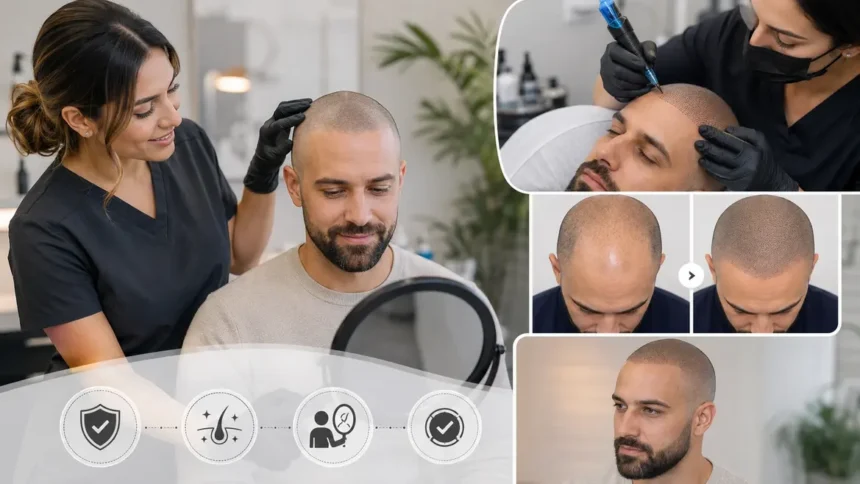
Along with addressing different forms of hair loss, a hair tattoo also helps conceal certain types of scalp scarring. This treatment option uses specialized pigment and equipment designed specifically for the scalp to produce realistic-looking results. Here is more information about the tattoo process to give clients a clearer picture of what to expect:
Initial Consultation
Before treatment begins, clients schedule an initial consultation with their practitioner. This stage helps the artist decide whether the client will benefit from getting a hair tattoo. Clients can choose to have the consultation over the phone, through a video call, or in person, depending on their preference and current location.
During the consultation, practitioners typically ask questions to learn more about the client’s current hair situation. They use this information to design a treatment plan that matches the client’s appearance goals. This helps create realistic expectations, with the client encouraged to share their preferences on hairline design and pigment color.
For treatments that require scar camouflage, the consultation stage provides artists with an opportunity to examine the scar. The client may review previous examples of scar treatments and ask questions about the proposed tattoo approach. A practitioner uses this information to create an effective treatment plan based on the scar’s characteristics and the client’s goals.
Tattooing Process
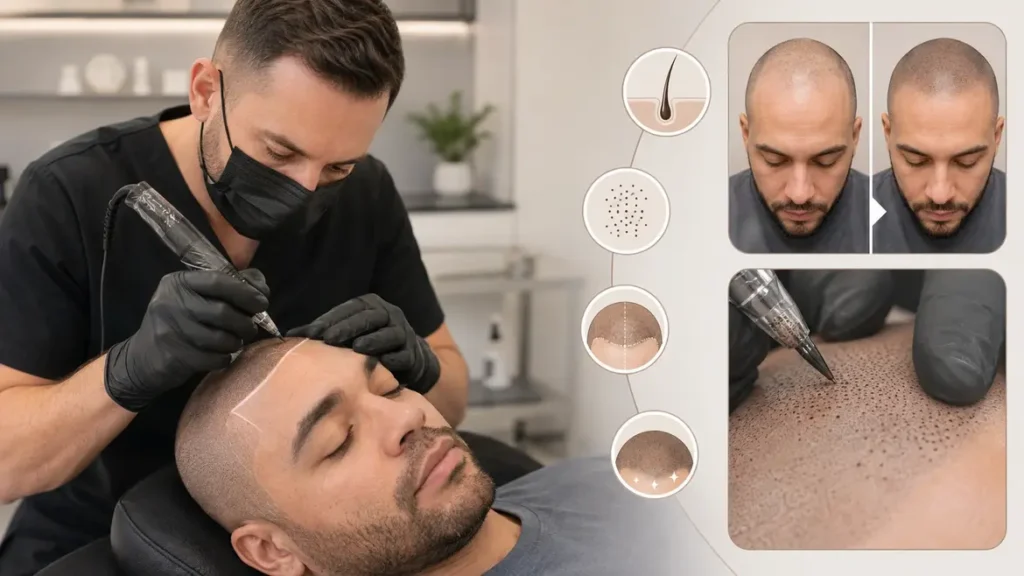
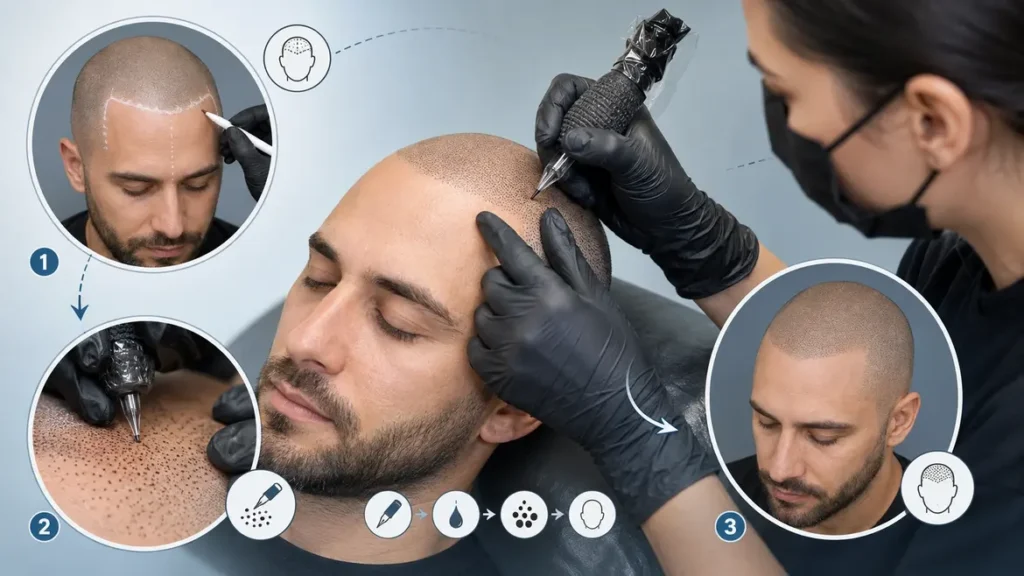
Before treatment begins, the practitioner discusses the desired hairline and overall appearance with the client. The design is reviewed before the treatment starts, so adjustments to the planned look are addressed in advance. Pigment is selected based on factors such as the client’s existing hair and desired appearance. During treatment, an SMP practitioner uses specialized equipment to apply small amounts of pigment to the scalp; the pigment is placed in a pattern designed to resemble the appearance of hair follicles, while the placement and density are adjusted for the treatment area. The process is performed gradually, allowing the practitioner to refine the appearance as treatment progresses.
Scar Camouflage Steps
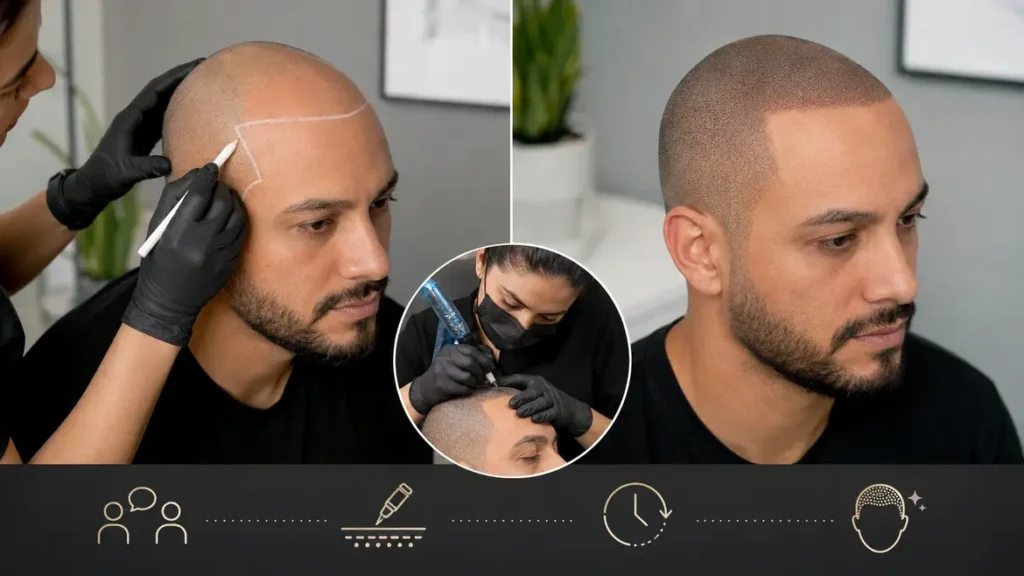
Scar camouflage requires artists to pay close attention to the transition between the scarred area and the surrounding scalp. They work with the existing pattern so that the treated area blends visually with nearby hair follicles. In most cases, the spacing and number of pigment deposits are adjusted during the process because scars differ in appearance and texture.
The number of sessions a practitioner will recommend for scar camouflage hair tattoos depends on the scar’s size and characteristics. Clients should generally expect one to three sessions, with individual sessions lasting approximately two to four hours. The sessions are usually spaced about 10 to 14 days apart to help the artist build the treatment gradually rather than completing everything in one sitting.
Touch-up sessions provide an opportunity to adjust the treated area as its appearance changes over time. Other treatments are also needed if new areas of hair loss or scarring develop after the initial sessions. Hair tattoos are used to address various types of scalp scars, including the following:
- FUE transplant scars that appear as small, round marks
- FUT or strip scars, which typically appear as a longer linear scar
- Plug scars that are often associated with earlier hair-transplant procedures
- Alopecia-related scarring
- Scars caused by accidents or injuries
Aftercare Practices
Clients should follow the recommended aftercare instructions after their session to maximize treatment results. Practitioners offer several tips designed to protect the scalp and the newly applied pigment, including what to avoid and for how long. General aftercare instructions often include limiting activities that cause sweating, avoiding shampooing or scrubbing the treated area, protecting the scalp from direct sunlight, and using gentle care if itching occurs.
Clients typically follow their practitioner’s guidance when returning to their routine after treatment. This includes activities such as shaving, exercising, and spending time outdoors, but additional care for the treated area may be recommended during the recovery period. Following general scalp care practices also helps support the skin as it recovers.
Understand the Hair Tattoo Process
A hair tattoo uses scalp micropigmentation techniques to create the appearance of hair follicles with carefully placed pigment. The treatment process is tailored to each client and typically begins with a consultation before moving into pigment selection and treatment sessions. Schedule a consultation with an experienced practitioner to review available treatment options.
Disclaimer
This article is for general informational purposes only and should not be considered medical advice, diagnosis, or treatment guidance. Scalp micropigmentation results, suitability, healing, session requirements, and aftercare can vary from person to person. Always consult a qualified scalp micropigmentation practitioner or healthcare professional before undergoing treatment, especially if you have an existing scalp condition, scarring, allergies, or other health concerns.