
Varicose veins are one of those conditions that most people live with longer than they need to before seeking treatment, often because they assume the only option is surgery or because the symptoms feel manageable enough that formal treatment seems like an overreaction. The reality is that varicose vein treatment has changed significantly, the minimally invasive options available today bear little resemblance to the surgical stripping procedures of previous decades, and the symptoms that seem manageable often improve dramatically with treatment. Understanding what the options are and how the process works changes the calculation for most people who have been putting off evaluation.
What Varicose Veins Are And Why They Develop
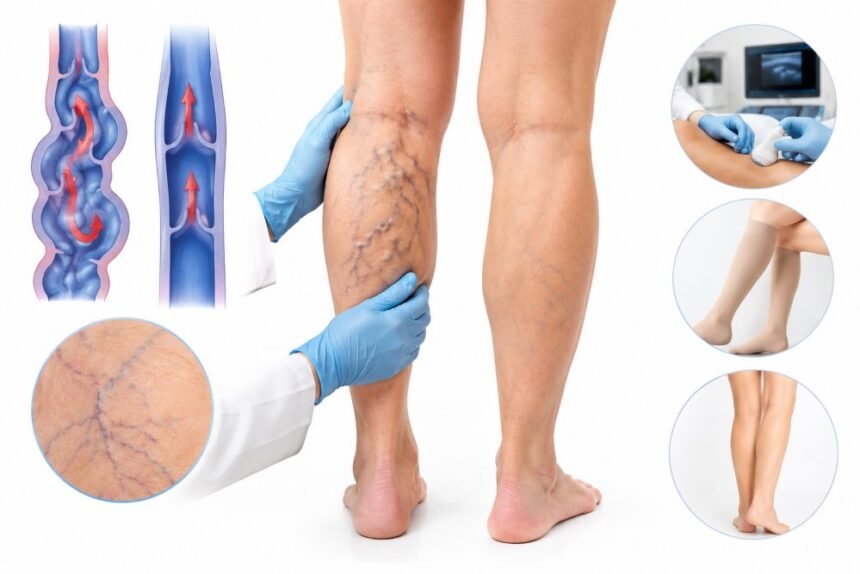
Varicose veins are enlarged, twisted veins that appear most commonly in the legs and are visible beneath the skin as bulging, rope-like structures that are often blue or purple in color. They develop when the valves inside the veins that are supposed to keep blood moving toward the heart stop functioning properly. When these valves fail, blood pools in the vein rather than continuing upward, causing the vein to stretch and enlarge under the increased pressure. The National Library of Medicine describes the same mechanism in its overview of varicose veins, noting that veins rely on one-way valves to keep blood moving toward the heart and that blood pools when those valves are weak or damaged. The underlying condition that causes varicose veins is called chronic venous insufficiency, and it is progressive. Without treatment, the venous pressure that causes the visible varicose veins also affects the surrounding tissue, which is why varicose veins that are left untreated can eventually lead to skin changes, chronic leg swelling, and in more advanced cases venous ulcers that are difficult to heal. The clinical literature is direct on this point: a review of venous insufficiency states that untreated CVI is usually progressive, that delayed treatment can accelerate it, and that roughly 40% of venous ulcers recur even with standard treatment. Risk factors for developing varicose veins include family history, prolonged standing or sitting, pregnancy, obesity, and age. Women are more commonly affected than men, though men develop varicose veins as well and are equally candidates for treatment.
Symptoms That Go Beyond The Visual
The appearance of varicose veins is what most people notice first, but the symptoms that accompany them are often more impactful on daily life than the cosmetic concern. Leg aching, heaviness, and fatigue that worsen throughout the day and with prolonged standing are among the most common complaints. Swelling in the ankles and feet, particularly by the end of the day, is common. Itching or burning over the varicose vein itself, night cramps, and a restless feeling in the legs are also associated with the venous insufficiency that underlies varicose vein development. These symptoms are not cosmetic and they do not resolve on their own. Compression stockings can manage them to a degree, but they address the symptom rather than the cause, and most patients find that symptoms return when compression is discontinued. NHS guidance positions them accordingly, offering compression stockings mainly where procedures or surgery are unsuitable, and noting they are not appropriate for people with arterial blood flow problems, which a specialist should check for first.
Minimally Invasive Treatment Options
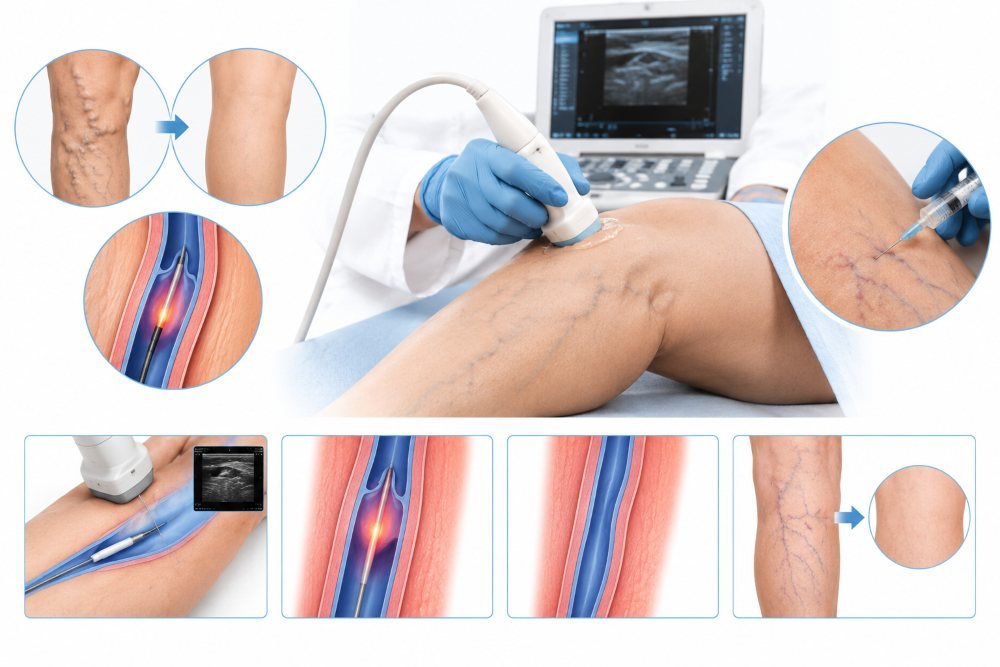
Modern varicose vein treatment does not involve the surgical vein stripping that was standard practice decades ago. The procedures used today are performed in an outpatient setting, typically take less than an hour, require no general anesthesia, and involve recovery measured in days rather than weeks. Endovenous laser ablation and radiofrequency ablation are the most widely used treatments for the underlying venous insufficiency that causes varicose veins. Both work by delivering thermal energy through a thin catheter inserted into the affected vein, causing the vein wall to collapse and seal. The treated vein is absorbed by the body over time, and blood reroutes through healthy veins. The procedures are performed under local anesthesia with ultrasound guidance and most patients walk out of the clinic the same day. Sclerotherapy involves injecting a solution directly into the varicose vein that irritates the vein wall and causes it to collapse and eventually fade. It is used for smaller varicose veins and spider veins and can be used alongside ablation for comprehensive treatment of a broader area. USA Vein Clinics specializes in these minimally invasive approaches, and their resource on varicose vein treatment explains the full range of treatment options available, what each procedure involves, and what patients can expect during recovery. Their clinics are specifically focused on venous disease, which means the evaluation and treatment process is structured around the specific needs of patients with varicose veins and chronic venous insufficiency rather than being one service among many in a general practice.
When Treatment Is Medically Appropriate
Varicose vein treatment is not purely cosmetic. When varicose veins are accompanied by symptoms including pain, swelling, skin changes, or a history of superficial thrombophlebitis, treatment is medically indicated and is typically covered by insurance. The evaluation process begins with a duplex ultrasound that maps the venous system, identifies which valves are failing, and guides the treatment plan. Getting evaluated is the first step toward understanding whether treatment is appropriate and what the right approach is for a specific presentation. Clinical guidance follows the same sequence, with NICE setting out when someone should be referred to a vascular service and how assessment and treatment proceed from there.
Disclaimer
General information, not medical advice. Whether treatment is appropriate depends on an individual assessment, usually including a duplex ultrasound, so speak to a doctor or vascular specialist about your own symptoms. Insurance coverage varies by policy and by country. Seek urgent medical care for sudden leg swelling or pain, which can indicate a blood clot rather than varicose veins, and for a bleeding vein or an open sore that will not heal.