

According to the CDC’s 2024 oral health surveillance data, tooth decay affects more than 50% of children aged 6 to 8, making it one of the most common chronic diseases of childhood. This shows why early dental care matters so much. When children have positive dental experiences from a young age, they are more likely to feel comfortable with checkups and maintain healthy oral habits as they grow.
Pediatric dentistry today focuses strongly on prevention. Parents and dental professionals can work together to help children avoid cavities, reduce dental fear, and build lifelong routines. Since dental anxiety affects many children and adults, creating a calm and positive experience early can make a major difference.
For parents, the goal is not only to get through one dental appointment. The bigger goal is to help children understand that dental care is normal, helpful, and important for their overall health.
How Can Parents Make Dental Exams Enjoyable for Kids?
Making dental visits enjoyable starts before the appointment. Children often feel nervous because they do not know what to expect. Parents can help by presenting the visit as a positive experience instead of something scary.
Reading age-appropriate books about dental visits can help children become familiar with the process. Choose stories where dentists are shown as kind and helpful. Role-playing at home can also be useful. Let your child pretend to examine your teeth with a clean toothbrush. You can also allow them to bring a favorite stuffed animal to the appointment so the toy can “go first.”
Timing matters as well. Schedule the appointment when your child is usually alert and well-rested. For many younger children, mid-morning works well. Avoid rushing to the office. Arriving 10 to 15 minutes early gives your child time to adjust to the environment.
During the visit, stay calm and positive. Children often copy their parents’ emotions. If you seem relaxed, your child is more likely to feel safe. Let the dental team explain the process in child-friendly language. Avoid using words that may create fear, such as pain, shot, drill, or hurt.
After the visit, celebrate your child’s effort. This does not have to mean candy or expensive rewards. A trip to the park, extra bedtime stories, a sticker, or special praise can help create a positive memory. Over time, this makes future dental visits easier.
What Are Effective Cavity Prevention Strategies for Different Ages?
Cavity prevention changes as children grow. A baby, toddler, preschooler, and school-age child all need different levels of care and supervision.
For babies, oral care should begin even before teeth appear. Parents can gently wipe the gums with a soft, damp cloth after feeding. This helps remove bacteria and begins the habit of daily mouth cleaning.
When the first tooth appears, brushing should begin twice a day with a small amount of fluoride toothpaste. For children under age 3, use an amount about the size of a grain of rice. Around age 3, parents can begin using a pea-sized amount.
During the preschool years, children often start eating a wider variety of foods. Snacking becomes an important issue. Frequent sugary or starchy snacks can increase cavity risk because bacteria in the mouth produce acid after each eating occasion. Instead of allowing children to snack all day, parents should offer planned meals and snacks with water in between.
As children enter elementary school, they can take a more active role in brushing, but they still need supervision. Most children need help with brushing until around age 8 to 10. This is also the time when permanent molars begin to come in. These teeth have deep grooves that can trap food and bacteria, so that dental sealants may be helpful.
Understanding each stage helps parents adjust routines as children grow instead of relying on the same approach for every age.
How Should Parents Prevent Cavities in Toddlers?
Toddler cavity prevention requires patience, consistency, and a positive approach. Cavities in baby teeth can begin as early as 12 to 18 months, so daily care is important even when a child resists brushing.
Parents can use the “lift the lip” method once a month. Gently lift the toddler’s upper lip and check for white or brown spots near the gum line. These spots can be early signs of decay. Finding them early may help prevent more serious problems.
Bottle and sippy cup habits also matter. Children should not go to bed with bottles containing milk, formula, juice, or sweet drinks. These liquids can stay on the teeth and increase the risk of decay. Water is the safest option at bedtime.
Parents should try to move children away from bottles around 12 to 15 months when possible. Sippy cups should be used mainly at mealtimes instead of being carried all day.
Fluoride toothpaste is also important. Use a rice-sized amount from the first tooth and a pea-sized amount around age 3. Teach children to spit out toothpaste, but understand that small amounts may be swallowed while they are learning. Supervision is important to make sure children do not use too much.
How Do Diet and Fluoride Work Together to Prevent Cavities?
Diet and fluoride work together to protect teeth. Diet affects how much acid is produced in the mouth, while fluoride helps strengthen enamel and repair early damage.
The frequency of eating is very important. It is not only about how much sugar a child eats. Each time a child eats or drinks something other than water, bacteria can produce acid for about 20 to 30 minutes. This means that sipping juice all day can be more harmful than drinking it only during a meal.
Some foods can support oral health. Cheese, nuts, leafy greens, and other calcium-rich foods help provide minerals that support enamel strength. Crunchy fruits and vegetables can also encourage saliva flow, which helps wash away food particles and neutralize acid.
Fluoride helps protect teeth by supporting remineralization. This means it can help repair early enamel damage before a cavity forms. When fluoride combines with minerals in saliva, it makes teeth more resistant to acid.
Parents can support this process by using fluoride toothpaste correctly, offering water between meals, limiting frequent snacks, and choosing whole foods when possible.
What Are the Benefits and Safety Guidelines for Fluoride in Children?
Fluoride is one of the most studied tools for cavity prevention. It helps strengthen tooth enamel and can reduce the risk of tooth decay when used correctly.
The American Dental Association recommends fluoride toothpaste from the appearance of the first tooth. The key is using the right amount. Children under age 3 should use a rice-sized amount. Children age 3 and older should use a pea-sized amount.
Professional fluoride treatments may also help, especially for children at higher risk of cavities. Fluoride varnish can be applied during routine dental cleanings for kids and usually takes only a few minutes. It is especially useful when permanent molars begin to come in around age 6.
Parents should supervise brushing until about age 8. This helps prevent children from swallowing too much toothpaste and ensures they brush properly. Toothpaste should also be stored out of reach so children do not use it without supervision.
Families who use well water may need to test the fluoride level in their water. A pediatric dentist can guide parents on whether their child needs extra fluoride based on the local water supply and cavity risk.
What Are the Early Signs of Tooth Decay in Children?
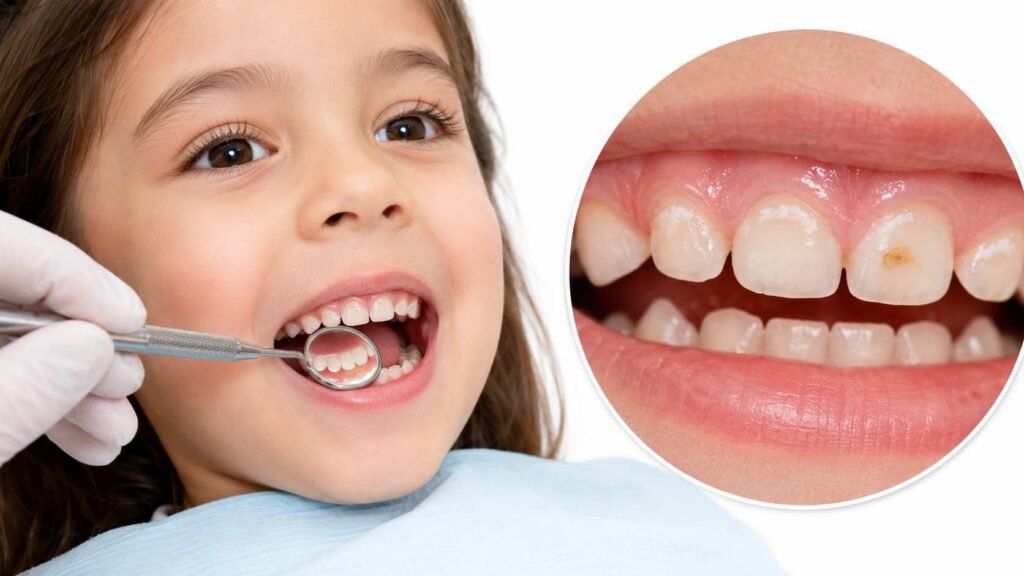
Early tooth decay does not always look like a hole. In many cases, the first sign is a white spot on the tooth. These white spots often appear near the gum line and may look chalky. They show that minerals are being lost from the enamel.
Brown or yellow spots can also be warning signs, especially if they appear suddenly or get darker over time. Baby teeth have thinner enamel than adult teeth, so that decay can progress faster in young children.
Children may also show behavior changes. They may avoid certain foods, chew on one side of the mouth, or complain when eating cold or sweet foods. Early sensitivity may come and go, so parents should not ignore it.
Bad breath that continues despite brushing may also be a sign of bacterial buildup. Rough or sticky areas on the teeth can also suggest early damage.
Parents should contact a dentist if they notice white spots, dark spots, sensitivity, swelling, pain, or changes in eating habits. Early treatment is usually easier, less expensive, and less stressful for the child.
Which Myths and Challenges Affect Childhood Cavity Prevention?
One common myth is that baby teeth do not matter because they fall out. This is not true. Baby teeth help children chew, speak, and maintain space for permanent teeth. Untreated cavities in baby teeth can cause pain, infection, and problems with adult tooth development.
Another myth is that sugar-free always means tooth-safe. Some sugar-free drinks and snacks still contain acids that can weaken enamel. Crackers, dried fruit, and frequent starchy snacks can also contribute to cavities because they stick to teeth and feed bacteria.
Some parents believe genetics matter more than daily habits. Genetics can influence cavity risk, but brushing, diet, fluoride, and regular dental visits play a major role. Even children who seem prone to cavities can benefit from strong prevention routines.
Practical challenges also affect many families. Busy schedules, financial stress, limited access to dental care, and a lack of fluoridated water can make prevention harder. This is why community dental programs, school-based prevention, and affordable pediatric dental services are important.
Final Conclusion
Making dental exams fun for kids is not about distracting them from dental care. It is about helping them feel safe, prepared, and involved. When parents use positive language, practice at home, choose the right appointment time, and reward effort in healthy ways, children are more likely to see dental visits as normal and helpful.
Preventing childhood cavities also requires daily habits. Brushing with the right amount of fluoride toothpaste, limiting frequent snacks, choosing tooth-friendly foods, avoiding bedtime bottles with sugary liquids, and visiting the dentist regularly all work together to protect children’s teeth.
Baby teeth matter. Early dental experiences matter. The habits children build in their first years can influence their oral health for life. With patience, consistency, and support from a pediatric dental team, parents can help their children grow up with healthier smiles and less fear of dental care.
References
- Centers for Disease Control and Prevention. (2024). Oral Health Surveillance Report: Dental Caries, Tooth Retention, and Edentulism, United States, 2017 to March 2020. Atlanta, GA: U.S. Department of Health and Human Services, Centers for Disease Control and Prevention. Published October 9, 2024.
- Centers for Disease Control and Prevention. (2024). 2024 Oral Health Surveillance Report: Selected Findings. Atlanta, GA: U.S. Department of Health and Human Services, Centers for Disease Control and Prevention. Published October 9, 2024.
- American Dental Association Council on Scientific Affairs. (2014). Fluoride toothpaste should be used for young children. The Journal of the American Dental Association, 145(2), 190-191. DOI: 10.14219/jada.2013.47.
- Wright, J. T., Hanson, N., Ristic, H., Whall, C. W., Estrich, C. G., & Zentz, R. R. (2014). Fluoride toothpaste efficacy and safety in children younger than 6 years: A systematic review. The Journal of the American Dental Association, 145(2), 182-189. DOI: 10.14219/jada.2013.37.
- American Academy of Pediatric Dentistry. (2025). Policy on Early Childhood Caries: Classifications, Consequences, and Preventive Strategies. The Reference Manual of Pediatric Dentistry. Chicago, IL: American Academy of Pediatric Dentistry.
- American Academy of Pediatric Dentistry. (2025). Periodicity of Examination, Preventive Dental Services, Anticipatory Guidance/Counseling, and Oral Treatment for Infants, Children, and Adolescents. The Reference Manual of Pediatric Dentistry, 2025-2026 edition, pp. 312-324. Chicago, IL: American Academy of Pediatric Dentistry. Latest revision 2022.
- American Academy of Pediatric Dentistry. (2025). Behavior Guidance for the Pediatric Dental Patient. The Reference Manual of Pediatric Dentistry, 2025-2026 edition. Chicago, IL: American Academy of Pediatric Dentistry.
- U.S. Preventive Services Task Force. (2021). Prevention of Dental Caries in Children Younger Than 5 Years: Screening and Interventions. Recommendation statement. Published December 7, 2021.
- Chou, R., Pappas, M., Dana, T., Selph, S., Hart, E., Schwarz, E., & McDonagh, M. S. (2021). Screening and interventions to prevent dental caries in children younger than 5 years: Updated evidence report and systematic review for the US Preventive Services Task Force. JAMA, 326(21), 2179-2192. DOI: 10.1001/jama.2021.20007.
- Community Preventive Services Task Force. (2013). Dental Caries: School-Based Dental Sealant Delivery Programs. The Community Guide. Atlanta, GA: Centers for Disease Control and Prevention. The review found that school-based sealant delivery programs increased sealant use and reduced tooth decay among children.