

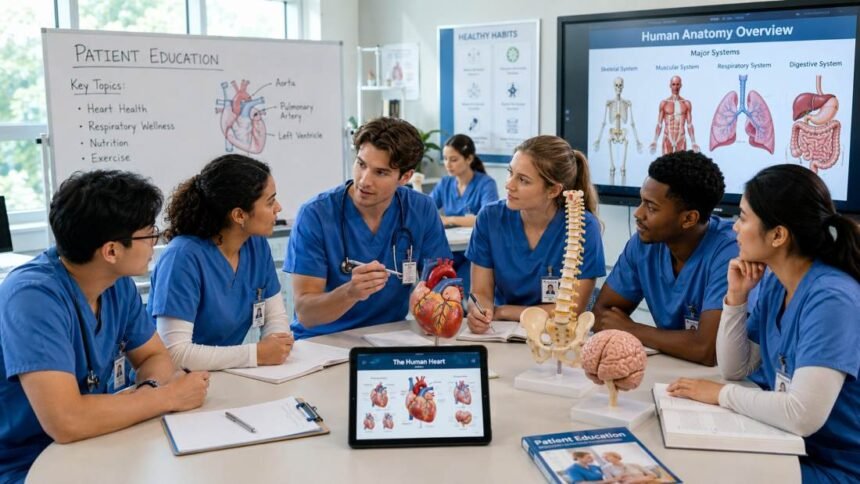
Clear and accurate visuals play an important role in healthcare communication. Whether explaining a medical condition, teaching anatomy, promoting healthy habits, or supporting patient education, images often make complex information easier to understand than text alone. Educational visuals can improve engagement, simplify difficult concepts, and help patients remember important health information.
Creating professional medical illustrations, however, can be both time-consuming and expensive. Healthcare organizations, educators, clinics, and wellness professionals frequently need diagrams, awareness posters, presentation slides, and educational graphics that are both informative and visually appealing. Producing these materials manually often requires design expertise and multiple revisions before they are ready for publication.
One solution that is changing this workflow is Nano Banana, an AI-powered image generation model that creates detailed visuals from natural language prompts. Built on the Gemini Flash reasoning engine, it supports high-quality image generation, intelligent scene planning, reference image workflows, realistic lighting, and accurate text rendering, allowing creators to produce visuals more efficiently.
Nano Banana is designed for creators who need professional-quality images while maintaining greater control over composition, consistency, and visual detail. Its reasoning-based approach helps generate images that better understand object relationships, lighting and scene context before rendering the final result. Available through the Higgsfield platform, these capabilities support efficient image creation while giving users access to a broader ecosystem of AI-powered creative tools for visual content development.
Although qualified healthcare professionals should always review AI-generated medical illustrations before publication, they can support faster content creation for patient education, wellness campaigns, healthcare presentations, and online medical resources. As digital healthcare communication continues to grow, understanding how AI-assisted image generation works can help organizations create educational materials that are both engaging and informative.
Why Are Visuals Important in Medical and Health Education?
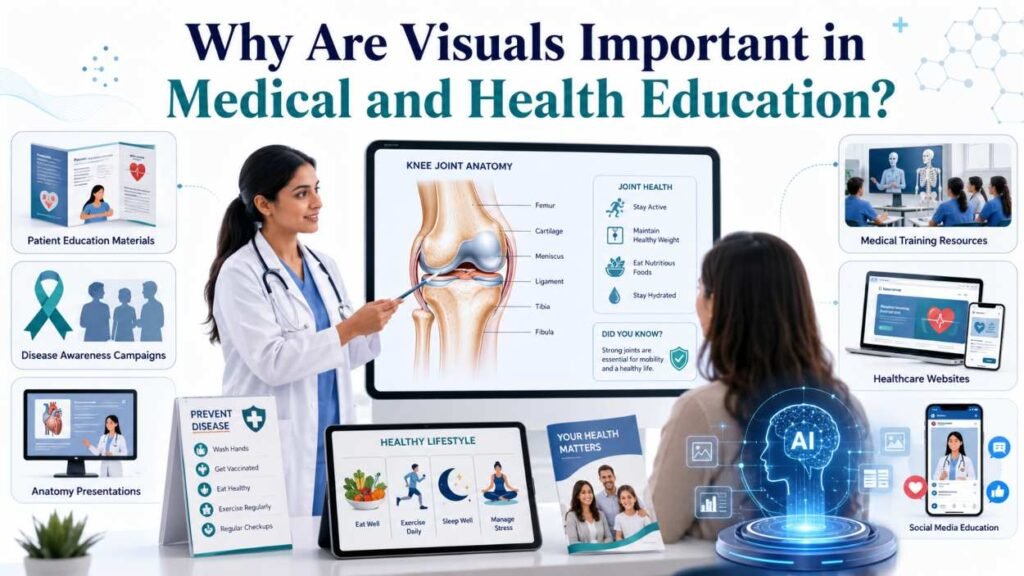
Healthcare information often includes complex medical terminology that may be difficult for patients to understand. Visuals help bridge this gap by transforming written explanations into diagrams, illustrations, charts, and educational graphics that communicate information more clearly.
For example, an anatomy illustration can explain how a joint functions much faster than several paragraphs of text. Likewise, a visual explaining healthy lifestyle habits or disease prevention may encourage greater understanding than a text-only brochure. Educational graphics also support different learning styles, making healthcare information more accessible to a wider audience.
Today, medical visuals are used across many areas of healthcare, including:
- Patient education materials
- Disease awareness campaigns
- Anatomy presentations
- Hospital information displays
- Medical training resources
- Wellness blogs
- Healthcare websites
- Social media education campaigns
As digital communication continues to expand, healthcare professionals are producing more online educational content than ever before. AI-powered image generation provides another way to create original visuals without relying entirely on traditional illustration workflows.
What Is Nano Banana?
Nano Banana is an AI image generation model that transforms written prompts into high-quality visual content. Rather than generating images based only on visual patterns, it uses the Gemini Flash reasoning engine to analyze scene composition, lighting, object relationships, and spatial understanding before producing the final image. This reasoning-first approach helps generate visuals that appear more realistic and logically structured.
The platform includes multiple models, including Nano Banana 2, Nano Banana Pro, and Nano Banana 2 Lite, allowing creators to choose different levels of image quality, creative control, and generation speed based on their project requirements.
Users can also upload reference images to guide the appearance of characters, products, or environments. Combined with descriptive prompts, this feature helps maintain visual consistency across multiple images, which is especially useful when creating educational materials that require a unified design style.
Available within the Higgsfield creative ecosystem, Nano Banana works alongside additional AI-powered creative tools for image generation, editing, and visual content creation. This allows creators to manage multiple creative workflows from a single platform while producing professional-quality visuals more efficiently.
How Does Nano Banana Improve Medical and Health Education Visuals?
Healthcare communication depends on visuals that explain medical information accurately while remaining easy for patients to understand. Creating these illustrations manually can require considerable time, especially when organizations need multiple versions for websites, presentations, brochures, printed materials, and social media campaigns.
Nano Banana simplifies this process by generating educational visuals from descriptive prompts. Users can describe the type of illustration they need, upload a reference image when appropriate, and generate original graphics that support their educational objectives. The reasoning engine also considers lighting, object relationships, and scene composition before creating the final image, helping produce more natural-looking results.
Healthcare professionals may use these capabilities to create:
- Anatomy illustrations
- Disease awareness graphics
- Preventive healthcare posters
- Wellness campaign visuals
- Medical infographics
- Educational presentation slides
- Healthcare blog illustrations
- Patient education materials
Because the Higgsfield platform also supports accurate typography, data visualization, and image reference workflows, creators can develop educational graphics that remain visually consistent across multiple projects while presenting information in a clear and engaging format.
Although every healthcare illustration should be reviewed for medical accuracy before publication, AI-assisted image generation offers healthcare educators another tool for producing educational content more efficiently while supporting better visual communication.
How Can Healthcare Professionals Use Nano Banana?
Healthcare professionals create educational materials for a wide range of audiences, including patients, caregivers, students, and the general public. Each audience has different learning needs, making it important to present medical information in a clear, accurate and visually engaging format. Educational visuals can simplify complex concepts while supporting better communication during consultations, presentations and community health programs.
Nano Banana offers a practical way to create these visuals using natural language prompts and optional reference images. Instead of designing every illustration from scratch, users can generate original images that match their educational objectives while maintaining a consistent visual style. This can reduce production time and make it easier to update existing educational materials as healthcare information changes.
Available through the Higgsfield platform, Nano Banana can support creators working on a variety of healthcare communication projects while giving them access to additional AI-powered creative tools for image generation and editing.
Healthcare professionals may use AI-generated visuals in several ways.
Doctors and Medical Specialists
Doctors often explain diagnoses, treatment options, and preventive care recommendations during patient consultations. Visual diagrams can make these conversations easier to understand by showing anatomical structures, body systems, or treatment processes in a simple format.
Nurses and Patient Educators
Nurses frequently provide instructions related to medication, recovery, lifestyle changes, and disease prevention. Educational graphics can reinforce these discussions and help patients remember important information after leaving the healthcare facility.
Medical Educators
Universities, training centers, and healthcare educators regularly develop anatomy lessons, classroom presentations, workshops, and educational resources. AI-generated illustrations can support these activities by providing customized visuals that match specific learning objectives.
Healthcare Bloggers and Wellness Writers
Original illustrations often attract more attention than generic stock images. Healthcare bloggers can use educational visuals to improve articles covering nutrition, wellness, preventive healthcare, fitness, and healthy lifestyle topics.
Public Health Organizations
Health awareness campaigns frequently require posters, infographics, presentation slides, and educational materials that explain important public health topics. AI-assisted image generation can help produce multiple visual concepts while maintaining a consistent style throughout a campaign.
Although AI-generated illustrations can improve efficiency, healthcare professionals should always verify that educational graphics accurately represent medical information before sharing them with patients or the public.
What Features Make Nano Banana Useful for Healthcare Content?
Several features make Nano Banana suitable for producing educational healthcare visuals. Rather than focusing only on image quality, the platform also emphasizes reasoning, consistency, and prompt accuracy to help creators produce visuals that better match their intended ideas.
Reasoning-Based Image Generation
Nano Banana uses the Gemini Flash reasoning engine to analyze scene composition before generating an image. Instead of simply creating pixels from text, it evaluates object relationships, lighting, perspective, and spatial arrangement to produce more realistic results. This reasoning-first approach helps create educational visuals that appear more natural and visually balanced.
Reference Image Support
Healthcare organizations often need consistent illustrations across presentations, websites, patient brochures, and awareness campaigns. Nano Banana allows users to upload reference images that guide the appearance of characters, environments, or objects, making it easier to maintain visual consistency throughout a project.
Physics-Aware Scene Understanding
The platform is designed to understand how objects interact before rendering the final image. By considering lighting, gravity, object positioning, and scene relationships, Nano Banana can generate visuals that better reflect real-world environments.
Accurate Typography
Medical graphics often include labels, titles, annotations, and educational text. Nano Banana is designed to produce clearer typography, making it more practical for creating diagrams, presentation slides, and educational posters where readable text is important.
Data Visualization
Healthcare communication frequently relies on charts, infographics, and presentation graphics. Nano Banana supports creating visual layouts that organize information more effectively, helping educators present medical data in a format that is easier to understand.
Multilingual Rendering
Healthcare organizations often communicate with diverse communities. The platform also supports multilingual rendering, making it possible to create educational visuals for audiences who speak different languages while maintaining consistent design quality.
As part of the broader Higgsfield creative ecosystem, these capabilities allow creators to develop educational graphics, awareness materials, and healthcare presentations while managing image generation and creative workflows from a single platform.
What Practices Help Create More Effective Healthcare Visuals?
Creating healthcare visuals involves more than generating attractive images. Educational graphics should communicate information accurately, remain easy to understand, and support the learning objectives of patients, students, or healthcare professionals. AI-assisted image generation can speed up the creative process, but following good design practices helps ensure that the final visuals remain useful and appropriate for medical education.
Write Clear and Descriptive Prompts
The quality of an AI-generated image depends largely on the prompt. Instead of using short descriptions, provide details about the subject, environment, lighting, perspective, labels, and educational purpose. A detailed prompt gives Nano Banana more context to generate visuals that closely match the intended concept.
Use Reference Images When Appropriate
Reference images help maintain visual consistency across multiple educational materials. Whether creating anatomy diagrams, awareness campaigns, or presentation slides, using reference images allows illustrations to maintain a similar appearance throughout the project. This feature is especially useful when educational content is developed over an extended period.
Keep Educational Graphics Simple
Medical visuals should communicate information quickly. Avoid unnecessary decorative elements that may distract from the main educational message. Simple layouts, readable labels, and organized illustrations often improve understanding for a broader audience.
Review Every Illustration for Accuracy
Although AI can assist with generating educational visuals, healthcare professionals should always verify anatomical structures, labels, and medical information before publishing or sharing any image. Human review remains an essential part of responsible healthcare communication.
Maintain Consistent Design Across Projects
Using consistent colors, illustration styles, typography, and layouts helps create a more professional learning experience. Educational resources that follow a unified design are often easier for readers to recognize and understand.
These recommendations can help organizations create healthcare visuals that are both visually engaging and educational while making better use of AI-assisted creative workflows available through the Higgsfield platform.
How Is Nano Banana Supporting the Future of Healthcare Communication?
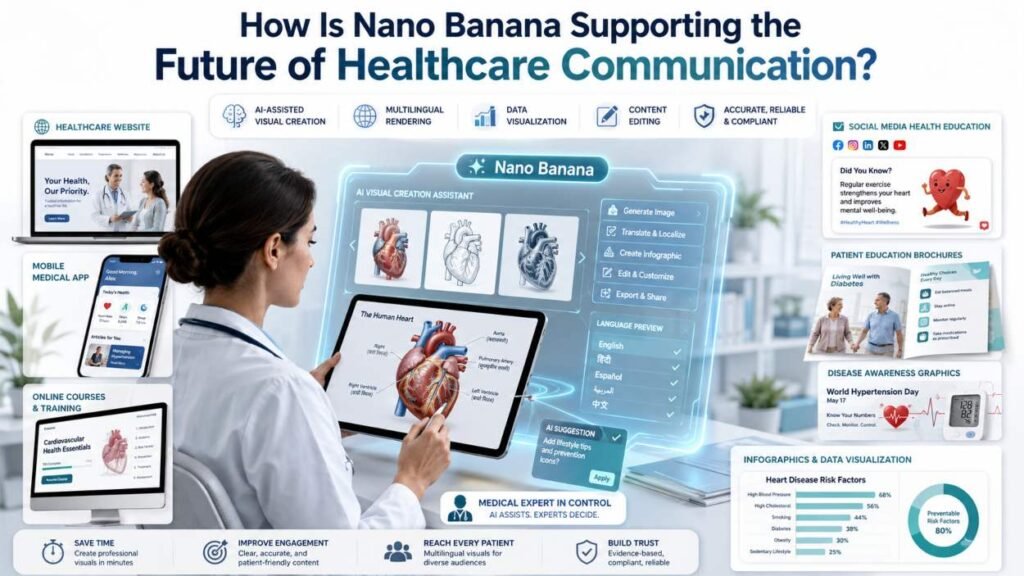
Healthcare communication continues to become more digital, with patients increasingly accessing medical information through websites, mobile applications, online courses, and social media platforms. As the demand for educational content grows, organizations need efficient ways to produce visuals that are both informative and engaging.
Nano Banana supports this transition by combining reasoning-based image generation, reference image workflows, realistic lighting, accurate typography, multilingual rendering, and data visualization within a single creative process. These capabilities help creators produce original educational graphics that can be adapted for presentations, awareness campaigns, patient resources, and digital publications.
Healthcare educators are also placing greater emphasis on visual learning because diagrams, illustrations and infographics often improve understanding of complex topics. AI-assisted image generation provides another option for producing customized educational resources while reducing the amount of time traditionally required to create original artwork.
As part of the broader Higgsfield creative ecosystem, Nano Banana gives creators access to additional AI-powered tools that support image generation, editing, and visual content creation from a unified platform. This integrated workflow can help healthcare communicators develop consistent educational materials while adapting to the growing demand for digital health information.
Rather than replacing medical professionals or designers, AI image generation functions as a creative assistant that can accelerate content production while leaving final review and medical accuracy in the hands of qualified experts.
Conclusion
High-quality visuals have become an essential part of modern healthcare communication. They help explain medical concepts, support patient education, improve health awareness campaigns, and make complex information easier for people to understand. As digital healthcare continues to expand, organizations are looking for practical ways to create educational visuals without sacrificing quality or clarity.
Nano Banana offers a reasoning-based approach to AI image generation that combines high-resolution image creation, intelligent prompt understanding, reference image support, realistic lighting, data visualization, multilingual rendering, and accurate text generation. These capabilities allow creators to produce educational graphics more efficiently while maintaining greater visual consistency across different projects.
Available through the Higgsfield platform, these creative tools can support healthcare educators, medical writers, wellness organizations and content creators who regularly develop visual educational resources. Although every healthcare illustration should be reviewed for medical accuracy before publication, AI-assisted image generation provides an additional resource for creating engaging patient education materials, presentations and public health campaigns.
As healthcare communication continues to evolve, combining professional expertise with thoughtfully designed AI-generated visuals may help make medical information more accessible, understandable, and engaging for a wider audience.
Disclaimer: This article is for general informational and educational purposes only. Nano Banana and other AI image generation tools should not be used as a substitute for professional medical advice, clinical judgment, diagnosis, or treatment. Any AI-generated medical or health education visual should be carefully reviewed and approved by qualified healthcare professionals before being published, shared with patients, or used in medical training materials. Accuracy, context, and patient safety should always remain the responsibility of trained medical experts.