

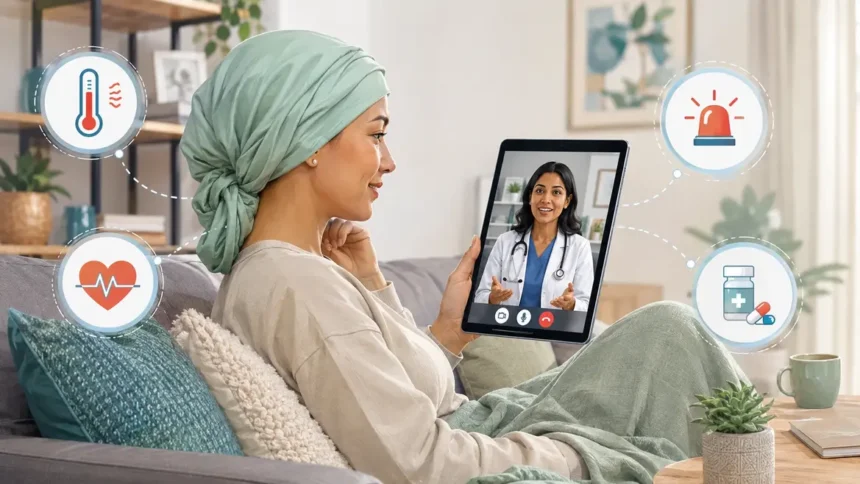
An online oncology consultation is the right tool when you need a specialist’s judgment rather than a specialist’s hands. Reading a pathology report, weighing two treatment paths against each other, getting a second set of eyes on a borderline scan: none of that requires you to be in the room. A biopsy, an infusion, a neurological exam, or emergency care does.
That line matters more than it used to. Between 2019 and 2023, 30.6% of the 124,974 adults receiving cancer-related care through the Johns Hopkins Health System had at least one cancer-related telehealth encounter. The figure describes a single academic system in Maryland rather than the country as a whole. Still, it shows how far remote consultation has moved from pandemic improvisation toward ordinary practice.
When Should Patients Consult an Oncologist Online?
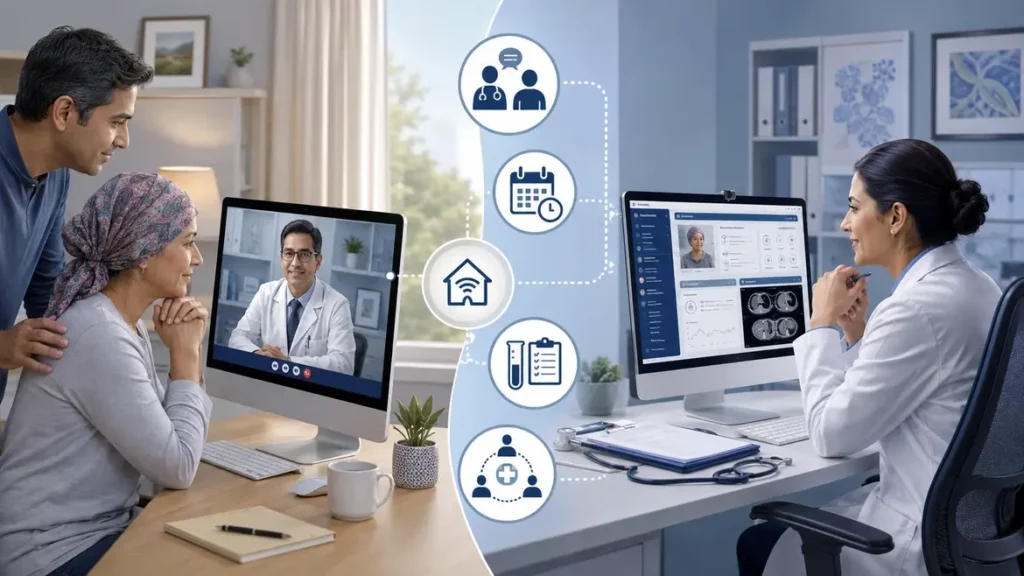
The useful question is not whether online oncology works in general. It is whether it fits the specific thing you need answered this month. Three situations come up again and again.
After a New Diagnosis
The weeks after a diagnosis tend to produce paperwork faster than understanding. A pathology report arrives, then a staging scan, then a treatment recommendation, often from clinicians who each see one slice of the picture. A virtual oncologist can sit with all of it at once and explain what the cancer type, grade, stage, and biomarker results mean when read together, and whether anything is missing before treatment begins.
Before a Major Treatment Decision
Surgery, chemotherapy, radiation, targeted therapy, and immunotherapy each cost something different in time, side effects, and recovery. A remote specialist can explain what a proposed treatment is trying to achieve, how much benefit the evidence actually supports, what the trade-offs look like week to week, and which alternatives are worth raising with your own team.
When Specialist Access Is Limited
Rare tumors make the clearest case. If your cancer is seen a handful of times a year at your local hospital and several hundred times a year at a referral center, distance stops being an inconvenience and becomes a clinical variable. The same reasoning applies when travel is exhausting, mobility is limited, or a fifteen-minute scan discussion would otherwise cost you an entire day.
How Can Oncology News Support a Consultation?
Staying current is genuinely useful, with one caveat that shapes everything else: almost nothing you read applies to every patient with your diagnosis. Modern cancer approvals are narrow by design.
Open the FDA’s oncology approval notifications, and the indications read like eligibility criteria, because that is what they are. A specific line of therapy. A specific mutation. Sometimes a named companion diagnostic that has to confirm the target before the drug can be prescribed at all. A headline announcing that a drug “was approved for lung cancer” can easily describe a population you are not part of.
The most productive way to use credible oncology news before a consultation is to build a question list rather than a conclusion list.
- New approvals are worth asking about by name, along with whether you meet the indication
- Guideline updates can change which tests come first, not just which drugs come later
- Biomarker findings may justify asking whether additional molecular testing is warranted
- Trial results give you something concrete to raise about eligibility
- One firm rule: never start, stop, or adjust a cancer medication because of something you read
How Can Oncology Events Help Patients?
Conferences and webinars do something different from news. News tells you what changed. Events tend to show you how oncologists reason, which is often more valuable when you are trying to have a productive conversation with one.
Scanning an oncology events calendar is a practical way to find sessions pitched at patients and caregivers rather than at specialists, and to spot the ones covering your tumor type.
Patient Education Builds Understanding
Webinars aimed at patients translate the vocabulary that makes medical records feel impenetrable: what “margins” means on a surgical report, why a grade and a stage are not the same thing, what a response rate does and does not promise. Half an hour of that can make an appointment substantially more efficient.
Expert Sessions Shape Questions
Specialist presentations surface treatment goals, side effect profiles, and emerging options you would not have known to ask about. What they cannot do is tell you whether any of it applies to you. Conference data still has to be filtered through your cancer type, stage, biomarkers, and what you have already been treated with.
Caregiver Programs Improve Support
Sessions built for caregivers cover the unglamorous work: tracking symptoms accurately, knowing which changes warrant a phone call, preparing for appointments, managing the logistics of treatment weeks. Anything clinical that comes out of them still belongs in a conversation with the care team before it changes anything.
How Can an Online Consultation Help After Diagnosis?
Diagnosis is rarely a single result. It is usually a biopsy, imaging, bloodwork, and molecular testing that have to agree with one another before anyone can plan treatment. When they do not quite agree, patients are often the last to know there was a discrepancy at all.
A remote consultation is a reasonable place to work through that assembly:
- Pathology review covering cancer type, grade, margins, and lymph node findings
- Imaging review of tumor location, size, spread, and involvement of nearby structures
- Stage confirmation comparing pathology and scans against the clinical picture
- Biomarker assessment of molecular changes that may open or close treatment options
- Gap analysis identifying imaging, pathology, or molecular testing that has not been done
- Prognosis discussion in terms of what the findings mean for planning
Staging is worth understanding early, partly because how staging works surprises many patients. A cancer keeps the stage it was assigned at diagnosis even if the disease later changes; new information gets added to the original stage rather than replacing it, and knowing that in advance prevents a lot of avoidable confusion later.
Someone diagnosed with lung cancer, for instance, might use a virtual appointment to confirm the pathology and stage, have the original scans read a second time, and establish whether biomarker testing should be completed before the first treatment decision is made.
When Is an Online Second Opinion Useful?
Second opinions have an image problem. Patients worry they signal distrust, when in practice most oncologists expect them for complex cases, and many actively encourage them. Guidance from the American Cancer Society on seeking a second opinion treats it as a normal part of decision-making rather than an act of doubt.
Diagnosis or Stage Confirmation
A second specialist reviews the pathology, imaging, laboratory results, and biomarker findings independently. That review can confirm the original conclusion, surface a genuine disagreement, or identify testing that should happen before anyone commits to a plan.
Treatment Option Comparison
A second oncologist can lay out surgery, radiation, chemotherapy, targeted therapy, immunotherapy, or active monitoring side by side, covering expected benefit, side effects, sequencing, and recovery demands. Reading the plain-language NCCN guidelines for your cancer type beforehand makes that conversation noticeably sharper, because you arrive knowing roughly what the standard pathways look like.
Greater Decision Confidence
Often a second opinion confirms the first, which is a useful outcome rather than a wasted appointment. Sometimes it surfaces a clinical trial or a less invasive approach nobody had raised. The question to ask upfront is a practical one: will waiting for this consultation delay testing or treatment that should not wait?
When Should Treatment Changes Be Reviewed Online?
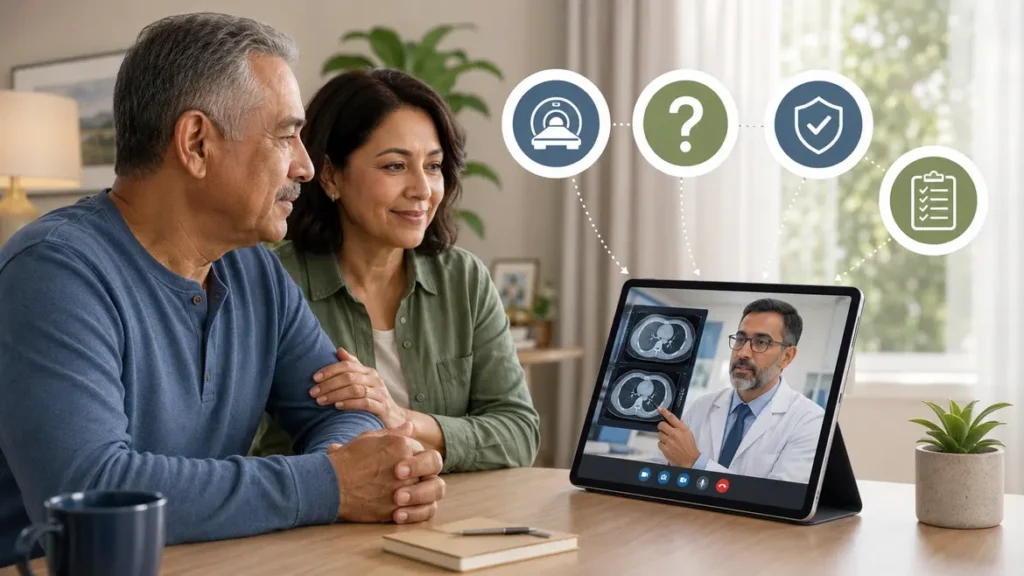
Plans change when scans, tumor markers, symptoms, or side effects change. A remote oncologist can help interpret what the new information means. What they usually cannot do is act on it, since the team prescribing and delivering your treatment holds that responsibility.
- New scan findings compared against earlier imaging rather than read in isolation
- Rising tumor markers interpreted alongside symptoms, scans, and treatment history
- Possible progression assessed for whether the evidence genuinely supports it
- Treatment resistance and whether another agent, combination, or local therapy is reasonable
- Severe side effects requiring supportive care, dose review, or a change of therapy
- Next-line planning covering further testing, trials, or palliative care
Tumor markers cause more unnecessary alarm than almost any other result. As the National Cancer Institute explains in its overview of tumor markers, an abnormal level on its own is usually not enough to diagnose anything, which is why these values are read together with imaging, biopsy findings, and the clinical picture rather than tracked as a standalone score.
If trials come up, it helps to look at the actual eligibility criteria on ClinicalTrials.gov rather than a summary of them. Enrollment requirements are frequently more specific than the descriptions patients encounter first.
Can Cancer Side Effects Be Managed Online?
Many side effects can be handled remotely, provided the clinician has current records and recent laboratory results. The main value of a virtual review is triage: deciding whether supportive treatment is enough or whether you need to be examined.
Routine Symptoms Can Be Discussed
Nausea, fatigue, appetite changes, stable pain, bowel problems, and medication questions are all reasonable material for a video appointment. The clinician may suggest supportive measures or order tests to clarify what is driving the symptom.
Oral Treatments Need Monitoring
Patients on oral chemotherapy or targeted therapy have a specific set of remote-friendly concerns: adherence, drug interactions, laboratory trends, and tolerability. Dose changes still belong to the oncology team responsible for the prescription.
Urgent Symptoms Require Direct Care
Some symptoms should never wait for a scheduled appointment. Fever during chemotherapy is the clearest example, because treatment can suppress the white blood cells that fight infection and a fever may be the only visible sign that something serious is developing. The NCI’s guidance on infection and neutropenia is worth reading before you need it, including the point that fever-reducing medication can mask the signs clinicians rely on. Breathing difficulty, uncontrolled bleeding, confusion, and rapidly worsening pain belong in the same category.
When Is In-Person Oncology Care Necessary?

Online oncology works best as one component of hybrid care rather than a replacement for it. A virtual specialist can interpret and advise. Physical infrastructure and trained staff do the rest.
- Physical examination for new lumps, swelling, neurological changes, or worsening symptoms
- Diagnostic procedures including biopsy, endoscopy, and tissue collection
- Imaging such as CT, MRI, PET, and ultrasound
- Laboratory testing requiring local sample collection
- Treatment delivery covering surgery, radiation, chemotherapy, immunotherapy, and infusions
- Acute complications needing urgent or emergency assessment
Which Medical Records Are Needed?
The quality of a remote consultation is largely determined before it starts, by what the oncologist has been given to read. Ask the service exactly which documents and original files they require, and how far in advance.
Diagnostic Records
Pathology reports, biopsy results, radiology reports, and the original imaging files rather than the summaries. Services offering formal second opinions frequently request pathology slides or tissue blocks so a second pathologist can review the material directly, which takes time to arrange.
Treatment Records
Operative notes, radiation summaries, medication names with doses and dates, hospital records, and documented responses to previous treatment. This is the history that explains why your current plan looks the way it does.
Current Health Information
Recent laboratory results, active medications, allergies, ongoing side effects, biomarker findings, and a clear timeline. A consultant offering a genuine second opinion normally reviews the complete case rather than answering a question in isolation.
What Happens During an Online Oncology Consultation?
Most consultations center on one clearly defined concern, though the oncologist will usually need to establish the wider history first. Submitting records in advance is what buys you time for the parts that matter.
- History review covering diagnosis, symptoms, other conditions, and prior treatment
- Diagnosis explanation of cancer type, grade, stage, and the results that established them
- Treatment assessment of the current recommendation and its alternatives
- Risk and benefit discussion including timing, side effects, and genuine uncertainty
- Your questions about goals, further testing, and trial options
- Follow-up plan specifying written recommendations and coordination with your local team
The four questions worth asking almost every time: Is the diagnosis and stage correct? Is any testing missing? What alternatives exist? How quickly does treatment need to start?
How Should Patients Choose an Online Oncologist?
Expertise in your specific disease matters more than general oncology credentials, and the administrative details matter more than most patients expect.
Match the Cancer Specialty
Look for direct experience with your cancer type, stage, and treatment setting. Rare or complex tumors usually warrant a subspecialist at an academic or comprehensive cancer center rather than a generalist.
Check the Consultation Process
Confirm that the service accepts pathology, imaging, and molecular results through a secure system, and ask whether a second pathology read or a multidisciplinary review is included. Those are meaningfully different products.
Confirm Follow-Up and Costs
Establish whether written recommendations, follow-up questions, and direct communication with your local oncologist are part of what you are paying for. Licensing is the detail most often overlooked: medical licensure is state-specific, which shapes whether a remote oncologist can advise only or can also prescribe and direct care. Insurance coverage and out-of-pocket costs are worth settling before booking rather than after.
What Are the Benefits and Limits of Online Care?
| Benefit | Limitation |
|---|---|
| Specialist access: Access to specialists beyond your local area, including subspecialists for rare diseases. | No physical examination: Video consultation cannot replace hands-on, neurological, or visual assessments. |
| Reduced burden: Less travel cost, fatigue, missed work, and time spent in waiting rooms. | Dependence on records: Missing pathology or imaging can limit the value of the medical opinion. |
| Family participation: Caregivers in different locations can join the discussion. | Additional appointments: Biopsies, scans, bloodwork, and treatments may still need to be done locally. |
Professional guidance in this area is more developed than many patients realize. The ASCO telehealth standards for oncology address which patients can appropriately be seen remotely, how the physician-patient relationship should be established, the role of advanced practice providers and allied health professionals, virtual multidisciplinary cancer conferences, and trials conducted partly through telehealth. It is a reasonable benchmark for judging whether a service is operating seriously.
Is an Online Oncology Consultation Right for You?
A virtual appointment earns its place when it answers a focused question without delaying anything that should not wait.
Consultation Has a Clear Goal
Remote care works well for confirming a diagnosis, reviewing scans, comparing treatment options, discussing non-urgent side effects, or obtaining a second opinion. A vague appointment produces a vague answer; a specific question focuses the oncologist on the records that matter.
Condition Is Clinically Stable
Virtual visits suit situations where no immediate examination, procedure, or intervention is required. Acute symptoms, sudden deterioration, or rapidly worsening pain need assessment in person, not a slot next Tuesday.
Local Care Remains Available
A remote oncologist may recommend further testing, a change in treatment, or specialist review. Someone nearby still has to examine you, prescribe, deliver treatment, monitor results, and manage complications.
What Do Patients Need to Remember Before Booking?
- Match the specialist to the disease, not just to oncology as a field
- Send complete records early, including pathology, imaging, testing, and treatment history
- Rank your questions, since the first two usually get the most attention
- Keep local care in place and cancel nothing without medical guidance
- Change no medication on the basis of a consultation your treating team has not seen
- Treat emergencies as emergencies, particularly fever during treatment
Conclusion
An online oncology consultation is most valuable when the question is interpretive rather than physical: what these results mean, whether the plan is sound, what else is reasonable, what a second specialist would do differently. Those are real questions, and getting them answered well can change how a treatment course goes.
What virtual care cannot do is examine you, biopsy you, scan you, or treat you. The strongest arrangement pairs remote expertise with a local team that has the equipment and the responsibility to act. Choose the specialist for the specific disease, send the records before the appointment rather than during it, and make sure whatever comes out of the consultation reaches the people actually delivering your care.
This article is general information, not medical advice. Decisions about diagnosis and treatment should be made with qualified clinicians who have reviewed your complete case.