

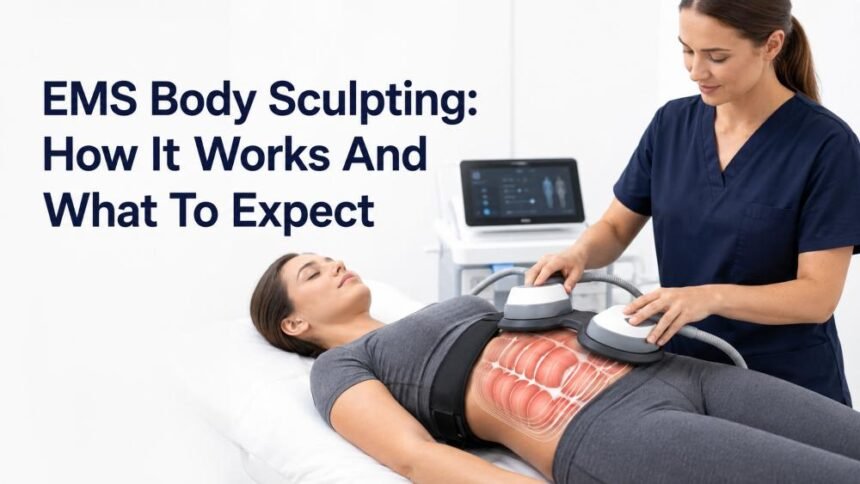
Most people who search for EMS body sculpting are not chasing a fantasy. They have one specific area that has stopped responding, or a postpartum abdomen that feels disconnected from the rest of them, or a back that makes loaded squats a bad idea, or a schedule that quietly swallowed the gym eighteen months ago. The pitch lands because it sounds reasonable: lie down for half an hour, let a machine contract a muscle harder than you can, get up and go back to work.
The technology does something real. That something is smaller than the advertising suggests; it behaves differently depending on which machine is in the room, and a few safety details rarely make it into the brochure. What follows is the version you would want a friend in the industry to give you before you hand over a card.
Two Different Treatments Share One Name
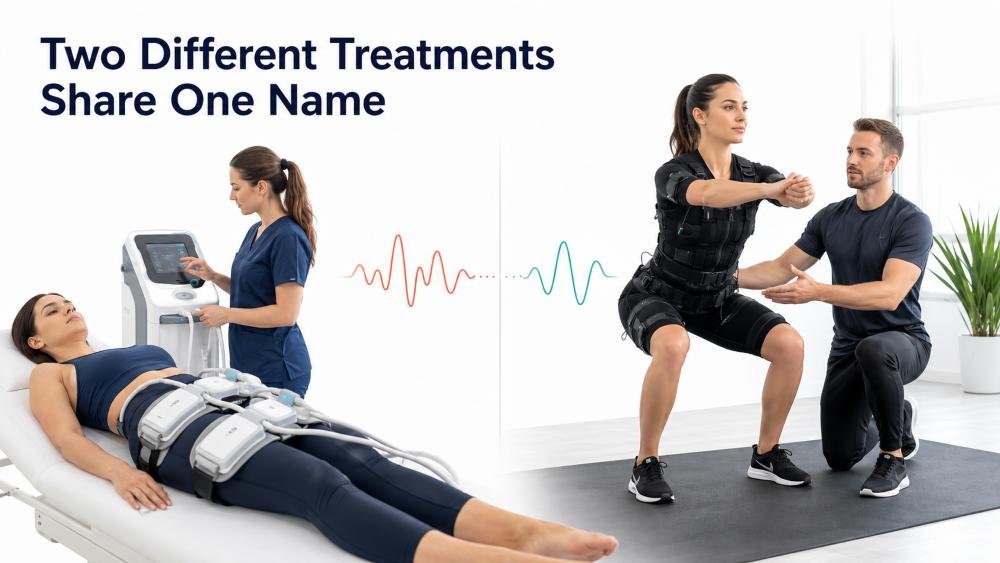
This is the first thing to sort out, because almost every confusing claim about EMS body sculpting comes from mixing up two unrelated experiences.
The first is the clinic or medspa treatment. You lie on a bed, applicators are strapped over a muscle group, nothing sharp touches you, and the device produces contractions using an electromagnetic field. Sessions usually run about 30 minutes per area. This is the treatment most people mean when they say body sculpting, and it is often marketed under the acronym HIFEM.
The second is whole-body EMS training, sold by fitness studios. You wear a vest and strap arrangement lined with electrodes, and you perform squats, push-ups and holds while electrical current fires through the muscle underneath. A trainer runs the session. It typically lasts 20 to 25 minutes, and it is exercise, not an aesthetic procedure.
They share a basic mechanism and almost nothing else. The intensity profile, the supervision, the cost, and the risk picture all differ. Safety findings from one do not automatically transfer to the other, in either direction. And neither has much to do with the small TENS units sold online, which are built to modulate pain signals through sensory nerves rather than to drive muscle contraction.
What The Energy Actually Does Inside Your Muscle
Skeletal muscle contracts when a motor neuron fires. Normally, your brain sends that signal. These devices bypass the decision and deliver the trigger directly. The FDA describes magnetic-field body contouring devices plainly in its guidance on non-invasive body contouring technologies: the pulsed field induces a small electric current in the muscle, and that current makes it contract. Repeat it several thousand times, and you get a training-like stimulus without the person doing anything.
You will see contraction counts quoted in the tens of thousands. Treat those numbers with the skepticism they deserve. A contraction in this context is a brief twitch, not a repetition, and there is no accepted conversion between twitch counts and sets of anything. Twenty thousand contractions is not twenty thousand crunches. It is a large number attached to a small unit, and it exists because it sounds impressive.
What the stimulus can plausibly do is recruit fibers you struggle to activate deliberately, produce genuine post-session soreness, and generate measurable changes in muscle thickness on imaging. What it does not do is burn a meaningful number of calories, replace progressive resistance training, or influence what you eat afterward.
Why The Machine In The Room Matters More Than The Brochure
The category label hides a lot of variation. Some systems deliver electromagnetic energy alone. Others pair it with synchronized radiofrequency, which heats the tissue layer above the muscle while the muscle contracts. Others bundle cavitation, roller massage or additional aesthetic modalities into a single console.
Clinics buy these systems from equipment distributors such as M-Shape Beauty, and the trade name printed on the panel tells you far less than two other things: what technology is actually inside it, and what that specific device has been authorized to claim in your country.
That second point deserves a moment. Body contouring muscle stimulators reach the US market through 510(k) clearance, which is a determination that a device is substantially equivalent to something already legally sold. It is not the same as FDA approval, which is a much higher evidentiary bar reserved for higher-risk products. The FDA maintains a short consumer explainer on the difference between cleared, approved and authorized devices, and it is worth two minutes of your time. Clearance is also device-specific and indication-specific. A study performed on one manufacturer’s machine, on one body area, says nothing reliable about a different machine in a different clinic.
What A Session Actually Feels Like
- Beforehand. A competent provider takes a medical history before anything is switched on, asks about implants and metal, and looks at the area rather than selling from a price list. You will usually be asked to remove jewelry, belts and anything metallic near the field. There is no fasting requirement. Drink water.
- During. The applicators are strapped down firmly, and that belt tension is part of the treatment rather than an afterthought, because contact matters. Intensity is ramped up gradually from a low setting. The sensation is difficult to describe and easy to recognize: a deep, involuntary tightening that builds, holds, and releases, with a lighter tapping or vibrating phase in between contraction blocks. It is not usually painful. It is strange, because you cannot relax the muscle and you are not the one deciding. If radiofrequency is included, add a spreading warmth, occasionally warmer than you would choose.
- Say something if it is too much. Intensity is adjustable in real time, and there is no prize for tolerating the maximum on your first visit.
- Afterward, no downtime. You can drive, work and eat normally. Most people feel a dull ache in the treated area over the next day or two, similar to delayed onset soreness after unfamiliar exercise. That is expected. Severe pain is not.
What The Research Actually Shows
Here is where the honest version diverges sharply from the marketing, and where two systematic reviews looking at broadly the same literature reached different conclusions.
A 2024 systematic review in Aesthetic Plastic Surgery by Kohan and colleagues took a favorable view, reporting increases in muscle thickness and reductions in subcutaneous fat, with high patient satisfaction and outcomes that appeared to hold at follow-up.
A 2023 systematic review in Annals of Plastic Surgery was considerably more critical. It evaluated 14 clinical studies, of which only one included a sham comparison group. The usual protocol was four treatments over two weeks. Measurement variance was high, photographic results were modest, and images showing dramatic change frequently showed unexplained change in untreated areas as well. A follow-up review of electromagnetic treatment combined with radiofrequency found a mean fat thickness reduction of 8.0 mm and a mean muscle thickness increase of 5.5 mm across seven studies, noted that all seven were authored by medical advisors to the device manufacturer, and concluded that the measured changes were probably within the margin of measurement error.
Eight millimeters is roughly a third of an inch. That is nothing, and it is not the transformation implied by a before-and-after grid.
The reasonable reading is not that the treatment is fake. It is that the effect is modest, the evidence base is thin, the studies are heavily entangled with the companies selling the machines, and almost all of the published work in the United States examines a single brand. Adjust your expectations to fit that, and you are unlikely to be disappointed.
Results You Can Reasonably Expect
Realistically: a firmer feel in the treated area, sometimes visible improvement in definition, sometimes a small change in circumference. Changes are gradual rather than immediate, and studies typically assess outcomes somewhere between one and three months after a course finishes.
Two limits matter more than any of the above.
The first is fat. If there is a substantial layer of subcutaneous fat over the target muscle, a slightly thicker muscle underneath will not necessarily read as visible definition. The overlying tissue is what your eye sees.
The second is what the treatment is for. The FDA states directly that non-invasive body contouring does not treat obesity, will not produce weight loss, and does not deliver the health benefits associated with weight loss. It also notes that muscle stimulation effects may be temporary and may require ongoing sessions to maintain. Anyone selling this as a substitute for exercise is selling something the evidence does not support. Most adults still need roughly 150 minutes of moderate activity plus two days of muscle-strengthening work each week, and a machine that contracts your abdomen for half an hour does not touch that requirement.
How Many Sessions, And What Happens When You Stop
Four sessions over two weeks is the most commonly used protocol, though published studies have run anywhere from three to eight treatments depending on the device and the area. Maintenance sessions every few months are frequently recommended afterward.
Ask about that maintenance schedule before you buy the initial package, and work out the annual cost rather than the package price. A course that seems reasonable at $800 becomes a different decision at $2,400 a year. Ask directly what the provider expects to happen if you stop. If the honest answer is that the effect fades, you want to hear it now.
No provider should guarantee a specific outcome after a specific number of sessions. Physiological response varies, and a guarantee is a marketing statement rather than a clinical one.
Safety Conversation Most Clinics Skip
Published aesthetic studies of electromagnetic body contouring have reported very few adverse events, and that record is genuinely reassuring for the clinic-based version of this treatment. But there are firm exclusions and one risk worth understanding properly.
- Do not proceed if you have an implanted electronic device such as a pacemaker or implantable cardioverter defibrillator, or metal implants or retained metal fragments in or near the treatment field. If radiofrequency is involved, that also rules out metallic tattoo ink in the area, and the FDA advises asking your OB-GYN or primary care provider if you have an IUD.
- Tell your provider if you are pregnant or breastfeeding, take anticoagulants, have a bleeding or clotting disorder, have uncontrolled diabetes, are immunosuppressed, have an active skin infection, have a hernia or recent surgery in the area, have a history of keloid scarring, or are undergoing or about to undergo chemotherapy or radiotherapy. Elective treatment during pregnancy has not been established as safe and can wait.
- On rhabdomyolysis. Large involuntary contractions in unaccustomed muscle can break down muscle fiber and release its contents into the bloodstream. This has been documented after high-intensity electrical whole-body EMS training sessions, including first sessions in otherwise healthy people. A 2025 case report and literature review in Cureus describes a 36-year-old man whose creatine kinase reached 19,534 IU/L after a single 25-minute session at high intensity, with no symptoms at all, discovered incidentally on routine bloodwork and resolved with rest and hydration over six days. The review also collects earlier cases, including two young professional soccer players, one of whom required intensive care.
- Those cases come from electrical whole-body training, not from the aesthetic electromagnetic literature, and it would be dishonest to present them as a documented hazard of a 30-minute clinic session. The mechanism is shared, though, so the sensible response is proportionate caution rather than either alarm or dismissal: start at a conservative intensity, hydrate properly, and do not stack a first session on top of a hard workout. The most thorough public list of exclusions for this category is the evidence-based German consensus on contraindications for non-medical whole-body electromyostimulation.
- Seek same-day medical care after any intense muscle stimulation if you develop severe pain out of proportion to the session, marked swelling, weakness, or dark or cola-colored urine. Device problems can also be reported to the FDA through its MedWatch program.
Who This Suits, And Who It Does Not
It tends to suit people who are already near their goal weight, want improvement in one specific area, understand that the change will be incremental, and are either training already or genuinely cannot train that area conventionally because of injury or recovery.
It tends to disappoint people who want weight loss, who have significant fat over the target muscle, who are stretching their budget to afford a package, or who are hoping to replace exercise rather than supplement it.
Postpartum abdominal separation is a common reason people look into this, and it has been studied. Get an assessment from a pelvic health physiotherapist or your OB-GYN first. Abdominal separation is a connective tissue problem as much as a muscle problem, and the right rehabilitation sequence matters more than the machine.
Questions Worth Asking Before You Pay

- Which specific device and technology will be used on me, and is radiofrequency included?
- What is that exact device authorized to be used for here, and for which body areas?
- How many sessions are you recommending, and what is your reasoning?
- What is realistic for my starting point, and what is not?
- What maintenance will I need, and what does a full year cost?
- Do any of my medications, implants or medical history rule this out?
- What training do you have on this device, and who is medically responsible on site?
Consider it a warning sign if a clinic guarantees results, uses the phrase “FDA approved” for a body sculpting device, shows before-and-after photos with different lighting, posture or underwear, pressures you to buy a multi-session package during the consultation, or takes no medical history at all.
Where That Leaves You
EMS body sculpting is a legitimate, low-risk, modestly effective treatment for muscle definition in a specific area, sold in a market that consistently oversells it. If you go in expecting a subtle improvement, choose a provider who screens you properly, understand what you are paying for over a year rather than a fortnight, and keep doing whatever exercise you were doing, you will probably be reasonably happy with it. If you go in expecting the photographs, you will not.
Medical Disclaimer
This article is for general information only and is not medical advice. It is not a substitute for assessment, diagnosis or treatment by a qualified healthcare professional. Device availability, regulatory status and approved indications vary by country and change over time. Always discuss your medical history, medications and implanted devices with an appropriately qualified provider before undergoing any aesthetic procedure.
References
- US Food and Drug Administration. Non-Invasive Body Contouring Technologies. Center for Devices and Radiological Health, content current as of October 15, 2025. https://www.fda.gov/medical-devices/aesthetic-cosmetic-devices/non-invasive-body-contouring-technologies
- US Food and Drug Administration. Is It Really “FDA Approved”? Consumer Updates. https://www.fda.gov/consumers/consumer-updates/it-really-fda-approved
- Swanson E. A Systematic Review of Electromagnetic Treatments for Body Contouring. Annals of Plastic Surgery. 2023;90(2):180-188. doi:10.1097/SAP.0000000000003387
- Swanson E. Body Contouring With Electromagnetic Treatment Plus Radiofrequency: A Review. Annals of Plastic Surgery. 2025;94(2):250-256. doi:10.1097/SAP.0000000000004155
- Kohan J, Vyas K, Erotocritou M, Khajuria A, Tehrani K. High-Intensity Focused Electromagnetic (HIFEM) Energy With and Without Radiofrequency for Noninvasive Body Contouring: A Systematic Review. Aesthetic Plastic Surgery. 2024;48(6):1156-1165. doi:10.1007/s00266-023-03730-3
- Mallek W, Kechida M, Jellad A. Electromyostimulation-Induced Rhabdomyolysis: A Case Report and Comprehensive Literature Review. Cureus. 2025;17(10):e95125. doi:10.7759/cureus.95125
- Kästner A, Braun M, Meyer T. Two Cases of Rhabdomyolysis After Training With Electromyostimulation by 2 Young Male Professional Soccer Players. Clinical Journal of Sport Medicine. 2015;25(6):e71-e73. doi:10.1097/JSM.0000000000000153
- von Stengel S, Fröhlich M, Ludwig O, et al. Revised contraindications for the use of non-medical WB-electromyostimulation: evidence-based German consensus recommendations. Frontiers in Sports and Active Living. 2024;6:1371723. doi:10.3389/fspor.2024.1371723
- Centers for Disease Control and Prevention. Physical Activity Guidelines and Recommendations. Physical Activity Basics, updated December 4, 2025. https://www.cdc.gov/physical-activity-basics/guidelines/index.html
- US Food and Drug Administration. MedWatch Voluntary Reporting Form. https://www.accessdata.fda.gov/scripts/medwatch/index.cfm?action=reporting.home