


A collision can affect several parts of the body at once, and the full picture doesn’t always become clear on the day of the crash. Someone may walk away with neck pain and a headache, not realizing that back strain and emotional stress are also part of what happened.
Recovery from a serious crash often means addressing more than one problem at a time. That takes careful medical evaluation, consistent follow-up care, and patience. For California patients navigating this process, understanding what to expect can make a real difference.
Why Multiple Injuries Can Make Recovery More Complicated
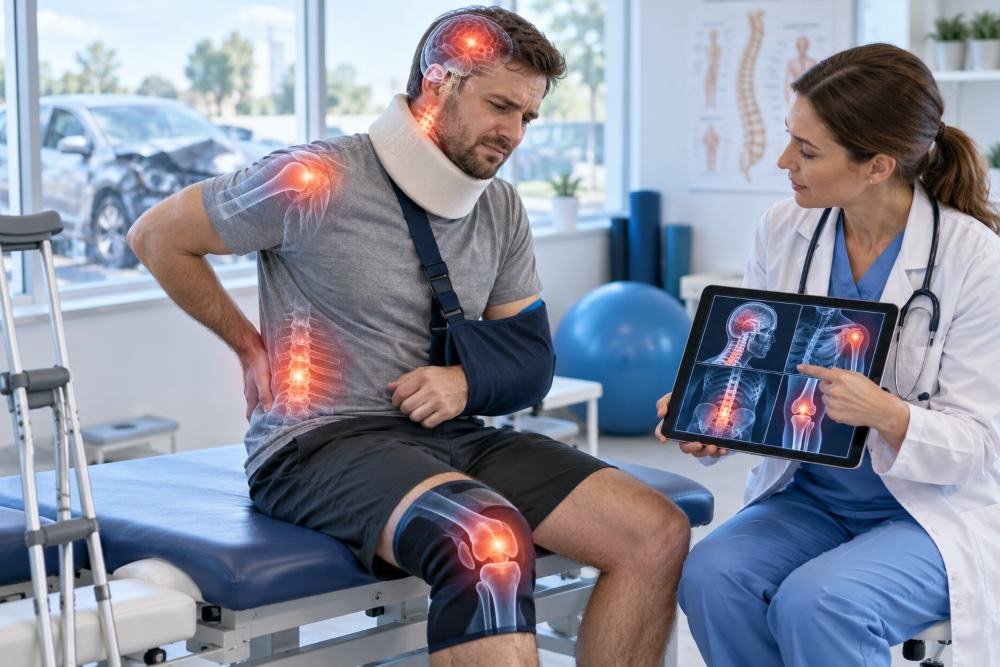
The force of a collision doesn’t target a single area of the body. A sudden impact can affect the head, neck, back, and limbs simultaneously, and the resulting injuries may not all announce themselves right away.
California recorded more than 14,000 serious injuries in 2023, and Caltrans also reports that fatalities plus serious injuries rose 48% from 2014 through 2023, reflecting just how significant the physical toll of these crashes can be statewide.
Symptoms That Appear Later
The body’s natural stress response plays a major role in masking pain immediately after a collision. Adrenaline and cortisol can numb injury signals for hours, leading people to believe they escaped unharmed. Conditions such as whiplash, concussions, and internal bleeding often take time to reveal themselves. Feeling relatively well right after a crash does not mean there are no injuries present.
When One Injury Hides Another
Pain and fatigue from one injury can make it harder to notice something else. A person focused on severe back pain may not register that their balance is off or that they are having trouble concentrating. This overlap is one reason a thorough medical evaluation matters even when a person feels they are managing.
The Compounding Effect
When multiple injuries are present, treating them in isolation can slow the overall process. A fracture that limits mobility may also interfere with physical therapy for a soft-tissue injury. A concussion that disrupts sleep can make it harder for the body to repair muscle damage. These connections are worth discussing openly with a healthcare provider from the start.
Common Injuries That May Occur Together
Crashes frequently produce combinations of injuries rather than a single isolated problem. Understanding the general categories can help patients recognize what they may be dealing with.
Head and Brain Injuries
Concussions and other traumatic brain injuries are among the most commonly missed after a crash. Post-concussion syndrome can appear days after a collision, bringing persistent headaches, memory lapses, difficulty concentrating, and sensory sensitivities. Subtle cognitive changes often emerge only when returning to work or school places real demands on the person. Dizziness and nausea are also common and can interfere with daily functioning.
Neck and Back Injuries
Whiplash is one of the most frequently reported crash-related injuries, often accompanied by stiffness, reduced range of motion, and nerve-related symptoms that extend into the arms or legs. Muscle and ligament injuries in the back can produce pain that worsens over the first few days as inflammation builds.
Bone and Soft-Tissue Injuries
Fractures, sprains, strains, bruising, and swelling often occur together, particularly when a person braces for impact or is struck from a specific direction. Soft-tissue injuries can slowly become painful as swelling and scar tissue form, with symptoms often appearing within 24 to 72 hours but sometimes delayed longer.
Emotional Effects
Anxiety, difficulty sleeping, heightened stress, and fear related to driving are real and recognized parts of crash recovery. These effects deserve the same attention as physical injuries and should be mentioned to a healthcare provider.
Why a Medical Evaluation Matters Even When Symptoms Seem Mild
Prompt medical assessment after a crash serves several purposes. It creates a baseline record of the patient’s condition, identifies injuries that may not yet be causing significant pain, and helps establish a treatment plan before problems worsen. A healthcare professional can determine whether imaging, specialist referrals, or rehabilitation is appropriate based on the full picture rather than just the most obvious complaint.
Tell the doctor about every symptom, including ones that seem minor. A mild headache, slight dizziness, or a vague sense of fatigue may point toward something that warrants attention. Patients should follow their provider’s guidance rather than attempting to assess their own injuries based on how they feel in the moment.
Building a Recovery Plan When Several Injuries Are Involved
Treatment for multiple injuries often involves more than one type of provider. Depending on the injuries, care may include:
- Primary care or urgent care for initial evaluation and coordination
- Neurology for head or brain-related concerns
- Orthopedics for bone and joint injuries
- Physical therapy for mobility, strength, and pain management
- Mental health support for anxiety, sleep problems, or trauma-related stress
Communication between providers matters. When each specialist understands the full scope of what a patient is dealing with, the overall plan is more likely to account for how one injury affects another. Attending follow-up appointments and reporting changes in symptoms promptly gives the care team the information they need to adjust the approach.
Recovery does not move at the same pace for every injury. A fracture may heal on a predictable timeline while soft-tissue injuries take longer. Pushing through worsening pain rather than reporting it can delay progress. Don’t wait it out.
Managing the Practical Side of Recovery After a California Car Accident

Recovering from multiple injuries also involves a set of practical responsibilities that can add stress to an already difficult period. Medical bills, insurance communications, missed work, and transportation to appointments all require attention. Keeping organized copies of medical records, prescriptions, referrals, and billing statements helps patients maintain a clear picture of their care over time.
When another driver may be responsible for the collision, patients often have questions about handling the claims process while also trying to focus on treatment. Consulting a car accident lawyer can help a patient understand how the legal and insurance side of the situation works, reducing the administrative burden so that treatment remains the priority. Once those concerns are in capable hands, it becomes easier to stay focused on following medical advice and attending appointments.
Giving the Body Time to Heal
Recovery timelines vary considerably depending on the type and severity of each injury. Soft-tissue injuries, neurological concerns, and fractures all follow different paths, and improvement is not always steady or linear. Some weeks will feel like progress. Others may involve setbacks.
Returning to normal activities should happen gradually and according to medical advice. Resuming strenuous exercise or physical work too soon can interfere with healing, particularly for injuries involving muscles, ligaments, or the spine. Adequate rest, prescribed rehabilitation, and consistent follow-up appointments all support the process. When new or worsening symptoms appear, bring them to a healthcare provider promptly rather than waiting to see if they resolve on their own.
When to Seek Additional Medical Attention
Certain changes during recovery warrant prompt attention rather than a wait-and-see approach. These include:
- Worsening or severe pain that was previously manageable
- New neurological symptoms such as numbness, weakness, or vision changes
- Significant difficulty breathing or chest pain
- Fainting or sudden confusion
- Abdominal pain or distension that develops after the crash
This list is not a substitute for professional assessment. Patients who are uncertain about a symptom should contact their healthcare provider. For anything that feels like an emergency, calling 911 or going to the nearest emergency department is the appropriate response.
Final Lines
Physical and emotional recovery are often intertwined, and both deserve consistent attention. Each injury can affect how another one heals, which means treatment works best when it accounts for the patient’s overall condition rather than addressing one symptom in isolation.
Attending appointments, following treatment recommendations, communicating changes honestly, and keeping organized medical records all support a more complete recovery. Having appropriate help with insurance or legal concerns can reduce some of the burden during that time.
The priority after a serious crash is identifying what needs attention, receiving appropriate care, and giving the body the time and support it needs to recover.