

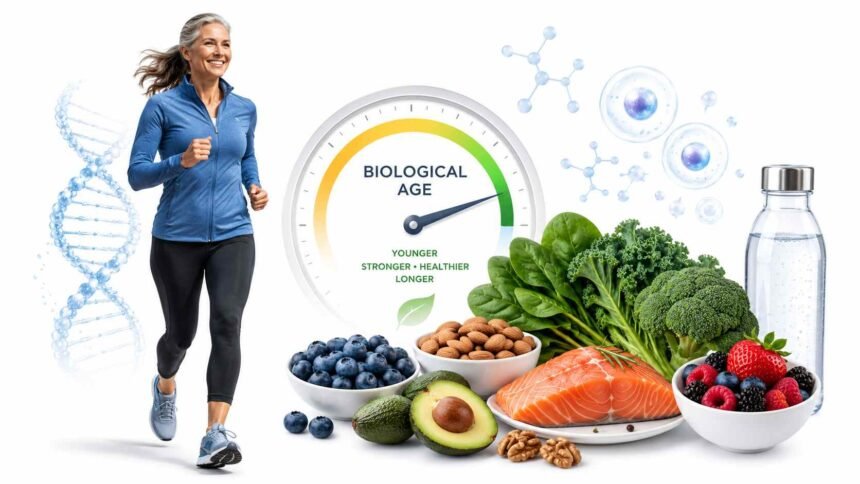
Two people can be the same age on paper and look nothing alike in terms of energy, mobility, and disease risk. One runs half-marathons at 55, the other struggles with stairs at the same age. The difference comes down to how their bodies have aged at a cellular level, a concept researchers call biological age.
Exercise and nutrition are two of the most powerful forces shaping that number, and understanding how they work gives anyone a real lever to pull.
Understanding Biological Age and Why It Matters
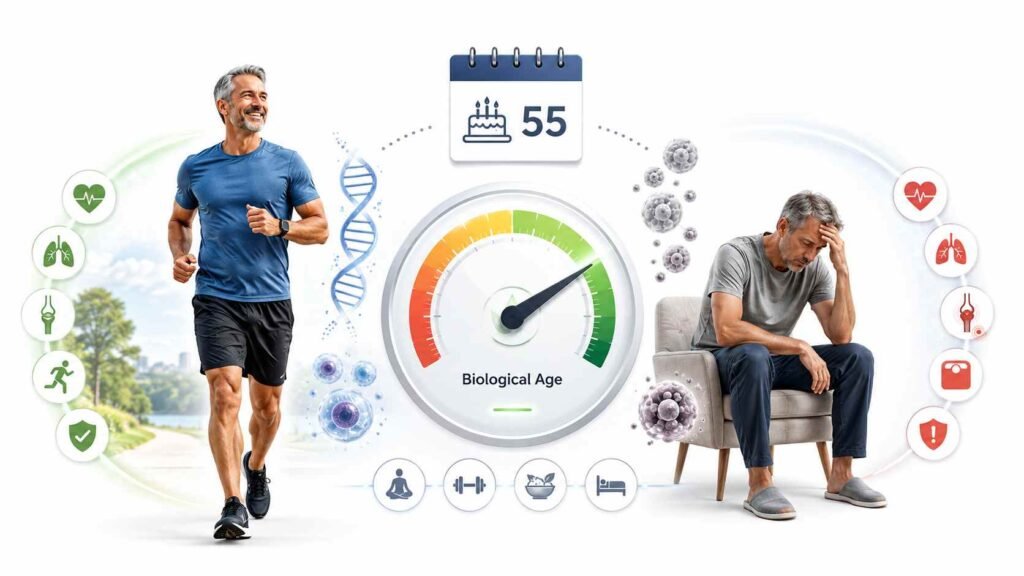
Biological age measures how old your body appears to be based on how well it functions, rather than the number of years you have lived. Your birth year is fixed, your biological age is not. It reflects the actual health condition of your body and suggests your risk of age-related diseases, and having it lower than your chronological age is linked to a longer healthspan, the period of life spent in good health.
The practical stakes are real. A 2024 analysis found that being older than your years predicts all-cause and cause-specific mortality across multiple clocks. And while genes do play a role, more recent research indicates that genetic factors account for only 15% to 25% of aging, meaning graceful aging has far more to do with lifestyle than with hitting the genetic lottery. That is an encouraging finding, because it means that this is genuinely changeable.
Role of Physical Activity in Slowing the Process
Movement is one of the most direct ways to influence how fast the body ages. Research found that short bursts of high-intensity exercise over time yielded a reduction of biological age by nearly 3.6 years, based on next-generation mRNA measurements of cellular aging. A separate review drawing on multiple human studies found that sedentary middle-aged women reduced their epigenetic age by 2 years after just 8 weeks of combined aerobic and strength training. Eight weeks. That is not a long time.
The mechanism behind these changes involves inflammation. Regular movement suppresses the chronic low-grade inflammation that drives cellular aging, while also supporting cardiovascular function, metabolic health, and bone density.
Sitting works in the opposite direction. A 2025 study published in Scientific Reports found that sitting for 8 or more hours per day was associated with a 58% higher risk of accelerated aging compared to those who sat fewer than four hours daily.
What Types of Movement Help
Not every form of exercise needs to be intense to be useful. The types that consistently show benefit include:
- Walking and low-intensity aerobic activity support cardiovascular function and metabolic health
- Strength training, which preserves muscle mass and bone density
- High-intensity interval training (HIIT), which has shown measurable reductions in biological age markers
- Flexibility and mobility work, which supports joint health and reduces injury risk
Many of the beneficial effects of exercise require repeated bouts over time to appear, and the benefits are likely most visible when studied across longer periods. A single workout matters less than the habit behind it.
Why Muscle Mass Becomes More Important With Age
One of the most overlooked aspects is what happens to muscle tissue over time. Everyone loses muscle with age, typically about 3% to 5% per decade after age 30, with inactive people losing the most, and the process accelerates noticeably around age 60. This condition, known as sarcopenia, is more common than most people realize. Large population studies have reported that sarcopenia affects over 20% of 60- to 70-year-olds and approaches 50% in those over 75.
The consequences reach well beyond appearance. Reduced muscle mass slows metabolism, impairs balance, raises injury risk, and makes everyday tasks harder. Strength training directly counters this decline by signaling the body to maintain and rebuild lean tissue, which in turn supports insulin sensitivity, energy levels, and functional independence.
Older adults may not process protein as efficiently as younger people and may need higher amounts to prevent muscle loss. Several expert groups recommend an increase in dietary protein to 1.0 to 1.2 grams per kilogram of body weight per day. Pairing that intake with regular resistance training is one of the most effective combinations available for preserving lean tissue and slowing functional decline.
Measuring Progress
As interest in longevity science grows, more people are turning to tools that estimate biological age based on lifestyle and health data. An online biological age test typically uses inputs like activity levels, diet quality, and other health markers to generate an estimate of how the body is aging relative to chronological age. A Penn State-led study notes that while this is not a health diagnosis, it can be useful for identifying a person’s risk for age-related diseases like heart disease and cancer.
These assessments work best as a starting point, not a final verdict. They can surface patterns that routine checkups miss and give people a concrete reference point for tracking whether lifestyle changes are making a measurable difference. Many of the factors these tests evaluate, including inflammation markers, metabolic health, and physical function, are directly shaped by both diet and exercise.
How Nutrition Influences Aging
What a person eats affects inflammation, cellular repair, hormone regulation, and metabolic function. Research consistently links pro-inflammatory diets to faster aging across multiple organs.
A large study using NHANES data found that a higher dietary inflammatory potential was related to at least a 25% elevated risk of accelerated biological aging, while individuals following anti-inflammatory dietary patterns like the DASH or Mediterranean diet experienced at least a 12% reduced risk.
A study of over 20,000 adults found that diets high in inflammatory foods are linked to accelerated brain aging, with the association strongest in people over 60. Short-term diets rarely move the needle in a meaningful way. The body responds to sustained patterns of eating, not occasional clean weeks sandwiched between months of poor choices.
Key Nutrients Associated With Healthy Aging
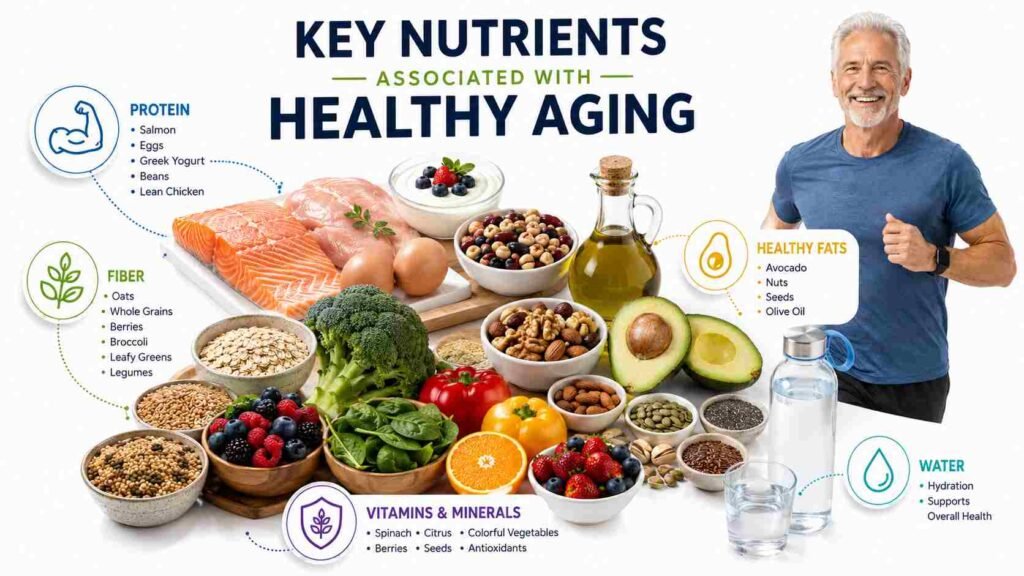
Certain nutrients show up repeatedly in aging research as particularly relevant to how well the body holds up over time:
- Protein: Supports muscle maintenance and recovery, especially important as the body becomes less efficient at using dietary protein with age
- Fiber: Feeds beneficial gut bacteria, reduces inflammation, and supports metabolic health
- Healthy fats: Omega-3 fatty acids in particular support heart function and brain health, both of which decline with growing older
- Vitamins, minerals, and antioxidants: Nutrients like vitamin K, vitamin E, and zinc help protect cells from oxidative damage
- Water: Hydration affects everything from kidney function to cognitive performance, and chronic mild dehydration accelerates physiological decline
None of these nutrients works in isolation. A diet built around whole foods, vegetables, lean proteins, and healthy fats naturally delivers most of them without requiring a complicated supplementation plan.
Powerful Combination of Exercise and Good Nutrition
Exercise and nutrition are more effective together than either is alone. Diet and diet-exercise interventions in a randomized controlled trial point to the possibility of not only preventing aging but reversing it in certain populations. Physical activity improves the body’s ability to use nutrients, particularly glucose and amino acids, while proper nutrition fuels recovery and reduces the inflammation that exercise temporarily creates.
Simple habits that combine both approaches include eating a protein-rich meal within a few hours of strength training, prioritizing whole foods on active days to support recovery, and staying well-hydrated before, during, and after physical activity. Not complicated interventions. Consistent behaviors that compound over time.
Bottom Line
Biological age is not something that simply happens to you. It is shaped, day by day, by choices made around movement and food. Scientists speculate that for the first 7 or 8 decades, lifestyle is a stronger determinant of health and lifespan than genetics.
That means the runway for meaningful change is long, and it starts with small, sustainable shifts rather than dramatic overhauls. Regular exercise, a nutrient-dense diet, and an honest look at current habits are not just wellness advice. They are the most evidence-backed tools available for keeping biological age in check.
Disclaimer
This article is for general health information only. It is not medical advice and should not be used to diagnose, treat, or prevent any health condition. Biological age tests, fitness plans, and diet changes can be helpful for understanding health patterns, but they do not replace advice from a doctor, registered dietitian, or qualified healthcare professional.
Always speak with a healthcare provider before starting a new exercise plan, changing your diet, increasing protein intake, using supplements, or making major lifestyle changes, especially if you have heart disease, diabetes, kidney disease, joint problems, pregnancy, or any long-term medical condition. If you have chest pain, shortness of breath, dizziness, sudden weakness, or unusual symptoms during exercise, stop and seek medical help.
References
- Liu, W. S., You, J., Ge, Y. J., Wu, B. S., Zhang, Y., Chen, S. D., Zhang, Y. R., Huang, S. Y., Ma, L. Z., Feng, J. F., Cheng, W., & Yu, J. T. (2023). Association of biological age with health outcomes and its modifiable factors. Aging Cell, 22(12), e13995. doi: 10.1111/acel.13995
- Herskind, A. M., McGue, M., Holm, N. V., Sørensen, T. I. A., Harvald, B., & Vaupel, J. W. (1996). The heritability of human longevity: A population-based study of 2872 Danish twin pairs born 1870 to 1900. Human Genetics, 97(3), 319 to 323. doi: 10.1007/BF02185763
- Lohman, T., Bains, G., Cole, S., Gharibvand, L., Berk, L., & Lohman, E. (2023). High-Intensity interval training reduces transcriptomic age: A randomized controlled trial. Aging Cell, 22(6), e13841. doi: 10.1111/acel.13841
- da Silva Rodrigues, G., Noma, I. H. Y., Noronha, N. Y., Watanabe, L. M., da Silva Sobrinho, A. C., de Lima, J. G. R., Sae-Lee, C., Benjamim, C. J. R., Nonino, C. B., & Bueno, C. R. (2024). Eight weeks of physical training decreases 2 years of DNA methylation age of sedentary women. Research Quarterly for Exercise and Sport, 95(2), 405 to 415. doi: 10.1080/02701367.2023.2228388
- Che, J., Huai, J., Luo, L., Tang, Y., & Zeng, T. (2025). Sedentary behavior accelerates biological aging mediated by body mass index in adults. Scientific Reports, 15, 21356. doi: 10.1038/s41598-025-06325-x
- Wang, X., Yan, X., Zhang, J., Pan, S., Li, R., Cheng, L., Qi, X., Li, L., & Li, Y. (2024). Associations of healthy eating patterns with biological aging: National Health and Nutrition Examination Survey NHANES 1999 to 2018. Nutrition Journal, 23, 112. doi: 10.1186/s12937-024-01017-0
- Sun, M., Fang, J., Gao, W., He, Y., Ma, Y., & Jin, L. (2023). Association of the dietary inflammatory index with phenotypic age in the United States adults. Epidemiology and Health, 45, e2023051. doi: 10.4178/epih.e2023051
- Dunk, M. M., Huang, H., Wang, J., Dove, A., Sakakibara, S., Guo, J., Carballo-Casla, A., Bennett, D. A., & Xu, W. (2026). The association between a pro-inflammatory diet and brain age in middle-aged and older adults. European Journal of Epidemiology, 41, 39 to 50. doi: 10.1007/s10654-025-01318-6
- Bauer, J., Biolo, G., Cederholm, T., Cesari, M., Cruz-Jentoft, A. J., Morley, J. E., Phillips, S., Sieber, C., Stehle, P., Teta, D., Visvanathan, R., Volpi, E., & Boirie, Y. (2013). Evidence-based recommendations for optimal dietary protein intake in older people: A position paper from the PROT-AGE Study Group. Journal of the American Medical Directors Association, 14(8), 542 to 559. doi: 10.1016/j.jamda.2013.05.021
- Nowson, C., & O’Connell, S. (2015). Protein requirements and recommendations for older people: A review. Nutrients, 7(8), 6874 to 6899. doi: 10.3390/nu7085311
- Ho, E., Qualls, C., Villareal, D. T., & others. (2022). Effect of diet, exercise, or both on biological age and healthy aging in older adults with obesity: Secondary analysis of a randomized controlled trial. The Journal of Nutrition, Health and Aging, 26(6), 552 to 557. doi: 10.1007/s12603-022-1812-x
- Fitzgerald, K. N., Hodges, R., Hanes, D., Stack, E., Cheishvili, D., Szyf, M., Henkel, J., Twedt, M. W., Giannopoulou, D., Herdell, J., Logan, S., & Bradley, R. (2021). Potential reversal of epigenetic age using a diet and lifestyle intervention: A pilot randomized clinical trial. Aging, 13(7), 9419 to 9432. doi: 10.18632/aging.202913
- Apsley, A. T., Ye, Q., Caspi, A., Chiaro, C., Etzel, L., Hastings, W. J., Heim, C. M., Kozlosky, J., Noll, J. G., Schreier, H. M. C., Shenk, C. E., Sugden, K., & Shalev, I. (2025). Cross-tissue comparison of epigenetic aging clocks in humans. Aging Cell, 24(4), e14451. doi: 10.1111/acel.14451
- Harvard Health Publishing. (2016). Declining muscle mass is part of aging, but not inevitable. Harvard Men’s Health Watch. Published February 11, 2016.