


Search around long enough and you will find peptides described as the missing piece for anyone over 40 who wants to hold onto muscle. The compounds that come up most often, growth hormone secretagogues like Sermorelin, CJC-1295, and Ipamorelin, along with recovery-focused molecules like BPC-157 and TB-500, do sit on real bodies of research. The problem is that the confidence of the marketing rarely matches the maturity of the evidence, and the two are easy to confuse when a product page is doing the talking.
This is a look at where the science actually stands. It separates what has been studied in humans from what has mostly been studied in rodents, and it treats these compounds the way the literature does, as investigational rather than settled. Almost everything below remains outside its approved medical use, and none of it should be read as a recommendation for healthy adults to go chasing muscle.
Why The Math Of Muscle Changes After 40
Something shifts in your thirties that most training advice quietly ignores. The hormones that drive tissue building all start drifting downward at once. Growth hormone output falls fastest, by roughly 14 percent per decade after early adulthood, a slide endocrinologists call the somatopause, and insulin-like growth factor 1, the downstream messenger that tells muscle to rebuild, tracks it closely. Testosterone declines more gently, at an estimated one percent a year past 30, though that figure is debated and varies a lot between individuals.
The lived version of this is familiar to anyone who has crossed that line. Sessions that used to feel routine take longer to bounce back from. Muscle slips away faster during a lay-off. Sleep gets shallower, which chips away at the overnight repair window. This gradual loss of muscle mass and strength has a name, sarcopenia, and researchers reviewing its biology consistently point to declining growth hormone, testosterone, and IGF-1 as part of the anabolic signaling breakdown behind it. That biological backdrop is exactly why aging populations have become the focus of so much peptide research.
Growth Hormone Secretagogues: What The Studies Actually Show

This is the most heavily studied peptide category in the aging and body-composition space, and the reason is mechanistic. Rather than injecting growth hormone itself, these compounds nudge the pituitary to release more of its own, in pulses meant to resemble a younger endocrine rhythm. That distinction matters to researchers, because flooding the body with external hormone and coaxing it to make more are not the same intervention.
Sermorelin has the longest paper trail of the group, with research into adult growth hormone deficiency going back decades, which gives it one of the sturdier evidence bases here. CJC-1295 paired with Ipamorelin is the combination that shows up most in body-composition and recovery discussions. CJC-1295 is a longer-acting growth-hormone-releasing hormone analogue, and Ipamorelin has drawn interest for amplifying growth hormone pulses without the cortisol and prolactin spikes that dogged older compounds like GHRP-6. The catch is that most published data comes from short studies in specific populations, not the long-term outcome trials that would tell you whether any of it translates to a healthy 45-year-old lifter.
Tesamorelin is the outlier, because it actually cleared the regulatory bar. It holds FDA approval for HIV-associated lipodystrophy, and it works as a stabilized version of the same GHRH signal, restoring growth hormone pulsatility and selectively trimming visceral fat. Its use for ordinary age-related body-composition change, though, is far less studied than its approved indication, which is a distinction the marketing tends to blur.
Peptides Studied For Age-Related Muscle And Recovery
| Compound | Research area | Evidence status | Study focus |
| Sermorelin | Endogenous GH stimulation | Decades of clinical study | Age-related hormonal decline |
| CJC-1295 with Ipamorelin | GH pulse amplification | Growing but short-term | Body composition and recovery |
| Tesamorelin | Visceral fat reduction | FDA-approved for a specific use | Lipodystrophy, body composition |
| BPC-157 | Tendon and vascular repair | Strong preclinical, scant human | Soft-tissue recovery models |
| TB-500 | Cell migration and healing | Largely preclinical | Connective-tissue research |
Recovery Peptides And The Ceiling of Preclinical Data

BPC-157 and TB-500 pull a lot of attention because tissue repair is where the anecdotes are loudest. BPC-157, a synthetic fragment based on a sequence found in gastric juice, has been studied mostly in rodents for tendon, ligament, and gut healing. TB-500, a fragment of thymosin beta-4, has been explored for angiogenesis and the cell migration that soft-tissue repair depends on.
Here is the honest boundary. A 2025 systematic review in the HSS Journal screened 544 papers on BPC-157 and found only one human study among the studies it included, and its authors cautioned clinicians and athletes against use given the absence of human safety data. The TB-500 picture is similar. A recent scoping review of thymosin beta-4 and TB-500 found the evidence concentrated in angiogenesis and cell-migration models, overwhelmingly preclinical, with human data thin on the ground. Consistent positive reports from athletes and clinics are worth noting, but a pile of anecdotes is not a controlled trial, and treating it as one is how people get hurt.
There is a reasonable argument that improving recovery matters as much as directly stimulating muscle protein synthesis, especially in older bodies where recovery capacity measurably declines. Whether peptides move that needle in humans is still an open question. For recovery strategies that do not depend on research compounds, the evidence still points hardest at resistance training, adequate protein, and targeted nutrition, which remain the best-supported tools for defending muscle with age.
Telling Documented Research From A Story
The peptide market has grown fast, and a good share of what gets sold as a muscle-building stack or an advanced growth blend is mostly narrative wrapped around a couple of active ingredients. The tells are consistent. Proprietary blends that hide individual doses. A certificate of analysis that quotes a purity number without showing the HPLC chromatogram behind it. Prices that sit conspicuously below everyone else. Product copy that promises clinical outcomes instead of describing a compound’s research profile.
The issue is not that these compounds lack scientific interest. It is that some are marketed with a certainty the evidence has not earned, and sold at a price that implies a standard of proof that does not exist. Mechanism data and independent purity documentation are the difference between a research material and a good story.
Where The Regulation Stands In 2026
The regulatory picture has moved quickly, so it is worth getting right. In late 2023, the FDA placed roughly seventeen peptides, including BPC-157, TB-500, CJC-1295, and Ipamorelin, into Category 2 of its interim 503A bulk substances list, which effectively shut down compounding-pharmacy production of them. A peptides calculator can also be useful for peptide-related calculations and measurements.
In April 2026, the agency reversed part of that, removing twelve peptides from Category 2 after their nominations were withdrawn. This is the point the coverage often gets wrong: removal from Category 2 is not approval, and it does not add a compound to the list of substances pharmacies may compound. It simply moves them back into an evaluative limbo. The next step is a Pharmacy Compounding Advisory Committee meeting scheduled for July 23 and 24, 2026, under docket FDA-2026-N-2979, where the committee will weigh whether seven of them, BPC-157 and TB-500 among them, belong on the 503A bulks list at all. Notably, CJC-1295 and Ipamorelin came off Category 2 but are not on that July agenda. For a plain-language read on what the reshuffle does and does not mean for pharmacies, this legal analysis of the do-not-compound removals is a useful reference.
A few fixed points sit outside all of this churn. FDA-approved peptide drugs, including Tesamorelin and the GLP-1 class, were never restricted under these rules. Peptides sold strictly for laboratory research occupy a different regulatory category from approved medicines and compounded products. And regulatory status can change again, so anyone tracking this should watch the committee’s decisions and, for anything touching their own health, talk to a qualified clinician rather than a forum.
How Laboratories Vet A Peptide Supplier
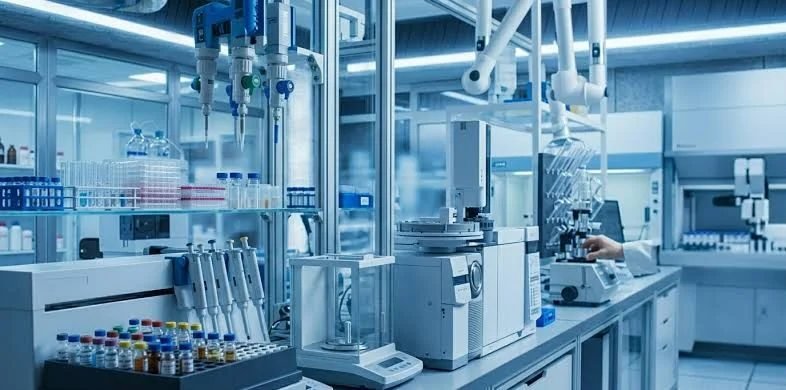
For labs sourcing research material, the documentation checklist is fairly settled. Many treat reverse-phase HPLC purity of around 95 percent or higher, backed by independent analysis, as a baseline quality signal. Look for mass spectrometry confirming the molecule is what the label claims. Look for a batch-specific certificate of analysis carrying a lot number and a testing date. Look for straight answers about synthesis method and starting-material sourcing.
A handful of research peptide suppliers, NuScience Peptides among them, attach batch-specific analytical documentation to individual products, so a researcher can review HPLC purity, mass spectrometry identity, and third-party certificates of analysis before sourcing material rather than after. That transparency is the practical version of everything above: it lets the paperwork, not the marketing, decide whether a batch is worth using.
Summary
Age-related hormonal decline and shrinking recovery capacity are real, and they remain active, legitimate areas of peptide research. But the evidence is uneven across compounds. Growth hormone secretagogues carry a genuine body of clinical documentation, while recovery peptides like BPC-157 and TB-500 still lean almost entirely on animal work. Much of the enthusiasm around peptides for aging and recovery is exploratory, and honest human trials are what would move it from promising to proven. For anyone evaluating research materials, independent verification and transparent batch documentation are the constants that matter regardless of which compound is in the vial.
Editorial And Medical Note: This article reviews peptides from a research and scientific perspective. Unless a compound is specifically FDA-approved for a medical use, the substances discussed here are intended for laboratory research only and are not approved for human consumption or self-medication. Research-use peptides are not medicines. Nothing here is medical advice, and any health decision should be made with a qualified healthcare professional.
Frequently asked questions
Which peptides are most commonly studied for age-related muscle loss?
Research has centered on the growth hormone secretagogue class, particularly Sermorelin, CJC-1295, and Ipamorelin, for their role in prompting the body’s own growth hormone. BPC-157 and TB-500 are studied specifically for tissue repair and recovery, mostly in preclinical models.
Are all research peptides approved for human use?
No. Only certain peptide medications hold FDA approval for specific indications. Many of the compounds discussed here remain investigational or are sold exclusively for laboratory research.
Why do so many peptides stay investigational instead of getting approved?
Most lack the large, long-term randomized trial data that approval requires. Animal results are often encouraging but do not always carry over to humans, and the approval pathway is expensive, which limits the incentive to fund trials for compounds that are hard to patent.
References
- Growth hormone in the aging male (somatopause and GH decline), NIH: https://pmc.ncbi.nlm.nih.gov/articles/PMC3940699/
- Testosterone and aging, NCBI Bookshelf: https://www.ncbi.nlm.nih.gov/books/NBK216175/
- Molecular constraints of sarcopenia in the ageing muscle: https://www.ncbi.nlm.nih.gov/pmc/articles/PMC12267276/
- Sarcopenia interventions, resistance exercise and nutrition: https://pmc.ncbi.nlm.nih.gov/articles/PMC12734266/
- BPC-157 in orthopaedic sports medicine, systematic review (HSS Journal, 2025): https://journals.sagepub.com/doi/abs/10.1177/15563316251355551
- Thymosin beta-4 and TB-500 in tissue healing, scoping review: https://www.mdpi.com/2076-3417/16/12/6202
- FDA Pharmacy Compounding Advisory Committee, July 23-24, 2026 meeting: https://www.fda.gov/advisory-committees/advisory-committee-calendar/july-23-24-2026-meeting-pharmacy-compounding-advisory-committee-07232026
- Legal analysis of the 2026 peptide do-not-compound removals (Frier Levitt): https://www.frierlevitt.com/articles/fda-peptides-do-not-compound-list-update-2026/