

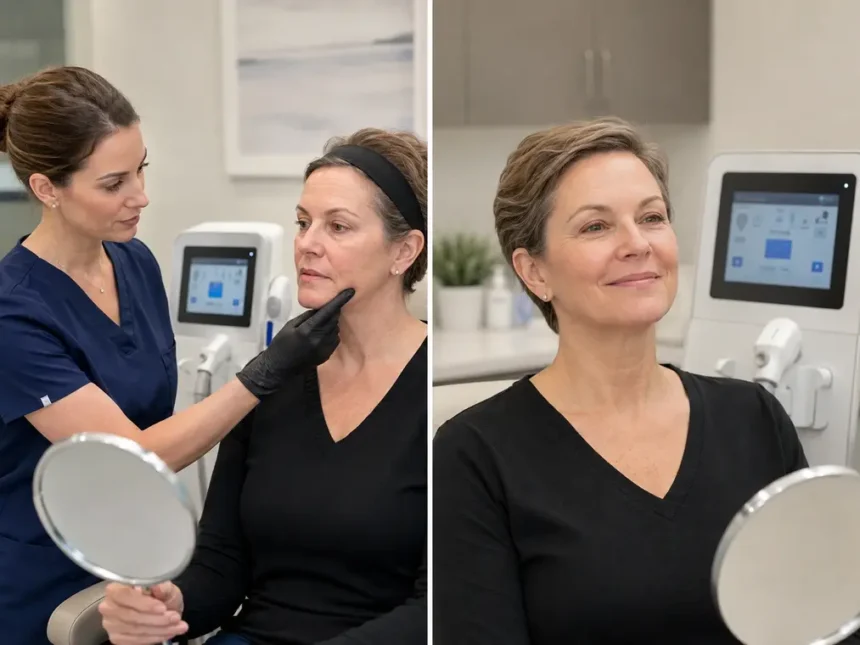
Both procedures begin from the same premise. Fine needles create controlled micro-injuries; the skin reads that damage as something to repair, and the repair process lays down new collagen. RF microneedling adds a second mechanism on top of the first: radiofrequency energy delivered through the needles or electrodes, producing heat at a chosen depth in the tissue.
That single addition changes the treatment goal, the intensity, the recovery, and, most consequentially, the risk profile. It does not automatically make RF the better choice. As of late 2025, it also carries regulatory weight that traditional needling does not, which is where any honest comparison now has to start.
What Traditional Microneedling Actually Does
Traditional microneedling relies on mechanical injury alone. Needles create microscopic channels through the epidermis and into the dermis, and the wound-healing cascade does the rest. Depth is adjustable and is matched to the area and the objective, with the face tolerating different settings than the body.
In professional settings, the established applications are surface-level: uneven texture, fine lines, the appearance of enlarged pores, and certain categories of acne scarring. Results accumulate across sessions rather than arriving after one.
The regulatory picture is narrower than most marketing implies. The FDA has authorized microneedling devices to improve the appearance of facial acne scars, facial wrinkles, and abdominal scars in patients aged 22 years or older. Everything outside that list is off-label, which is legal and common but means the agency did not review clinical data for that use. The FDA’s overview of microneedling devices also notes something rarely mentioned in treatment menus: these devices are not authorized to deliver cosmetics, topical medications, vitamin solutions, drugs, or blood products such as platelet-rich plasma into the skin.
Worth knowing too is that not every product marketed as a microneedling tool is regulated as a device at all. The FDA’s guidance on regulatory considerations for microneedling products draws the line at whether the product penetrates living skin layers and what the manufacturer claims it does.
What RF Adds to the Equation
Radiofrequency microneedling inserts needles or electrodes into the skin and then passes RF energy through them, generating heat at the needle tips. The intent is to stack thermal remodeling on top of the wound-healing response, reaching depths and producing tissue effects that mechanical needling alone does not.
This is why RF enters the conversation for laxity and for bigger textural change rather than surface refinement. It is also why the shorthand that RF “goes deeper” is unhelpful. Depth is a function of the device, the needle configuration, the energy settings, the anatomical area, and the hand holding the tip. Two RF treatments performed on the same patient with different parameters are not the same treatment.
The heat is the entire point of RF, and it is also the entire source of the additional risk. Those two facts are inseparable, and any comparison that presents the benefit without the mechanism behind the harm is incomplete.
RF Microneedling vs Traditional Microneedling: Side by Side
| Factor | Traditional Microneedling | RF Microneedling |
|---|---|---|
| Mechanism | Mechanical micro-injury only | Mechanical needling plus RF thermal energy |
| Thermal component | None | Yes; it contributes to both the potential benefit and added risk |
| Texture and fine lines | Commonly treated | Commonly treated |
| Laxity | Limited effect | Thermal remodeling may add benefit |
| Variables controlling intensity | Depth, passes, technique | Depth, passes, technique, energy level, pulse duration, needle design |
| Recovery | Varies with intensity | Varies with intensity and energy settings |
| Risk profile | Standard needling risks | Standard risks plus burns, fat loss, and nerve injury |
| Regulatory status | Class II, cleared for specific uses | Class II, cleared, and subject to an active FDA safety communication |
A more aggressive procedure earns its place only when the added mechanism addresses the actual concern and the benefit justifies what comes with it. That calculation runs patient by patient, not device by device.
Why the Device and Settings Matter More Than the Category
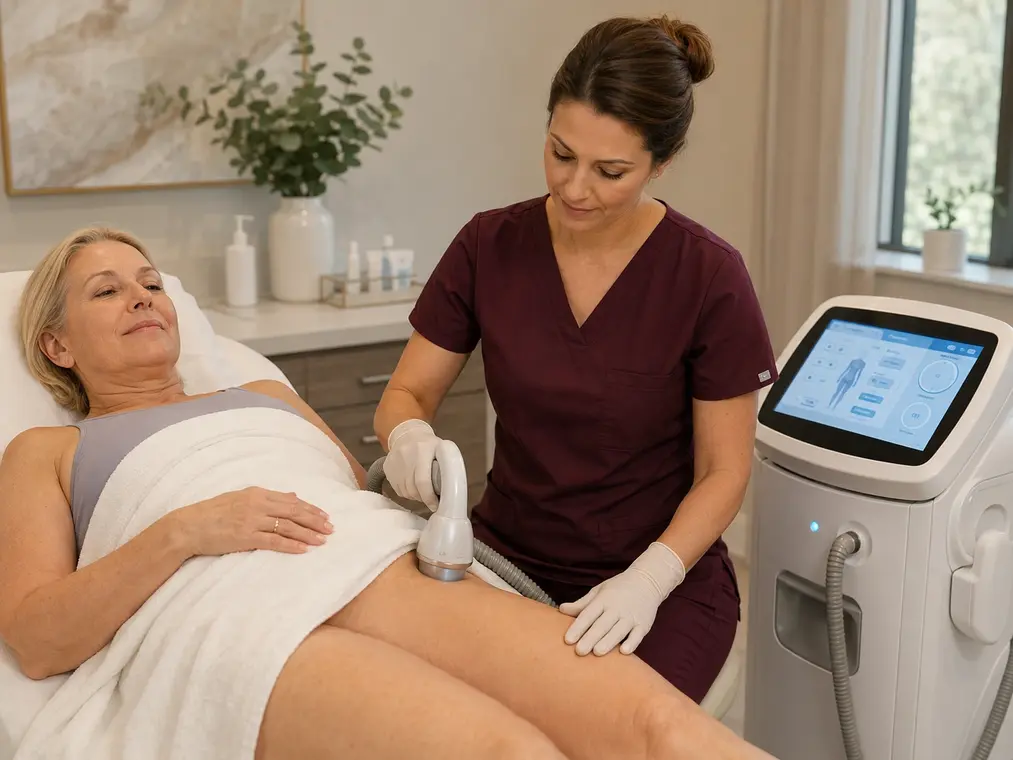
“RF microneedling” describes a category, not a standardized procedure. Professional RF microneedling machines differ in needle count and geometry, whether needles are insulated or non-insulated, depth increments, energy output, pulse duration, and treatment density. Those variables determine where the heat lands and how much of it the tissue absorbs.
This is why equipment cannot be evaluated separately from training and protocol. The same machine produces very different outcomes depending on who set the parameters and whether the patient was a reasonable candidate. Reporting on the FDA’s action has repeatedly linked adverse events to aggressive parameters, operator inexperience, and treatment of sensitive facial areas rather than to any single manufacturer.
How to Read a Clearance Claim Correctly
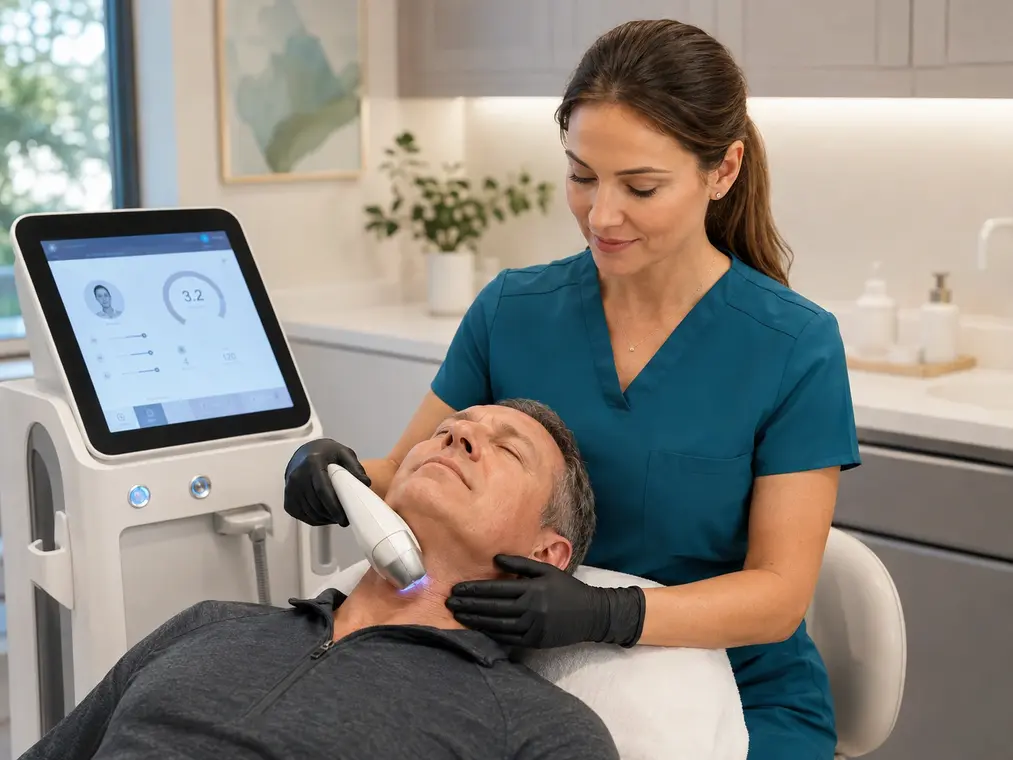
This deserves its own section because the terminology is routinely misused in aesthetic device marketing, sometimes carelessly and sometimes not.
FDA cleared means the agency reviewed a 510(k) submission and found the device substantially equivalent to a legally marketed predicate. FDA approved is a higher bar reserved for Class III devices and does not apply here. FDA registered means only that a facility filed establishment paperwork. It involves no review of the device whatsoever.
The distinction is not pedantic. The FDA’s own consumer guidance on what “FDA registered” does and does not mean states plainly that a registration and listing entry does not denote approval, clearance, or authorization, and that firms displaying registration alongside a product to imply FDA review are misbranding it. Federal regulation says the same thing in blunter language.
The practical move is to stop taking the claim on faith and check it. RF microneedling devices sit under product code QAI, and any legitimately cleared device will appear in the FDA’s 510(k) database with a summary document stating the exact authorized indication. If a device cannot be found there, that absence is the answer. The FDA has said directly that it is aware of microneedling devices on the market that are not legally marketed and whose safety and effectiveness it has never reviewed.
Matching the Modality to the Concern
When Traditional Microneedling Is Enough
Surface texture, fine lines, and many acne scars respond to mechanical needling without any thermal component. When the goal sits at that level, adding energy adds risk without adding a mechanism the concern requires.
Traditional needling is also the sensible starting point for patients whose skin type, medical history, or risk tolerance argues against heat. Scar outcomes in particular depend heavily on scar morphology, and some types respond better to subcision, resurfacing, or a combination approach than to needling of any kind.
When RF Is Worth the Added Risk
RF becomes a reasonable consideration when the objective genuinely includes thermal remodeling: laxity, deeper textural irregularity, and some deeper atrophic acne scarring. Published work reports improvement in acne scarring and aging-related concerns with fractional RF microneedling. However, outcomes vary meaningfully across patients, protocols, and devices, which limits how far any single study generalizes.
Candidacy is where this gets decided. The FDA’s contraindication list for microneedling is long and specific, covering bleeding disorders and anticoagulant therapy, immunosuppression, uncontrolled diabetes, active skin infection, recent isotretinoin use, keloid history, pregnancy, and darker skin types, for which several authorized devices were never studied.
Recovery: What Thermal Energy Changes
Both procedures produce redness, tenderness, swelling, and pinpoint bleeding. After traditional needling, the skin typically feels tight and sunburned, and reactions settle as it heals.
RF recovery covers the same ground but is governed by more variables. Needle depth, energy level, number of passes, treatment area, individual response, and aftercare all move the timeline, and the thermal component means the deeper tissue is recovering on a different schedule than the surface.
There is no universal downtime figure, and any clinic quoting one should prompt a question rather than reassurance. Promises like “fully healed in 24 hours” describe a marketing target, not a physiological one.
Safety Picture After October 2025
This is the section that separates current guidance from anything written before autumn 2025.
Standard needling risks include irritation, bleeding, bruising, infection, pigmentation changes, and prolonged redness. RF adds a thermal injury pathway, and the reported consequences are substantially more serious.
On October 15, 2025, the FDA issued a safety communication on potential risks with certain uses of RF microneedling, reporting complications including burns, scarring, fat loss, disfigurement, and nerve damage, with some injuries requiring surgical repair or other medical intervention. Fat loss and nerve damage are worth pausing on, because neither is a recoverable inconvenience and neither appears on the traditional needling risk list at all.
The agency’s recommendations are unambiguous. Patients should seek a licensed health care provider trained and experienced with these specific devices, and should ask which device will be used. The FDA also states directly that RF microneedling is a medical procedure rather than a cosmetic treatment and that these devices should not be used at home.
The American Academy of Dermatology responded the following day, emphasizing that treatments which look simple still require detailed working knowledge of facial anatomy, including nerves and muscles, both to avoid complications and to manage them competently when they occur. The American Society for Laser Medicine and Surgery reinforced the same framing, noting that the communication confirms cosmetic skin procedures are medical procedures carrying real risk.
One structural caveat belongs here. Adverse event reporting is voluntary, so the true incidence of these complications is unknown, and the FDA’s evaluation remains open. Providers and patients who encounter problems can file through the MedWatch voluntary reporting form, and the quality of future guidance depends on whether they do.
Training, Scope, and Who Holds the Handpiece
The FDA’s guidance to providers is direct: do not use microneedling devices without appropriate training or experience. Cartridges are single-use and single-patient, and reusing them is inconsistent with the terms of authorization even after cleaning.
Clinics offering RF should also have a written plan for managing complications, including when to treat on site and when to refer. They should tell patients explicitly to seek immediate care if something goes wrong. A provider who cannot describe that plan has not thought the service through.
Scope of practice varies by state and determines who may legally operate an energy-based device and under what level of supervision. Manufacturer training is a useful supplement to that, not a substitute for it, and a certificate of completion is not a credential.
Questions Worth Answering Before Either Procedure
- Which modality suits this specific concern, and why not the less intensive one?
- Which device will be used, and can its clearance be located in the FDA database?
- Is the intended use within that clearance, or is it off-label?
- Why these particular depths, energy settings, and number of passes?
- What training and hands-on experience does the operator have with this device?
- Which risks are most relevant given this skin type and medical history?
- What does recovery realistically look like, and what would count as a complication?
- What happens, and who is responsible, if one occurs?
This article is general information, not medical advice. Anyone considering either procedure should discuss their individual circumstances with a licensed provider.