

Dopamine is one of the most important chemical messengers in the human brain. It plays a major role in motivation, reward, movement, focus, mood regulation, learning, and decision-making. Although dopamine is often described online as the brain’s “pleasure chemical,” neuroscientists now understand that its function is far more complex than simply producing happiness.
In reality, dopamine helps the brain determine what deserves attention, what feels rewarding, and what behaviors should be repeated. It influences how people pursue goals, respond to challenges, build habits, and maintain motivation over time.
As conversations surrounding mental health, burnout, cognitive performance, and neurological wellness continue expanding, dopamine has become one of the most discussed neurotransmitters in modern health and wellness culture.
Dopamine Helps Regulate Motivation and Reward
One of dopamine’s primary functions involves the brain’s reward system. When people experience something rewarding or meaningful, dopamine activity may increase in certain areas of the brain. This process helps reinforce behaviors connected to survival, learning, and emotional satisfaction.
Importantly, dopamine is often more connected to anticipation and motivation than pleasure itself. In many cases, dopamine helps drive the desire to pursue a reward rather than simply creating enjoyment after the reward is achieved. This helps explain why dopamine is closely connected to habits, goal-setting, focus, and behavioral reinforcement.
Everyday activities, including exercise, social interaction, achievement, music, learning, food, and positive emotional experiences, may all influence dopamine activity to varying degrees.
Dopamine Also Influences Focus and Attention
Beyond reward processing, dopamine plays an important role in concentration and executive functioning. Researchers have studied dopamine extensively in relation to conditions including ADHD, depression, Parkinson’s disease, addiction, and other neurological disorders.
Healthy dopamine signaling helps support attention regulation, task initiation, working memory, and mental flexibility. When dopamine systems become dysregulated, people may experience symptoms involving motivation, concentration, emotional control, and behavioral consistency. This is one reason dopamine discussions have become increasingly common within conversations about productivity, mental performance, and cognitive wellness.
Modern lifestyles filled with digital overstimulation, chronic stress, inconsistent sleep, and constant multitasking may also influence attention patterns in ways researchers continue studying closely.
Sleep and Stress Can Affect Dopamine Balance
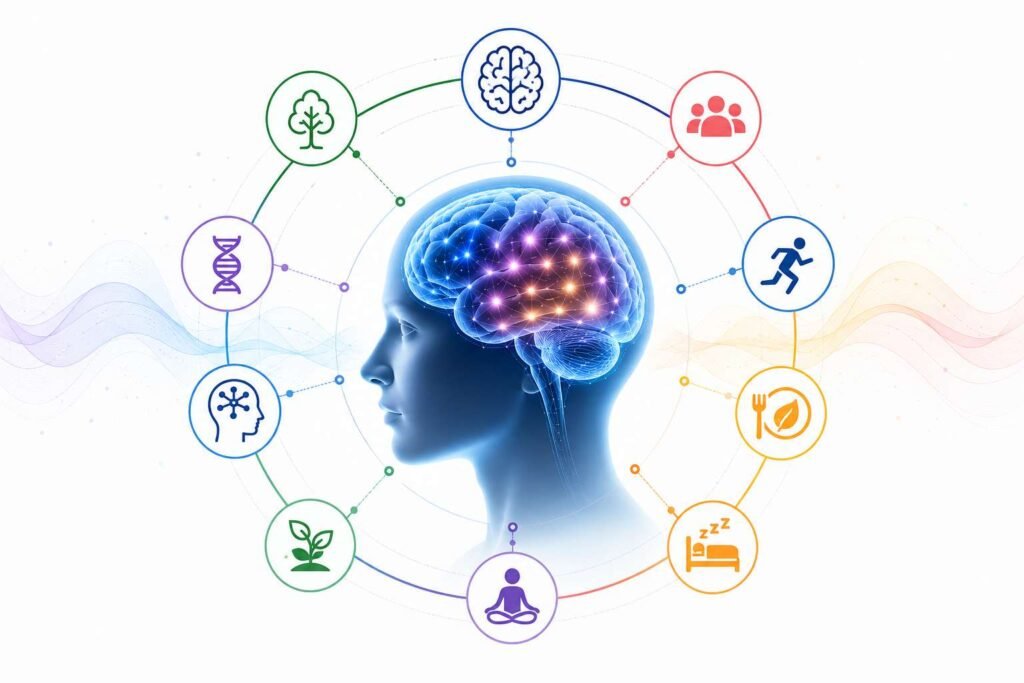
Dopamine does not function independently of the rest of the body. Sleep quality, stress levels, exercise habits, nutrition, and overall health may all affect neurological balance over time.
Chronic sleep deprivation may interfere with dopamine receptor sensitivity and cognitive performance, potentially contributing to fatigue, brain fog, reduced motivation, and impaired focus. High stress levels may also disrupt neurological regulation through prolonged cortisol exposure and nervous system strain.
This connection between lifestyle and brain chemistry is one reason healthcare professionals increasingly encourage more comprehensive wellness approaches rather than focusing only on isolated symptoms.
Consistent sleep schedules, stress management, physical activity, and balanced nutrition are now commonly discussed as part of broader neurological health maintenance.
Exercise Naturally Influences Dopamine Activity
Physical activity is one of the most widely studied lifestyle factors associated with dopamine regulation. Exercise may help stimulate multiple neurotransmitter systems connected to mood, focus, and emotional resilience.
Many people report improved mental clarity and motivation after regular movement. Activities including walking, resistance training, swimming, cycling, yoga, and recreational sports may all contribute positively to cognitive wellness when practiced consistently.
Researchers continue studying how exercise supports neurological function through improved blood flow, nervous system regulation, inflammation control, and neurotransmitter activity.
This relationship between physical movement and mental health has become increasingly important as more individuals seek sustainable ways to support long-term cognitive performance.
Nutrition Conversations Around Dopamine Continue Growing
Nutrition has also become a major topic within dopamine-related wellness discussions. Researchers continue exploring how vitamins, minerals, amino acids, and dietary habits may influence neurotransmitter production and brain function.
Certain nutrients are involved in processes connected to dopamine synthesis and nervous system support. Educational wellness resources discussing dopamine vitamins often explore ingredients associated with cognitive wellness, including vitamin B6, magnesium, omega-3 fatty acids, amino acids such as L-tyrosine, and other compounds commonly studied within nutritional neuroscience conversations.
Joy Organics has published educational content examining several supplements and nutrients frequently associated with dopamine support and broader mental wellness discussions, as consumer interest in cognitive health continues expanding.
At the same time, healthcare professionals continue emphasizing that supplements should not replace professional medical guidance, especially for individuals managing neurological or psychiatric conditions.
Digital Overstimulation Is Changing Attention Patterns
Modern technology has dramatically changed how people interact with information and stimulation. Social media feeds, rapid notifications, short-form video platforms, multitasking, and constant digital engagement may all influence the brain’s reward systems.
Many experts now discuss how excessive stimulation may contribute to fragmented attention spans and reduced tolerance for slower or less immediately rewarding activities.
This does not mean technology itself is harmful. However, researchers increasingly examine how modern digital environments may affect focus, motivation, impulse control, and behavioral reinforcement patterns over time.
For many individuals, balancing digital stimulation with rest, physical movement, sleep quality, and offline activities has become an important part of maintaining mental well-being.
Dopamine Is Closely Connected to Mental Health
Dopamine also plays a significant role in emotional regulation and mental health. Imbalances in dopamine-related pathways have been associated with multiple neurological and psychiatric conditions, although these relationships are highly complex and still actively researched.
Mood disorders, chronic stress, addiction, attention disorders, and burnout may all involve disruptions affecting reward processing and motivation systems.
Organizations, including the National Institute of Neurological Disorders and Stroke, continue supporting research into dopamine-related neurological function, movement disorders, cognitive health, and brain chemistry regulation.
As neuroscience research evolves, experts increasingly recognize that mental wellness is deeply interconnected with sleep, nutrition, movement, stress management, social connection, and environmental factors.
Brain Health Is Becoming Part of Everyday Wellness
One of the biggest cultural shifts in recent years is the growing public interest in brain health. People increasingly want to understand not only physical wellness, but also focus, emotional resilience, motivation, memory, and long-term cognitive function.
This has helped bring neuroscience concepts into mainstream wellness conversations. However, experts continue to caution against oversimplified social media claims that reduce complex neurological systems to quick fixes or trendy hacks.
Dopamine is not simply a “motivation switch” that can be permanently optimized overnight. Instead, it functions as part of an extremely sophisticated neurological network influenced by genetics, environment, lifestyle, emotional health, and overall physical condition.
As awareness around cognitive wellness continues growing, more people are beginning to approach brain health through sustainable long-term habits rather than short-term solutions alone.
Final Conclusion
Dopamine is far more than a simple “pleasure chemical.” It helps the brain manage motivation, reward anticipation, attention, learning, movement, emotional regulation, and decision-making. Healthy dopamine activity supports goal-directed behavior, focus, and mental resilience, while disrupted dopamine signaling may contribute to problems involving mood, attention, addiction, motivation, and neurological function.
The most important takeaway is that dopamine cannot be “hacked” through one supplement, habit, or quick fix. It works as part of a larger brain-body system influenced by sleep, stress, exercise, nutrition, social connection, digital habits, and overall health. Sustainable lifestyle habits may support better neurological balance over time, but anyone experiencing ongoing issues with mood, focus, motivation, or movement should seek guidance from a qualified healthcare professional.
References
- Schultz, W., Dayan, P., & Montague, P. R. (1997). A neural substrate of prediction and reward. Science, 275(5306), 1593–1599. DOI: 10.1126/science. 275.5306.1593
- Berridge, K. C., & Robinson, T. E. (1998). What is the role of dopamine in reward: hedonic impact, reward learning, or incentive salience? Brain Research Reviews, 28(3), 309–369. DOI: 10.1016/S0165-0173(98)00019-8
- Volkow, N. D., Wang, G. J., Telang, F., Fowler, J. S., Logan, J., Wong, C., Ma, J., Pradhan, K., Tomasi, D., Thanos, P. K., Ferré, S., & Jayne, M. (2008). Sleep deprivation decreases binding of [11C]raclopride to dopamine D2/D3 receptors in the human brain. Journal of Neuroscience, 28(34), 8454–8461. DOI: 10.1523/JNEUROSCI.1446-08.2008
- Basso, J. C., & Suzuki, W. A. (2017). The effects of acute exercise on mood, cognition, neurophysiology, and neurochemical pathways: A review. Brain Plasticity, 2(2), 127–152. DOI: 10.3233/BPL-160040
- Heijnen, S., Hommel, B., Kibele, A., & Colzato, L. S. (2016). Neuromodulation of aerobic exercise: A review. Frontiers in Psychology, 6, 1890. DOI: 10.3389/fpsyg.2015.01890
- Gorrell, S., Shott, M. E., & Frank, G. K. W. (2022). Associations between aerobic exercise and dopamine-related reward-processing: Informing a model of human exercise engagement. Biological Psychology, 171, 108350. DOI: 10.1016/j.biopsycho.2022.108350
- Glimcher, P. W. (2011). Understanding dopamine and reinforcement learning: The dopamine reward prediction error hypothesis. Proceedings of the National Academy of Sciences, 108(Supplement 3), 15647–15654. DOI: 10.1073/pnas. 1014269108