


With the changing of seasons come changes in all the little rituals that help maintain balance within ourselves. Patterns in our sleep habits alter, our energy shifts up and down, our skin adjusts to a new level of humidity – all things that may no longer work for us in the following season. This does not mean making huge life changes with the changing of the seasons; it just requires a little adjustment in a few key areas.
Why Seasonal Changes Affect Wellbeing
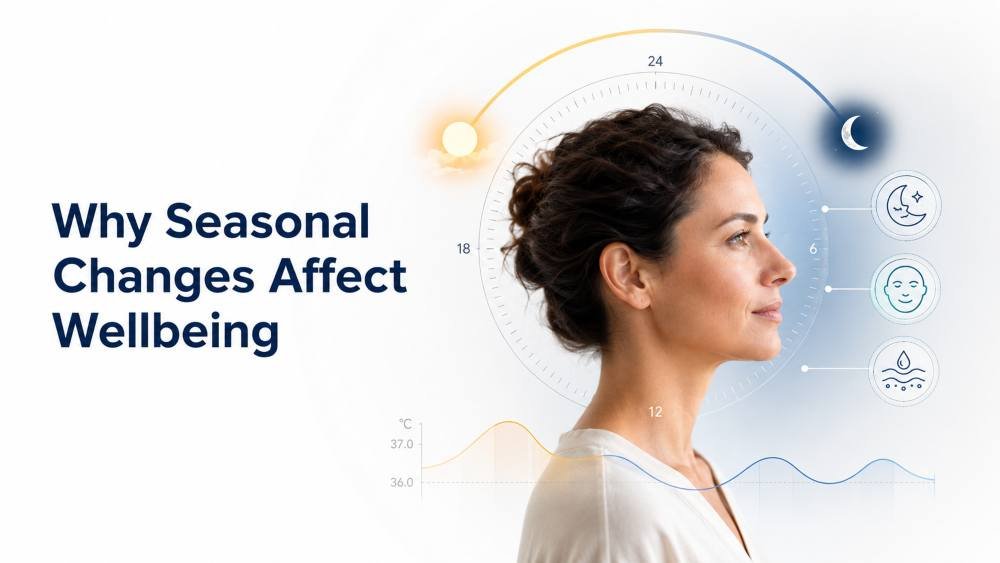
Changes in day length, changes in temperature, and changes in activities outside can all impact our sleeping patterns, our mood, and energy levels throughout the year.
Decreased daylight during the fall and winter can affect our circadian rhythm, and thus impact our sleeping patterns and our energy levels. The warmer weather and increased activities outside in summer can improve our mood but negatively impact our sleep.
According to the National Institute of Mental Health, seasonal changes in light exposure are directly linked to mood regulation. Noticing these shifts early makes it easier to adjust habits before they become disruptive.
Some of the most common seasonal changes people notice include:
- Variations in sleep quality or waking times due to variations in light
- Dryness or irritation of skin due to heating or humidity variation indoors
- Changes in appetite and hydration needs between hot and cold months
- Fluctuating motivation for outdoor movement and exercise
How the Body Tracks Seasonal Time
The body relies on light exposure as its primary cue for regulating sleep and wake cycles. When daylight hours shrink or stretch quickly, that internal clock takes time to catch up, which is often why the first two weeks of a new season feel the most disruptive.
Changes in temperature have a secondary influence. The fact is that cool air at night prompts the body to prepare for bed, whereas warmer conditions may slow down the process of cooling the body temperature.
Cold-Weather Self-Care Adjustments
Heating, fewer hours of sunlight, and shorter days require small but regular alterations to your skincare, sleep, and exercise routines.
Winter months usually lead to drier air inside homes than many people realize. Small modifications like using a richer moisturizer and using a humidifier at night will help avoid seasonal dryness that usually develops over time.
Doctiplus’s health and wellness tips cover a range of seasonal skincare and self-care adjustments worth reviewing as the weather turns.
Skincare Through Indoor Heating Season
Indoor heating systems pull moisture out of the air, and skin often reacts before people connect the dots. According to the American Academy of Dermatology, switching to a fragrance-free, heavier moisturizer and limiting hot showers to under ten minutes are two of the most effective ways to prevent winter skin dryness.
A few habits that tend to help most:
- Applying moisturizer within a few minutes of showering, while skin is still damp
- Running a humidifier in bedrooms overnight
- Switching to mild, unscented soap
Sleep Routines When Mornings Get Darker
Even sleep habits could use slight adjustments during winter days. It is better to have a constant time for waking up, even in the dark mornings, rather than changing the bedtime hours.
The Sleep Foundation notes that exposure to bright light shortly after waking, even from an indoor lamp, can help reinforce a consistent sleep-wake cycle when natural morning light is limited.
Managing Seasonal Stress and Mood
Mood changes tied to shorter days are common, and building a toolkit of relaxation habits ahead of time makes the transition easier.
Seasonal mood dips are common enough that having a few go-to relaxation habits in place before the season shifts makes a real difference. Some people lean on light therapy or extra time outdoors during daylight hours; others find that having a warm, low-stimulation evening routine helps.
Building an Evening Wind-Down Toolkit
The wind-down toolkit will be more effective if it’s developed before the change of seasons, rather than pieced together after your mood has been affected by the change of seasons. Many people exploring new relaxation habits for the first time end up looking into dispensary weed delivery Woodland as one option for a low-key, at-home evening routine during the darker months.
Other habits people commonly rotate into an evening routine include:
- A short walk before sunset to get natural light exposure
- Journaling or a few minutes of quiet reading before bed
- Herbal tea or a warm, screen-free wind-down period
When to Seek Additional Support
Doctiplus’s health conditions resources are a useful starting point if seasonal mood changes feel like more than a minor adjustment, since persistent low mood is worth discussing with a healthcare provider rather than managing through habit changes alone.
The CDC recommends reaching out to a healthcare provider if low mood, fatigue, or changes in sleep or appetite last for more than two weeks, since these can be signs of something that habit changes alone won’t resolve.
Nutrition and Hydration Shifts Across Seasons
The body’s hydration requirements as well as hunger change depending on the weather conditions, which is why it is important to adapt your food intake accordingly to ensure optimal functioning.
Your hydration requirements do not cease when the seasons change into the cooler ones since you can easily forget about your hydration due to the absence of external thirst stimulants. Drinking soups and herbal tea can assist you in getting enough water throughout the day without even trying.
A few seasonal nutrition habits worth building into a routine:
- Switching to warmer and hydrating food during the cold season
- Carrying a water bottle around as a passive reminder during winter
- Using seasonal foods, as these tend to suit our bodies’ needs
- Adjusting caffeine intake if sleep patterns shift with the season
Eating with the Seasons
Eating food items that are naturally available during their growing season will help one save money and also eat foods which provide nutrition to one’s body according to its requirements during that particular season. USDA mentions that food items that grow naturally during their season tend to be more flavorful and nutritious than food imported out-of-season.
Warmer months naturally bring more water-rich fruits and vegetables, like melon and cucumber, while cooler months shift toward root vegetables and squash that pair well with warm, slow-cooked meals.
Adjusting Caffeine and Energy Habits
The shorter days may cause one’s need for caffeine to come on earlier, forcing one into afternoon coffee consumption, which causes insomnia. Changing the time of day when one consumes caffeine to a later time is usually easier to maintain than abstaining from it completely.
Movement and Exercise Across the Year
Seasons affect natural motivation to exercise, and adapting expectations, not resisting them, allows you to maintain movement throughout the year.
Outdoor motivation decreases in cold months, but that’s fine, and it doesn’t mean that you failed to develop the habit. Moving indoors, whether that’s exercising at home or walking on the treadmill, allows you to stay active regardless of the weather conditions.
Mayo Clinic emphasizes that small bursts of activity done throughout the day can make a difference in one’s health in case one cannot afford to have a complete exercise routine. This is especially beneficial for wintertime when doing a complete routine seems less attractive.
A few ways people keep movement consistent through seasonal changes:
- Switching from running outside to indoor cardio or bodyweight sessions in winter
- Going from outdoor runs to indoor workouts in the winter
- Setting a lower, more realistic activity bar during the darkest months
- Pairing movement with something enjoyable, like a podcast or music
Building a Routine That Actually Sticks

The most sustainable seasonal wellness routines are the ones built around small, repeatable habits rather than a full reset every few months. Picking two or three adjustments, whether that’s a skincare change, a sleep habit, or a new relaxation routine, and building them in gradually tends to stick far better than trying to overhaul everything at once.
A Simple Seasonal Self-Care Checklist
Starting small makes seasonal transitions easier to manage:
- Select one sleep pattern that needs to change with the changing days
- Change skincare products before the weather changes rather than after
- Choose one relaxation habit to keep in rotation through darker months
- Adjust hydration and meal choices as temperatures shift
- Make a realistic movement goal for those difficult months
Frequently Asked Questions
How long does it take to adjust to a new seasonal routine?
It takes two to three weeks before most people begin to notice that the new habits have become routine for them, though adjustments concerning sleep might require some more time.
Is seasonal mood change the same as seasonal affective disorder?
No, because seasonal mood swing is quite common and easily treatable through behavioral changes, whereas SAD is a recognized disorder, and it might be good to talk about it with a doctor.
What’s the simplest seasonal habit to start with?
Adjusting sleep and wake times to stay consistent, even as daylight hours shift, tends to have the broadest impact on energy and mood with the least effort to maintain.
Conclusion
Seasonal well-being depends on listening to the subtle signs that our body gives us when the season changes, and adapting ourselves to those signs, rather than undergoing a complete transformation every time the seasons change. These can be anything from using richer moisturizers during winters to drinking more water during summers, but most of the things we do are minor changes.