

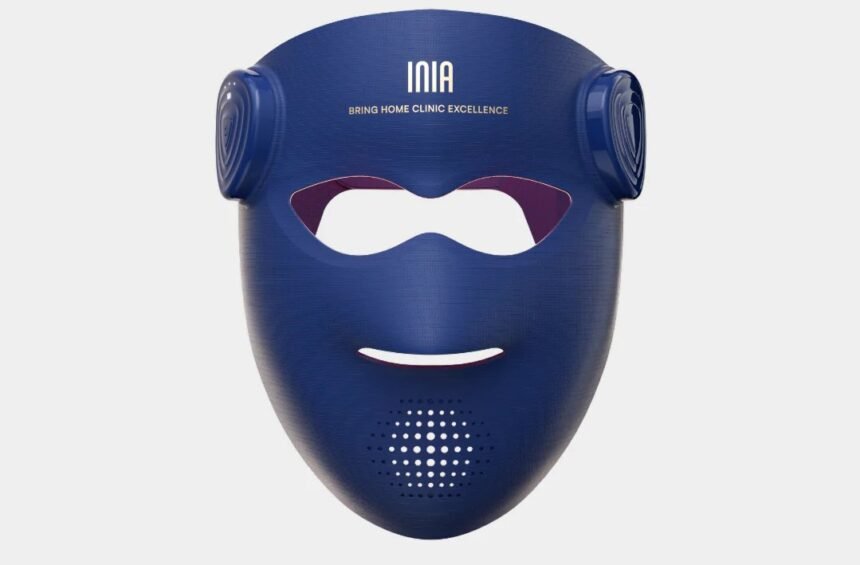
The mask itself is the easy part. You strap it on, press a button, and relax for a few minutes. The harder part is knowing what you are actually buying into. Red light therapy occupies an unusual corner of skincare: it has genuine research behind it, yet the marketing around it often runs well ahead of the science. With Harvard Health’s overview of red light therapy for skin care noting that home masks, caps, and wands typically cost several hundred dollars or more, it pays to go in with clear eyes.
This guide is organized around the questions people usually ask before, during, and after buying one. You will find what the light is doing, which skin concerns have the best support, who should be cautious, how to compare devices, and how to run a fair trial on your own skin.
Short Version
A red light mask may gently improve fine lines, texture, and overall skin quality when used consistently for two to three months. The evidence for acne is weaker, and claims about deeper “rebuilding” often outpace what studies have shown. Short-term safety looks good for most people, but anyone who takes light-sensitizing medicine, has a darker skin tone, lives with an eye condition, or has a light-sensitive disease should get professional advice first. Choose a device that is transparent about its wavelengths and output, follow the instructions closely, and judge results at the 8 to 12 week mark rather than after a handful of sessions.
What Is The Light Actually Doing?
Red light therapy is known in medical literature as photobiomodulation. A 2024 dermatology review of photobiomodulation in clinical practice describes it as the use of red light (about 620 to 700 nanometers) and near-infrared light (about 700 to 1,440 nanometers), usually delivered through LEDs or low-level lasers.
Inside skin cells, these wavelengths are absorbed by light-sensitive molecules, most notably an enzyme in the mitochondria called cytochrome c oxidase. Researchers believe this shifts how cells produce energy and send chemical signals, which in turn activates pathways linked to repair, collagen production, and calmer inflammation.
It can help to think of it less like a sunlamp and more like a dimmer switch for certain cellular processes. The goal is not to heat or injure tissue. The American Academy of Dermatology’s guidance on red light therapy notes that, unlike ultraviolet light, research has not found red light to cause cancer, and that it appears safe in the short term. The same guidance is candid that its long-term effects on skin and hair are still unknown.
Will It Help With My Skin Concern?
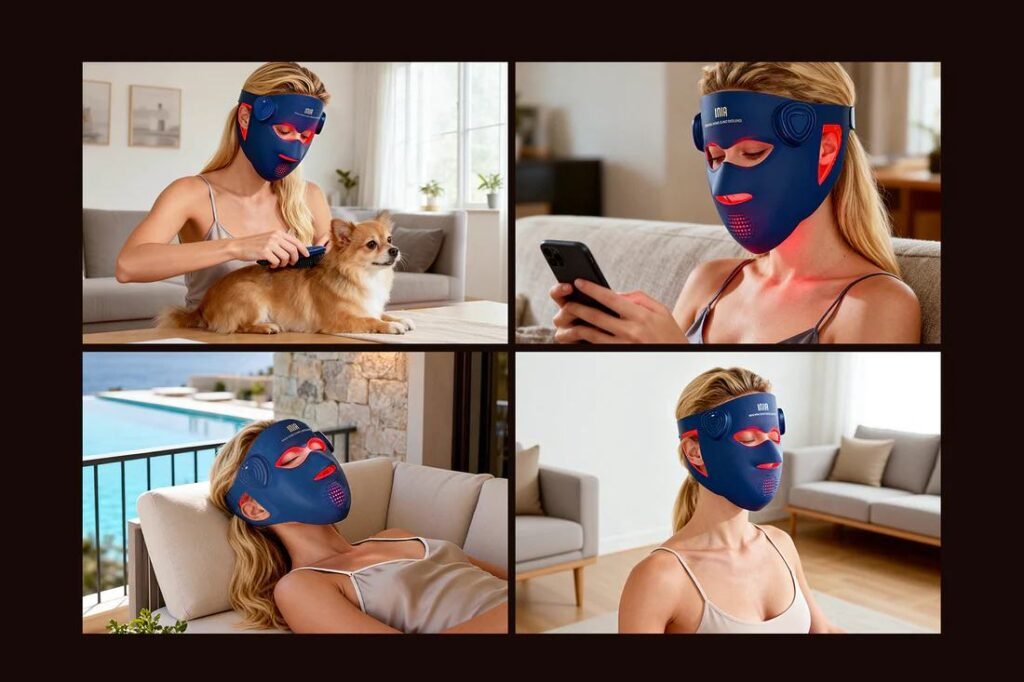
Evidence varies a great deal from one concern to another. This snapshot summarizes where things stand.
| Skin Concern | Strength Of Evidence | What To Realistically Expect |
| Fine lines and wrinkles | Several controlled trials, including a sham-controlled study | Subtle to noticeable softening over weeks to months |
| Rough texture | Controlled trials using objective skin measurements | Gradually smoother feel and appearance |
| Redness and uneven tone | Some supportive studies, fewer rigorous ones | Variable results; darker skin tones need extra caution |
| Acne | Many small trials, but high-quality evidence is lacking | Possible supporting role alongside proven treatment |
| Wounds, scars and other medical uses | Active research, largely in clinical settings | Not a reason to self-treat at home |
Where The Strongest Evidence Sits
Skin aging has the most convincing research. In a randomized, sham-controlled trial of LED therapy for facial wrinkles, 76 adults were treated twice a week for four weeks with 633 nm red light, 830 nm near-infrared light, both combined, or a sham light. The treated groups showed measurable wrinkle reductions of up to 36% and elasticity gains of up to 19% compared with their starting point.
A more recent study of an LED face mask used twice a week for three months reported steady improvement in several signs of aging, with benefits lasting up to a month after participants stopped. It is a useful finding, although the researchers worked for the cosmetics company that sells the mask, a common situation in this field that makes independent confirmation especially valuable.
Summing up this body of work, the American Academy of Dermatology describes results from red light LED devices as subtle to noticeable for fine lines, rough skin, redness, dark spots, and mild looseness. It also points out that the FDA has cleared several home devices for treating signs of skin aging.
Where The Picture Is Blurrier
Acne is a good example of a promising idea with uneven proof. A Cochrane review of light therapies for acne examined 71 randomized trials involving 4,211 people and concluded that high-quality evidence is lacking. The median trial had just 31 participants. Much of that research also looked at blue light, or at in-clinic photodynamic therapy that pairs light with a prescription cream, which is quite different from a red and near-infrared mask used on its own.
Photobiomodulation is also being studied for wound healing, scars, certain types of hair loss, cold sores and skin side effects from cancer treatment. The 2024 review describes these as real areas of progress, while stressing that more clinical trials are needed before standardized recommendations can be made across conditions and skin types. Most of that work happens under medical supervision, not with a mask on the sofa.
Why Home Results Can Differ From Study Results
Several factors can separate what a study reports from what you see in the mirror.
The first is power. According to the American Academy of Dermatology, the red light used in dermatology offices is stronger than what home devices deliver, so home use generally calls for more patience.
The second is dose. Laboratory and animal research has repeatedly found a biphasic response, meaning a modest dose of light can stimulate tissue more effectively than a larger one. Adding extra or longer sessions is not a shortcut and may even blunt the effect.
The third is the equipment itself. One frequently cited controlled trial used full-body lamp systems rather than a mask, and its broader spectrum extending into near-infrared performed no better than red light alone. More wavelengths do not automatically mean more benefit.
Finally, there is consistency. Nearly every positive study relied on regular sessions over at least four weeks. Occasional use is unlikely to deliver the same outcome.
Is It Safe For Me?
For most healthy adults who follow the instructions, red light masks appear to carry low short-term risk. The American Academy of Dermatology lists temporary mild pain or skin irritation as the most common side effects. Some groups, however, should speak with a clinician before starting:
- People taking light-sensitizing medicines. Certain antibiotics, such as doxycycline, along with a range of other drugs, can make skin react abnormally to light. The FDA’s explainer on medicines that can trigger photosensitivity describes how these reactions happen, and a pharmacist can check whether your prescriptions are relevant to a light device.
- People with light-sensitive conditions. The American Academy of Dermatology cautions that conditions such as lupus can worsen with red light exposure.
- People with darker skin tones. Research suggests darker skin is more sensitive to visible light, including red light, which can lead to hyperpigmentation that may be more intense and longer-lasting. The 2024 dermatology review specifically highlights the importance of tailored counseling for people with skin of color.
- People with eye conditions. In 2019, Australia’s regulator announced a recall of a red and blue light acne mask after identifying that, for a small group of susceptible people with conditions such as retinitis pigmentosa, ocular albinism or other inherited retinal disorders, repeated exposure could cause retinal damage. If you have any retinal condition, ask an eye specialist before using a face mask, particularly one with blue light modes.
- People who are pregnant. Safety data are limited, so it is sensible to check with your obstetric provider.
- Anyone with a new, changing, or unexplained spot or rash. Have it examined first, so a light routine never delays a diagnosis.
Eye care deserves a special mention for everyone. Because near-infrared light is mostly invisible, it does not trigger the natural squint or blink you get from a bright visible glare, so you cannot rely on discomfort as a warning. If your device comes with goggles or eye shields, use them every time, and do not substitute ordinary sunglasses. Never look directly into the LEDs, even if they appear dim.
How To Choose A Mask Without Getting Lost In The Marketing
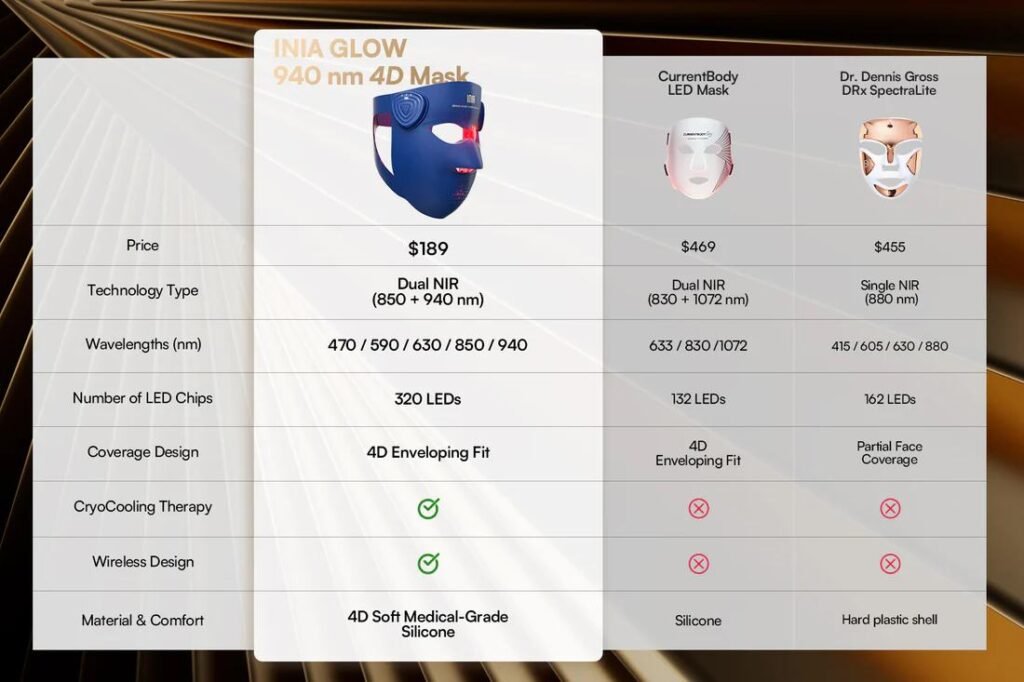
A few focused questions will tell you more than any glossy product photo.
- Which wavelengths does it use, exactly? Look for figures in nanometers, not vague phrases like “infrared technology.” The best-known facial skin trials mostly used red light around 630 to 660 nm and near-infrared light around 830 to 850 nm. A red light mask that lists 660 nm red alongside 850 nm and 940 nm near-infrared, for instance, gives you precise information to compare against the research. Keep in mind that longer near-infrared wavelengths such as 940 nm have a much thinner track record in facial skin studies, so any promised extra benefit from them remains unproven.
- How much light does it deliver, and for how long? Output is often listed in mW/cm². A clearly stated session length, a built-in timer, and automatic shut-off are all good signs. If a brand shares almost nothing about output, it is hard to know whether the device resembles anything that has been studied.
- Is it FDA cleared, and can the company prove it? The American Academy of Dermatology recommends choosing an FDA-cleared device. As the FDA explains in its guide to what “FDA approved” really means, most moderate-risk devices reach the market through 510(k) clearance, which shows substantial equivalence to a device already legally sold. Clearance points to a low-risk product but does not prove effectiveness, and terms like “FDA approved” or “FDA certified” have no meaning for these devices. If clearance is claimed, ask for the 510(k) number and look it up in the FDA’s public database.
- What kind of evidence sits behind the claims? Brands such as Inia publish detailed specifications, schedules, and safety guidance, which makes side-by-side comparison far easier. Still, a product page, a star rating, or a before-and-after photo is not a clinical trial. Be wary of phrases such as “instant results,” “clinically proven” with no citation, “clinic results at home,” or “safe for all skin types.”
- What happens if it does not suit you? Because meaningful change usually takes 8 to 12 weeks, check the return window and warranty before you buy. A 14-day trial will not tell you much.
How To Run A Fair 12-Week Trial On Your Own Skin
Treating your first few months as a simple personal experiment helps you judge results honestly and spot problems early.
- Before week one: Take clear photos of your face from the front and both sides, in the same spot, at the same time of day, with the same lighting. Note any concerns you are hoping to change.
- Keep everything else steady. If you start a new retinoid, peel, or serum in the same month, you will not know what made the difference. Change one thing at a time where you can.
- Prepare your skin as directed. Most devices are designed for clean, dry skin, since makeup and heavier products can sit between the light and your skin. If your skin is sensitive, avoid applying strong actives such as retinoids or exfoliating acids immediately before a session.
- Follow the schedule closely. Many published protocols used two or three sessions per week. Use the session length and frequency your device recommends, and log each session in your phone so gaps do not creep in.
- Check in at week four. At this point, you are looking mainly for tolerance. Mild, temporary irritation can occur, but burning, pain, blistering, persistent redness, darkening patches, or any change in your vision mean you should stop and seek professional advice.
- Compare at weeks 8 to 12. Retake your photos under the same conditions and compare them side by side. Look for softer fine lines, smoother texture, or a more even appearance, while remembering that changes are usually subtle.
- Decide what comes next. If you are happy with the results, plan for ongoing maintenance. The American Academy of Dermatology notes that follow-up treatments are needed because skin keeps aging, and at least one mask study found benefits faded within about a month of stopping.
Where A Mask Fits In A Bigger Routine
Even at its best, a red light mask is a supporting player. Daily broad-spectrum sunscreen remains the foundation of healthy-looking skin, and treatments such as prescription retinoids have a far larger evidence base for signs of aging. Dermatologists who use red light typically add it to a wider plan, for example alongside medicated creams, microneedling or chemical peels, rather than relying on it alone.
If you enjoy the ritual, can comfortably afford it, and expect gradual improvement, a well-specified mask used correctly can be a reasonable addition. If your goal is dramatic change or relief from a medical skin problem, a visit to a board-certified dermatologist is the better first investment.
Final
Red light therapy masks are neither miracle nor myth. The strongest evidence supports modest, gradual improvements in fine lines and skin texture with consistent use, while benefits for acne and other concerns are less certain. Choose a device that clearly states its wavelengths and output, understand what FDA clearance does and does not guarantee, protect your eyes, and give your skin a fair 8- to 12-week trial. If you take light-sensitizing medicine, have a darker skin tone, live with an eye or light-sensitive condition, or are managing a persistent skin problem, speak with a healthcare professional before you begin.
Disclaimer: This article is for general informational purposes only and is not a substitute for professional medical advice, diagnosis, or treatment. Please talk with a qualified healthcare provider about your personal skin, eye, or health circumstances before beginning any light-based treatment.