


Urinary symptoms are common, but they are not always simple. For California residents balancing hot, dry days, long commutes, outdoor work, and active routines, it can be easy to blame dark urine or a sudden urge to urinate on not drinking enough water. Sometimes that is the explanation. At other times, a change in urination may point to an infection, stone, blockage, prostate issue, or another condition that deserves attention. Symptoms can also change gradually, which makes it especially important to notice patterns rather than waiting for discomfort to become severe.
Knowing what to watch for can help people respond sooner and avoid guessing. Men who are navigating prostate concerns may also need specialized assessment, including expert prostate cancer staging, when their symptoms, examination, test results, or diagnosis call for it. This guide is educational and cannot replace personalized care from a qualified clinician. A health professional can consider the full picture, including age, medical history, medications, recent illnesses, and whether symptoms are new or recurring.
Why Urinary Symptoms Deserve Attention
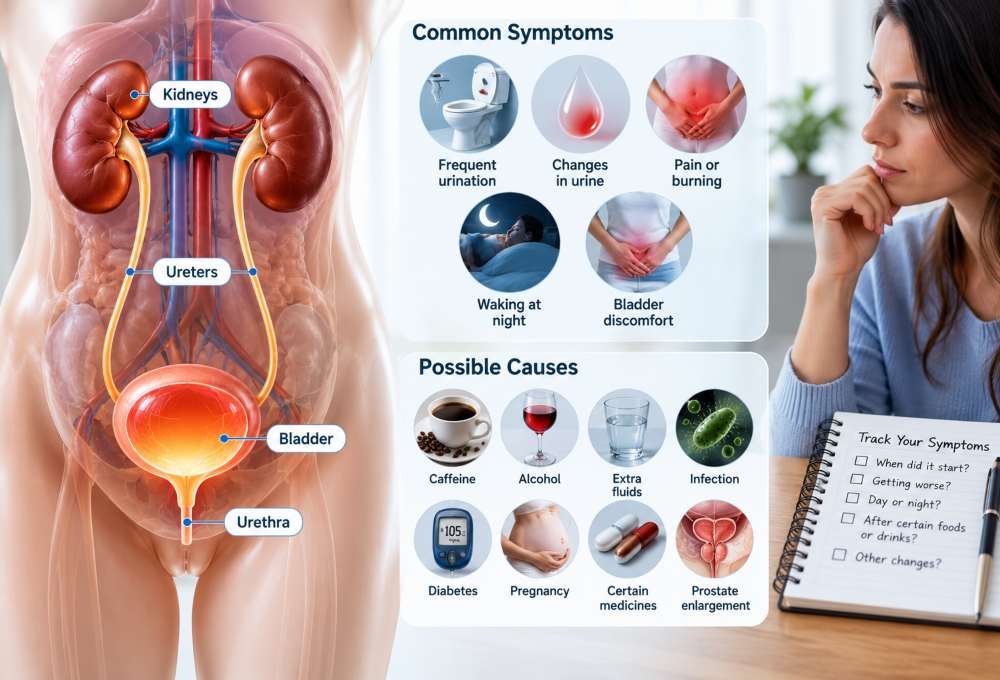
The urinary tract includes the kidneys, ureters, bladder, and urethra. The kidneys filter waste and excess fluid from the blood to form urine; the ureters carry urine to the bladder; and the bladder stores it until it leaves the body through the urethra. A problem at any point in that system can change how often a person urinates, what urine looks like, or whether urination is painful. Nerves and muscles also play an important role by signaling when the bladder is full and helping it empty normally.
Similar symptoms can have different causes. For example, frequent urination may follow extra coffee, alcohol, or fluids, but it can also occur with infection, diabetes, bladder irritation, pregnancy, some medicines, or prostate enlargement. Rather than self-diagnosing, record when symptoms began, whether they are worsening, and what other changes are present. Note whether symptoms occur only during the day, wake you at night, or appear after particular foods, beverages, activities, or medicines.
Burning Or Pain During Urination
Burning may occur with a bladder infection, but it can also result from irritation, a sexually transmitted infection, urinary stones, or other conditions. Pain that persists, returns, becomes severe, or occurs with fever, blood in the urine, discharge, or pelvic pain should be discussed with a health professional. Do not assume that burning will resolve on its own simply because it is mild at first, particularly if other urinary changes develop.
Frequent Or Urgent Urination
Caffeine, alcohol, carbonated drinks, high fluid intake, and certain medicines can increase urination. However, urgency, leakage, pain, weak stream, dribbling, or a feeling that the bladder does not empty fully may need evaluation. Waking repeatedly at night to urinate can also be related to bladder changes, sleep disruption, diabetes, fluid shifts, or prostate enlargement. A sudden change from a person’s usual bathroom routine can be useful information to share with a clinician, even when there is no pain.
Changes In Urine Color Or Smell
Dark yellow urine can occur when urine is concentrated. Foods, supplements, and medicines can also affect urine color or odor. Red, pink, tea-colored, or brown urine may indicate blood, although some foods and medicines can create similar colors. Because the cause cannot be determined by appearance alone, a clinician should evaluate suspected blood in the urine. Cloudiness or a strong odor alone does not confirm an infection, but it may be more concerning when paired with pain, urgency, fever, or lower abdominal discomfort.
Bladder Infection Signs To Watch For
Common bladder infection symptoms include burning while urinating, frequent urges, lower abdominal discomfort, and cloudy, bloody, or strong-smelling urine. The symptoms described in this overview of bladder infection symptoms show why urinary discomfort should not automatically be considered a normal part of aging. Some people may feel the urge to urinate even when only a small amount of urine passes.
A clinician may use a medical history, examination, and urine testing to identify the cause. Antibiotics can treat many bacterial bladder infections, but they are not appropriate for every cause of urinary discomfort. Follow the prescribed treatment plan, and seek prompt advice if symptoms worsen or do not improve. Untreated bladder infections can spread to the kidneys. Fever, chills, nausea, vomiting, or pain in the back or side, alongside urinary symptoms, can be warning signs of a more serious kidney infection.
Kidney Stone Symptoms And Red Flags
Kidney stones can cause sharp pain in the back, side, lower abdomen, or groin. The pain may come in waves and can shift as a stone moves through the urinary tract. Nausea, vomiting, painful urination, blood in the urine, cloudy urine, and trouble passing urine may also occur. These kidney stone symptoms warrant timely medical guidance because they may overlap with more serious problems. Severe pain with fever or chills is particularly important to address quickly because infection and blockage can occur together.
For someone with a history of stones, prevention planning may include individualized advice on fluids, sodium intake, diet, and follow-up testing. California heat can increase fluid losses, so people who exercise or work outdoors should pay attention to hydration needs, especially if their clinician has not placed them on a fluid restriction. The best prevention approach can vary based on the type of stone and a person’s overall health.
When Blood In The Urine Needs Medical Care
Hematuria means blood in the urine. It may be visible or found only during testing. Possible causes include infection, stones, injury, vigorous exercise, medicines, prostate conditions, kidney disease, or urinary tract cancers. Blood in the urine does not need to be painful to matter. Contact a qualified health professional rather than relying on home remedies or waiting for it to return. Even when urine returns to its normal color, an earlier episode can still provide important diagnostic information.
Symptoms That May Need Urgent Attention
Seek urgent medical care or emergency help when urinary symptoms occur with:
- Fever or chills.
- Severe pain in the back, side, abdomen, or groin.
- Repeated vomiting or signs of dehydration.
- An inability to urinate, or only passing a very small amount.
- Heavy or persistent blood in the urine.
- Sudden testicular pain or swelling.
- Confusion, marked weakness, or feeling severely ill.
These symptoms can signal an infection, obstruction, or another problem that should not be managed by waiting at home. People with conditions that affect the immune system, kidney function, or pregnancy should be especially cautious about new or worsening symptoms.
Everyday Habits That Support Urinary Health
- Drink fluids regularly. Individual needs vary with climate, activity, medical conditions, and medicines. Spreading fluids throughout the day may be more comfortable than drinking a large amount at once.
- Use the bathroom when needed. Regular habits may reduce discomfort from holding urine for long periods.
- Notice personal triggers. Caffeine, alcohol, spicy foods, and carbonated drinks can irritate the bladder for some people.
- Stay active and manage chronic conditions. Diabetes, high blood pressure, and kidney disease can affect urinary health.
- Avoid tobacco. Smoking is associated with serious health risks, including bladder cancer.
- Practice good hygiene and safer sex. These measures may reduce some infection risks.
How Symptoms Can Differ
Anyone can develop urinary symptoms, but anatomy and life stage affect risk. Pregnancy, menopause, and pelvic floor changes can contribute to leakage, urgency, or recurrent bladder infections. In men, an enlarged prostate can contribute to weak flow, hesitancy, dribbling, urgency, and incomplete emptying. Recurrent urinary infections in men and ongoing urinary symptoms all warrant clinical evaluation. Children, older adults, and people with neurologic conditions may not always describe urinary symptoms in the same way, so changes in behavior, weakness, or bathroom habits may also be relevant.
What To Record Before A Medical Visit
- When symptoms started and whether they are improving or worsening.
- Daytime and nighttime urination frequency.
- Pain, fever, chills, nausea, leakage, weak flow, or trouble emptying.
- Changes in urine color, odor, cloudiness, or visible blood.
- Recent medicines, supplements, illness, travel, fluid changes, infections, stones, or surgeries.
If possible, bring a current list of medications and supplements. Mention whether you have had similar symptoms before, what testing or treatment was used, and whether it helped. This information can help a clinician decide which tests are appropriate.
What Testing May Involve

Evaluation often begins with a health history and physical examination. Depending on the situation, testing may include urinalysis, urine culture, blood work, a bladder scan, ultrasound, or other imaging. The right tests depend on symptoms, age, medical history, and risk factors. One symptom alone rarely identifies the cause. A urine sample may help identify blood, signs of infection, or other abnormalities, while imaging can sometimes help identify stones, blockage, or structural concerns.
Common Questions About Urinary Health
Is Frequent Urination Always A Problem?
No. Fluids, caffeine, alcohol, pregnancy, stress, and some medicines can increase urination. Persistent symptoms, sleep disruption, pain, leakage, or weak flow should be evaluated. Frequencies that develop suddenly or occur with thirst, fatigue, fever, or changes in urine also warrant attention.
Can A Bladder Infection Occur Without Severe Pain?
Yes. Some people notice urgency, frequency, cloudy urine, odor, or mild discomfort rather than intense burning. Symptoms can vary, and a urine test may be needed to clarify whether an infection is present.
How Much Water Should A Person Drink?
There is no single amount that fits everyone. People with heart, kidney, or other conditions that require fluid limits should follow their clinician’s instructions. Hot weather, exercise, and outdoor work can increase fluid needs, while some medical conditions require more individualized guidance.
Conclusion
Urinary changes may be temporary, but pain, fever, blood in the urine, severe side pain, and trouble urinating should not be ignored. Paying attention to patterns, maintaining practical daily habits, and seeking qualified care when symptoms persist can help California residents protect bladder, kidney, and overall urinary health. Early evaluation can also help identify treatable causes before symptoms become more disruptive or serious.
Disclaimer: This article is for general educational purposes only and is not a substitute for medical advice, diagnosis, or treatment from a qualified healthcare professional. Never ignore professional medical advice or delay seeking care because of something you have read here. If you have severe pain, fever with urinary symptoms, an inability to urinate, or any other urgent concern, call 911 or go to the nearest emergency department. External links are shared for reference only, and their inclusion does not imply endorsement of any provider, product, or service.