

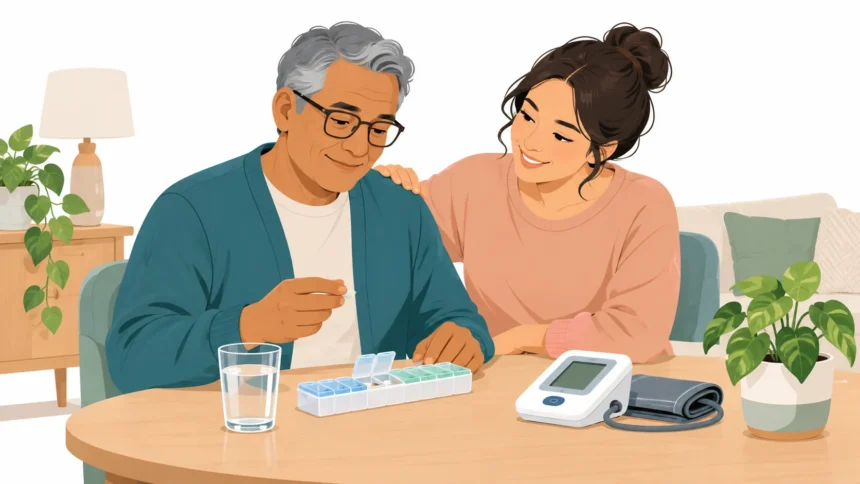
Nobody hands you a manual on the day you learn that your blood pressure, blood sugar, heart or lungs will need looking after for the rest of your life. Living With Long-Term Health Issues You leave the appointment with a prescription, maybe a leaflet, and a quiet sense that daily life has just changed shape. Type 2 diabetes, high blood pressure, heart failure, COPD and arthritis are not problems that clear up after a few days of tablets. They are ongoing, and most of the work of managing them happens not in the clinic but at the kitchen table, on the bathroom scale and beside the pill box.
That can feel like a burden. It is also where you have the most influence. Your doctor may see you for twenty minutes a few times a year, while you live with your condition every hour in between. A simple home routine makes it easier to take treatment as prescribed, catch problems early, and give your care team real information instead of guesses. Done well, it is one of the things that keeps people active, well, and independent for longer.
The Basics Of Staying Well At Home

Long-term illness is easier to manage with a little structure. When checking your numbers becomes as automatic as brushing your teeth, early warning signs are much easier to spot.
1. Tracking Your Vitals And Key Metrics
Memory is a poor record keeper, especially in a short appointment when you feel rushed. A notebook or app with your daily numbers shows your doctor what is really happening between visits. The evidence supports this. A large analysis of blood pressure self-monitoring found that tracking readings at home lowered blood pressure modestly on its own, with bigger benefits when the readings were used to adjust treatment. The numbers help most when someone acts on them.
Which tools you need depends on your diagnosis:
- Blood pressure monitor: for high blood pressure, heart disease, or kidney disease. Choose an upper-arm cuff that fits your arm, and check whether your model appears on the US list of clinically validated blood pressure devices run by the American Medical Association. Sit quietly for five minutes first with your back supported, feet flat and arm resting at heart level, and avoid caffeine, exercise and smoking for 30 minutes beforehand. Take the monitor to an appointment once so it can be checked against the clinic’s.
- Glucometer or CGM: for diabetes. A continuous glucose monitor reads fluid just under the skin so that it can trail a finger-stick reading by several minutes. If a number does not match how you feel, confirm it with a finger-stick.
- Pulse oximeter: for asthma, COPD, or other lung conditions. Treat the reading as an estimate. The FDA’s safety communication on pulse oximeter accuracy explains that cold hands, nail polish, movement, and darker skin pigmentation can all affect results, and a 2020 study in The New England Journal of Medicine found that low oxygen levels were missed more often in Black patients. Warm your hand, keep still, and trust your symptoms: new breathlessness matters even when the number looks fine.
- Digital scale: for heart failure. Weigh yourself each morning after using the toilet and before breakfast, on the same scale and in similar clothes. A gain of more than 2 to 3 pounds in a day or 5 pounds in a week can mean fluid is building up, one of the warning signs of heart failure that the American Heart Association asks patients to report. Your doctor may set a different personal limit.
2. Medication Management And Dosing
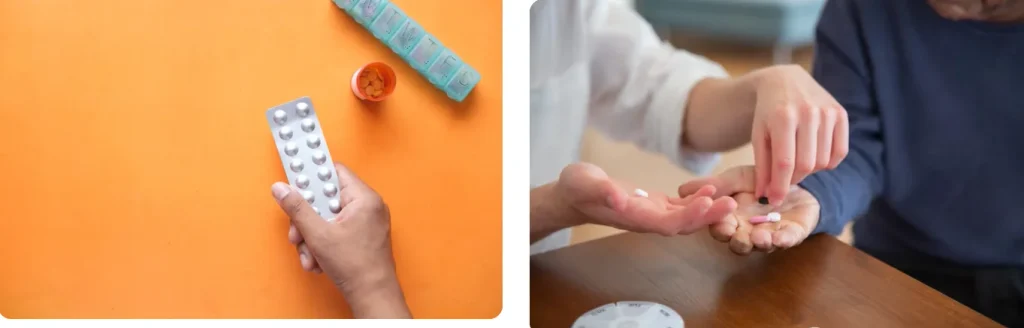
Many long-term conditions mean several medicines, sometimes from several doctors. That is where mistakes creep in: a missed dose, a double dose, or two drugs that do not mix well. Missed doses are extremely common. A widely cited review estimated that about half of people with chronic illness do not take their medicines exactly as prescribed. That is rarely a character flaw. It is usually a system problem, and systems can be fixed.
- Use a pill organizer with morning, afternoon, and evening compartments. Check with your pharmacist first, because a few medicines, such as nitroglycerin tablets and some blood thinner capsules, need to stay in their original container.
- Keep one current list of every medicine with its name, dose, timing, purpose, and prescribing doctor, and carry a copy in your wallet or phone.
- Set phone alarms or use a reminder app, and tie each dose to a daily habit such as breakfast or brushing your teeth.
- Add vitamins, herbal products, and over-the-counter medicines to that list. The National Center for Complementary and Integrative Health’s advice on using dietary supplements wisely warns that some supplements interact with prescription drugs. St. John’s wort, for example, can make several common medicines less effective.
- Use one pharmacy where possible, so every interaction check happens in one place.
- If you have Medicare Part D and take several medicines, ask whether you qualify for a free Medication Therapy Management review with a pharmacist.
If a medicine gives you side effects, call your doctor or pharmacist rather than quietly stopping it. There is often an alternative.
Everyday Life Decisions That Impact Chronic Conditions
Prescriptions are the foundation of chronic care, but everyday choices decide how well those treatments work.
| Life pillar | Why it matters | How to manage at home |
| Nutrition | Shapes blood pressure, blood sugar, cholesterol and fluid balance | Follow the eating pattern your doctor or dietitian suggests, such as low-sodium or Mediterranean-style meals |
| Physical activity | Helps with weight, blood sugar, heart fitness and joint strength | Choose low-impact movement you can do safely, even in short bouts |
| Sleep | Poor sleep can raise blood pressure and make blood sugar harder to control | Keep regular sleep and wake times, and put screens away before bed |
| Stress | Stress hormones can push up blood pressure and blood sugar | Try a few minutes of slow breathing, gentle stretching or a short walk each day |
Two things are easy to overlook here. Loud snoring, gasping at night, or heavy daytime sleepiness can point to sleep apnea, which a long-running Wisconsin study linked to a higher risk of developing high blood pressure. It is worth mentioning to your doctor. Low mood is also common with long-term illness, and it can make every part of self-care harder. If sadness or loss of interest lasts more than two weeks, tell your doctor, because depression is treatable. If you ever have thoughts of harming yourself, call or text 988.
Designing A Medical Diet Plan

Changing how you eat is one of the most effective things you can do at home. Cutting back on sodium lowers blood pressure partly because the body holds on to less fluid. In the DASH-Sodium trial, lowering sodium reduced blood pressure on both a typical American diet and the DASH diet, and the combination worked best. The National Heart, Lung, and Blood Institute’s DASH eating plan comes in a 2,300 mg sodium version and a lower 1,500 mg version, built around vegetables, fruit, whole grains, beans, low-fat dairy, and lean protein.
Most sodium comes from packaged, restaurant, and takeout food rather than the salt shaker, so reading labels makes a bigger difference than hiding the shaker. For diabetes, swapping sugary drinks and refined carbohydrates for high-fiber foods helps keep blood sugar steadier. A simple guide is to fill half your plate with non-starchy vegetables, a quarter with lean protein, and a quarter with carbohydrate foods.
A few cautions matter:
- Many salt substitutes contain potassium, which can be dangerous with kidney disease or with some blood pressure and heart medicines.
- People with heart failure or advanced kidney disease may be given fluid limits.
- Grapefruit interacts with some statins and heart medicines.
- If you take warfarin, keep your intake of leafy greens steady rather than cutting them out.
A registered dietitian can build a plan around all of your conditions at once, and Medicare Part B covers medical nutrition therapy for people with diabetes or kidney disease.
Importance Of Staying Active
Physical activity is one of the most overlooked parts of long-term care. A major review found evidence for prescribing exercise as therapy in 26 different chronic diseases. The CDC’s activity guidelines for adults with chronic conditions suggest that those who are able aim for at least 150 minutes of moderate activity a week plus two days of muscle strengthening, while stressing that some activity is better than none.
You do not need a gym. Walking laps of a hallway, marching in place, standing up from a chair ten times, seated leg lifts and light resistance bands all count, and three 10-minute sessions work as well as one 30-minute block.
Not every exercise suits every condition, so ask your doctor before starting a new routine, especially after a hospital stay or if you have heart disease. If you take insulin or certain diabetes tablets, check your blood sugar before exercising and keep a fast-acting snack nearby. Stop and seek help for chest pain, severe Breathlessness or dizziness. If you have had a heart attack or heart surgery, or live with moderate to severe COPD, ask about cardiac or pulmonary rehabilitation, which gives you supervised exercise and education.
Preventing Health Emergencies
One of the biggest reasons to manage your health well at home is to avoid the sudden flare that ends in the emergency room. Those flares rarely come out of nowhere. There is usually a trail of small warning signs over several days.
What To Do If You Notice Red Flags?
Every long-term illness has its own warning signals. Knowing the difference between “call the doctor today” and “call 911 now” can prevent both panic and dangerous delays.
| Condition | Call your doctor the same day | Call 911 |
| Heart failure | Weight up 2 to 3 pounds in a day or 5 pounds in a week, more ankle or leg swelling, needing extra pillows to breathe at night | Breathlessness at rest, chest pain, fainting |
| Diabetes | Readings repeatedly above your target, a foot sore that is not healing, more frequent lows | Low blood sugar with confusion or trouble swallowing; very high readings with vomiting, fruity breath or fast breathing |
| COPD | More breathless than usual, more mucus or a change in its color, fever | Severe breathlessness, blue lips, new confusion or drowsiness |
| High blood pressure | A reading above 180/120 with no symptoms that stays high when rechecked after five minutes | A reading above 180/120 with chest or back pain, shortness of breath, numbness, weakness, vision changes or trouble speaking |
For low blood sugar below 70 mg/dL, most people are taught the 15-15 rule: have 15 grams of fast-acting carbohydrate, such as half a cup of juice or glucose tablets, then recheck after 15 minutes and repeat if still low. Never give food or drink to someone who is confused or cannot swallow safely. Use glucagon if it has been prescribed and call 911. For sudden face drooping, arm weakness, or slurred speech, think stroke and call 911 immediately.
A printed emergency plan is worth the ten minutes it takes. Tape it somewhere visible, such as the refrigerator door, and include your diagnoses, current medicines and doses, allergies, your doctors’ phone numbers, an emergency contact, and where to find any advance directive. Adding the same details to your phone’s medical ID helps if you are away from home.
Getting Professional Oversight At Home
Self-checks at home matter, but they cannot replace a clinician who knows you. A good primary care doctor supports your routine by:
- Reviewing your home records to spot trends you might miss
- Adjusting doses before small changes become big problems
- Ordering regular lab work, such as A1C, kidney function, and cholesterol tests
- Arranging extra help like physical therapy, foot care, or dietitian visits
For older adults, people with limited mobility, or anyone juggling several conditions, frequent trips to a clinic can be exhausting, and missed appointments are often where care starts to slip. Home-based medical teams bring visits and lab draws to your door. In Kentucky, for example, Iris Medical Group offers chronic and palliative care alongside services such as home lab draws and remote patient monitoring.
Palliative care is widely misunderstood. It is not the same as hospice, and it can be given at any stage of a serious illness alongside treatment aimed at the illness itself. Its focus is comfort, symptom control, and support for the whole family. In a landmark trial of people with advanced lung cancer, adding early palliative care to standard treatment improved quality of life and mood. Medicare also covers home health services, such as part-time skilled nursing and therapy, for people who are homebound and whose doctor certifies the need.
Getting Started With At-Home Chronic Disease Management
A clear weekly rhythm often makes the difference between a condition that stays steady and one that keeps catching you off guard.
| When | What to do |
| Every day | Take your measurements at the same time each morning, write them down, and take medicines on schedule |
| Sunday | Refill your pill organizer and check supplies. Request refills while you still have a week left, not when bottles are nearly empty |
| Midweek | Look back over your numbers. If weight, blood pressure or glucose keeps creeping up, call your doctor’s office |
| Every month | Write down questions and new concerns for your next appointment. If you plan to use over-the-counter products to strengthen your immune system, bring them up with your doctor or pharmacist first, since some supplements interact with heart, blood-thinning and diabetes medicines |
| Every year | Ask which vaccines are recommended for you, such as the yearly flu shot, and update your emergency plan and medication list |
Living with a chronic condition means changing how you approach ordinary days. Type 2 diabetes, high blood pressure, heart problems, and arthritis all need steady attention, but that attention does not have to be perfect to work. Missed a reading? Take the next one. Had a salty weekend? Monday is a fresh start. A simple home routine keeps you on top of your treatment plan, keeps your doctor informed, and protects the independence that matters most to you.
Disclaimer
This article is for general information only and is not a substitute for personal medical advice, diagnosis, or treatment. Always follow the specific targets, thresholds and plans your own doctor gives you, as these can differ from the general figures here. If you think you are having a medical emergency, call 911 straight away.
References
- American Heart Association. Warning signs of heart failure. https://www.heart.org/en/health-topics/heart-failure/warning-signs-of-heart-failure
- American Medical Association. US Blood Pressure Validated Device Listing. https://www.validatebp.org/
- Centers for Disease Control and Prevention. Physical activity for adults with chronic health conditions and disabilities. https://www.cdc.gov/physical-activity-basics/guidelines/chronic-health-conditions-and-disabilities.html
- Centers for Medicare & Medicaid Services. Home health services coverage. https://www.medicare.gov/coverage/home-health-services
- National Center for Complementary and Integrative Health. Using dietary supplements wisely. https://www.nccih.nih.gov/health/using-dietary-supplements-wisely
- National Heart, Lung, and Blood Institute. DASH eating plan. https://www.nhlbi.nih.gov/education/dash-eating-plan
- Osterberg L, Blaschke T. Adherence to medication. New England Journal of Medicine. 2005;353(5):487-497. DOI: 10.1056/NEJMra050100
- Pedersen BK, Saltin B. Exercise as medicine: evidence for prescribing exercise as therapy in 26 different chronic diseases. Scandinavian Journal of Medicine & Science in Sports. 2015;25(Suppl 3):1-72. DOI: 10.1111/sms.12581
- Peppard PE, Young T, Palta M, Skatrud J. Prospective study of the association between sleep-disordered breathing and hypertension. New England Journal of Medicine. 2000;342(19):1378-1384. DOI: 10.1056/NEJM200005113421901
- Sacks FM, Svetkey LP, Vollmer WM, et al. Effects on blood pressure of reduced dietary sodium and the Dietary Approaches to Stop Hypertension (DASH) diet. New England Journal of Medicine. 2001;344(1):3-10. DOI: 10.1056/NEJM200101043440101
- Sjoding MW, Dickson RP, Iwashyna TJ, Gay SE, Valley TS. Racial bias in pulse oximetry measurement. New England Journal of Medicine. 2020;383(25):2477-2478. DOI: 10.1056/NEJMc2029240
- Temel JS, Greer JA, Muzikansky A, et al. Early palliative care for patients with metastatic non-small-cell lung cancer. New England Journal of Medicine. 2010;363(8):733-742. DOI: 10.1056/NEJMoa1000678
- Tucker KL, Sheppard JP, Stevens R, et al. Self-monitoring of blood pressure in hypertension: a systematic review and individual patient data meta-analysis. PLOS Medicine. 2017;14(9):e1002389. DOI: 10.1371/journal.pmed.1002389
- US Food and Drug Administration. Pulse oximeter accuracy and limitations: FDA safety communication. 2021. https://www.fda.gov/medical-devices/safety-communications/pulse-oximeter-accuracy-and-limitations-fda-safety-communication