

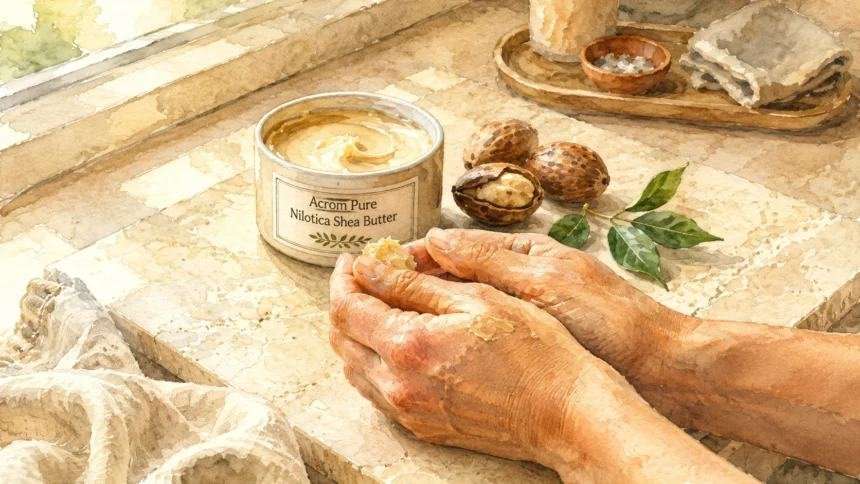
Most jars of shea butter on a drugstore shelf trace back to the same tree, the West African Vitellaria paradoxa. Acrom’s Pure Nilotica comes from its lesser-known cousin, and that single difference is the reason the product costs more and behaves differently the moment you open the lid. At around $35 a jar it sits well above the price most people associate with shea, so the fair question is not whether Nilotica is nicer in the abstract but whether the difference is one you can feel on your own skin. The short version, drawn from people who have used it for weeks rather than days, is that most of them stop reaching for anything else. You can see the product and its sourcing at tryacrom.com.
A Different Tree, Not A Different Label
Nilotica is not a marketing flourish bolted onto ordinary shea. It comes from a botanically separate East African subspecies of the shea tree, one that grows wild in the Nile basin of Uganda and South Sudan rather than across the West African savannah. That geography matters, because the subspecies accounts for less than five percent of the world’s shea supply and cannot be grown to order outside its native range. The nuts are gathered by hand from wild parkland trees and pressed by women-led cooperatives in northern Uganda, many of which double as conservation and replanting efforts for a tree that has come under pressure from deforestation.
Authentic Nilotica gives itself away by feel. It is soft enough to lift with a fingertip at room temperature, pale ivory rather than the deeper gold of West African butter, and it carries a faint nutty smell instead of the stronger, earthier scent of paradoxa shea. Acrom’s version is a single ingredient in the jar, raw and unrefined, with no fragrance, emulsifier, or filler added. Buyers who already know the raw material tend to recognize it on first contact, and threads in skincare communities have generally landed on the same verdict when newcomers ask whether what they received is the genuine article.
Why It Disappears Into Skin The Way It Does
Anyone who has used West African shea knows the ritual. You chip a hard piece out of the tub, warm it between your palms until it softens, then work it in slowly. Nilotica skips that step entirely. It is soft straight from the jar and melts on contact, sinking in within seconds and leaving no waxy film to wait out before you get dressed.
The reason sits in the fat itself. Nilotica carries a markedly higher share of oleic acid and a lower melting point than its western relative, which is what gives it both the softer texture and the quicker absorption. Oleic acid is a monounsaturated fat that skin reads as familiar, since it is among the fatty acids the skin’s own oils already contain, so the butter tends to sink in rather than sit on top. That same trait is why it feels far lighter on the face than most rich emollients. Coconut oil, by contrast, carries a comedogenic rating near the top of the scale and clogs pores for a lot of people, while denser West African shea can feel heavy and slow to absorb. Nilotica’s leaner profile is simply more forgiving.
Dry, Ashy, And Barrier-Worn Skin
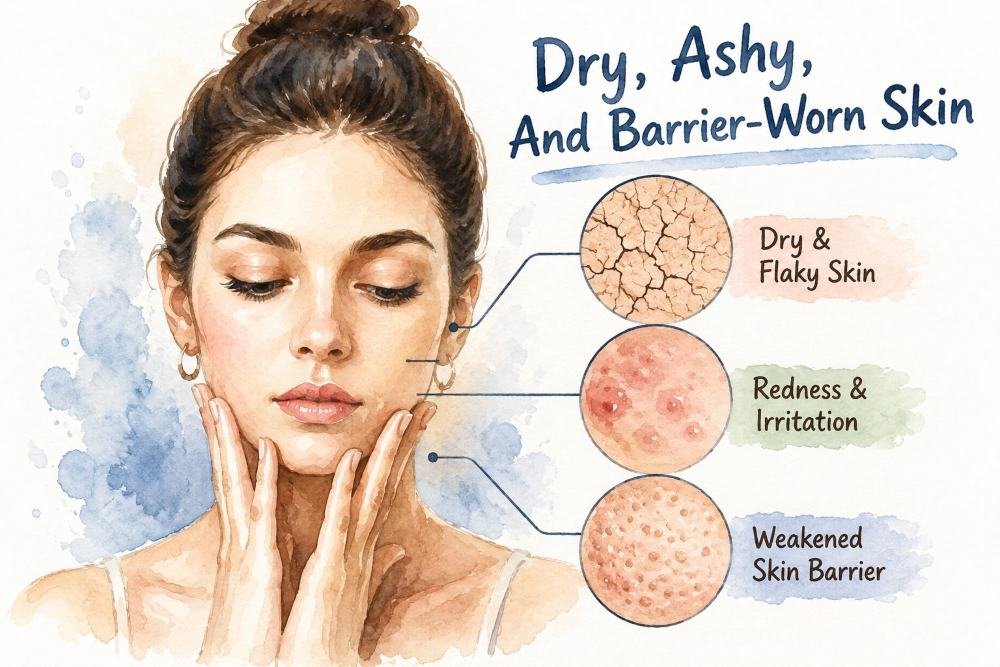
This is where the reports cluster, and they are strikingly consistent. Elbows that stayed ashy through whole tubs of ointment, heels that cracked despite nightly cocoa butter, hands left like sandpaper by constant washing: people describe these softening within roughly two to three weeks of daily use, sometimes faster. The mechanism is not mysterious. Dry, flaky, and barrier-compromised skin usually comes down to a lipid barrier that has lost its integrity, and shea is rich in exactly the kind of unsaturated fats that barrier draws on to rebuild. The American Academy of Dermatology lists shea butter among the ingredients worth looking for in a moisturizer for dry skin, which lines up with what long-term users say happens on their own arms and heels.
Eczema deserves a more careful sentence. Acrom is a skincare product, not a medicine, and it should not be treated as a therapy for eczema or any other condition. What people with eczema-prone skin tend to report is that using Nilotica alongside their existing prescription routine seems to stretch out the calm between flares, keeping skin softer for longer and stopping dry patches from escalating as quickly. That fits the wider clinical picture, since the National Eczema Association describes consistent moisturizing as central to barrier care rather than an optional extra. If you have a diagnosed condition, the sensible approach is to keep this as a supporting moisturizer and let your clinician steer the treatment.
Who Tends To Get The Most From It
The heaviest users skew toward dry to very dry skin: chronic ashiness, the rougher texture that can arrive with perimenopause and menopause, and skin left thin or reactive by years of retinoids and acids. People in cold or arid climates lean on it through winter, when lighter lotions stop holding up. Combination and oily skin types generally treat it as a spot fix on dry zones rather than an all-over moisturizer, and they tend to find it settles more comfortably on the face than coconut oil or thick paradoxa butter would.
Hair is the other common use, especially among people with tightly coiled textures from 4A through 4C. Nilotica’s softer profile coats the strand and seals in moisture without the buildup heavier shea can leave behind, which is why many people work a small amount through the ends between wash days, or onto the scalp to ease dryness and itch.
What A Jar Actually Costs To Use
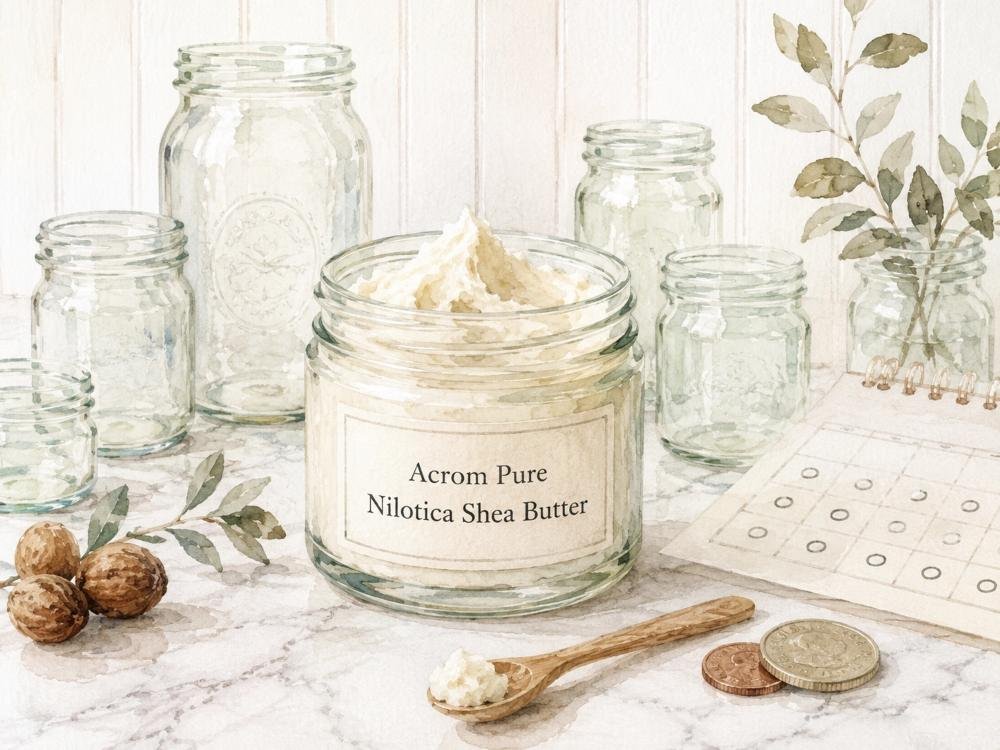
The sticker price looks steep next to a cheap tub of West African shea, but the per-use math shifts once you notice how little you need. A pea-sized amount covers a whole arm or leg, and a half-pea does the face. Used once a day on a targeted area like heels or elbows, a jar tends to last two to three months; spread across several body areas daily, it still runs somewhere around six to eight weeks. Because it absorbs fast and holds moisture for hours, most people apply it once and forget it, rather than topping up a lotion every few hours through the day. On a targeted routine, that works out to well under fifty cents a day.
The other half of the value is what you are paying for. There is nothing in the jar except the butter, which is unusual at this price point, where a good share of the cost often goes to fragrance systems, formulation, and the brand name. A published safety review of shea-derived cosmetic ingredients underlines how well tolerated raw shea generally is, which is part of why a single-ingredient product appeals to people whose skin reacts to additives. Acrom pairs the product with a 60-day money-back window, longer than the usual 30, which is roughly the time it takes to judge a moisturizer across a full skin cycle. For a first-time buyer weighing a single-ingredient purchase found through word of mouth, that return window does a lot to take the risk out of the decision.
The Honest Bottom Line
Acrom’s Pure Nilotica is aimed squarely at people with dry, ashy, sensitive, or barrier-worn skin who the usual suspects have already let down. That is the group that quietly buys a second jar. If your skin is balanced and perfectly happy with an inexpensive lotion, the upgrade may be lost on you, and there is nothing wrong with that. But for the person whose skin has been asking for exactly this kind of concentrated, single-ingredient lipid, the price stops feeling like the point somewhere in the first week, and the butter becomes the thing they reach for without thinking about it.
Medical Disclaimer
This article is for general information only and is not medical advice. Nilotica shea butter is a cosmetic moisturizer, not a treatment for eczema, dermatitis, or any medical condition. If you have a diagnosed skin condition, are pregnant or nursing, or are prone to allergies, speak with a qualified dermatologist or healthcare professional before changing your routine, and patch-test any new product on a small area first.
References
The sources below are linked in context throughout the article and are provided here for verification.
- ScienceDirect, Vitellaria paradoxa overview, on the botanical and fatty-acid distinctions between the East and West African subspecies.
- Wikipedia, Vitellaria paradoxa subsp. nilotica, on the subspecies’ Nile-basin range and share of global supply.
- Mongabay, “Uganda community group restores shea groves and livelihoods,” on women-led shea cooperatives in northern Uganda.
- LSE Africa blog, “Biological and economic distinctions matter for shea butter,” on Nilotica’s oleic acid content and melting point.
- Advanced Dermatology, P.C., “Is coconut oil good for your face?” on the comedogenic rating of coconut oil.
- American Academy of Dermatology, “Dermatologists’ top tips for relieving dry skin,” on recommended moisturizer ingredients.
- National Eczema Association, “The science of moisturizing for atopic dermatitis,” on moisturizing and barrier care.
- Cosmetic Ingredient Review, “Safety Assessment of Butyrospermum parkii (Shea)-Derived Ingredients,” on the safety profile of shea in cosmetics.